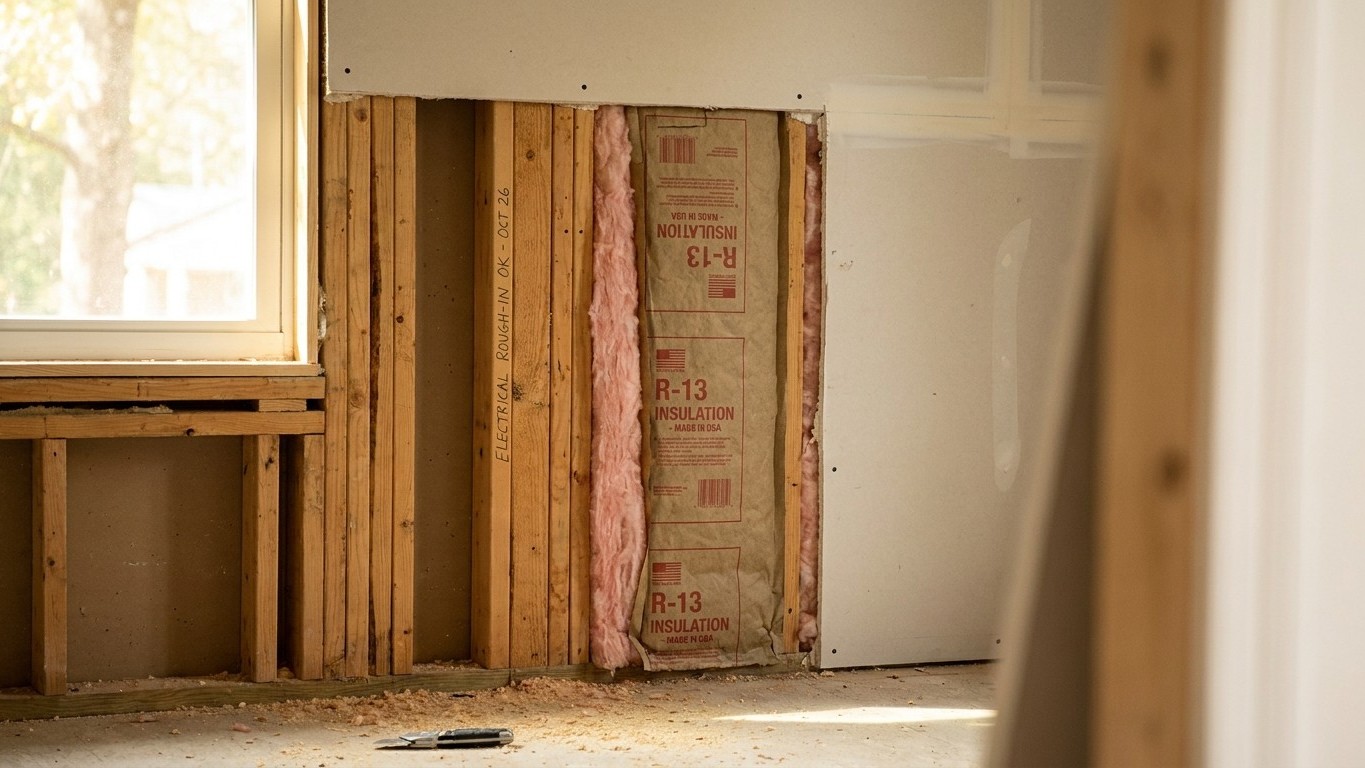

Yes. Every one of Maryland’s 24 counties falls outside the International Residential Code’s warm-zone exception, so a vapor retarder on the interior side of framed walls is required statewide under the 2021 IRC. The state’s two climate zones, 4A and 5A, both sit north of the line where that rule stops applying, which is a different story than in Florida or coastal Texas.
What the code asks for in Maryland

The 2021 International Residential Code, Section R702.7, states it plainly: a vapor retarder of the class given by Table R702.7(2) “shall be provided on the interior side of frame walls.” That’s the baseline rule adopted, in some form, across most of the country. What changes state to state is whether an exception cancels it out, and the exception that matters most reads: “A vapor retarder shall not be required in Climate Zones 1, 2 and 3.”
Maryland doesn’t touch any of those three zones. According to the 2021 IECC’s Table R301.1, 22 of the state’s 24 counties sit in Climate Zone 4A, and the remaining two fall in Zone 5A. Both are cold-side zones, both are moist regimes (the “A” designation), and neither comes anywhere near the warm-zone cutoff. That means the exception simply doesn’t reach Maryland. Unlike states that get split answers depending on which county a reader lives in, Maryland’s spread across 4A and 5A doesn’t change the outcome here: a vapor retarder is required on the interior side of framed walls in both zones.
That’s a meaningful distinction from “not required,” which some readers mistake for “forbidden.” The exception in warmer zones removes an obligation; it doesn’t ban a retarder outright, it just stops mandating one because, as the next section explains, an impermeable one can cause real damage there. In Maryland, the obligation stands, but the specific class required, and how a local jurisdiction has amended or adopted the code, is a separate question this page can’t answer for any individual house.
A wall built with the wrong vapor control doesn’t announce the mistake. There’s no cracked drywall, no visible stain the week after drywall goes up. The moisture accumulates behind the finish, inside the cavity, for years, sometimes a decade, before framing members show rot or insulation loses its R-value to trapped condensation. That’s the reason this isn’t a detail to guess at from a blog post: it’s a reason to call the county or municipal building department before framing closes up, and confirm which edition of the code that jurisdiction has adopted and what class of retarder it requires for the specific wall assembly being built.
Why the answer is the opposite in a warm climate
The mechanism is about which direction the moisture is traveling, not a regional preference written into the code by accident. In a cold climate like Maryland’s, the warm, damp air lives inside the house all winter. Left alone, that vapor would migrate outward through the wall assembly, hit the cold sheathing near the exterior, and condense there. An interior vapor retarder stops that migration before it starts, keeping the moisture on the warm side where it never reaches a cold surface.
Flip the climate, and the physics flip with it. In a warm, humid climate, the damp air isn’t inside the house, it’s outside, pressing in through the wall assembly during long, muggy summers. If a builder puts an impermeable retarder on the interior side of that wall anyway, the U.S. Department of Energy’s Building America program spells out exactly what happens: “If the wall contains a vapor retarder on the interior side of the insulation, the water vapor will condense on this cool, impermeable surface.” The air conditioning keeps that interior surface cold, the retarder blocks the moisture from drying inward, and condensation forms right where nobody can see it. The result, in the DOE’s own words, is “ruined insulation, mold, and structural rot of framing members.”
That’s the entire reason the code writes different rules for different climate zones. It isn’t bureaucratic inconsistency or a compromise between regional builders’ lobbies, it’s a direct response to which side of the wall the water vapor is coming from. A retarder that protects a Maryland wall by blocking vapor from the warm interior would trap vapor against the interior in Miami, turning a protective layer into the thing causing the damage. Same material, same wall assembly logic, opposite outcome, because the moisture is moving in opposite directions.
This is worth sitting with for a moment, because it explains why a builder who’s worked mostly in the Southeast and one who’s worked mostly in the Mid-Atlantic can walk onto the same job site and disagree about whether a retarder belongs in the wall at all. Neither is wrong. They’re describing two different physical situations that happen to use the same word.
The three classes, and why the word matters
The IRC doesn’t treat “vapor retarder” as one product. It splits the category into three classes, ranked by how much moisture they let pass, measured in perms. The lower the perm rating, the less vapor gets through.
| Class | Example materials | Perm rating |
|---|---|---|
| Class I | Sheet polyethylene, nonperforated aluminum foil | 0.1 perm or less |
| Class II | Kraft-faced fiberglass batts, vapor retarder paint | Above 0.1 up to 1.0 perm |
| Class III | Latex or enamel paint | Above 1.0 up to 10.0 perm |
Sheet polyethylene is the material most people picture when they hear “vapor barrier,” but calling it that without the class attached skips the part that actually matters. Polyethylene is a Class I material, which is precisely why it causes trouble in a warm-humid wall assembly and why the code table assigns different classes to different zones instead of a single blanket material. The disagreement between a builder in Maryland and a builder in a warm-humid zone was never about whether a retarder belongs in the wall. It’s about which class.
Here’s the detail most homeowners miss entirely: ordinary latex paint qualifies as a Class III vapor retarder. Anyone who’s painted an interior wall with a standard latex finish already has a vapor retarder on that wall, whether they meant to install one or not. It’s a mild one, permeable enough to let a wall dry in either direction if it needs to, but it counts under the code’s own definition.
One more distinction worth keeping straight: a vapor retarder is not the same thing as an air barrier. A vapor retarder controls moisture that diffuses through a material. An air barrier stops bulk air, and the moisture riding along with it, from moving through gaps and seams. They’re different jobs, and while some products (certain rigid foams, some sheet membranes) do both at once, the code addresses them separately, and a wall can meet one requirement while failing the other.
Where the rule stops
R702.7 lists three exceptions to the interior vapor retarder requirement, and none of them are about climate zone:
- Basement walls
- The below-grade portion of any wall
- Construction where accumulation, condensation, or freezing of moisture will not damage the materials
The basement exception is the one most Maryland homeowners will actually encounter, because so much of the state’s housing stock includes a basement, finished or not. A poured concrete or masonry foundation wall behaves nothing like a framed wall clad in siding. Concrete holds and releases moisture from the surrounding soil for years, sometimes indefinitely, and that assembly needs the ability to dry toward the interior. Sealing an impermeable vapor retarder against the inside face of that wall does the same thing an interior retarder does in a warm-humid climate: it traps moisture against a surface that needs to breathe, and gives it nowhere to go. This is a distinct assembly with its own logic, covered in more detail in this site’s basement wall vapor barrier guide.
The third exception, moisture that won’t damage the materials, is narrower than it sounds and depends on the specific assembly, not a general judgment call. It’s the kind of determination a local building inspector or a design professional makes for a particular wall, not something to assume applies by default.
Who actually decides, in Maryland
Nothing on this page substitutes for a call to the local building department. Model codes like the IRC get adopted state by state, sometimes county by county, and jurisdictions routinely amend the model language, add stricter provisions, or lag several code cycles behind before adopting the current edition. The code in force on a given job site is whatever that jurisdiction has actually adopted, not automatically the 2021 IRC referenced here.
Maryland’s climate makes this a question with real weight, not a technicality to skip past. At Baltimore Washington International Airport, NOAA’s 1991-2020 climate normals put the annual heating degree day total at about 4,484, against roughly 1,322 cooling degree days. Heating degree days measure demand, tallying how far below 65°F the average daily temperature falls, added up across the year, not a single temperature reading. A total near 4,484 describes a long, genuinely cold heating season, the kind of climate the interior vapor retarder requirement was written for in the first place. That’s the reference figure for one station near the state’s population center; a county in the mountainous western part of Maryland, sitting in Zone 5A, carries a colder profile still.
None of that changes the answer for an individual wall. It explains why the answer matters here. A wall assembly built with the wrong vapor control in a climate carrying this many heating degree days doesn’t fail in a way anyone notices right away. It fails quietly, inside the cavity, and the homeowner finds out only when the damage has already been done. The building department that issued the permit knows which code edition applies and which class of retarder that edition requires for the wall assembly in question, and that’s the conversation to have before the wall closes up, not after.