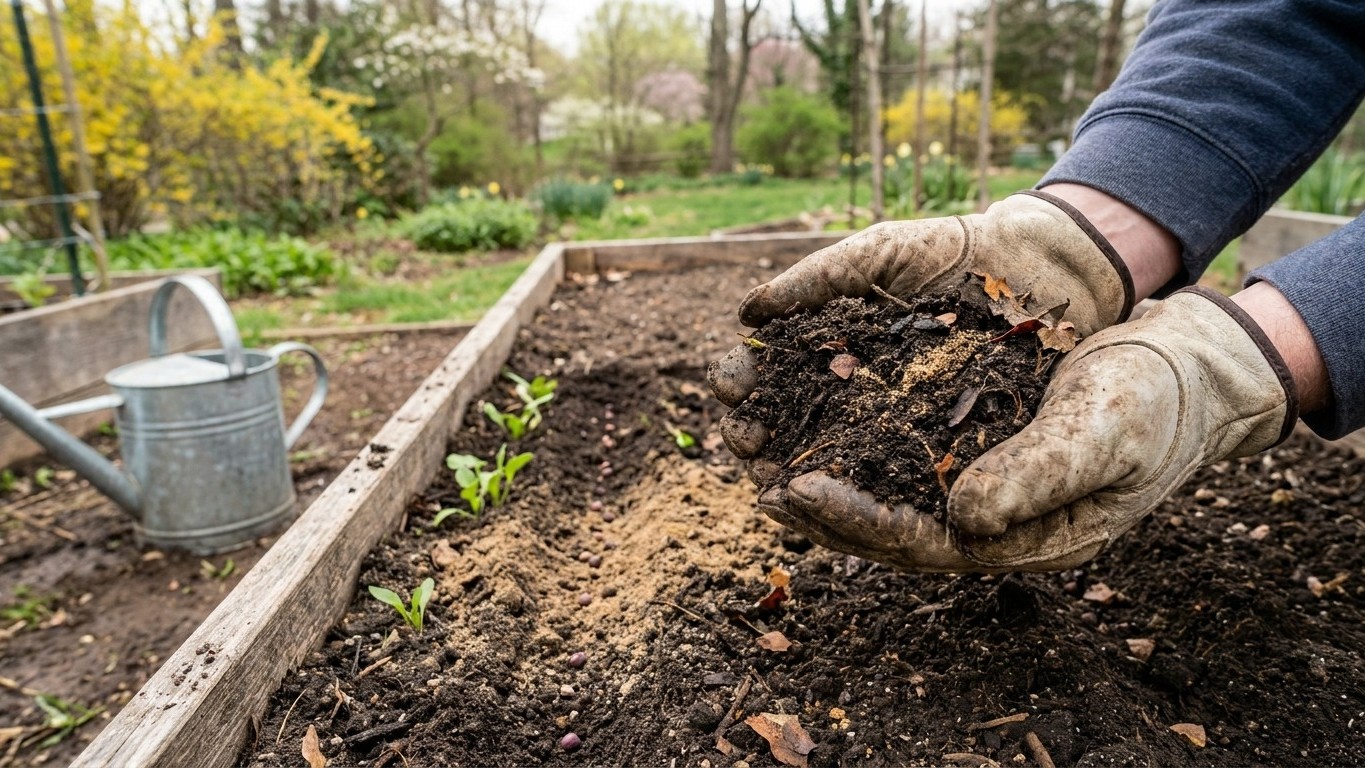

Maryland’s benchmark soil runs sandy, acid and fast-draining, decent bones for a beet but poor at holding nutrients and moisture without help. Beets go into the ground as seed, 2 to 3 weeks before the last frost, which falls between April 3 and April 16 across most of the state, timing covered in more detail in When to Sow Beets in Maryland. Keep the first six weeks watered evenly and bolting stays off the table; let a hot, dry spell hit later on and the roots turn woody instead.
The short answer
The soil USDA lists as representative of Maryland is the Sassafras series, an Ultisol: old, heavily weathered and leached ground that formed under forest cover over a very long stretch of time. Its surface horizon runs strongly acid, with a pH around 5.3, and the texture is mostly sand, 67 percent sand, 10 percent clay and 23 percent silt. Organic matter sits low, about 1.6 percent, and drainage is classed as well drained, a profile worth understanding in more depth when it comes to Beet Soil in Maryland.
What the numbers mean for a beet
For a beet, that mix cuts two ways. The sand fraction and the well-drained classification mean water moves through fast, so roots rarely sit in standing water, which beets don’t tolerate well. But that same fast drainage means the topsoil dries out quickly between waterings, and with organic matter at only 1.6 percent there isn’t much sponge in the ground to hold moisture or nutrients once applied. Utah State University Extension’s guidance for beets calls for soil that’s deep, sandy and well drained, but also rich in organic matter, worked in at no more than 1 inch of composted material per 100 square feet. Sassafras ground gets the sand and drainage right and falls short on organic matter, a gap a gardener has to fill rather than something the ground supplies on its own. The pH is the other mismatch: beets do not thrive in strongly acid ground, and 5.3 sits well below what most vegetable gardens want. A lime application, guided by an actual soil test rather than this regional figure, is usually the first fix.
The heat variable
Heat works on a different timeline than sowing. Maryland summers routinely push past the 85 F threshold that Utah State University Extension ties to woody roots when it lands on plants already under water stress. This page doesn’t have a published count of how many days a given Maryland location clears 90 F in a typical year, so that number isn’t stated here, but the takeaway holds regardless: heat stress late in a beet’s life, not just at sowing, is a real risk in this region.
None of this describes any one garden. Maryland spans hundreds of mapped soil series, and the actual dirt in a yard in Garrett County or on the Eastern Shore may share almost nothing with Sassafras ground. Treat these numbers as a regional starting point, then confirm with a soil test.
The six weeks that decide it here
Utah State University Extension’s rule for sowing, 2 to 3 weeks before the last frost, plugs straight into Maryland’s frost calendar. Across most of the state that last spring freeze falls somewhere between April 3 and April 16, based on NOAA’s 1991-2020 climate normals. That puts a typical sowing window in mid to late March for much of central Maryland, with the first six weeks of growth then running through late March, April and into May.
A swinging spring
That stretch of the Maryland spring tends to swing back and forth rather than warm in a straight line: a run of mild days can be followed by a cold snap, and a wet week can be followed by a dry one. For a beet, the first six weeks are the window where water stress does its damage, because that’s when the plant is deciding whether to put energy into a root or to bolt and flower instead. A dry stretch that lands during that window, even a short one, can push a stand toward bolting before the plants have had a chance to size up.
Why the region matters
The regional spread matters here too. Western Maryland sits at higher elevation and runs its last frost weeks later than the rest of the state, which shifts the whole six-week window later into a warmer part of spring. The Eastern Shore runs milder and often earlier.
| Region | Last spring frost, relative to the statewide April 3 to April 16 window |
|---|---|
| Western Maryland (Garrett, Allegany) | Runs weeks later, due to elevation |
| Central and most of the state | Falls within April 3 to April 16 |
| Eastern Shore | Runs milder, often earlier |
A sowing date and a six-week window that make sense in one part of the state can be off by two or three weeks in another, which is one more reason a single statewide sowing date doesn’t work well for beets. Watering on a schedule rather than by feel is the practical answer here, since a sandy, low-organic-matter soil like the Sassafras series won’t hold moisture through a dry stretch on its own. Mulch helps buy time between waterings, but it doesn’t replace them.
What goes wrong here
- Low soil pH locks up nutrients. A surface pH near 5.3, typical of the Sassafras series, is strongly acid for a crop like beets, and nutrients become less available to the plant at that pH even when they’re present. The remedy is lime, applied according to an actual soil test rather than a regional pH figure, since the amount needed depends on how far a specific garden’s pH sits from what beets want.
- Sandy ground dries out between rains. With 67 percent sand and only 1.6 percent organic matter in the reference soil, water moves through fast and doesn’t linger. If that dry-down happens during the first six weeks after sowing, the plant can bolt instead of building a root. The fix is watering on a regular schedule through that window rather than waiting for plants to show stress, plus a layer of mulch to slow evaporation.
- Low organic matter leaves the soil with little reserve. At 1.6 percent organic matter, the reference soil has almost no buffer against a missed watering or an unbalanced feeding. Utah State University Extension’s figure of up to 1 inch of composted organic matter per 100 square feet is a ceiling, not a target to undershoot; working in that amount before sowing gives sandy ground something to hold onto.
- A hot, dry stretch late in the season turns roots woody. This is a separate failure from bolting and happens later, once roots are sizing up rather than just germinating. Utah State University Extension ties it to heat above 85 F combined with water stress. Consistent watering through any hot spell, and harvesting once roots reach size instead of leaving them in hot ground, is the remedy.
- Crusting after a hard rain on sandy, low-organic-matter ground can block germination. A heavy downpour can seal the surface into a crust that small beet seedlings struggle to push through. A light mulch or a thin layer of finer material over the seed row, plus pre-moistening the row before sowing, keeps the surface workable for emerging seedlings.
Checking this against your own county
Everything above describes the soil USDA lists as representative of Maryland and the frost pattern NOAA tracks for the state as a whole. Neither one is a substitute for what’s actually in a specific yard.
The University of Maryland Extension, extension.umd.edu, runs offices in every county and is the place to start for a real answer. Its agents can point to a local soil test lab, interpret the pH and nutrient numbers that come back, and speak to how the last frost date in a specific county compares to the statewide range given here. That matters most for anyone in Garrett or Allegany counties, where elevation pushes the last frost later than the April 3 to April 16 window that covers most of the state, or on the Eastern Shore, where milder conditions can shift things the other way. A soil test costs little next to a season lost to bolted beets or a bed of woody roots, and it replaces every regional figure on this page with a number that actually applies.
Common questions
When should I sow beet Seed in Maryland?
Utah State University Extension recommends sowing 2 to 3 weeks before the last frost. Across most of Maryland, that frost falls between April 3 and April 16, based on NOAA’s 1991-2020 climate normals, though Western Maryland runs later and the Eastern Shore tends to run milder. Check the actual date for your county before setting a sowing day.
Why did my beets bolt instead of forming roots?
Bolting is tied to water stress in the first six weeks after sowing, according to Utah State University Extension. On a sandy, low-organic-matter soil like the kind common across much of Maryland, that stress can show up fast if watering isn’t kept consistent through that early window.
Why are my beet roots tough or woody?
Woodiness is a separate problem from bolting, and it shows up later. Utah State University Extension ties it to heat above 85 F landing on plants that are also short on water. Keeping roots watered through hot stretches, and harvesting once they’ve reached size instead of leaving them in the ground, are the remedies.
Does Maryland garden soil need lime for beets?
The Sassafras series, which USDA lists as representative of Maryland, runs strongly acid at a surface pH near 5.3, well below what beets prefer. That figure describes a regional reference soil rather than any one yard, so the only way to know if lime is needed, and how much, is a soil test on the actual garden bed.