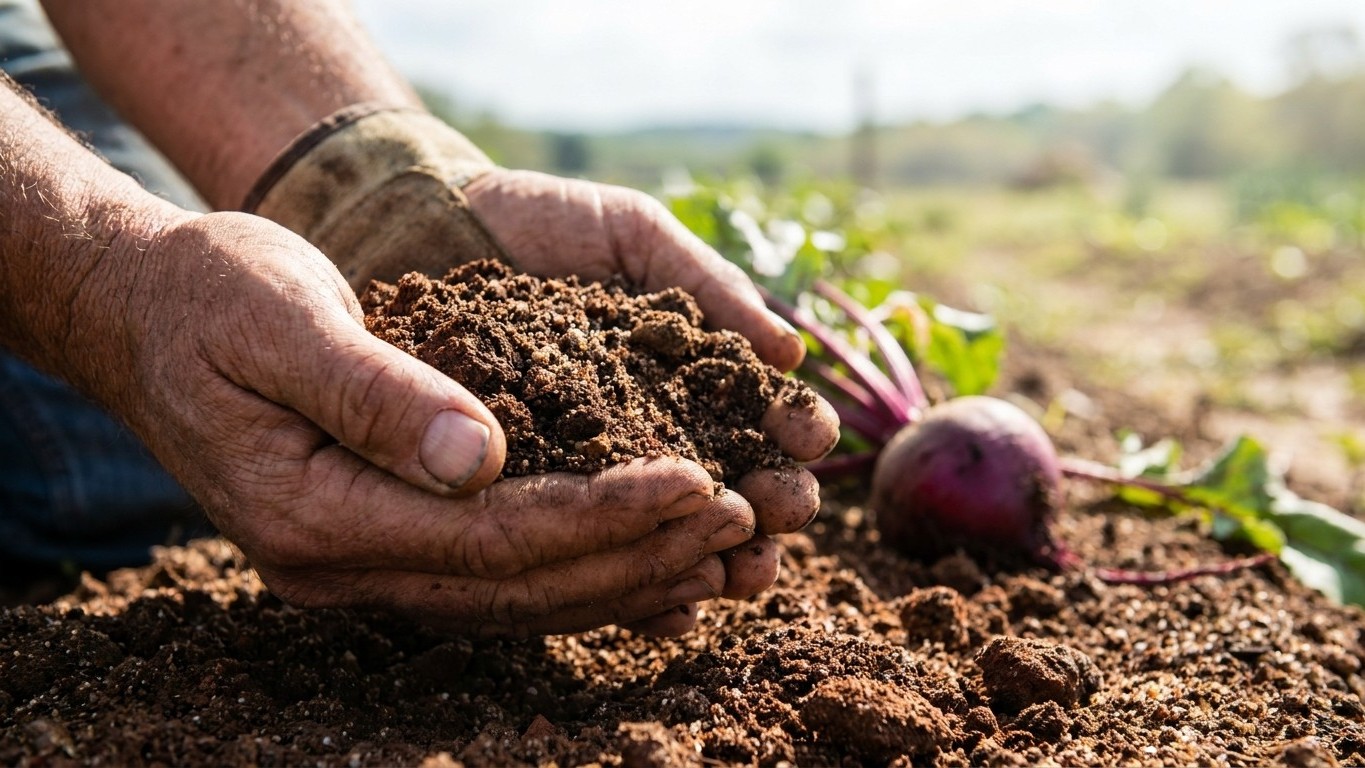

Maryland’s representative ground, the Sassafras series, is a sandy, acid, well-drained Ultisol that drains fast and holds little organic matter. That combination favors beet roots but starves them of nutrients unless a gardener corrects the pH and feeds the soil first. Add a spring frost window running April 3 to April 16, and the real work of growing beets here happens before the seed ever goes in the ground.
The short answer
The soil that USDA lists as representative of Maryland is the Sassafras series: 67 percent sand, 10 percent clay, 23 percent silt in the surface horizon, with a pH around 5.3 and organic matter near 1.6 percent. It’s well drained, which is exactly the drainage class Utah State University Extension says beets want. That part lines up well. The trouble is everything else. A pH of 5.3 is strongly acid, well below the near-neutral range most root vegetables prefer, and 1.6 percent organic matter is thin for a crop that Utah State describes as needing soil “rich in organic matter” to size up properly.
What that means in practice: a Sassafras-type bed sheds water quickly (good for avoiding rot, bad for keeping roots hydrated through a dry stretch) and needs both lime and compost before beets go in, not after. Utah State’s guidance caps that amendment at no more than 1 inch of composted organic matter per 100 square feet, worked in ahead of sowing rather than added later as a rescue. Skipping the lime step on a soil this acid tends to show up as stunted, pale growth rather than outright failure, since beets tolerate a wider pH range than something like blueberries, but they don’t thrive in it.
On heat, the FAITS available here don’t include a published count of how many days Maryland’s climate reference station spends above 90 F in a typical year, so that specific figure isn’t published in this piece. What is documented is the mechanism: Utah State ties heat above 85 F combined with water stress directly to woody roots. Sandy, fast-draining ground like Sassafras makes that combination easier to hit by accident, since the soil profile simply doesn’t hold a reserve of moisture the way a heavier clay loam would during a hot, dry week.
None of this describes any one backyard. Maryland spans hundreds of mapped soil series, and Sassafras is a statewide reference point, not a promise about what’s under a specific garden bed. River bottoms tend to run heavier and wetter. Piedmont hill soils can carry more clay. Any lot a builder has graded, filled, or stripped of topsoil may bear no resemblance to the mapped series at all. A soil test remains the only way to know the real starting pH and organic matter of a given bed; this page describes the regional tendency, not a personal diagnosis.
The six weeks that decide it here
Beets are sown in place, not transplanted, and the 60 to 80 days Utah State Extension gives for maturity run from that seeding date. Utah State also recommends sowing 2 to 3 weeks before the last expected spring frost. In Maryland, that frost date falls between April 3 and April 16, which puts a typical sowing somewhere in the second half of March into early April for most of the state. Western Maryland, in Garrett and Allegany counties, runs weeks later than that window because of elevation, and the Eastern Shore tends to warm earlier, so the calendar shifts by region even within one state.
Whatever the exact sowing date, the first six weeks after it land squarely in a Maryland spring, and Mid-Atlantic spring weather doesn’t hold to one pattern. Some years bring a wet, cool stretch through April with soil staying saturated longer than a fast-draining Sassafras-type bed would suggest. Other years swing dry and breezy for weeks at a stretch, which on sandy ground translates into a surface that looks fine one afternoon and is bone-dry the next morning. That swing matters more than the average, because Utah State’s warning is specific: water stress in those first six weeks is what triggers premature flowering, or bolting, in beets. A bolted beet stops building a usable root and puts its energy into a flower stalk instead, and there’s no reversing that once it starts.
The practical exposure in Maryland comes from the mismatch between soil type and spring rainfall pattern. A heavier clay soil buffers a dry week or two by holding moisture in reserve. Sassafras-type sandy soil doesn’t offer that buffer, so the six weeks right after sowing, precisely the window Utah State flags, are also the six weeks when Maryland’s fast-draining regional soil is least forgiving of a missed watering. That’s a separate risk from summer heat and needs a separate response: consistent moisture early, regardless of how warm the days get later.
What goes wrong here
- Bolting from early dry spells. Sassafras-type soil drains fast, so a dry week during the first six weeks after sowing (mid-March through May in most of the state) can trigger premature flowering per Utah State’s guidance. Remedy: water on a set schedule through that window rather than waiting for the surface to look dry, since sandy ground shows dryness deceptively fast.
- Woody roots from mid-summer heat. This is a different failure from bolting: it happens later, once temperatures push past 85 F and the plant is also short on water. Remedy: keep watering through hot stretches and harvest on the early side of the 60-to-80-day window rather than letting roots sit in the ground during a heat wave.
- Weak, pale growth from low fertility and acidity. At a surface pH near 5.3 and organic matter around 1.6 percent, Sassafras-type soil starts short on both counts for a crop Utah State describes as wanting soil rich in organic matter. Remedy: work in lime toward neutral and up to 1 inch of composted organic matter per 100 square feet before sowing, not as a mid-season fix.
- Nutrients washing through fast-draining sand. A 67 percent sand profile doesn’t hold soluble nutrients the way a loam or clay does, so a single early feeding can leach away before the root has used it. Remedy: split fertilizer into smaller applications across the growing period instead of one heavy dose at sowing.
- Sowing by a statewide date that doesn’t fit a mountain or shore garden. The April 3 to April 16 frost window describes the state broadly, but Western Maryland runs weeks later and the Eastern Shore runs milder. Remedy: adjust the sowing date to the local frost pattern rather than a single statewide figure.
Common questions
When should I sow beet seed in Maryland?
Utah State University Extension recommends sowing 2 to 3 weeks before the last spring frost. With Maryland’s last frost falling between April 3 and April 16, that puts most of the state’s sowing window in the second half of March into early April, later in Western Maryland’s mountain counties and somewhat earlier on the Eastern Shore.
Does Maryland’s soil need lime before planting beets?
The state’s representative Sassafras soil runs strongly acid at a surface pH around 5.3, and Utah State’s guidance calls for soil closer to neutral along with added organic matter. A soil test is the only way to confirm the actual pH of a given garden bed, since Sassafras is a regional reference, not a guarantee for every lot.
How long do beets take to mature from seed in Maryland?
Utah State University Extension lists 60 to 80 days from seeding to maturity, not from any transplant date, since beets are direct-sown in place. That window is the same regardless of state; what shifts by region is when the sowing clock can safely start.
What causes woody beets in Maryland gardens?
Utah State ties woody roots to heat above 85 F combined with water stress, which is a separate problem from the bolting that early-season dryness causes. On fast-draining, sandy Sassafras-type soil, that heat-and-drought combination can arrive quickly during a hot, dry stretch, so consistent watering through the warmer part of the season matters as much as it does right after sowing.