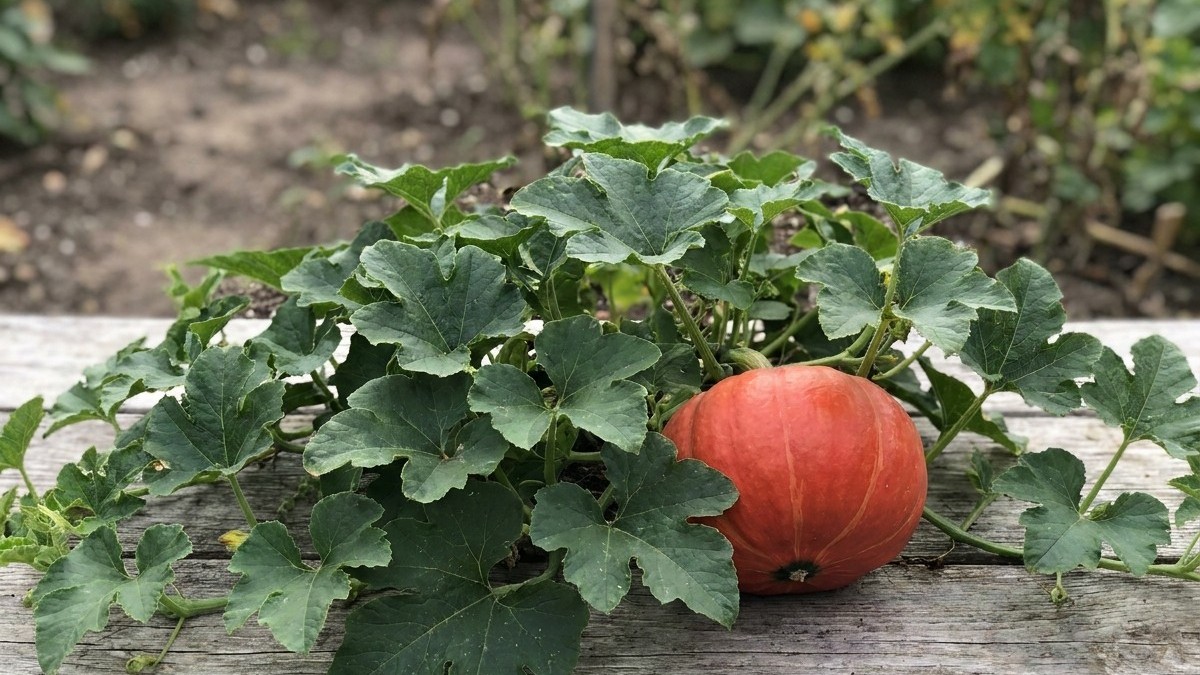

Cut a pumpkin when the rind is hard and fully colored, and do it before the first 32 F freeze, which in Maryland usually lands between October 26 and November 5. A whole pumpkin can then keep for three to six months, but only in a cool, dark spot that holds between 45-50 F. Warmer rooms, brighter rooms and fruit bowls all shorten that.
When pumpkins are ready in Maryland
A pumpkin is ready when the rind has turned its full mature color all over, a fingernail pressed into it leaves no dent, and the stem has dried and hardened. In Maryland that signal usually shows up between late September and the end of October, about 45 to 55 days after flowering, and the fruit has to get there ahead of the first fall freeze.
Utah State University Extension gives 45 to 55 days as the time pumpkins take to mature once the flower opens, and says to harvest with the stem attached, before frost. The frost side comes from the NOAA NCEI Climate Normals. In that data, the 30 to 70 percent probability band for a 32 F freeze runs from October 26 to November 5. Fruit that is finished by then can be cut at leisure. Anything still filling out is racing the calendar.
How do you count back from the first frost?
Take the freeze window and subtract the maturing time. A flower that opens around September 1 has about 55 days before October 26. One that opens around September 21 has about 45 days before November 5. The last flowers that can still finish a fruit therefore open somewhere between roughly September 1 and September 21, depending on how early the freeze comes and how fast the fruit fills out. A flower that opens after that gives a green fruit. If that is your situation, Will Pumpkins Ripen Before Frost in Maryland? covers what a late fruit can and cannot do.
The count starts at the flower. Seed packets count their days from sowing, which is a longer number because the vine spends weeks growing leaves and runners before the first bloom. Mixing the two clocks is the most common reason a harvest date comes out wrong by a month.
When should pumpkin seed go in the ground in Maryland?
Utah State says to sow when the soil reaches 65 F. Soil temperature and the last frost date are two different things. The average last spring freeze falls between April 3 and April 16 in the NOAA data, but the soil lags the air by weeks, so seed dropped in mid-April sits in cold ground. Sowing on warm soil is what gets the flowers open early enough to mature before frost. The full planting routine is in Growing Pumpkins in Maryland.
These dates describe the central part of the state. Garrett and Allegany counties are mountainous, and their frost dates sit weeks away from those above, with a shorter growing season. The Eastern Shore runs milder. Your county extension office can tell you how far your own yard drifts from the averages.
Keeping them, and for how long
University of Illinois Extension says a whole pumpkin keeps for three to six months in a cool, dark location between 45-50 F. Read that as a ceiling for a sound, uncut pumpkin held in exactly those conditions. A fruit with a bruise, a broken stem or a few weeks in a warm room will give up well before six months, so plan around the short end and count anything longer as a bonus.
What does the stem have to do with it?
Utah State says to harvest with the stem attached. Cut the stem with pruners or a sharp knife and leave it on the fruit, because a pumpkin without its stem has an open scar where rot can start. A pumpkin that is cut clean and kept dry has the best chance of reaching the long end of the storage range.
The same source gives the rule for the cold end: keep pumpkins where they will not freeze. A frozen pumpkin does not recover, and in Maryland the odds of a 32 F night start climbing in the last week of October. An uncovered pile on a porch or in a truck bed is exposed to that first hard night.
Why not store pumpkins near apples?
University of Illinois Extension also says to store pumpkins away from any ripening fruit or vegetables, and it names apples, potatoes and tomatoes. Ripening fruit gives off a gas that ages the pumpkin, which makes the porch next to the apple crate about the worst place for it. Fall is when apples, potatoes and the last tomatoes all come in, so the temptation to park everything in the same cool corner is strong.
Check stored pumpkins regularly for signs of decay. Use the first one that gets a soft spot, and set aside any fruit with feeding scars or gnawed patches, since those wounds shorten storage. What Eats Pumpkin in Maryland, and When explains who makes them and when they show up.
The 45-50 F range applies to a whole pumpkin. A carved one is a different matter, and nobody should expect a jack-o’-lantern to last for months.
Where in the house that actually is
The 45-50 F range falls between two extremes in an ordinary house. A refrigerator runs far colder than that, and few pumpkins fit inside one anyway. A heated living space runs warmer than a pumpkin wants, and a sunny windowsill adds light to a crop that keeps best in the dark. A garage is the tricky one. It can average out near the right temperature and still swing from a mild afternoon to a freezing night, which is exactly what the pumpkin cannot take.
The room that comes closest in most Maryland houses is an unheated basement room, an interior closet, or a spare room with the heat register closed and the door shut. Choose a spot away from the furnace, the water heater and any bin of apples or potatoes. Windowless is better than bright.
Local conditions move the answer a little. Eastern Shore gardens run milder, while gardens in Garrett and Allegany counties may hit 32 F earlier in the fall. A garage that works fine in early October can become a hazard by the first days of November, right when the freeze odds in the NOAA data are climbing.
How do you check a spot with a thermometer?
Put a thermometer where the pumpkins will sit and read it for several days before you move them in. A minimum/maximum model is the most useful, because it records the overnight low you would otherwise miss. A steady reading of 45-50 F means the spot is a good one. A reading above that means you should try a cooler location, and a reading near 32 F means the pumpkins need to come out. Skipping this check is how a whole stack gets lost to one cold night in the garage.
Set the thermometer at the height of the pumpkins. Floors in a basement or garage can run colder than a shelf.
Common questions
How late can you cut pumpkins in Maryland?
Cut them before the first freeze. The NOAA data puts the 30 to 70 percent probability band for a 32 F freeze between October 26 and November 5. Watch the forecast in the last week of October, and cut everything with its stem attached the day before a freeze is predicted. In the western mountains, plan on cutting sooner.
How long do whole pumpkins last after cutting?
University of Illinois Extension says three to six months, in a cool, dark location between 45-50 F. That is the best case for a sound pumpkin. Warm rooms, bruises and nearby ripening fruit all cut the time short, so check them every couple of weeks.
Can pumpkins sit on the porch until Halloween?
Early in the season, yes, as long as the nights stay above freezing. A freeze ends a pumpkin’s keeping time, and the porch is exposed to it. Keep them away from a bowl or crate of apples, because the gas from ripening fruit ages the pumpkin faster.
Does a carved pumpkin keep as long as a whole one?
No. The 45-50 F range and the three-to-six-month window describe a whole, uncut pumpkin. Once the rind is opened, the pumpkin is a short-term decoration, so carve it close to the day you plan to display it and keep the uncarved ones in storage until then.