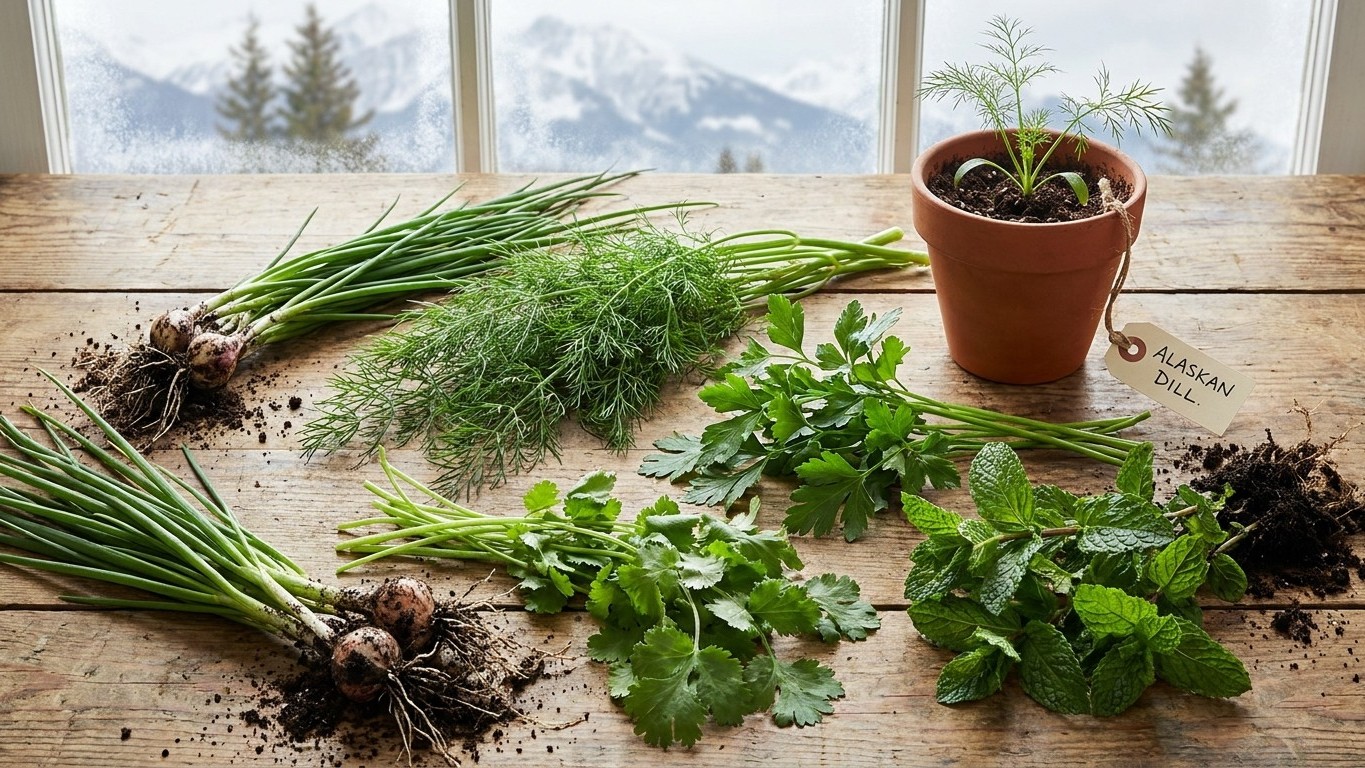

Massachusetts gardeners get the best results from hardy perennial herbs like thyme, sage, chives, and oregano, plus warm-season annuals such as basil, dill, and cilantro sown after the last frost. Rosemary and bay survive as annuals or potted plants only, since the state’s winter cold is too much for their roots.
The short answer for Massachusetts
Two numbers decide almost everything here: a coldest-month average minimum of 23.1°F, and a hardiness zone range of 5a-7b across the state. Those figures split the herb world into two clean categories, and the split matters more than any list of “top ten herbs” you’ll find elsewhere.
Perennial culinary herbs that tolerate real cold, chives, oregano, sage, thyme, and mint, come back reliably because their roots handle temperatures well below that 23.1°F coldest-month average. Mint in particular is hardy from zone 3 through zone 9, so it shrugs off anything Massachusetts winters produce. These are the herbs to plant once and harvest for years, and they’re the safest bet for a first-time herb bed anywhere in the state.
Rosemary and bay laurel sit in the opposite category. Both are typically rated hardy only to USDA zone 8, sometimes zone 7 for a few rosemary cultivars in a sheltered spot. Since Massachusetts tops out at 7b in its mildest coastal pockets, growing either one in open ground as a permanent perennial is a gamble that loses most winters. Pot them instead, and bring them indoors before the first fall frost.
Warm-season annuals, basil, dill, cilantro, parsley grown as an annual, all fit inside the state’s frost-free window, which runs from the last spring frost (April 1 to April 8) to the first fall frost (November 3 to November 14) at the Boston reference station. That’s a workable growing season for anything that completes its life cycle in under seven months, which covers every common culinary annual herb.
Quick reference by herb type
| Herb type | Examples | Why it works or doesn’t |
|---|---|---|
| Cold-hardy perennial | Chives, thyme, oregano, sage, mint | Survives well below the 23.1°F coldest-month minimum |
| Tender perennial, grow in pots | Rosemary, bay laurel | Needs zone 8+, colder than any part of Massachusetts |
| Warm-season annual | Basil, dill, cilantro | Fits inside the frost-free window without issue |
| Marginal perennial | French tarragon | Often fails in the coldest winters within zone 5a-6a |
What will not work here
The state’s short frost-free window and its humid summers each rule out a different set of herbs, and knowing which failure you’re dealing with saves a wasted growing season.
Start with anything that needs a genuinely long, hot growing season to mature. Lemongrass is the clearest example: it wants close to a full year of frost-free warmth to build the thick stalks worth harvesting, and even the mildest Massachusetts location, working from the Boston frost dates, offers roughly seven months between the last spring frost and the first fall frost. Planted outdoors as a perennial, it simply runs out of time before the cold returns. The same problem hits any tropical herb sold as a novelty at spring garden centers.
Next, the cold itself. That 23.1°F coldest-month average minimum is not a record low, it’s the typical nightly floor during the coldest stretch of an ordinary winter. Rosemary roots left in open ground meet that number most years and don’t come back. Bay laurel fails the same way. Gardeners who plant these directly in a border, expecting them to behave like sage or thyme, are usually replacing them every spring without realizing why.
Humidity causes a third, quieter failure. Massachusetts summers aren’t the dry heat that Mediterranean herbs evolved for, they’re warm and often damp, especially in low-lying or poorly drained beds. Oregano, thyme, and bee balm planted too close together trap moisture between the leaves, and that combination of humidity and tight spacing invites powdery mildew and root rot. The fix isn’t a different herb, it’s wider spacing and a bed that drains fast after rain.
French tarragon deserves its own warning. It’s often marketed as a hardy perennial, but its cold tolerance is genuinely borderline within zone 5a to 6a, which covers a good share of inland Massachusetts. A mulched crown may return three winters running and then die in the fourth, colder one. That’s not bad luck, it’s the plant sitting right at the edge of what the coldest-month figure allows.
What changes across Massachusetts
A hardiness range of 5a-7b is not a small spread. It means the coldest inland corners of the state and the mildest coastal strip can differ by two full zones, and a herb that thrives in one spot may need protection thirty miles away. There is no single “Massachusetts answer” here, only a spread, and where a reader falls inside it changes real decisions.
The frost dates used above come from a waterfront urban station, the mildest possible reading in the state. Inland suburbs, the Connecticut River Valley, and especially the Berkshires see frost arrive earlier in fall and linger later in spring than that April 1 to April 8 last-frost window suggests. For a gardener at higher elevation or well away from the coast, that means shifting basil and other tender annuals later on the calendar, and expecting fall harvest to end sooner than a Boston-based planting guide implies.
At the milder end of the range, coastal areas and the Cape and Islands sit closer to zone 7, sometimes 7b. That’s still short of what rosemary needs for reliable in-ground survival, but it’s close enough that some gardeners in those pockets do get a rosemary plant through a mild winter with heavy mulch and a sheltered wall. It’s a possibility worth trying there, not a guarantee, and it would fail more often thirty miles inland.
None of this tells an individual reader which zone covers their own yard, only that the difference between the coldest and mildest parts of the state is large enough to change the herb list. The USDA Plant Hardiness Zone Map is the tool built for that exact question, and it’s worth a look before committing a bed of rosemary or tarragon to open ground.
Where to check this for your own county
Everything above is a state-level picture, built from a single reference station and a statewide zone range. That’s useful for planning, but it’s not a substitute for what your own county’s extension office has already tested on local soil.
UMass Extension is the state’s land-grant extension service, and it publishes planting guidance built specifically for Massachusetts growing conditions rather than a national average. Two things are worth looking for on their site before you finalize a planting date: the current planting calendar for herbs and vegetables, which accounts for actual local frost data rather than the single Boston station used here, and any variety trial results for herbs grown in your part of the state. Extension trials often flag which cultivars of sage, oregano, or basil held up best against local disease pressure or a wet spring, information no statewide article can offer.
A county-level recommendation will always beat a state-level one, for a simple reason: a county extension office works from data closer to your actual soil and microclimate. If UMass Extension’s guidance for your county differs from anything written here, follow theirs.
This is especially worth doing before planting anything borderline, rosemary attempts, French tarragon, or an early basil sowing pushed ahead of the frost-free window. Those are exactly the calls where a few miles of elevation or distance from the coast change the outcome, and where local extension data earns its keep.
Checking this against your own garden
Frost dates and hardiness zones describe an average year, not this year. Your own garden will tell you more than any average date, and it does it through a handful of signs anyone can read without special equipment.
Soil warmth by feel is the first check. Push a finger a couple of inches into the bed before sowing basil, dill, or cilantro seed. Cold, damp soil that feels uncomfortable to the touch means germination will be slow or spotty even if the calendar says the frost-free window has opened. Soil that feels merely cool but not cold is usually ready.
The second sign is what’s already growing. If dill or cilantro self-seeded from last year, watch for their first true leaves, the second set that appears after the initial rounded seed leaves. That flush tells you the soil has held steady warmth long enough to support new seedlings, a better real-time signal than any date range.
Third, watch established perennials like sage, thyme, or chives for their first fresh growth flush at the base of last year’s stems. That new growth marks the point where the plant itself has decided winter is over, and it’s a fair cue that tender annuals can go in soon after. Between these three signs and a look at your own county’s extension calendar, you’ll have a planting window built for your actual yard rather than a statewide average.