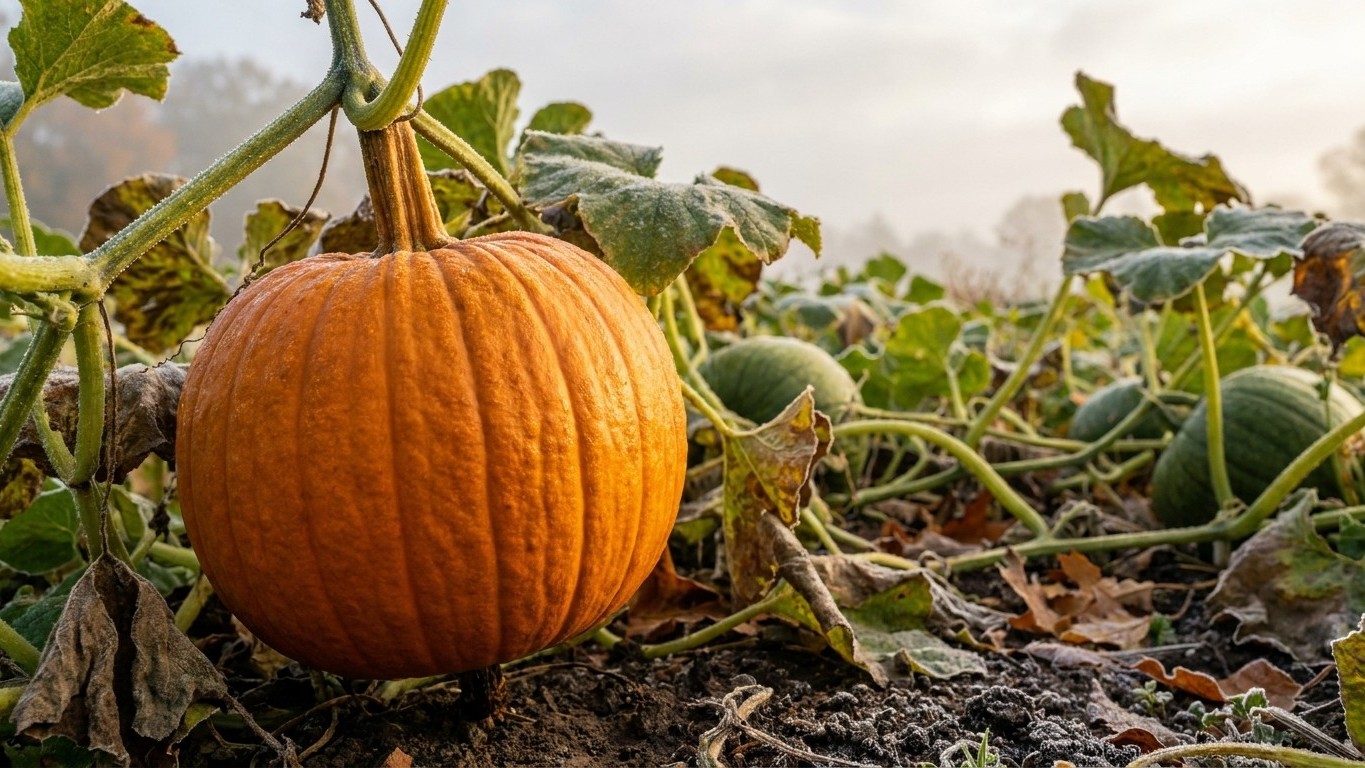

In Massachusetts, a pumpkin flower needs to open by roughly mid-September to have a real shot at turning orange before the vine gets frozen. Miss that window and you’re left with a green, hard fruit that won’t finish ripening on the counter. The math behind that date, and what changes it county to county, is worth walking through before you drop a single seed.
The short answer
Start with the end point: the first fall frost at Boston’s Logan Airport station lands somewhere between November 3 and November 14, based on NOAA’s 1991-2020 climate normals for that location. That’s a two-week band, not a single date, because frost timing shifts year to year even at one station.
Now work backward. Utah State University Extension’s pumpkin guidance puts the maturation period at 45 to 55 days, counted from the day the flower opens, not from the day you drop the seed in the ground. That distinction matters more than almost anything else on this page, because a lot of frustrated gardeners count from planting and end up weeks off.
Run the subtraction both ways. If frost hits on the early side of the window (November 3) and your pumpkin needs the full 55 days, the flower had to open by roughly September 9. If frost holds off until November 14 and the fruit only needs 45 days, a flower opening as late as September 30 could still make it. Put those two together and you get a safe flowering window that runs from about early September to the end of September, depending on which end of both ranges you land on.
That’s the honest answer to Will Pumpkins Ripen Before Frost in Massachusetts?: not one date, but a window, and the earlier end of it is the one to plan around if you want a margin for error. A flower that opens in the first half of September gives you the best odds regardless of how the frost timing shakes out that particular year.
One more wrinkle. The Logan Airport station sits on the waterfront in Boston, which makes it the mildest reporting point in the state. Inland suburbs, the Connecticut River Valley, and especially the Berkshires see frost arrive earlier in the fall and linger later in spring. If you garden outside the immediate Boston area, treat that November window as optimistic and aim for flowers opening in the first half of September rather than pushing toward the end of the month.
When to sow here
The last spring frost at the Boston station falls between April 1 and April 8. That date tells you almost nothing about When to Sow Pumpkins in Massachusetts, because the soil itself lags the air by weeks. Utah State University Extension is specific on this: pumpkins go in once the soil reaches 65 degrees Fahrenheit, and cold, wet soil that sits in the 50s will rot seed before it ever germinates.
- Mark the last frost window (April 1 to April 8) as your floor, not your planting date. Soil at 65 degrees comes well after the air has cleared frost risk; treat the frost date as the earliest the clock even starts ticking toward warm soil.
- Check soil temperature directly rather than guessing from the calendar. A simple soil thermometer pushed a few inches down beats any date on a chart, since a cool spring can push that 65-degree mark later than expected.
- Use row covers to buy roughly two weeks if you want to sow earlier. Covering the bed traps heat and can let you get seed in before bare soil would otherwise reach that threshold, effectively pulling your sowing date forward.
- Count forward from sowing toward your flowering target. Since the safe flowering window runs from early to late September, and the plant needs time after germination to grow, vine, and set blossoms, sowing sits somewhere in the stretch after soil hits 65 degrees and well before midsummer, giving the plant enough runway to flower inside that window rather than after it.
- Don’t chase the calendar at the expense of the soil. A grower who sows the moment the frost date passes but before the soil has actually warmed gains nothing; the seed just sits, and the maturity clock doesn’t start until real growth begins.
What goes wrong here
- A late flower that never colors. Fruit set from a bloom opening after the safe window simply runs out of days before frost, staying green and hard even if it looks full-sized. The remedy is tracking the actual date each fruit’s flower opened and comparing it against the 45 to 55 day window rather than guessing from the calendar; anything opening after late September in an inland spot is a gamble.
- A fruit caught by frost before harvest. Utah State University Extension is direct on this point: harvest with the stem attached, and get fruit in before frost hits, since freezing damages the shell and shortens how long it will keep. Watching the forecast in late October and pulling ripe or near-ripe fruit ahead of a hard freeze beats leaving it on the vine and hoping.
- A vine that dies back before the skin hardens. Vines weakened by pests collapse early, cutting off the plant’s ability to finish coloring and firming the rind even if the calendar days would otherwise have been enough. Squash bugs and cucumber beetles are the usual culprits behind that early vine collapse in Massachusetts gardens; our dedicated guides to squash bugs in Massachusetts and cucumber beetles in Massachusetts cover identification and control in detail rather than repeating it here.
Checking this against your own county
Everything above is anchored to a single Boston-area weather station, which makes it a useful baseline and a poor substitute for what’s actually happening in your yard. If you garden in Worcester County, the Berkshires, or anywhere well inland from the coast, frost arrives earlier in fall and lingers later in spring than the Logan numbers suggest, which tightens the flowering window on both ends.
The UMass Amherst Extension is the named land-grant extension service for Massachusetts and the right place to check local frost data, soil conditions, and variety performance for your specific county before you commit to a planting date built entirely off a Boston airport reading.
Common questions
Can I still get a ripe pumpkin if my flower opened in early October?
It’s tight. Counting 45 to 55 days from an early October flower pushes the fruit’s finish date close to or past the November frost window at the Boston station, and later in most inland counties. It’s not published here whether a partially-colored fruit finishes ripening indoors; the source only addresses harvesting before frost and storing where fruit won’t freeze.
Does counting from the seeding date instead of the flowering date change the answer much?
Yes, and it’s the most common mistake. The 45 to 55 day figure from Utah State University Extension starts when the flower opens, not when the seed goes in the ground. Counting from seeding will make you think you have far less time than you actually do, or worse, lead you to pull fruit early that still had weeks left to mature.
Is 65 degree soil the same as the last frost date?
No. The last spring frost at the Boston station falls between April 1 and April 8, but soil temperature lags well behind air temperature. Treat the frost date as an early floor, not the actual planting signal, and check the soil directly with a thermometer instead.
How much does keeping temperature matter after harvest?
The source used for this page doesn’t publish a storage temperature, humidity level, or keeping time for harvested pumpkins, only the general guidance to keep them somewhere they won’t freeze. Beyond that, no specific figure is available here.