
In Massachusetts, pumpkin seeds go into the ground once soil temperature hits 65°F, not on the last frost date. That threshold typically arrives in late May to early June, weeks after frost risk clears on April 1 to April 8. Wait too long, though, and flowers won’t have time to set fruit before the first fall frost, which lands anywhere from November 3 to November 14 depending on where you garden. The math runs backward from frost, not forward from spring.
The short answer
Start with the end of the season, not the beginning. Massachusetts sees its first fall frost anywhere from November 3 to November 14, according to NOAA’s 1991-2020 Climate Normals, depending on the weather station and how close you are to the coast. That data comes from Logan Airport, which sits in the mildest corner of the state, a waterfront urban site that runs warmer than almost anywhere else in Massachusetts. Inland suburbs, the Connecticut River Valley, and especially the Berkshires typically see frost arrive earlier in fall and linger later in spring, which pulls the whole calendar tighter for those gardeners.
Pumpkins need 45 to 55 days after flowering to reach maturity, according to Utah State University Extension. That clock starts when the flower opens, not when the seed goes into the ground and not when the vine first sets a bud along its length. Count backward from the frost window using that range, and the last flowers with a real shot at producing a ripe pumpkin need to open somewhere between early September and the final days of September, depending on which end of the frost window applies to your yard and which end of the 45-to-55-day range your particular plant falls into.
A flower that opens in early October, is racing a clock it can’t win in most of the state. It might still swell into a small fruit, but by the time 45 days pass, frost has usually already arrived. A pumpkin caught green or half-colored by a hard freeze won’t finish ripening on the vine, and it won’t finish ripening in storage either.
This backward math is why sowing date matters more than most gardeners assume. It isn’t about giving pumpkins “enough of the summer.” It’s about making sure the plant has time to germinate, grow, flower, and then run out that 45-to-55-day clock before the first freeze shuts the season down. Push the sowing date back by even two or three weeks, and the flowering window slides past the point where a fall frost can still catch it, forcing the whole harvest into a race it’s likely to lose.
When to sow here
The last spring frost window in Massachusetts runs from April 1 to April 8, but that date tells you almost nothing about when to actually put pumpkin seed in the ground. Soil temperature is a separate measurement, and it lags well behind the air. Here’s how the sequence plays out in practice.
- Let the frost window close first. April 1 to April 8 marks the point where the air stops threatening a hard freeze, but the ground underneath it is still cold from winter and hasn’t caught up.
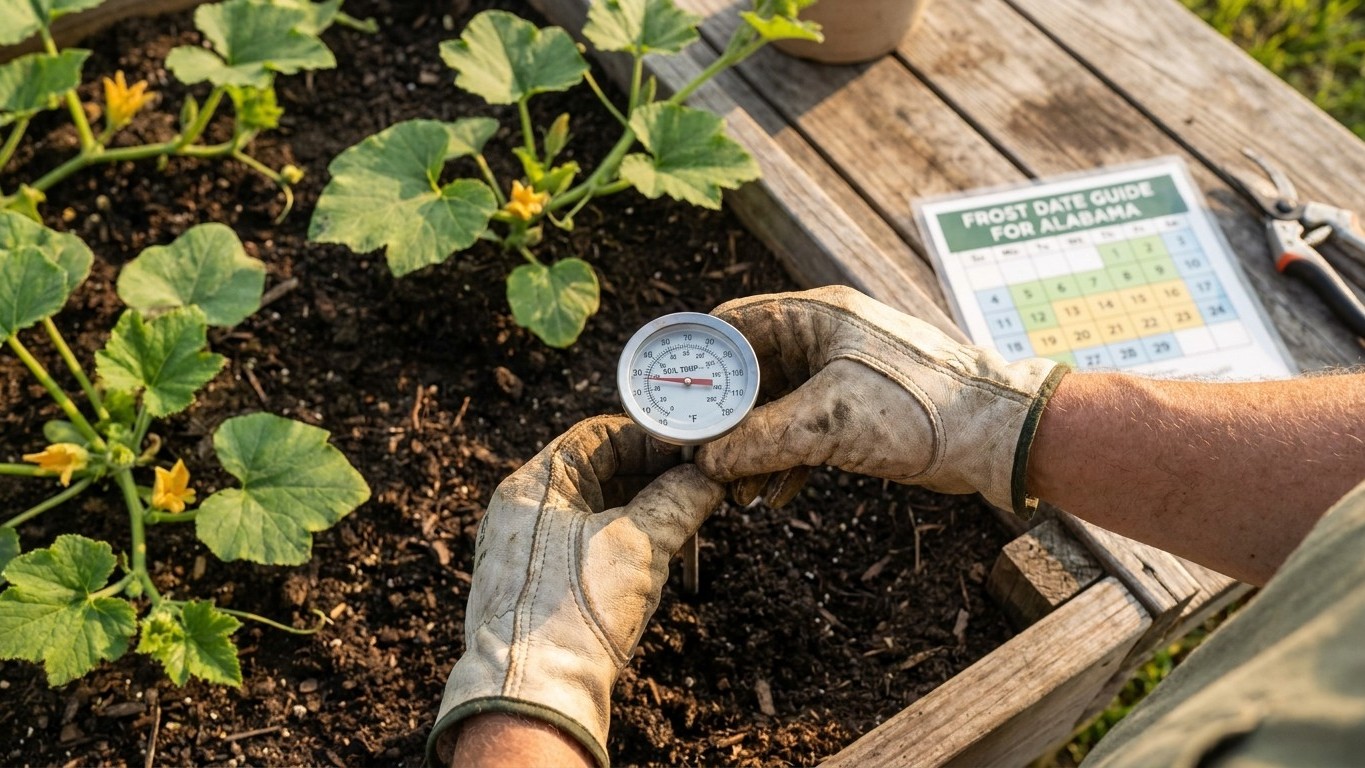
- Check soil temperature directly, not the calendar. A basic soil thermometer pushed a few inches down tells you more than any date on a seed packet. Pumpkins need that soil at 65°F before germination has a real chance.
- Expect several weeks of lag between air and soil. Soil warms slowly, and in most Massachusetts yards it doesn’t cross 65°F until well into May, sometimes not until early June, long after the last frost window has passed.
- Use row covers or black plastic mulch if you want to move faster. These commonly buy gardeners about two extra weeks of soil warmth, which can pull the sowing date earlier without exposing seedlings to frost.
- Sow once 65°F is confirmed, generally late May into early June for most of the state. That gives the plant roughly three to four months to germinate, vine out, flower, and still land its 45-to-55-day maturation window before frost returns in fall.
Variety choice plays into this timeline too, even though this page carries no maturity figures for specific types. Home gardeners across Massachusetts commonly grow Connecticut Field, Small Sugar, Jack Be Little, Baby Boo, Rouge Vif d’Etampes, Long Island Cheese, Howden, Big Max, and Autumn Gold. None of those names come with a published days-to-maturity number here, so cross-check the seed packet for your specific variety against the flowering math above before deciding how late you can push a sowing date.
What goes wrong here
- A late flower that never colors. This happens when sowing gets pushed into mid-June or later, or when a slower variety is planted without accounting for the extra weeks it needs. The flower opens fine, but it opens too close to the November frost window, and the fruit stalls out green or pale orange. Remedy: work backward from the earliest date in your local frost window, not the latest, and treat late June as a hard cutoff for sowing in most of the state.
- A fruit caught by frost before the skin hardens. A pumpkin can look nearly finished and still have soft, thin skin that a freeze will damage. Utah State University Extension recommends harvesting with the stem attached before frost hits, then storing the fruit somewhere it won’t freeze. Remedy: track the frost window for your specific town, not just the statewide range, since inland and higher-elevation spots freeze earlier than the coast.
- A vine that dies back before the fruit finishes. Powdery mildew, borers, or simple exhaustion late in the season can kill the vine while the pumpkin is still soft. Once the vine is gone, the fruit stops receiving sugars and the skin never fully hardens. Remedy: cut the vine a few inches from the fruit and let the pumpkin finish curing in a dry, protected spot rather than leaving it attached to a dying plant.
- Pest pressure that shortens the growing window. Squash bugs and cucumber beetles can weaken vines enough to push maturity later right when the calendar has no room left. For identification and control specific to this state, see this site’s pages on squash bugs in Massachusetts and cucumber beetles in Massachusetts.
Common questions
Can I start pumpkin seeds indoors to get ahead of the soil temperature lag?
Some gardeners start seeds indoors a couple of weeks before the outdoor soil hits 65°F, then transplant once conditions catch up. Pumpkins dislike root disturbance, so this needs care, but it can shave time off the wait described above.
Does the coast really matter that much for frost timing?
Yes. The November 3 to November 14 window comes from a waterfront station in the mildest part of the state. Inland and higher-elevation areas, including much of the Berkshires, tend to see frost earlier in fall, which shortens the flowering window on this page’s timeline.
What happens if my pumpkin flowers in early October anyway?
It’s a race against the 45-to-55-day clock with the odds against you. Some fruit may still color partially before frost, but full maturity in most of Massachusetts requires flowering no later than the range described in the short answer above.
How should I store pumpkins after harvest?
Utah State University Extension advises keeping harvested pumpkins somewhere they won’t freeze, without specifying an exact temperature or humidity target. Beyond that general guidance, no storage figures are published here.