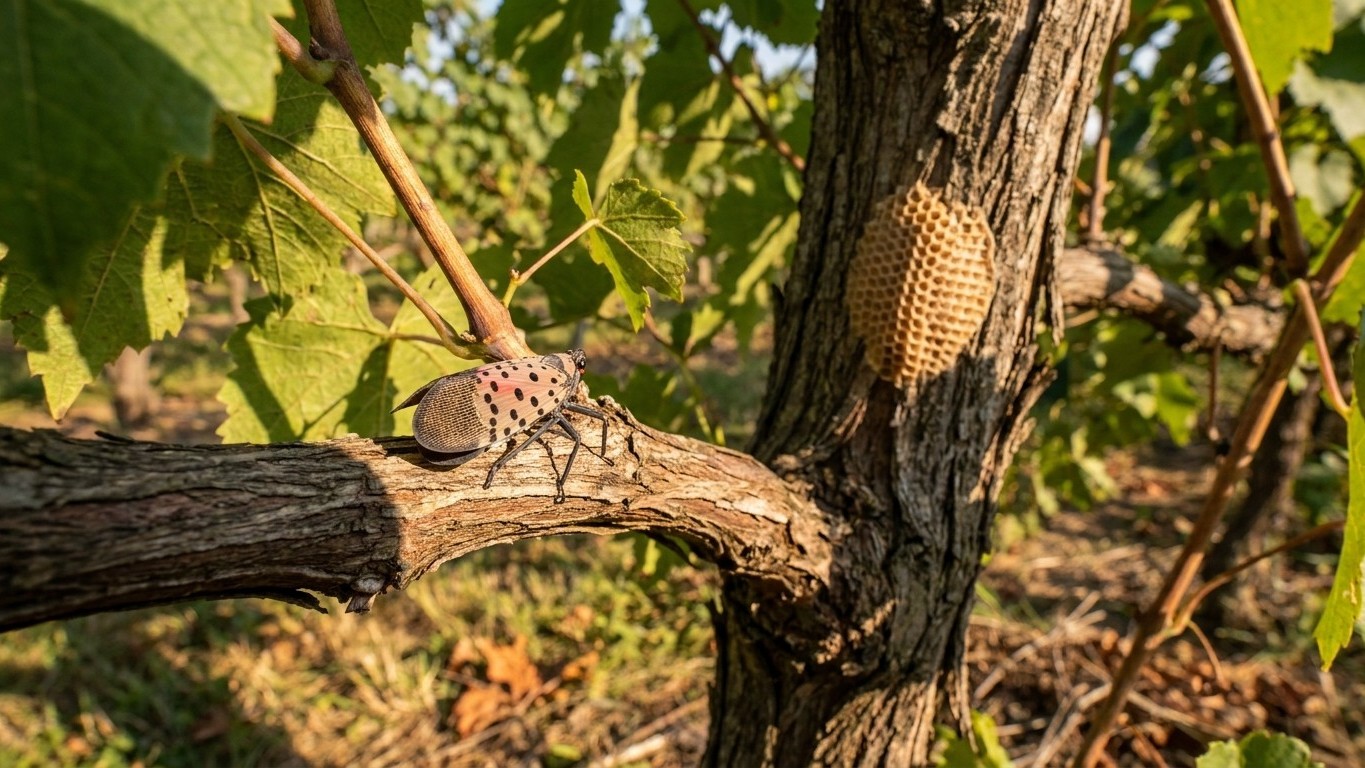

Spotted lanternfly has moved from a rare hitchhiker to an established pest in parts of Massachusetts, with breeding populations confirmed in central and western counties since the early 2020s. Adults are most visible from late July through October, when they cluster on Tree of Heaven, grapevines, and hardwoods to feed. The state’s containment strategy relies on three things: early detection by residents, physical removal of egg masses before spring hatch, and targeted treatment of host trees rather than broad spraying.
Where It Has Turned Up in Massachusetts

The first Massachusetts sighting dates back to 2018, when a dead adult was found in a Boston shipment, not a live infestation. That changed a few years later. State agriculture officials confirmed breeding populations in cities including Fitchburg and Springfield, both of which sit along major rail and trucking corridors that likely carried egg masses in from Pennsylvania and New York. Since then, isolated adults and egg masses have been reported farther east, including in areas closer to Worcester and the I-90 corridor.
That spread pattern isn’t random. Spotted lanternfly eggs stick to almost any flat, hard surface, meaning rail cars, shipping pallets, and vehicle undercarriages act as free transportation. Massachusetts sits downstream, geographically speaking, from some of the heaviest infestations in the Northeast, which is why the Massachusetts Department of Agricultural Resources (MDAR) treats new reports as high priority rather than routine paperwork.
Why Massachusetts Habitat Works in Its Favor
Tree of Heaven (Ailanthus altissima) is the preferred host, and it grows aggressively along the same disturbed ground the insect travels through: rail beds, highway margins, vacant lots. Massachusetts has plenty of it, especially in old mill towns where the tree colonized abandoned industrial land decades ago. Where Tree of Heaven clusters, spotted lanternfly tends to follow.
The insect isn’t picky once established, though. It feeds on more than 70 plant species, and in Massachusetts that list includes grapevines, maples, black walnut, and fruit trees. Vineyards in the Pioneer Valley and southeastern Massachusetts are watched closely for this reason. A heavy feeding season can weaken vines enough to cut into next year’s yield, and the sticky honeydew the insects excrete promotes sooty mold that coats leaves and reduces photosynthesis.
The Seasonal Timeline That Matters for Homeowners
Timing changes what you’re looking for and what actually works.
Fall Through Early Spring: Egg Masses
From September through November, females lay egg masses on flat surfaces: tree trunks, fence posts, patio furniture, even the side of a car left parked too long near infested trees. Each mass looks like a smear of gray putty or dried mud, roughly an inch long, and can hold 30 to 50 eggs. This is the single best window to reduce next year’s population, since one scraped egg mass removes dozens of future insects before they hatch.
May Through July: Nymphs
Nymphs emerge in spring as black insects with white spots, later developing red patches before their final molt. They’re wingless and often mistaken for ticks or beetles at a glance. This stage feeds heavily on tender new growth, which is when young or stressed trees show the most stress.
Late July Through October: Adults
Adults are roughly an inch long with gray, spotted forewings that hide bright red underwings, visible mainly in flight or when disturbed. This is the stage most people actually notice, often in large numbers on tree trunks at dusk or swarming porch lights. It’s also the stage when egg-laying begins again, closing the loop.
What Actually Stops It
Sticky bands wrapped around tree trunks get recommended online constantly, but MDAR and most extension programs now advise against unprotected sticky tape. It traps birds, squirrels, and beneficial insects along with the target pest. A wire-mesh cover over the sticky band, or a circle trap designed specifically for lanternfly, does the same job without the collateral damage.
For established infestations on high-value trees, licensed applicators use systemic insecticides applied to the trunk or soil, which the tree absorbs and which then kills insects feeding on it. This approach avoids spraying blooming plants where pollinators are active, which is a real concern given how many spotted lanternfly reports come in during peak pollinator season. Homeowners without a pest control license are generally limited to contact insecticides labeled for the pest, applied directly to visible nymphs or adults rather than broadcast across a yard.
Removing Tree of Heaven from a property is often the single most effective long-term move, since it strips away the preferred host and forces the insect onto less favorable plants where it survives in smaller numbers. Cutting the tree alone isn’t enough, though. Ailanthus resprouts aggressively from cut stumps and roots, so herbicide treatment of the stump is usually necessary to prevent regrowth.
Reporting Sightings to MDAR
Massachusetts asks residents to report suspected sightings rather than assume someone else already has. A photo of the insect or egg mass, along with a location, helps state entomologists confirm new spread before it becomes an established population. This reporting step matters more in Massachusetts than in states where the pest is already widespread, because early-stage infestations here are still small enough that targeted removal can slow the spread.
Quarantine Zones and Moving Firewood or Plants
Neighboring states with heavier infestations, including Pennsylvania, New York, and Connecticut, have established quarantine zones restricting movement of firewood, nursery stock, and outdoor furniture out of infested counties. Massachusetts residents traveling to or from those areas are advised to check vehicles, camping gear, and firewood before crossing state lines, since egg masses survive cold winters attached to hard surfaces. The U.S. Department of Agriculture’s Animal and Plant Health Inspection Service maintains updated guidance on interstate movement restrictions tied to spotted lanternfly, which is worth checking before hauling firewood or outdoor furniture across state lines.
For more on how federal and state agencies track this pest region by region, the USDA APHIS spotted lanternfly program page lists current confirmed states and general host information.
One detail that surprises a lot of Massachusetts homeowners: spotted lanternfly doesn’t bite, sting, or transmit disease to people or pets. The damage is entirely to plants and, indirectly, to backyard grapevines, ornamental maples, and the sticky mess that honeydew leaves on decks and cars parked under infested trees. That distinction matters when deciding how urgently to act. A few adults on one tree in a suburban yard isn’t the same emergency as an active vineyard infestation, and the response, from egg scraping to reporting to targeted treatment, should scale accordingly.