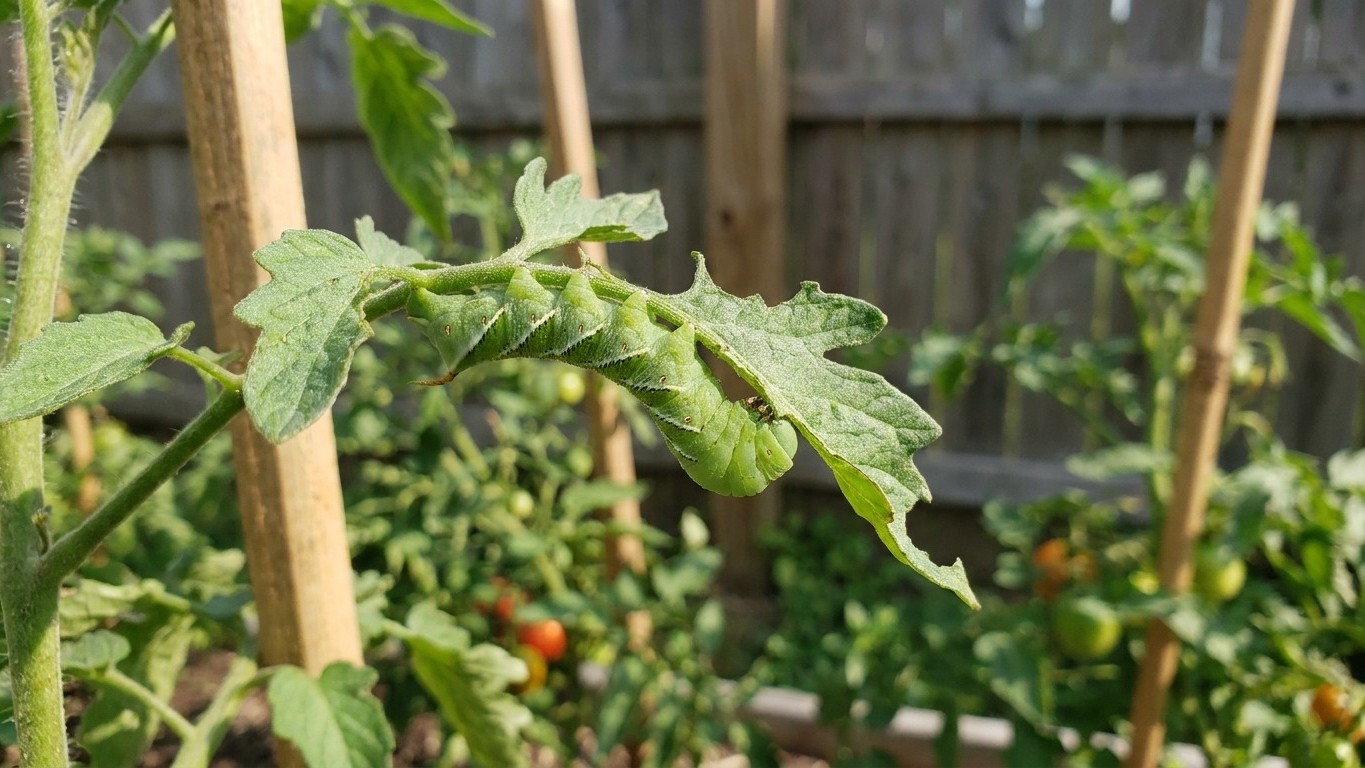

Tomato hornworms get all the attention — the fat green worm everyone posts pictures of — but by the time one shows up on your plant, the season’s already past its riskiest stretch. The real damage in Michigan happens in the first two weeks after transplant, when a cutworm can topple a seedling overnight or flea beetles riddle the leaves before the stem has even toughened. Hornworms are a summer problem. The plant has to survive spring first.
What this comes down to in Michigan

The growing season runs from the last spring freeze, which MSU Extension puts at around April 30 in the Detroit area and early to mid May across most of the Lower Peninsula, to that October frost window. Inside that stretch, a short list of pests does nearly all the damage a home gardener will see. Cutworms and flea beetles are the two to watch in the first two weeks after transplant, before stems have toughened up. The rest show up later, as the plant grows and fruit sets.
Cutworms

These show up right at transplant, often the very first week. A cutworm hides in the soil during the day and feeds at night, chewing through a young stem at ground level so the whole seedling topples over with no warning. A paper or cardboard collar pushed an inch into the soil around each stem stops them cold, and it costs almost nothing.
Flea Beetles

Flea beetles follow close behind cutworms, feeding on transplants within days of setting them out. They chew dozens of tiny round holes across a leaf, giving it a shot-through look. Young plants can outgrow light feeding once they’re established, but a floating row cover kept on until the plants are a foot tall prevents most of the damage in the first place.
Aphids

Aphids build up through June as the weather warms, clustering on new growth and the undersides of leaves. Feeding curls and yellows the newest leaves, and the sticky honeydew they leave behind grows a black sooty mold on top. A hard spray of water knocked them off every few days usually keeps a light infestation from ever needing a spray.
Colorado Potato Beetle

This beetle moves onto tomatoes from nearby potato or eggplant plantings once the weather settles into summer. Larvae do the real damage, stripping foliage down to bare veins in a matter of days on a young plant. Checking leaf undersides for clusters of yellow-orange eggs once a week and crushing them is the single most effective step, since hand-picking adults alone rarely keeps pace with a heavy hatch.
Tomato Hornworm

Hornworms show up in high summer, once nights stay reliably warm, and they can strip a whole branch of leaves overnight. Despite the size, a caterpillar this big is easy to hand-pick once you spot the chewed leaves and dark droppings on the ground below. Leave any hornworm carrying small white oval cocoons on its back. Those are parasitic wasp eggs, and that caterpillar is already finished doing damage.
Stink Bugs

Stink bugs arrive last, drawn in as fruit starts to ripen toward fall. Their piercing mouthparts leave pale, cloudy spots just under the skin of the fruit, a cosmetic problem more than a serious one for a home crop. Keeping the area around the tomato bed free of tall weeds removes the overwintering and feeding sites they rely on.
| Pest | Typical timing | Damage | Best control |
|---|---|---|---|
| Cutworms | First 2 weeks after transplant | Stem severed at soil line | Stem collar |
| Flea beetles | First 2 weeks after transplant | Small shot-holes in leaves | Row cover |
| Aphids | Through June | Curled new growth, sooty mold | Water spray, insecticidal soap |
| Colorado potato beetle | June onward | Foliage stripped to veins | Egg removal, hand-picking |
| Tomato hornworm | High summer | Branches stripped overnight | Hand-picking |
| Stink bugs | As fruit ripens | Cloudy spots on fruit skin | Weed control nearby |
Working it out for your own garden
The fastest way to identify a pest is to read the damage before you go looking for the bug itself. A toppled seedling with no chewed leaves and no insect visible is almost always a cutworm working underground. A young plant peppered with tiny round holes within days of going in the ground points to flea beetles. Curled, sticky new growth further into the season means aphids, and a plant stripped down to bare stems overnight, with dark pellet droppings on the soil, means a hornworm has moved in.
- Seedling down at the soil line, no bug in sight: cutworm.
- Tiny round holes across the leaf surface, worse on young transplants: flea beetles.
- Curled, yellowing new growth with a sticky film: aphids.
- Foliage chewed to bare veins, striped beetle nearby: Colorado potato beetle.
- Whole branch stripped overnight, dark droppings below: tomato hornworm.
- Cloudy or sunken spots under the skin of ripening fruit: stink bug.
Timing does most of the identification work for you. Because cutworms and flea beetles only attack in the window right after transplant, a plant that gets past its first two to three weeks undamaged is very unlikely to fall to either one later. Lining up your transplant date against the frost window, as covered in Tomato Planting Dates in Michigan: Counting Back From Your Frost Window, also tells you exactly which week to be watching the soil line most closely. If damage shows up well after that early window has passed, look at aphids, beetles, or hornworms before assuming a new pest has arrived.
What changes across the state
Michigan spans USDA hardiness zones 4a to 6b, and pest timing shifts with that range. A garden near a large lake shoreline warms more slowly in spring and cools more slowly in fall than one further inland, which pushes early pests like cutworms and flea beetles back by roughly a week or two on either side of the season compared with inland gardens at the same latitude. Northern Michigan and higher-elevation inland sites see all of this shifted later and compressed into a shorter window, since the ground stays cold longer into spring.
Colorado potato beetle populations tend to build up fastest in areas with a long history of potato or tomato-family plantings nearby, since the adults overwinter in the soil close to where they last fed. A garden that has grown nightshade-family crops in the same spot for years is likely to see heavier pressure than one on newly broken ground, regardless of which part of the state it sits in. Stink bug and aphid pressure both track more with a warm, dry stretch of weather than with location, so a hot summer can bring heavier numbers of either almost anywhere in the state.
The mistakes this state punishes

The most common mistake is skipping cutworm protection because the seedlings look sturdy. A warm stretch in April or early May can fool a gardener into transplanting early, right into soil that is still cool enough to slow root growth, which leaves the stem soft and vulnerable exactly when cutworms are most active. A cardboard collar takes thirty seconds per plant and prevents nearly all of this damage, so there’s little reason to skip it.
The second mistake is waiting too long to check for Colorado potato beetle eggs. Because the larvae do most of the damage and they hatch fast, a gardener who checks weekly instead of every few days can miss the window and end up with a plant stripped bare before the beetles are even noticed. Checking leaf undersides on the same day you water is an easy habit to build in.
The third is assuming a resistant variety solves a pest problem. The disease resistance codes printed on tomato seed packets, covered in Tomato Varieties That Ripen in Time in Michigan, protect against specific fungal and viral diseases, not against insects. A plant resistant to Fusarium wilt is just as vulnerable to a hornworm or a flea beetle as one with no resistance at all.
Checking this against your county
Every figure above is measured at or near Detroit, and Michigan’s other regions run earlier or later than that. Before you plan around any of this, check with your county’s MSU Extension office, part of the statewide network listed through MSU’s outreach directory, for pest pressure specific to your area. The general routine for growing tomatoes in Michigan assumes you’ve already got a planting date and a variety chosen, so pair that with your county’s own pest reports for the fullest picture.
Common questions
Do I need to spray for hornworms every year?
No. Hornworm numbers vary a lot from year to year, and hand-picking is usually enough to keep a home garden’s worth of plants from serious damage. Spraying broadly also risks killing the parasitic wasps that control hornworm populations naturally.
Are Japanese beetles a problem on tomatoes in Michigan?
They show up in Michigan gardens, but they generally prefer other plants like roses and grapes over tomato foliage. Light feeding on tomato leaves is usually cosmetic and not worth treating on its own.
Why does my tomato plant have tiny holes in the leaves but I never see any bugs?
That pattern points to flea beetles, which feed heavily at dawn and dusk and drop off the leaf the moment they sense movement. Checking plants early in the morning, before they warm up and become active, is the easiest way to actually spot them.
Can aphids actually kill a tomato plant?
Rarely on their own. A heavy infestation stresses a plant and stunts new growth, but the bigger risk is the viruses some aphids can spread while feeding. A plant with curled, distorted new leaves and visible aphid clusters is worth treating promptly for that reason, even if the aphids alone wouldn’t kill it.