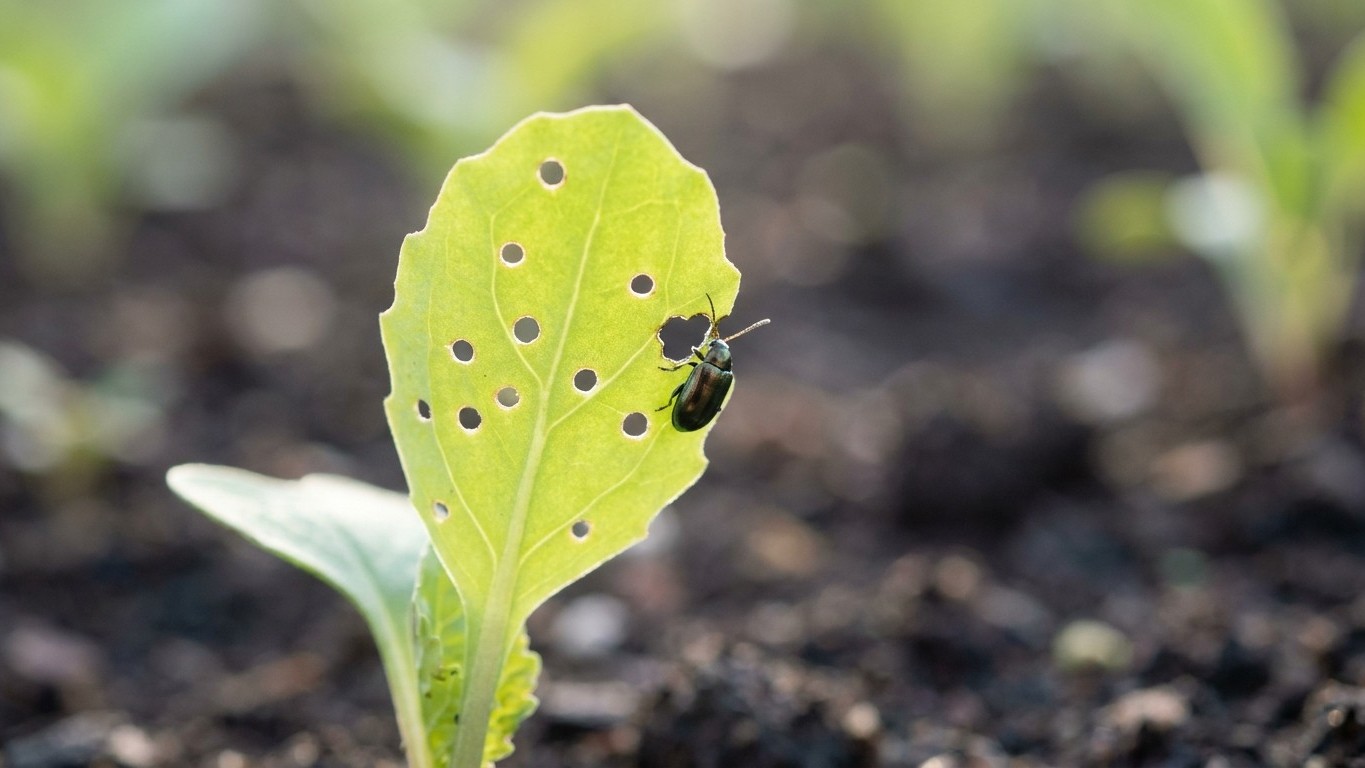

Flea beetles show up in Michigan gardens as soon as soil temperatures climb into the low 50s, usually between mid-April in the southern Lower Peninsula and late May farther north. They chew tiny “shotgun” holes in young leaves, target brassicas and nightshades first, and multiply fast in warm, dry stretches. Row covers timed to the emergence window, combined with trap crops and a well-timed insecticide application, stop most infestations before they wreck a harvest.
When Flea Beetles Show Up in Michigan

Timing depends on where you garden. Southeast Michigan, the counties around Kalamazoo, and the warmer pockets near Lake Michigan’s shoreline typically see the first adult flea beetles emerge from overwintering sites by late April. Central Michigan and the Thumb region usually lag two to three weeks behind. Gardeners in the Upper Peninsula and the far northern Lower Peninsula rarely see activity before the first week of June.
The trigger isn’t the calendar. It’s soil temperature. Adult beetles that spent winter tucked into leaf litter, fence rows, and garden debris become active once soil hits roughly 50°F at a few inches deep. A mild March followed by a warm April can push emergence a full two weeks earlier than average. That’s why the same species can hit a Grand Rapids garden in mid-April one year and not show real damage until May the next.
Once established, flea beetles produce one to two generations per year in most of Michigan, sometimes three in unusually warm southern counties during a hot summer. The second generation, appearing in July and August, often does more cumulative damage than the spring wave because populations have built up and plants are already stressed from earlier feeding.
Species Michigan Gardeners Actually Deal With
Michigan hosts several flea beetle species, and they don’t all target the same plants. The crucifer flea beetle (Phyllotreta cruciferae) goes after cabbage, kale, broccoli, and radish. The potato flea beetle (Epitrix cucumeris) prefers potatoes, tomatoes, and eggplant, and its larvae tunnel into potato tubers, leaving small dark scars that show up at harvest. The eggplant flea beetle, common in southern counties, can defoliate young eggplant transplants within days if left unchecked.
How to Spot the Damage Early
The signature sign is a leaf riddled with pinholes, sometimes described as looking like it took a hit from birdshot. On seedlings and young transplants, this damage is far more serious than it looks on a mature plant. A cabbage seedling with 20% leaf area lost to flea beetles in its first two weeks can end up stunted for the rest of the season, while an established plant with the same percentage of damage barely slows down.
Shake a suspect plant gently over a white sheet of paper or a paper plate. Adult flea beetles are small, dark, and quick, jumping like fleas when disturbed (hence the name). If you count more than five or six per plant on young brassicas, it’s time to act rather than wait and see.
Potato growers should watch for a second kind of damage entirely: small, roughened scars on tuber skin at harvest, caused by larvae feeding underground rather than adults feeding on leaves. That damage doesn’t show up until you dig the potatoes, which is why root-zone prevention matters more than leaf-watching for this crop specifically.
What Actually Stops Flea Beetles in a Michigan Garden
No single method works alone. Flea beetle control in Michigan comes down to layering a few tactics that target different points in the life cycle.
Timing and Physical Barriers
Delaying transplant dates by even one to two weeks past the typical emergence window in your region can mean the difference between a beetle population finding tender seedlings versus finding nothing to eat. For southern Michigan gardeners, that often means holding brassica transplants until early May instead of mid-April.
Floating row covers, installed immediately after planting or transplanting and sealed at the edges with soil or landscape staples, physically block adult beetles from reaching plants. They work best on crops that don’t need pollinators while flowering, like leafy brassicas and root crops harvested before bloom. Row covers need to come off once flowering starts on crops like squash, but for cabbage, kale, and radish, they can often stay on for the entire vulnerable seedling stage.
Trap Crops and Companion Planting
Radish, planted as a border around the perimeter of a brassica bed, draws crucifer flea beetles away from the main crop because radish leaves are more attractive to them. Michigan State University Extension research on brassica pest management has documented this trap-crop effect in field trials, showing measurably lower feeding damage on the protected crop when a radish border is present and managed (sometimes the trap crop itself needs to be treated or removed once it’s saturated with beetles).
Interplanting with strong-smelling companions like catnip, tansy, or nasturtium can reduce beetle landing rates, though the effect is modest compared to row covers or trap crops. Think of it as one more layer rather than a standalone fix.
Sanitation Between Seasons
Because adult flea beetles overwinter in plant debris and leaf litter near the garden, fall cleanup matters more than most gardeners assume. Clearing brassica and potato residue after harvest, and tilling shallowly in fall rather than leaving beds untouched, removes overwintering sites and can measurably lower the following spring’s population. Gardeners who till in spring right before planting sometimes get the opposite effect, disturbing overwintering adults right as they’re ready to fly onto fresh transplants.
Direct Treatment When Populations Spike
When physical and cultural controls aren’t enough, a few treatments have a track record in Michigan conditions:
- Diatomaceous earth, dusted on dry foliage, damages the beetles’ exoskeletons on contact and needs reapplication after rain or irrigation.
- Kaolin clay sprays coat leaves in a fine white film that disrupts feeding and egg-laying, widely used on potatoes and eggplant.
- Spinosad, an organic-approved insecticide derived from soil bacteria, controls adult beetles with lower toxicity to pollinators than broad-spectrum options, though it should be applied in early morning or evening to avoid bees.
- Pyrethrin-based sprays knock down active infestations fast but break down within days in sunlight, so timing application right after you spot a spike matters more than with longer-lasting products.
Yellow sticky traps placed at seedling height help monitor when adult activity is picking up, giving a two-to-three-day warning before visible damage appears. Checking traps twice a week during the emergence window (mid-April through May in most of Michigan) catches the buildup before it becomes a full infestation.
Crop Rotation and Long-Term Prevention
Flea beetles overwinter close to where they fed the previous year, so planting brassicas or potatoes in the same bed year after year keeps feeding the problem back to itself. Rotating susceptible crops to a different part of the garden each year, ideally with at least 100 feet of separation where space allows, breaks that cycle by forcing overwintered adults to travel farther to find host plants in spring.
Gardeners who’ve struggled with recurring potato flea beetle damage on tubers often find that a two-year rotation away from nightshades (potatoes, tomatoes, eggplant, peppers) combined with fall sanitation cuts larval tuber damage substantially by the second season. It’s not a fast fix, but it’s the one that reduces reliance on repeated spraying.
Healthy, actively growing plants also tolerate flea beetle feeding better than stressed ones. Consistent watering during dry spells, since drought-stressed plants show worse flea beetle damage and slower recovery, and appropriate spacing to improve airflow both make a measurable difference in how much feeding a planting can absorb without real yield loss.
Michigan’s flea beetle pressure varies enough by region and by year that no fixed calendar date works for everyone. Checking soil temperature with a simple probe thermometer in your own bed, rather than relying on a general spring date, gives a more accurate read on when to install row covers or start watching sticky traps, and it’s a five-minute habit that saves a lot of seedling replanting later in the season.