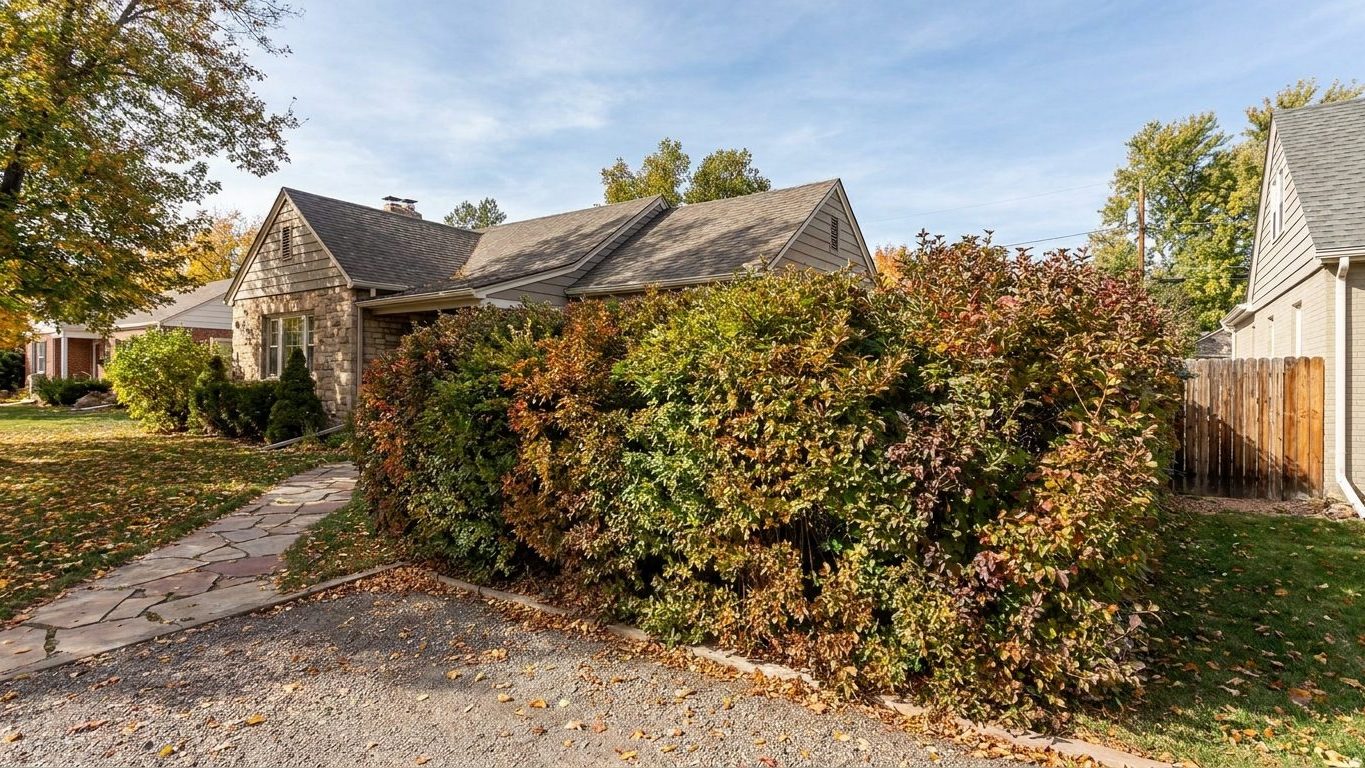

Minnesota has no state law that caps hedge height. Search for one and you’ll only find city ordinances, each different, because height limits on hedges and fences are set locally, not by the state legislature. That means the real answer to “how tall can my hedge be” depends entirely on which city or township you live in, and finding it takes about ten minutes once you know where to look.
There is no Minnesota hedge height law
Check the Minnesota Statutes and you won’t find a chapter on hedge height. That’s not an oversight or a gap waiting to be filled. It’s how land use regulation works in this state, and in every other state in the country. Height limits on fences and hedges fall under zoning authority, and zoning authority in Minnesota belongs to cities, townships, and counties, not to the legislature in St. Paul.
This matters because a lot of what circulates online treats hedge height as if it were a single number you could look up once and apply anywhere. It isn’t. A rule that works in Rochester might not apply in Duluth, and a homeowner in a township outside Brainerd may face a completely different framework than someone inside city limits ten miles away. Any source that tells you “Minnesota law says hedges can’t exceed X feet” is wrong on its face, because no such statewide figure exists.
Where does the confusion come from? Partly from aggregator sites that pull a figure from one city’s code, strip out the city’s name, and present it as if it covers the whole state. Partly from genuine mixing of two different legal categories, fences, which are built structures, and hedges, which are living plants that many codes treat under a separate heading, or don’t mention explicitly at all.
Why this decentralization actually helps you
A single state rule would have to average out wildly different situations, a dense urban lot in Minneapolis, a rural five-acre parcel near the Iowa border, a lakeshore property in the northern part of the state. Local control means the rule in front of you was written with your kind of neighborhood in mind, sight lines at your kind of intersections, setback patterns typical of your kind of lot. The tradeoff is that you can’t assume anything until you check your specific jurisdiction, which is exactly what the next section walks through.
How to find the rule that actually applies to you
Every city that regulates hedge or fence height publishes that rule somewhere in its municipal code, and almost all Minnesota cities have that code online now. Three publishers host the overwhelming majority of American municipal codes: Municode, at library.municode.com, American Legal Publishing, at codelibrary.amlegal.com, and eCode360, run by General Code. Type your city’s name plus “municipal code” into a search engine and you’ll land on one of these three platforms almost every time.
Once you’re in the code, don’t search for “hedge” first. Go straight to the zoning chapter. Inside zoning, look for a section titled “fences,” “accessory structures,” or sometimes “screening and landscaping.” That’s where height limits live, whether they’re written as a flat number of feet or as a formula tied to setback distance from the property line.
The word that changes everything
Read the section closely for how it defines its own scope. Some codes state plainly that fence regulations apply to “fences, walls, and hedges,” lumping the living and the built together under one height cap. Others regulate fences as structures only, built from material, requiring a permit past a certain height, and say nothing about vegetation at all. A few separate the two entirely, capping fence height in one subsection and hedge or shrub height in another, sometimes with different numbers for each.
This distinction isn’t a technicality. If your city’s code only regulates “fences” and defines a fence as a constructed barrier, a living hedge may fall outside that rule altogether, at least on paper, even if a code enforcement officer would still expect you to keep it clear of sidewalks and sight lines. Read the definitions section at the start of the zoning chapter. That’s usually where “fence” gets a formal definition, and you’ll see quickly whether hedges are folded in or left out.
Who to call when the code is unclear
If the ordinance text still leaves you guessing, don’t guess. Call your city’s planning or zoning department, sometimes called community development, and ask directly: does the fence height ordinance apply to hedges and living screens? These departments field this exact question often enough that most staff can answer it in under a minute, and a phone call beats a misread paragraph of code every time. For a property inside a township rather than an incorporated city, the same question goes to the township clerk or the county planning office, since township zoning is frequently administered at the county level in Minnesota.
Keep a copy of whatever answer you get, whether that’s a screenshot of the relevant code section or a note of the date and name of the staff member you spoke with. If a dispute with a neighbor ever surfaces, that record is worth more than a vague memory of what someone told you over the phone.
The branches that cross the line
Height limits set by ordinance are only half the picture. The other half is what happens when a hedge, tall or not, starts pushing branches or roots across the property line into a neighbor’s yard. Here the relevant rules come less from written statute and more from long-established case law, principles courts have applied over and over across states, including Minnesota.
The general rule, followed in most states, gives a property owner the right to trim back branches and roots that cross onto their land, up to the boundary line and no further. A neighbor annoyed by overhanging growth can cut it themselves, at their own expense, without needing the hedge owner’s permission. What they can’t do is reach across the line onto the neighbor’s actual property to cut, and they can’t damage or kill the plant in the process, say, by over-trimming a hedge back so aggressively on one side that it dies.
What this principle does not cover
This self-help right addresses overgrowth. It says nothing about the height of a hedge kept entirely within its owner’s property line but tall enough to block a neighbor’s view or shade a garden bed. That situation, where the hedge stays on one side of the line but its height creates a dispute anyway, is where local ordinance height limits (if one exists and applies to hedges) become the only real leverage. Absent a local rule, a purely aesthetic or view-blocking complaint about a hedge that respects the boundary line is a much harder case to make.
This principle is a general one that shows up across states with local variation in the details, not a Minnesota-specific statute with a citation you can point to. Treat it as background for understanding your rights, not as a substitute for reading your city’s actual code or, if a dispute escalates, talking with an attorney who handles property line matters in your county.
What to check before you plant
The smartest time to look up the rule is before you put a hedge in the ground, not after it’s six feet tall and a neighbor is on the phone with city hall. A few checks up front save a lot of grief later.
- Corner lots and driveways. Nearly every municipal code, whatever it says about general fence or hedge height, carries a separate and much stricter limit for the “sight triangle,” the clear-view zone at intersections and driveway entrances. This limit exists to keep drivers able to see oncoming traffic and pedestrians, and it typically caps growth at a height well below what’s allowed elsewhere on the same lot, often just a couple of feet. If you’re planting anywhere near a corner or the end of a driveway, check this section of the code specifically, since it overrides the general rule in that zone regardless of what the rest of the ordinance permits.
- Setback distance. Some codes tie allowable height to how far the hedge sits from the property line, allowing taller growth further back and capping height more tightly right at the boundary.
- Utility easements. If a utility easement runs along your property line, buried lines or overhead clearance requirements may restrict what you can plant there independent of the zoning height rule.
- HOA rules, if you have one. A homeowners association can impose a height limit stricter than the city’s, and that private restriction sits on top of, not instead of, the municipal code.
- Mature height of the species. Nursery tags list expected mature height. Pick a variety whose natural ceiling sits comfortably under whatever limit applies to your lot, so you’re not fighting an annual trimming battle against a plant that wants to grow taller than the rule allows.
None of these checks take long, and doing them before you dig saves the far more expensive fix of pulling out an established hedge because it turns out to violate a rule you never read.
Common questions
Does Minnesota have a statewide hedge height limit?
No. Height limits on hedges are set by individual city, township, or county ordinances, not by state statute. There is no single number that applies across Minnesota.
Where exactly in a city’s code do I look for the hedge rule?
Look in the zoning chapter, usually under a heading like “fences,” “accessory structures,” or “screening and landscaping.” Most Minnesota municipal codes are hosted on Municode (library.municode.com), American Legal Publishing (codelibrary.amlegal.com), or eCode360.
Can my neighbor cut branches from my hedge that grow over their fence?
In most states, yes, up to the property line, at their own expense, and without killing the plant. This is a general legal principle drawn from case law, not a specific Minnesota statute, so confirm details with a local attorney if a dispute gets serious.
Is a hedge automatically treated the same as a fence under my city’s code?
Not necessarily. Some codes explicitly include hedges under fence regulations, others regulate only built structures and leave living hedges out, and some address the two separately with different rules. Read the definitions section of your local zoning code, or call the planning department, to find out which applies where you live.