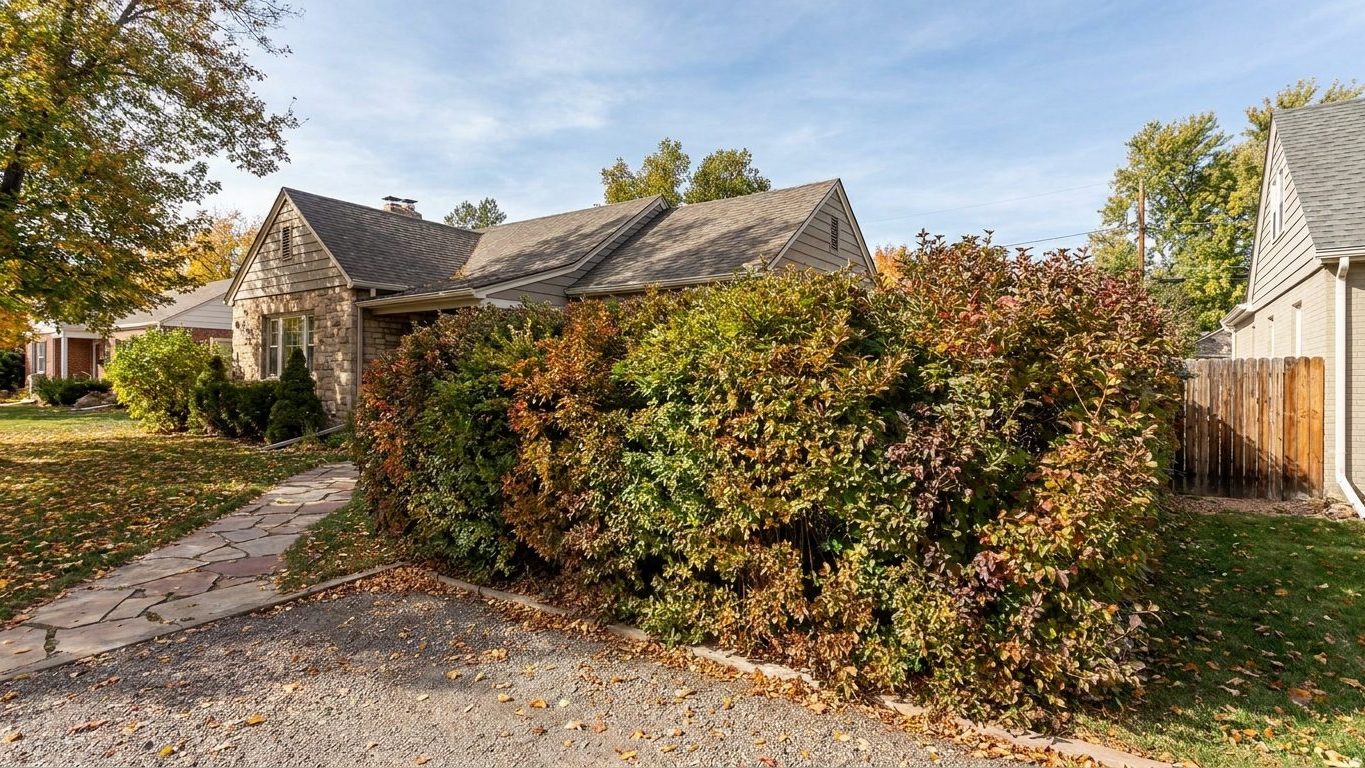

Iowa has no state law setting a maximum hedge height. Search all you want through the Iowa Code and you won’t find a number. Instead, hedge and fence height limits in Iowa are written into local zoning ordinances, city by city, which means the honest answer to “how tall can my hedge be” is: check your municipal code, because the state left that decision to your town.
There is no Iowa hedge height law
This surprises a lot of homeowners, and it’s worth sitting with for a second. Iowa regulates plenty of things at the state level: property line disputes, drainage, even how you record a survey. Hedge height isn’t one of them. The legislature never wrote a statewide cap on how tall a living fence can grow, and no state agency enforces one. If you’ve read a gardening site or a fencing company’s blog that names a single figure, like “hedges in Iowa can’t exceed X feet,” treat that claim with suspicion. It’s very likely wrong, or at best it’s quietly describing one city’s rule and presenting it as if it covered the whole state.
The reason this gap exists comes down to how Iowa structures local government. Cities in Iowa operate under home rule authority, which lets each municipality write and enforce its own zoning code rather than following a single statewide template. Zoning, including the rules that govern fences, screening, and accessory landscaping, is one of the areas cities control directly. Des Moines can set different limits than Cedar Rapids, which can differ again from a small town of two thousand people forty miles away. There’s no requirement that these numbers match, and in practice they don’t.
That decentralization is exactly why the commercial sites ranking for this question tend to get it wrong. Writing “the hedge height law in Iowa is six feet” is simple, clean, and shareable. It’s also fiction, because it takes a rule that might apply to one neighborhood and stretches it over the entire state, roughly 56,000 square miles and hundreds of separate zoning authorities. A homeowner in a small Iowa town who trims their hedge to match a number pulled from a generic list could still be violating (or unnecessarily complying with) a completely different local rule.
None of this means the question is unanswerable. It means the answer lives one level down, at the municipal level, and finding it takes a specific search rather than a general one. The next section walks through exactly how to do that, because locating your actual local ordinance is far more useful than memorizing a number that may not apply to your address at all.
It’s also worth noting that even within a single city, the rule for a front-yard hedge and a rear-yard hedge is often different. Zoning codes frequently set lower limits near the street, where visibility matters, and allow more height along interior or rear property lines. So the question isn’t just “what does my city allow,” it’s “what does my city allow in this particular location on my lot.”
How to find the rule that actually applies to you
Start with the assumption that your city’s zoning code is published online, because most are. Three publishers host the vast majority of American municipal codes: Municode, at library.municode.com, American Legal Publishing, at codelibrary.amlegal.com, and eCode360. A quick search for your city’s name plus “municipal code” will usually land you on one of these three platforms. Once you’re there, you’re looking for the zoning chapter, not the general ordinances section, and within zoning you want the part that deals with “fences” or “accessory structures.” That’s where height limits for screening, hedges, and yard barriers typically live, tucked in among setback rules and lot coverage requirements.
Why the word choice in the code matters
Here’s the detail that trips people up: many zoning codes regulate fences as built structures and say nothing explicit about living hedges, or they address them in an entirely separate section. A code that caps “fences” at a certain height doesn’t automatically mean your boxwood row is held to the same number. Some cities fold hedges, shrubs, and other vegetative screening into the same definition as a fence, treating a dense hedge as a “fence-like structure.” Others don’t mention hedges at all, which can mean there’s no explicit limit, or it can mean the rule is buried under a different heading like “vegetation,” “landscaping,” or “sight obstructions.” Read the actual definitions section of the ordinance before assuming the fence rule applies to your hedge. If the code defines “fence” narrowly as a constructed barrier of wood, metal, or vinyl, a living hedge may fall outside that definition entirely, for better or worse.
If the online code search doesn’t turn up a clear answer, or if the language is ambiguous, the fastest path is a phone call. Every Iowa city has a planning and zoning department, sometimes folded into a broader community development or building inspection office in smaller towns. Ask specifically: “Does the zoning code regulate hedge or shrub height, and if so, where?” Zoning staff field this exact question regularly, particularly from homeowners dealing with a boundary dispute or planning a new privacy screen, and they can usually point you to the exact section number in under five minutes.
One more resource worth checking: your county’s GIS or property records office. That won’t tell you the height rule, but it will confirm your exact property lines, which matters enormously once you start talking about hedges near a boundary. A hedge planted a foot over the line is a different legal situation than a hedge planted a foot inside it, regardless of how tall it grows.
The branches that cross the line
Height limits are only half the picture. The other common flashpoint is growth that crosses onto a neighbor’s property, and this is governed by a different body of law entirely, one that has nothing to do with your city’s zoning code.
The general principle, recognized across most states in some form through case law rather than a specific statute, works like this: if branches, roots, or foliage from your hedge grow across the property line and onto a neighbor’s land, the neighbor generally has the right to trim back that growth up to the boundary line, at their own expense. They can cut what’s hanging over their side. What they typically cannot do is cut past the boundary onto your side of the line, and they cannot take action that kills the plant outright, such as poisoning roots or hacking it back so severely that it doesn’t survive. This is sometimes called the “right of self-help,” and it’s a common-law doctrine, meaning it comes from accumulated court decisions rather than a single piece of legislation. Because it varies by state and even by jurisdiction within a state, it’s a general framework to understand, not a specific Iowa statute you can cite chapter and verse.
Where this gets practical is disputes between neighbors that never should have escalated. A hedge planted a few feet from a shared property line, left untrimmed for several growing seasons, can easily push eight or ten feet of branch growth onto the other side. If your neighbor starts trimming their side without asking, that’s likely within their rights under this general principle. If they come onto your property to do it, or if they damage the hedge beyond what reasonable trimming requires, that’s a different matter, and one worth a conversation with a real estate attorney rather than a guess based on a blog post.
There’s one boundary rule that shows up almost everywhere, regardless of city or state, and it’s the closest thing to a universal standard in this whole topic: the sight triangle. At a street corner or where a driveway meets a road, most municipal codes prohibit anything, hedge, fence, sign, or parked vehicle, from blocking a driver’s line of sight. The height limit inside a sight triangle is typically much lower than the general yard hedge limit elsewhere on the property, sometimes low enough to rule out anything but ground cover. This rule exists for safety reasons and gets enforced more consistently than almost any other landscaping regulation, because it directly affects visibility at intersections.
What to check before you plant
Before you put a hedge in the ground, a short checklist saves you from redoing the work later.
- Sight triangle distance: if you’re anywhere near a corner lot or a driveway apron, confirm the exact sight triangle dimensions in your zoning code before choosing a planting spot, not after.
- Property line location: a recent survey or your county GIS records will show you exactly where your lot ends, which matters more than most people assume once a hedge starts maturing.
- Utility easements: many lots carry a utility easement along the rear or side property line, and utility companies generally retain the right to remove anything planted inside that easement if it interferes with access or lines.
- HOA rules: if your property sits inside a homeowners association, the HOA’s covenants may impose stricter height or species limits than the city itself, and those private rules are enforced separately from zoning.
- Mature height of the species: the shrub you plant at three feet tall might reach fifteen at maturity, so check the plant’s expected full-grown size against whatever height limit applies to your yard.
That last point trips up more people than the zoning code does. A hedge that complies with local rules today can grow past that limit within a few seasons if you picked a species with a mature height well beyond what your yard allows. Matching the plant to the rule, rather than assuming you’ll just keep trimming forever, saves a lot of maintenance headaches down the road.
Common questions
Is there a statewide hedge height limit anywhere in the United States?
No. Height limits for hedges and fences are set locally, through municipal zoning ordinances, in every state, including Iowa. Any source claiming a single number covers an entire state is describing, at best, one city’s rule.
Where exactly in my city’s code will the hedge rule be?
Look in the zoning chapter, under a heading like “fences,” “accessory structures,” or occasionally “landscaping” or “sight obstructions.” Most Iowa cities publish their code through Municode, American Legal Publishing, or eCode360, searchable by city name.
Can my neighbor legally cut my hedge if it grows onto their property?
Under the general common-law principle followed in most states, a neighbor may trim overhanging branches up to the property line at their own expense, but they generally cannot cross onto your side of the line or take action that kills the plant. This varies by jurisdiction, so a property attorney is the right resource for an actual dispute.
Does the fence height limit in my city automatically apply to my hedge?
Not necessarily. Check how your city’s code defines “fence.” Some codes explicitly include living hedges under that definition, others regulate them separately or not at all, and the difference changes what height, if any, applies to your planting.