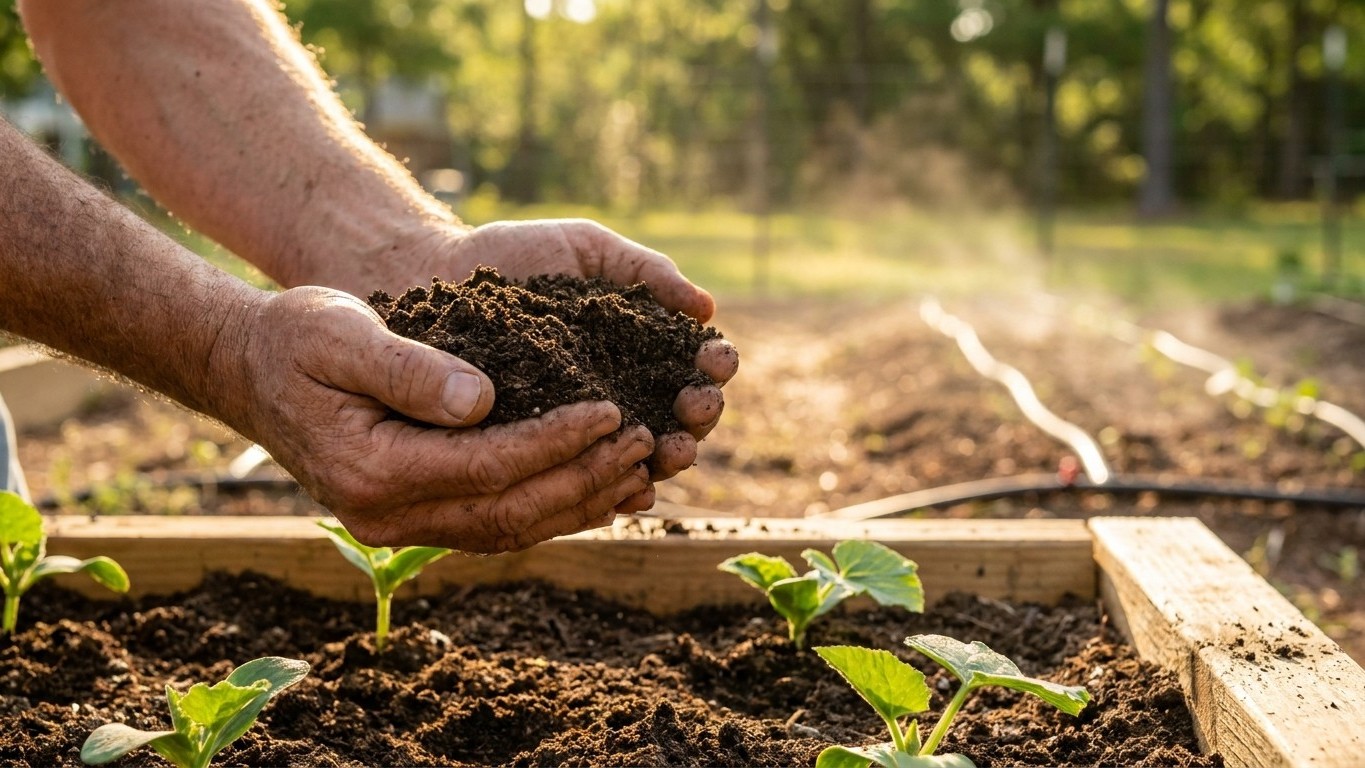

Minnesota gardeners can set out summer squash once the soil sits reliably above 60°F, which usually lines up with mid to late May in the Twin Cities and later still up north. The safe window between the last spring frost and the first fall one gives roughly five months, but heat spikes, clay soils and short summer rain totals shape how that window actually plays out in the garden.
When the soil is warm enough in Minnesota

The date everyone wants is the last spring frost, and for the Twin Cities the NOAA NCEI 1991-2020 Climate Normals put it between April 17 and April 30, based on 32°F freeze probabilities at station USW00014922. That’s a band, not a single day, and it reflects a 30-70% probability range, meaning frost can still show up on either side of it in a given year. Northern Minnesota runs two to three weeks tighter at both ends, so a gardener in Bemidji or International Falls should treat that Twin Cities window as a southern benchmark, not their own calendar.
Here’s the part that trips people up: that frost date is a proxy, not the real trigger. Summer squash doesn’t care about frost once it’s gone. It cares about soil temperature, and soil takes time to catch up to the air. Seeds sown into cold, damp ground just sit there, sometimes rotting before they sprout, even on a morning with zero frost risk. The practical move is to wait one to two weeks past the last-frost window before planting seeds or setting out transplants, letting the top few inches of soil actually warm through.
Why the frost date is only half the story
A frost probability band tells you the odds of a freeze event, not the temperature of your raised bed or your clay-heavy backyard plot. Soil in full sun warms faster than soil under a tree line or against a north-facing fence. Raised beds and black landscape fabric can shave several days off that wait. None of that changes the frost data itself, but it changes how a gardener should read it.
This also matters for seed-starting indoors versus direct sowing. Summer squash resents root disturbance, so many Minnesota gardeners direct-sow once soil has warmed rather than transplanting, unless they’re trying to beat the calendar in the north where the season runs shorter. For the actual varieties bred and trialled for Minnesota’s soil and heat load, the University of Minnesota Extension keeps trial data specific to the state rather than generic national lists, and that’s the resource worth checking before buying seed, since this page can’t responsibly name a cultivar it hasn’t sourced for this climate.
Skip the fungicide-and-spray routine as a calendar habit. Treating soil moisture and airflow around the plant does more for early-season health than any product applied on a schedule.
How long the season lasts here
Subtracting the two Twin Cities frost dates gives a growing window of roughly five months: spring frost risk clears between April 17 and April 30, and fall frost typically arrives between October 11 and October 23, per the same NOAA NCEI 1991-2020 normals. That’s a comfortable stretch for a crop that moves from seed to first harvest in about two months. Northern Minnesota, running two to three weeks tighter on both ends, loses close to a month of that cushion, which changes the math for anyone gardening near Duluth or further north.
A five-month window in the southern part of the state isn’t just enough for one planting, it’s enough to consider a second one. Summer squash plants tend to slow down and get woody or disease-prone by midsummer, especially once powdery mildew shows up on the leaves. Gardeners in the Twin Cities area often get more total harvest by sowing a second round in late June or early July rather than nursing one aging planting through August and September. That second sowing lines up well before the October frost window closes, giving it time to mature.
In the shorter northern season, that math doesn’t work the same way. With less room between frost dates, the first planting becomes the only realistic one, and timing it well matters more. That’s also where the transplant-versus-direct-seed decision gets real: a head start indoors, even with the root disturbance risk, can matter more in a compressed window than it does in the south, where there’s slack to spare.
Anyone planning a second sowing, or deciding whether their local window even allows for one, should look at the site’s succession sowing guide for the specific timing and spacing that makes a second planting worth the effort rather than a race against frost.
Heat and water in Minnesota

Minnesota isn’t a hot-summer squash territory in the way the term usually gets used. The reference station in Minneapolis averages just 10.6 days a year at or above 90°F, per NOAA NCEI Climate Normals 1991-2020. That’s a modest heat load. Squash pollen struggles and fruit-set drops off when temperatures push into the high 90s for stretches, but with barely over ten days a year even touching 90°F, that kind of heat failure isn’t the state’s main risk.
Rainfall tells a more relevant story. Summer rain across June, July and August averages about 13.0 inches, broken down as 4.58 inches in June, 4.06 in July, and 4.34 in August, out of 31.6 inches for the year, all from the same reference station (USW00014922). July, the driest of the three summer months, is also usually when squash plants are sizing up fastest and pulling the most water through those big leaves. That’s a moderate rainfall total, not a drought pattern, but it’s also not so generous that a gardener can ignore watering altogether, especially during a dry stretch in July.
What a cooler, damper Minnesota summer actually brings
With low heat-day counts and rain spread fairly evenly across summer, the bigger threat to Minnesota squash isn’t wilting from heat stress, it’s the opposite: cool, humid stretches that favor powdery mildew and other fungal issues on the leaves. Squash foliage is dense and low to the ground, and when humidity lingers after a rain without much heat or wind to dry it out, mildew spreads fast. That’s a different management problem than the irrigation-and-shade concerns a hotter, drier territory would face.
The practical response is airflow, not misting or fungicide schedules. Spacing plants wider than the seed packet’s minimum, pruning a few of the oldest leaves once the plant is established, and watering at the soil line rather than overhead all reduce the humid microclimate that mildew needs. A rain gauge on the actual garden site is still worth having, because the 13.0-inch summer figure is a station normal, not a guarantee for a particular yard, especially one on sandy soil that drains fast or clay that holds water for days after a storm.
Which summer squash suit Minnesota
Given a five-month window in the south and a tighter one in the north, plus a summer that’s more humid than hot, the reasoning for Minnesota points toward early-maturing types with some disease resistance built in, rather than the heat-tolerant, shade-at-the-root types that a hotter southern territory would need. A short northern season rewards types bred to fruit quickly. A humid statewide summer rewards types with better resistance to powdery mildew and other foliar disease, since that’s the more likely failure point here, not heat stress.
That’s as specific as this page can responsibly get. Naming an actual variety would mean picking one out of a seed catalog without knowing whether it’s ever been trialled against Minnesota’s soil, its clay-to-sand range, or its particular mildew pressure. The University of Minnesota Extension runs the trials that answer that question directly, testing varieties against the state’s real growing conditions rather than a generic national average. Their variety recommendations reflect actual performance in Minnesota gardens and trial plots, which is a different thing entirely from a seed catalog’s marketing copy.
Refusing to hand over a cultivar name here isn’t a dodge. A recommendation that ignores whether a variety has ever been grown in a USDA zone 3a-5a climate, per the USDA Plant Hardiness Zone Map 2023, is worth less than no recommendation at all. Hardiness zone is built on one variable, the average annual extreme minimum temperature, so it doesn’t predict summer performance on its own, but it does confirm that Minnesota’s climate range is wide enough that a variety trialled near the Twin Cities won’t necessarily perform the same three hours north. The extension service is set up to sort exactly that kind of regional difference out, which is more than a single article can do responsibly.