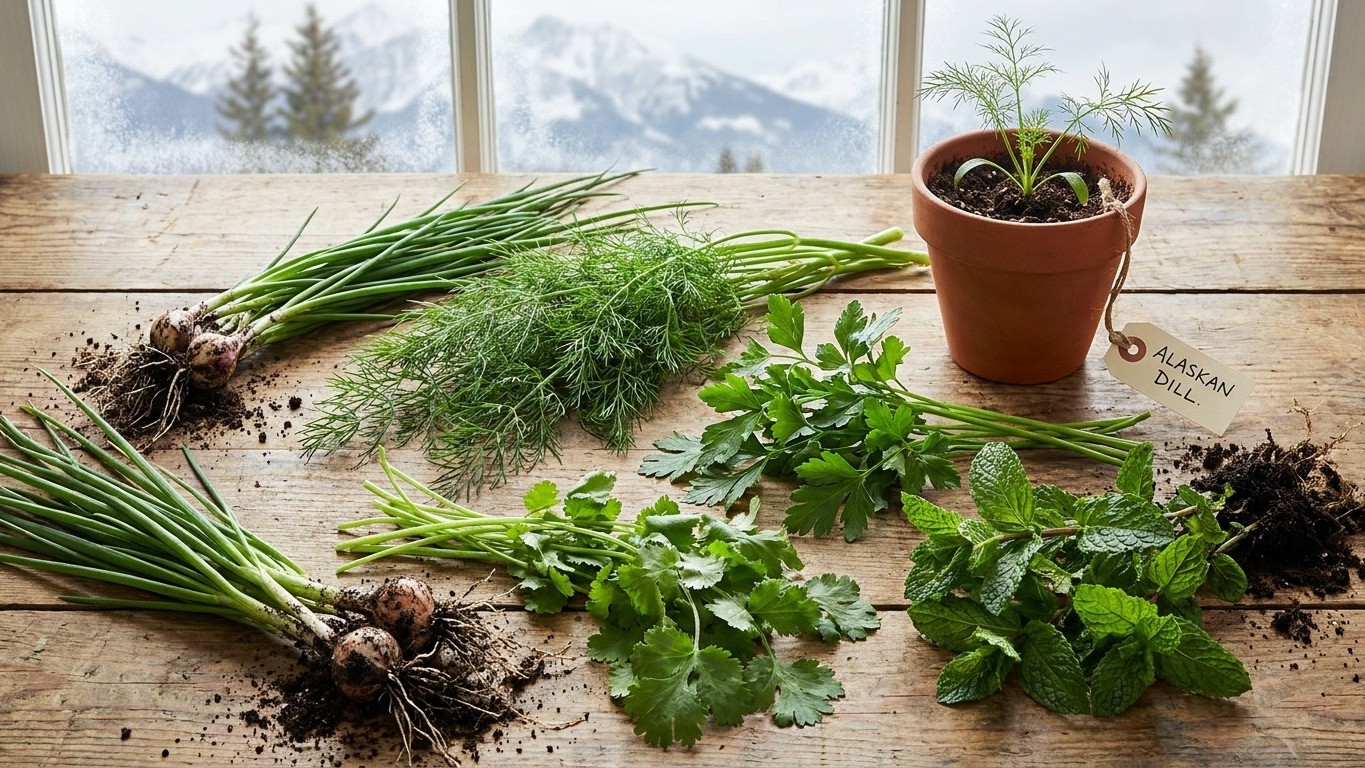

Mississippi‘s long, mild growing season makes Mediterranean perennial herbs, rosemary, thyme, oregano, sage, the safest long-term bet across most of the state, since the average minimum in the coldest month sits at 36.6°F. Basil and other heat-loving annuals thrive in the long, hot summers. Cool-season herbs like cilantro and dill only get a narrow window before the heat pushes them to bolt.
The short answer for Mississippi
Start with the numbers that actually decide this. The reference station’s last spring frost falls somewhere between March 6 and March 22, and the first fall frost arrives between November 7 and November 22. Stretch that out and you get a growing season that can run close to 230 days in a typical year, longer in the southern half of the state. That’s a season length few other states can match, and it’s the single biggest reason Mississippi gardeners can grow herb categories that struggle elsewhere.
The coldest month here averages a daily minimum of 36.6°F. That’s mild. It’s the number that decides whether a woody perennial herb survives the winter outdoors at all, and at 36.6°F, most of the classic Mediterranean herbs clear that bar without much trouble in a typical year. Rosemary, thyme, oregano, and sage are woody, drought-tolerant, and built for exactly this kind of climate: hot, sunny summers and winters that rarely stay hard-frozen for long.
Basil and other tender annual herbs (basil, summer savory, lemongrass grown as an annual) fit the long season well. They need heat to grow fast, and Mississippi hands them five, six, sometimes seven months of it before frost shuts things down. The catch is water, not cold. These annuals need consistent moisture through a summer that can run bone dry for stretches, and that’s a different failure mode than the one gardeners farther north worry about.
Cool-season herbs, cilantro, dill, chervil, are the trickiest call. They germinate and grow best in temperatures well under 75°F, which in Mississippi means the six or eight weeks after the last frost date and again in fall before the first frost. Try to run them through July and August and they’ll bolt, going to seed and turning bitter almost overnight. The decision by type is straightforward: perennial woody herbs are a strong bet statewide, tender annuals are a strong bet with irrigation, and cool-season herbs are a two-window crop, not a season-long one.
What will not work here
Mississippi’s problem isn’t a short season. With roughly 230 days between frosts, almost nothing here dies from running out of time. The failures come from the opposite direction: heat, humidity, and winters that are mild rather than cold enough to trigger true dormancy in a few specific plants.
Herbs that need real winter cold
French tarragon is the clearest example. It needs a hard winter chill to reset and come back reliably as a perennial, and a coldest-month average minimum of 36.6°F simply doesn’t deliver that most years. Gardeners who plant it as a perennial here are usually disappointed within two or three seasons; it’s better treated as an annual replant or skipped in favor of Mexican mint marigold, which mimics the flavor and actually likes the heat.
Herbs that hate humid summers
Lavender is the other repeat failure, and it’s not about cold at all. English lavender wants dry air and sharp drainage, and Mississippi’s summer humidity sits it in damp soil and thick air for months at a stretch. Root rot and fungal dieback take out more lavender plants here than any freeze does. Planting it in raised beds with heavy sand or gravel amendment helps, but even then it’s a shorter-lived plant here than in a drier climate.
Spacing and watering habits that backfire
Two garden habits that work fine elsewhere fail specifically in this climate. Close spacing, fine in a drier state, invites powdery mildew and leaf spot here because humid air doesn’t dry foliage between waterings the way it does out West. And a once-a-week watering schedule, adequate in a mild summer, leaves basil and other annuals wilting and stressed during the dry, blazing stretches that show up most Mississippi summers. Herbs here need airflow between plants and watering tuned to the week’s actual heat, not a fixed calendar.
What changes across Mississippi
Mississippi isn’t one climate. The USDA Plant Hardiness Zone Map places the state across zone 7b to 9a, and that spread matters more than it sounds like on paper. A herb that overwinters without a second thought in the Gulf Coast counties can get knocked back hard, or killed outright, in the hill country up near the Tennessee line.
Rosemary is the herb where this shows up most. In the milder zone 9a stretch along the coast, a well-sited rosemary plant can live for years as a genuine woody shrub, sometimes reaching several feet across. Move that same plant into zone 7b territory in the north, and a hard winter can kill it back to the ground or take it out entirely, especially if it’s planted somewhere exposed rather than against a south-facing wall.
Bay laurel follows the same pattern, only more sharply. It’s genuinely perennial in the mildest coastal pockets but needs to be treated as a container plant, brought in for winter, once you’re up in the colder end of the state’s zone range. Sage and thyme are more forgiving across the whole spread, since both tolerate the cold end of zone 7b reasonably well, but even they leaf out later and grow slower in a north Mississippi spring than they would sixty or eighty miles south.
There’s no single answer for “will this herb survive winter in Mississippi” because the state spans nearly two full hardiness zones. A reader in the Delta or the northern hill counties is gardening in a meaningfully colder pocket than one near Gulfport or Biloxi. Check the USDA Plant Hardiness Zone Map for your own county before betting a perennial herb bed on a statewide average.
Where to check this for your own county
Everything above is a state-level picture, and a state-level picture is exactly what it sounds like: an average across counties that don’t all match it. Mississippi State University Extension runs the state’s official land-grant extension service, and it’s the source built to narrow this down to your actual county rather than the state as a whole. Their site is at extension.msstate.edu.
Once there, two things are worth hunting down specifically. The first is a county-level or regional planting calendar, which will translate the March 6 to March 22 last-frost range and the November 7 to November 22 first-frost range into dates adjusted for your part of the state, since those figures come from a single reference weather station and suburban or rural gardens away from that station typically see later spring frosts and earlier fall frosts, sometimes by one to two weeks. The second is any herb or vegetable variety trial data for your region. Extension agents test specific cultivars, not just general categories, and a rosemary variety trialled and recommended for north Mississippi conditions is a more useful answer than the generic “rosemary does fine in Mississippi” statement made above.
A county recommendation beats a state one every time, because it’s built on soil, elevation, and microclimate data specific to that ground. A state-level picture is useful for deciding what category of herb to plant, less useful for pinning down the exact week to put seedlings in the ground in your particular county.
Checking this against your own garden
Every date and average describes a typical year at one weather station. Your garden isn’t required to follow it, and the surest information is usually sitting right in front of you.
Soil warmth is the first check, and you don’t need a thermometer to feel it. Dig down two or three inches with a trowel or your hand on a sunny afternoon. If the soil feels cool and slightly damp rather than warm through, basil and other tender annuals will sit and sulk rather than grow, no matter what the calendar says about frost being past.
The second is watching how your existing perennial herbs come back after winter. If rosemary, sage, or thyme planted the previous year show fresh green growth pushing from the base by early spring, that’s a stronger signal about your specific spot’s winter survival than any zone map, because it’s already happened in your actual soil and exposure.
The third is the first true leaves on anything started from seed, the second set that follows the small, rounded seedling leaves. That’s the signal a cool-season herb like cilantro or dill has enough runway before summer heat arrives to actually be worth growing on, rather than bolting within a few weeks of germinating. Watch for all three, and adjust the next planting by what you saw, not by what the average says should have happened.