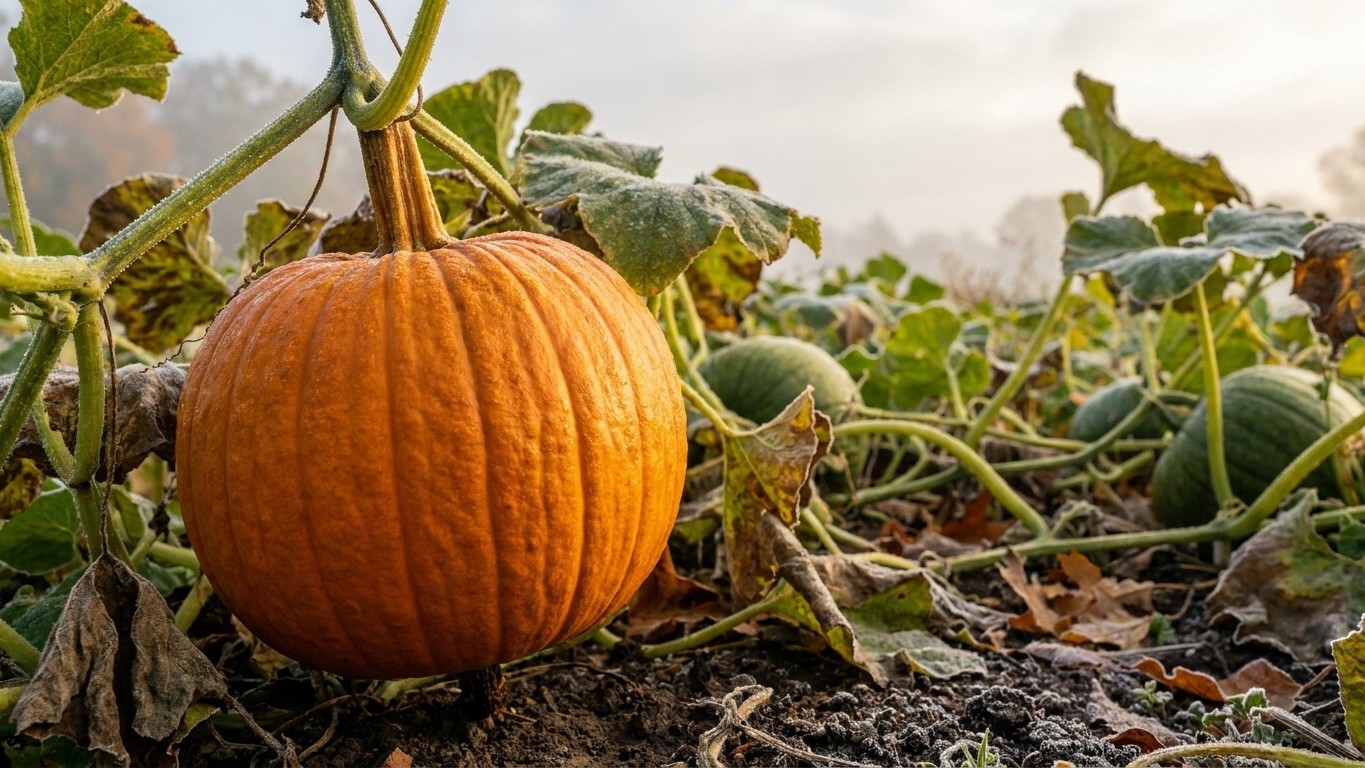

A pumpkin flower that opens after the first week of October in most of South Carolina is racing a clock it probably can’t win. The state’s first fall frost lands somewhere between November 20 and December 5, and a pumpkin needs 45 to 55 days of frost-free growing after that flower opens, not after the seed goes in the ground, to turn into a hard-skinned, orange fruit. Miss that window and you’re left with a green pumpkin on a dying vine, which raises the key question: Will Pumpkins Ripen Before Frost in South Carolina?
The short answer
Start with the frost date and work backward. NOAA’s climate normals for the station near Columbia (USW00013880) put the first fall frost somewhere between November 20 and December 5. Because frost can show up on the early end of that window, the safe math uses November 20 as the deadline, not December 5. Subtract the full 45-to-55-day maturation period from that date and the flowering window that still gives you a ripe pumpkin lands between roughly September 26 and October 6.
Working backward from frost
That’s not a single date you circle on a calendar. It’s a range, because the frost date itself is a range and the maturation period is a range. A flower that opens on September 26 has 55 days of cushion before the earliest possible frost. A flower that opens on October 6 has closer to 45 days, which is the bare minimum the fruit needs to size up, color out, and harden its skin. Anything that flowers after the first week of October is gambling on a late frost, and South Carolina’s own climate data says that gamble doesn’t always pay off.
What changes across the state
This calculation shifts depending on where in South Carolina you’re gardening. Peninsular Charleston runs milder than the airport station the frost data comes from, so gardeners near the coast often get a few extra days of breathing room. The Upstate runs the other direction: both the first fall frost and the last spring frost arrive several weeks tighter there, which squeezes the whole growing window from both ends. A flowering date that works fine in the Midlands can be too late in Greenville or Spartanburg.
When to sow here
Working out a planting date means starting from the soil, not the frost calendar, and that’s where a lot of pumpkin timing goes wrong. South Carolina’s last spring frost falls between February 28 and March 17, but pumpkin seed sown into cold soil just sits there and rots. Utah State University Extension is specific about this: pumpkins go into the ground once the soil itself reaches 65°F, and soil temperature lags well behind air temperature. The last frost passing doesn’t mean the soil is ready. It usually means the soil is ready in a few more weeks.
- Let the last frost window close first. In South Carolina that’s sometime between February 28 and March 17, depending on where you are in the state.
- Wait past that date for the soil, not the air, to warm. Soil takes longer to climb than the thermometer on the porch, so the 65°F mark typically arrives well after the last frost has passed, not on the same week.
- Use a row cover over the bed if you want to push that soil warm-up earlier. A cover traps daytime heat and can buy roughly two weeks on the sowing date compared with waiting on bare soil to warm naturally.
- Once soil hits 65°F, sow. Count forward mentally to the flowering window described above (late September to early October) and make sure the stretch between sowing and flowering leaves enough season on both ends.
- If the soil is running late this year and that math doesn’t leave room, treat it as a signal to start seedlings indoors under cover rather than direct-seeding outside and hoping the season stretches to fit.
What goes wrong here
South Carolina’s season length causes a specific, repeatable set of failures, and most of them trace back to the flowering date running too close to that November frost window.
- A late flower that never colors. A pumpkin that sets fruit in mid-October simply doesn’t have 45 days left before the earliest frost arrives. The fruit stays green and hard-shelled but never turns orange. The remedy is upstream: pull back the sowing date the following season, or start seedlings indoors so flowering happens closer to Labor Day than to Columbus Day.
- A fruit caught by frost mid-ripening. A pumpkin partway through coloring when a hard freeze hits will show frost damage on the skin and soft spots that spread fast. Harvest with the stem attached the moment frost is forecast, even if the color isn’t fully finished, rather than leaving it on the vine and hoping for one more warm week.
- A vine that collapses before the skin hardens. Vines weakened by squash bugs or cucumber beetles often die back weeks before the fruit is ready, cutting off the plant’s ability to finish hardening the rind. This site covers squash bugs in South Carolina and cucumber beetles in South Carolina in detail; catching either early keeps the vine alive long enough for the fruit to finish.
Checking this against your own county
The frost windows above come from one weather station, and South Carolina is big enough that a single station doesn’t speak for the whole state. Upstate counties run tighter on both ends of the season than the coastal plain, and Charleston’s peninsula runs milder than the airport data suggests. Before locking in a sowing or flowering target, check current-season guidance with the Clemson Cooperative Extension office for your county. They track local frost patterns and can tell you whether your particular spot needs to shave a week off the calculations here or has room to spare.
Common questions
Can I still get a ripe pumpkin if my vine flowers in mid-October?
It’s tight. Mid-October leaves less than the full 45-to-55-day window before the earliest possible frost date of November 20, so the fruit is more likely to stay green than to finish coloring.
Does the 45-to-55-day figure start when I plant the seed?
No. It starts when the flower opens, not when the seed goes in the ground or the seedling gets transplanted. That distinction is the whole basis for the timing calculation on this page.
Why can’t I just plant right after the last frost?
Because soil temperature lags behind air temperature. The last frost passing tells you the air is safe; it doesn’t tell you the soil has reached the 65°F pumpkin seed needs to germinate instead of rot.
Is there a difference between Upstate and coastal timing?
Yes. The Upstate’s frost windows run several weeks tighter on both ends of the season than the coastal plain, and Charleston’s peninsula runs milder than the inland station data used here.