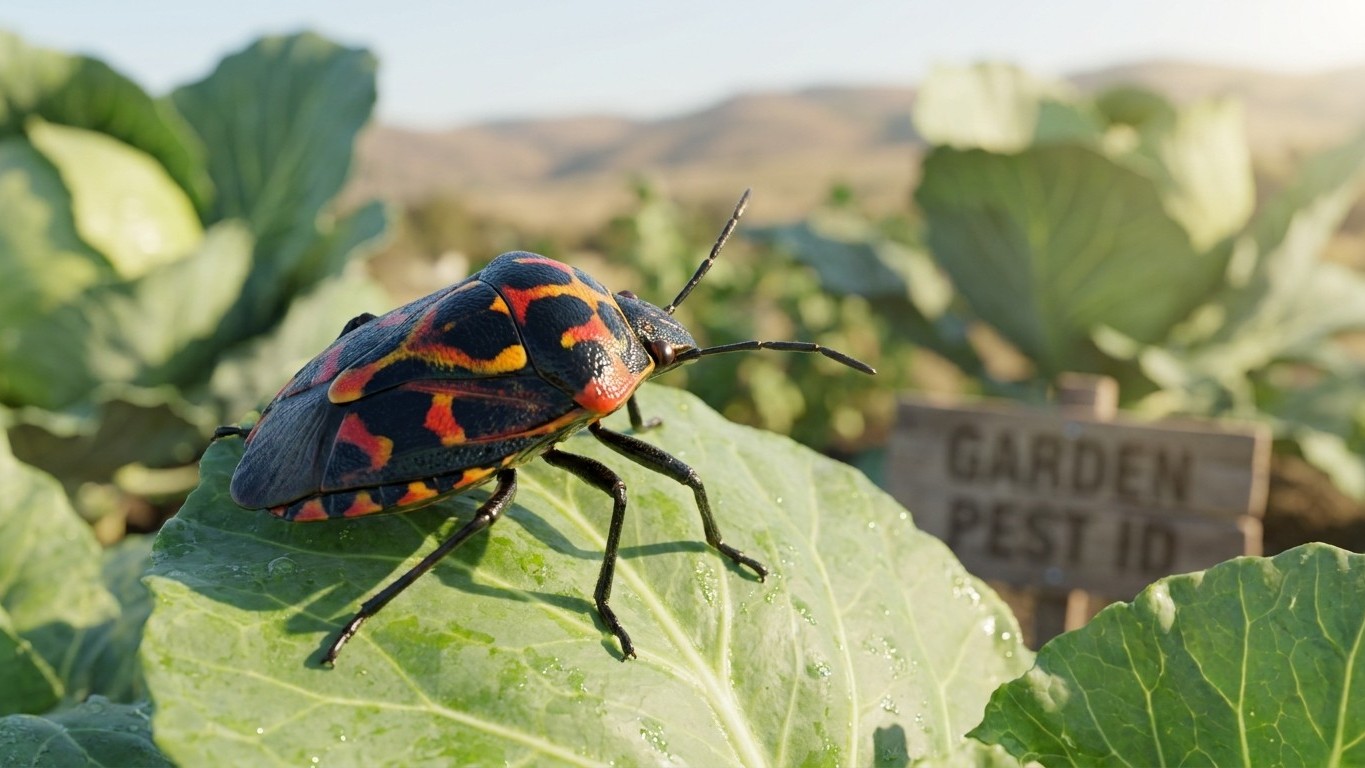

Harlequin bugs in Mississippi run on a schedule that flips the usual garden calendar: they stay active through fall, winter, and into spring, then go dormant once summer heat sets in. Row covers at transplant, hand-picking egg masses, and clearing brassica debris before winter are what keep populations from building back up.
The weeks to watch

Harlequin bugs are active through winter in Mississippi, then hibernate through summer, according to Mississippi State University Extension Publication 2347. That’s the opposite pattern from most of the state’s other garden pests, which either peak in late summer (squash vine borer, Pickleworm, leaf-footed bugs) or run fall through late spring like the yellowmargined leaf beetle. The extension guide doesn’t publish a narrower window than that for harlequin bug specifically, so the season, not a set of dates, is the useful marker here.
Fall through winter activity
Once cool-season brassicas go into the ground, adult harlequin bugs that survived the previous winter start feeding and laying eggs almost immediately. Because Mississippi winters rarely bring hard, sustained freezes, the bugs keep feeding on cabbage, collards, and other cole crops through the cold months rather than dying off the way a lot of northern populations do.
Summer dormancy
As soil and air temperatures climb into summer, harlequin bugs go dormant. This matches up with when most brassica crops are finished for the season anyway, so the pest’s quiet stretch and the garden’s natural gap in cole crops largely overlap. It’s less a coincidence than a pest that has adapted its life cycle to a host plant family Mississippi gardeners mostly grow cool-season.
Reading the calendar from your last frost

Mississippi’s last spring frost, based on NOAA’s 1991-2020 climate normals for the Jackson-area reference station, falls between March 6 and March 22. That’s a range built from 30-70% freeze probabilities, not a promise, and suburban and rural gardens often see frost linger one to two weeks past what the airport station records. Check your own county extension office for a local figure before you plan around this one.
Harlequin bugs don’t wait on that date the way warm-season pests do. Because they’re already active through winter, they can be on cool-season transplants well before the last frost even arrives. Here’s how the timing typically works out:
- Take your last frost window (March 6 to March 22 at the reference station, adjusted for your county).
- Cool-season brassica transplants commonly go into the ground two to three weeks before that window closes, meaning mid-to-late February for many Mississippi gardens.
Because harlequin bug adults have already been active nearby all winter, feeding damage can show up within the first week or two after transplant, before frost has even cleared. That means row covers need to go on at planting, not after the frost risk passes.
What it attacks, and what the damage looks like

The first sign is usually a blotchy, wilted look on the leaves of a young cabbage or collard plant, patches that go pale, then brown or black, where the insect has fed. Both nymphs and adult harlequin bugs feed by piercing plant tissue and drawing out sap, and the toxin they inject while feeding causes that localized dieback around each feeding site. On a heavy infestation, entire leaves can wilt and blacken well before the plant would otherwise show stress.
The crops most at risk in a Mississippi garden are the cole crops:
- Cabbage
- Collards
- Kale
- Broccoli and cauliflower
- Brussels sprouts
- Mustard greens
- Turnips and radishes
Because both nymphs and adults feed with piercing-sucking mouthparts on the outside of the plant, there’s no stage where the insect burrows in and becomes untouchable, the way squash vine borer larvae do once they’re inside a stem. That’s a genuine advantage for anyone trying to manage harlequin bug by hand: as long as you can see it, you can act on it.
How Mississippi sits in this pest’s range
This isn’t a case of borrowed data from a neighboring state. Mississippi State University Extension documents harlequin bug directly in its own home-garden pest guide, alongside the state’s other cool-season and warm-season pests, so the winter-active, summer-dormant pattern described here comes from local observation, not a guess extended across a state line.
Harlequin bug is common across the warmer parts of the Southeast, and Mississippi’s mild winters put it squarely in territory where the insect can stay active nearly year-round rather than dying back to eggs or overwintering deep underground. That’s a difference in degree, not in kind, compared with cooler states further north, where harlequin bug pressure tends to be lighter simply because winters interrupt its activity more completely. For a Mississippi gardener, the practical takeaway is that the mild winter itself is the reason this pest needs watching well before spring planting even starts.
What actually works against it

Timing and physical barriers do most of the heavy lifting here, since harlequin bugs stay exposed on the plant surface through every life stage.
- Adjust planting timing where you can. Because harlequin bugs are dormant through summer, a fall brassica planting that goes in right as bugs are coming out of dormancy will see pressure sooner than one timed a few weeks later. Shifting planting dates doesn’t eliminate the pest, but it reduces the overlap between transplant and active adult populations.
- Use row covers from the moment of transplant. A physical barrier keeps adults from reaching leaves to feed or lay eggs. The mechanism only works while the cover is sealed at the edges and stays on; once it comes off for weeding or harvest, or once bugs are already established underneath, the cover stops doing anything.
- Hand-pick adults and egg masses. Harlequin bugs are large, boldly marked in black, red, and orange, and their barrel-shaped eggs are laid in visible clusters on leaf undersides. Removing both by hand directly cuts the next generation before it hatches, but it only stays practical while the population is still small enough to spot.
- Rotate cole crops to a different bed each season. Moving brassicas away from where they grew the previous year means overwintering adults have to travel farther to find a host, which lowers how fast a new infestation builds.
- Clear brassica debris and nearby mustard-family weeds after harvest. Harlequin bugs overwinter as adults in plant litter and weedy ground cover. Removing that shelter before winter takes away the spot where next spring’s population would otherwise be waiting.
Some gardeners plant a small mustard patch as a trap crop, since harlequin bugs will concentrate on it over less-preferred plants nearby, making it easier to hand-pick or destroy the trap planting outright. It’s a widely used tactic, but how much it actually reduces damage to the main crop hasn’t been well quantified in trials, so treat it as one more tool rather than a guaranteed fix.
Common questions
Do harlequin bugs survive a Mississippi winter outdoors?
Yes. Adults overwinter in plant debris and weedy ground cover and stay active through the cold months rather than dying off, which is part of why they’re already present when spring brassica transplants go in.
Can harlequin bugs damage tomatoes or other non-brassica vegetables?
Their preferred hosts are cole crops like cabbage, collards, and kale. Mississippi State’s guide lists them among the cool-season pests tied to that plant family, not among the pests that target tomatoes, peppers, or vine crops.
Is it too late to protect a brassica bed if bugs are already feeding?
Not necessarily. Because both nymphs and adults feed openly on the plant surface, hand-picking and removing debris can still reduce the population at any point in the season, unlike pests that bore inside stems and become inaccessible.