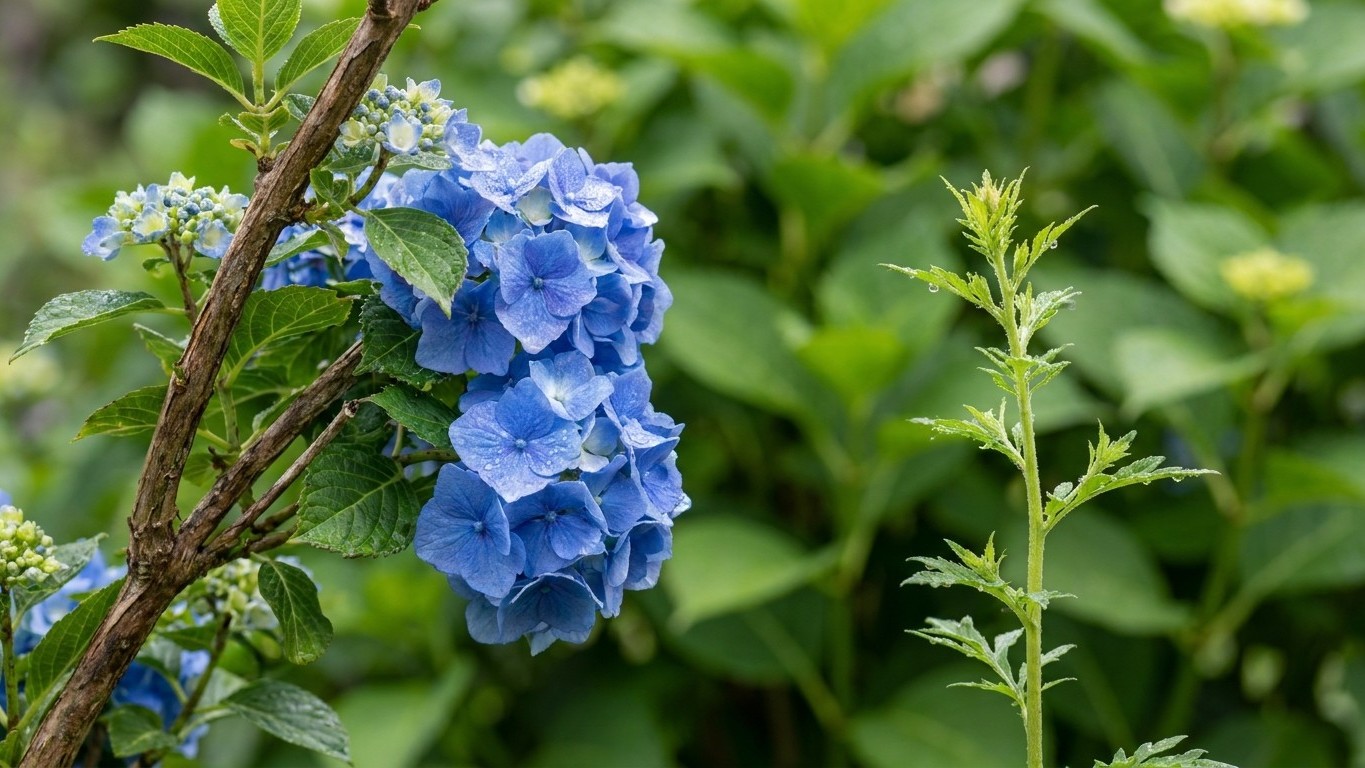

Prune hydrangeas that flower on new growth (panicle and smooth types) in early spring, before the buds swell. Bigleaf types bloom on last year’s stems, so cut them right after flowering, or in spring remove only the stems that are clearly dead. Montana’s long winters and late frosts punish the wrong cut. A shrub pruned at the wrong time can lose a whole season of flowers.
What this comes down to in Montana

In Billings, the reference city, NOAA NCEI 1991-2020 Climate Normals place the last spring frost between April 29 and May 10 and the first fall frost between October 1 and October 14. Those two windows set the pruning calendar: new-wood shrubs get cut in early spring, bigleaf types wait until the frost danger has thinned and live buds show, and all cutting stops by late summer so fresh shoots can harden before October.
The reason is where the flower buds sit. A hydrangea either builds its flower buds on stems grown this spring or on stems grown the summer before. Cut the first kind in March and you lose nothing. Cut the second kind to the ground in March and you remove every flower it planned to make.
Which hydrangeas bloom on new wood?
Smooth hydrangeas such as Annabelle and Incrediball, and panicle hydrangeas such as Limelight, Bobo and Quick Fire, flower on shoots that grow after winter ends. These are the forgiving ones. They tolerate a hard cut in early spring, and the cut often improves them: stems come back stronger and the flower heads are held better. Smooth types can be cut back to a foot or so above the ground. Panicles do better with a lighter hand, removing dead tips, crossing branches and perhaps a third of last year’s growth.
Which hydrangeas bloom on old wood?
Bigleaf hydrangeas, including the reblooming Endless Summer, set buds on the previous year’s stems, at least in part. Where winter cold kills stems back, the only pruning that makes sense is removing dead wood once the plant leafs out. Any pruning for shape should happen right after the flowers fade, in July at the latest. After that, the shrub is forming next year’s buds, and a late cut takes them off. For which of these types survive the cold at all, see Which Hydrangeas Survive a Montana Winter.
Working it out for your own garden
You do not need a memorized date. You need to know which type you have and where your last spring frost falls, then count from there. Start with the type. If the tag is gone, look at last year’s bloom: flowers at the very ends of tall, thin, woody stems point to old wood, while heads on shoots that grew from the base or from fresh side growth point to new wood.
Field check before you cut: in spring, scratch a thumbnail across the bark of a stem. Green and moist underneath means the stem is alive. Tan and dry means it is dead. Then bend a thin twig. A live one flexes, while a dead one snaps. Make the check at several heights, because a stem can be dead at the tip and green at the base.
Now the arithmetic for new-wood types. Pruning is best done while the plant is still dormant but the worst of winter is over. Watch the hydrangea’s own buds and prune just before they begin to swell in spring, and check with your local county extension office for timing in your area. That is the window to cut an Annabelle or a Limelight in a valley like Billings. A warm spell in March is a signal to wait rather than act, since swelling buds are easy to damage.
Take Limelight as a worked case. Cut in early April, it sends up new shoots in May and opens its flowers in summer, well ahead of an October 1 to October 14 first fall frost. The cut finishes its job with months to spare. Now take an old-wood bigleaf cut hard in the same week. The plant regrows, but the buds that should have opened in July were on the stems you removed, so the season passes with leaves and no flowers. Same shears, same week, opposite outcome.
For the end of the season, count forward from the same window. Any pruning after midsummer pushes tender growth that will not toughen up before the first fall freeze. For bigleaf shrubs that means finishing shaping cuts in July, as noted above. For new-wood shrubs it means leaving the old flower heads alone through fall. They stand through winter, catch snow and shelter the crown. If you want to know how pruning interacts with bloom color, Why Hydrangeas Are Pink in Montana, and How to Turn Them Blue explains that the color comes from the soil, not the shears.
What changes across the state
The Billings dates are a reference point, and Billings is milder than much of the state’s higher country. Montana covers a huge range of landscapes, and the USDA Plant Hardiness Zone Map, which measures the average annual extreme minimum temperature, runs from about zone 3 to zone 6 across the state. Pruning dates move with that spread.
Elevation is a major factor. Every few hundred feet of climb pushes spring later and brings fall earlier. A shrub at a higher mountain-valley address may not wake up until well after a Billings shrub has leafed out, and frost there can arrive in any month. In those gardens, the early-spring cut for new-wood types shifts later, and the wait before judging bigleaf winter damage stretches into late May or even June.
Latitude and geography matter too. The northern tier of the state and the cold basins that trap still air stay colder than south-facing slopes and sites sheltered by buildings. East of the Continental Divide, Arctic air can sweep across open plains with little to stop it, and winter wind can strip stems and dry out buds. West of the Divide, valleys tend to be a bit more sheltered, though cold air pools on still nights.
Your own yard has a small climate as well. A south wall can wake a shrub weeks ahead of one in an open lawn. So treat the early-April window as a starting point and then watch the plant. Buds that have started to swell and show green at the tips mean the dormant window is closing.
The mistakes this state punishes

A costly error is cutting a bigleaf hydrangea to the ground in spring, as if it were a smooth type. In a cold climate those shrubs often have little live old wood to begin with. Removing what is left means another year without blooms. Take out only what the scratch test proves dead, and give the plant until the leaves show before judging.
Pruning in a warm spell is another common mistake. A mild stretch in February or March can persuade a gardener that spring has arrived, and a cold snap in April or early May can follow. New growth stimulated by an early cut gets nipped, and the plant spends energy twice. Wait for the Billings-style frost window to narrow (or your own local one) before doing hard cuts, and keep the cuts to dormant, undamaged stems.
Late-season pruning also hurts. A tidy-up in September or October looks harmless, but it encourages tender shoots just before the first fall frost, which falls between October 1 and October 14 in Billings and earlier in higher country. Cutting flower heads off new-wood shrubs in fall also removes the winter cover the crown would have had. Leave them until spring.
The last mistake is heavy cutting of a young or newly planted shrub. A first-year hydrangea needs its leaves and stems to build roots. Remove only dead or broken wood the first year, and save shaping for when the plant is established.
Checking this against your county
A frost window measured in Billings is a starting point for your own yard, not an instruction. Your county office of Montana State University Extension can tell you how local frost dates, elevation and soils differ from the reference city. For site selection, planting and ongoing care beyond pruning, the state resource on growing hydrangeas in Montana covers the rest.
Common questions
When should I prune Annabelle hydrangeas in Montana?
Prune them in early spring while dormant, before buds swell. In a valley like Billings, where the last spring frost falls between April 29 and May 10, that means early to mid April. Cut the stems back to a foot or so above the ground. They bloom on new growth, so the flowers are not at risk.
Can I prune bigleaf hydrangeas in spring?
Only to remove dead wood. Bigleaf types carry flower buds on last year’s stems, so a spring haircut removes flowers. Wait until leaves emerge, use the scratch test to find dead stems, and cut just those. Any shaping should come right after bloom, no later than July.
Is it safe to prune hydrangeas in fall?
It is better to avoid it. Fall cuts can encourage tender growth just before the first freeze, which falls between October 1 and October 14 in Billings. On new-wood types, the old flower heads also protect the crown over winter. Wait until spring.
How do I tell if a hydrangea stem is dead?
Scratch the bark with a thumbnail. Green and moist means alive. Tan and dry means dead. A thin twig that bends is alive, and one that snaps is dead. Test at more than one height, because stems often die back from the tips while the base stays alive.