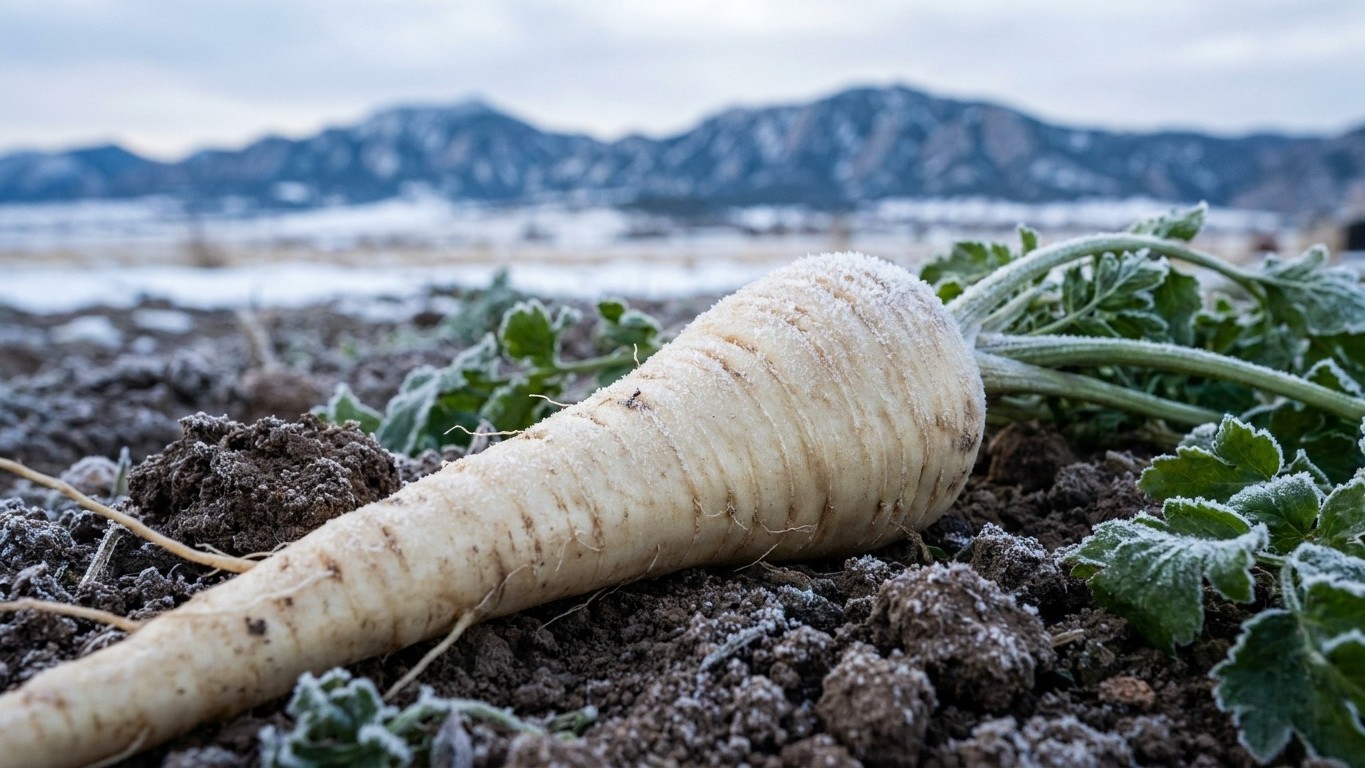

Lift parsnips after several weeks of frost, which at the Billings reference station means late October into November, since the first fall frost arrives between October 1 and October 14. Kept at 32 to 34°F and 98% humidity, the roots hold for 4 to 6 months. They go bitter next to apples or other ripening fruit, though, and that’s the mistake most home cellars make. Details on timing, season fit and failures follow.
The short answer
Does the ground here deliver several frosty weeks? It does. The mean daily minimum of the coldest month at the Billings reference station is 17.9°F (NOAA NCEI Climate Normals). The sweetening depends on several weeks of cool, frosty weather, not on the cold of the coldest month. Cool, frosty weather makes a parsnip convert stored starch into sugar, according to Utah State University Extension. A parsnip grown here tastes best after several weeks of cool, frosty weather. The reason is frost exposure over several weeks. A comfortable hardiness zone says nothing about that, and a mild-winter garden can raise a fine root that never gets sweet. For more on the mechanism, see Will Parsnips Sweeten in Montana?
When should you dig parsnips?
Wait until the roots have been through a run of frosts. With the first fall frost falling between October 1 and October 14, that points to late October through November, depending on the year. Digging in the first week after a frost gets you a parsnip, but a less sweet one. Roots can stay in the ground well into winter, and a thick layer of mulch keeps the soil workable for digging. Pull whatever is left before spring growth restarts, because a root pushing new leaves is spending its sugar.
Billings is one of the milder valleys. Mountain valleys elsewhere in the state can frost in any month, so the same calendar will run earlier in high country and the growing season will be shorter there. Your county extension office can tell you the local frost dates.
How long do lifted parsnips keep?
USDA Agricultural Handbook 66 says parsnip roots can be stored 4 to 6 months at 32 to 34°F with 98% relative humidity (USDA Handbook 66). By any standard, that is a long keeper. It assumes the temperature and humidity are held steady, which almost no house does. In a typical home setup, expect less than the full range.
Cold is not the threat here, since parsnips are not chilling sensitive. Ethylene is. A parsnip makes very little of it, but even low levels of ethylene in cold storage cause bitterness, likely from a compound called xanthotoxin building up in the root. Apples and any ripening fruit give off ethylene. Keep parsnips in a separate space, even if the temperature is perfect. Top the leaves after digging, but do not trim into the crown.
Does the season fit?
Parsnips are sown in place and need 100 to 120 days counted from seeding, with the sowing made 2 to 3 weeks before the last frost. Here is how that lines up with the Billings frost window, which runs from a mean last spring frost between April 29 and May 10 to a mean first fall frost between October 1 and October 14.
- Sow early. Put the seed in the ground as soon as the soil can be worked, which means roughly early to late April, in line with the 2-to-3-week lead before the last frost.
- Wait for germination. Parsnip seed takes 14 to 21 days to come up. Those weeks of bare soil are normal. Digging it up or re-sowing at day ten is the most common way to lose a crop that was fine.
- Count from seeding. The 100 to 120 days begin on the sowing date, not when the seedlings show.
- Leave time for frost. The frosty weeks that sweeten the root then come on top of that.
- Check the verdict. At Billings, the season fits comfortably. A sowing pushed to late May or June is a different story, because the roots finish close to the first frost and have no time for the cold stretch. The same happens in cooler, higher valleys where spring comes late.
That fit is for the valley floor. If your garden sits higher, with a later last frost and an earlier first one, treat the fit as tight and sow at the first workable opportunity. The Growing Parsnips in Montana guide covers sowing and spacing in more detail.
What goes wrong here
Most failures come from the ground, the water, the calendar or the storage shelf. Soil varies from one valley to the next, so dig a spade-deep hole where the bed will go and see what you are working with before you seed.
- Forked roots from heavy or stony ground. A root meeting clay or a rock splits around it. Utah State University Extension recommends deep sandy soil, and says heavy soil must be double dug. Loosen the bed to a full spade depth or more, and pull out stones before you sow.
- Forked roots from overwatering. This is a separate cause.
- A season that runs out. Late sowing, a cold spring or a high-elevation garden leaves small roots at frost time. Sow at the first chance, and ask your county extension office when your local frosts usually arrive. For slugs, voles and other things chewing at stalled roots, see What Eats Parsnip in Montana, and When.
- Roots that never get sweet. This is rare in Billings-type winters, but a warm autumn can delay the cold. If a taste test is flat, leave the rest in the ground for more frosty weeks and dig again later.
- Bitter roots in storage. Ethylene from nearby apples or ripening fruit does it, even at the right temperature. Store parsnips alone, topped but with the crown left intact.
Common questions
How soon after frost can I dig parsnips?
Give the plants several weeks of frost first. Several weeks of cool, frosty weather convert stored starch to sugar, and taste improves as the cold stretch continues. With a first fall frost between October 1 and October 14, late October is a reasonable time for a trial dig, with the main harvest running into November.
Can parsnips stay in the ground all winter?
Yes. They are not chilling sensitive, and many gardeners dig them as needed once the soil is mulched. The limit is spring. Dig them before the tops start regrowing, or the roots lose quality.
Can I store parsnips with apples?
No. Apples give off ethylene, and even low levels around a parsnip cause bitterness. Keep the roots in a separate space from any fruit that is ripening.
How long will parsnips really last at home?
The 4 to 6 months figure assumes a steady 32 to 34°F and 98% humidity. Most kitchens and basements miss on one or both, so plan on a shorter life and check the roots regularly. Top them after digging but leave the crown intact.