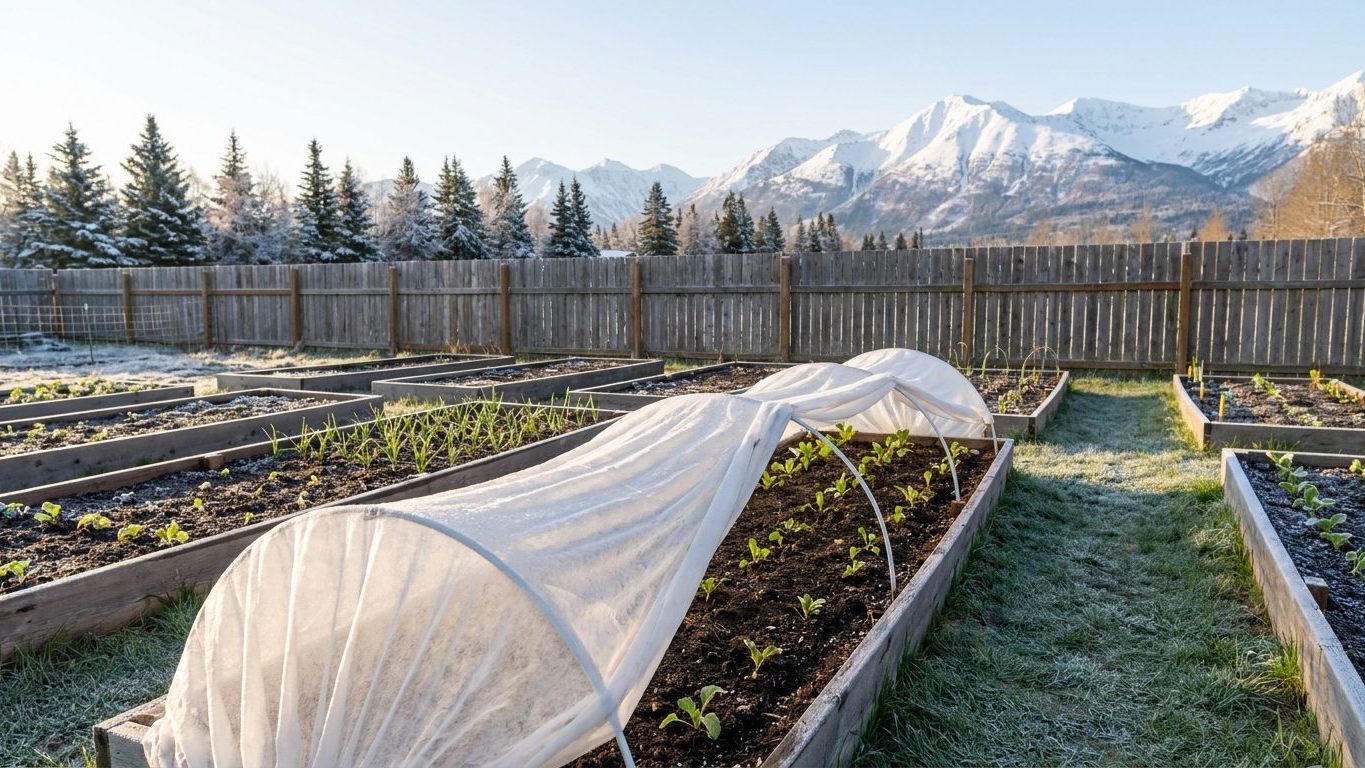

At Billings, keep covers on tender crops until the mean last freeze window of April 29 to May 10 has passed, and put covers back on every evening a freeze is forecast from late September on. The first fall freeze there falls between October 1 and October 14. Covers buy a few degrees, and they only work if they are on before the cold arrives.
The short answer for Montana
Cover cold-hardy crops in early spring, a couple of weeks before the April 29 to May 10 window. Keep covers on tender crops such as tomatoes, peppers and squash until that window is well behind you. In fall, have covers ready by the end of September and use them on every night the forecast calls for a freeze. The broader plan for stretching both ends of the season is laid out in Extending the Growing Season in Montana.
Those dates come from NOAA’s 1991-2020 climate normals for Billings. They mark the 30 to 70 percent band of probability for a 32°F freeze. Early in the band, a freeze still to come is more likely than not. By the end of it, a freeze is less likely than not, but still possible. The same goes for fall, where October 1 to October 14 is the band in which a first 32°F freeze is possible. Billings is one of the milder valleys in the state. Mountain valleys elsewhere in Montana can frost in any month.
When should you cover plants in spring?
Hardy crops like spinach, lettuce, peas and radishes can go under a row cover or low tunnel in early April. The cover warms the soil and shields seedlings from the light freezes that still come. Tender transplants belong in the ground after the window closes, with a cover kept within reach for the cold snap that sometimes follows. A freeze after May 10 is uncommon, but it is not rare.
When should you cover plants in fall?
Start in the last days of September. Clear, still nights are the dangerous ones, because the ground radiates its heat straight to the sky. Cloudy or windy nights usually keep frost off. Cover at sundown, while the soil still holds the day’s warmth, and uncover the next morning once temperatures climb. A first freeze is often followed by weeks of mild weather, and that is the stretch covers are meant to protect.
What will not work here
A single layer of light fabric will not carry tomatoes through a hard freeze in early May. Covers add a few degrees, and a night that falls well below 32°F beats them. Setting out warm-season transplants on April 29 and counting on a cover to save them is a bet that loses often enough to matter, since a freeze after that date is still more likely than not.
Clear plastic with no venting fails in the other direction. Big, sunny days are common in Montana, and the air under a closed tunnel heats up quickly. Seedlings that survived a frosty night can cook by noon. Open the ends or lift the sides by mid-morning, and close them again before the sun drops.
Wind is the quiet problem. Gusts will lift unanchored fabric and strip it off the bed in a night, leaving plants exposed at the worst moment. Pin the edges with soil, boards or landscape staples, and add hoops so the cover does not rest on the foliage. Matching the material to the job is covered in Which Season Extenders Work in Montana.
Winter cold is beyond what a cover can handle. The mean daily minimum of the coldest month at Billings is 17.9°F, which is far below what any tender crop tolerates. A cover that works in October will not hold a pepper plant through January. Only hardy greens and roots have a chance in winter, and even then only under a well-built tunnel in a mild valley.
Slow crops are the other casualty. Varieties that need a long stretch of warmth after setting fruit, such as melons and late corn, are not rescued by a fall cover. Choose faster varieties and use covers for what they do well, which is to shift the edges of the season by a couple of weeks.
Gardeners in mountain valleys face a further problem. If frost can come in any month, a calendar offers little protection. Keep covers within reach all summer, and check the evening forecast instead of the date.
What changes across Montana
The USDA Plant Hardiness Zone Map (2023, built on 1991-2020 normals) places Montana in zones 3a through 6a. That is a wide spread, and no single answer fits it. Zones rest on one variable, the average annual extreme minimum temperature. They tell you what survives the winter, not when to cover in spring or fall. Two gardens in the same zone can have frost dates weeks apart, depending on elevation and how cold air settles.
The Billings figures sit toward the milder end of the state’s valleys. A gardener in the far north, near the Canadian border, or at higher elevation should shift the whole calendar. Covers go on later in spring, tender transplants wait longer, and fall covers go on earlier. At altitude, the practical rule is to treat any clear night as a possible frost and keep covers on hand through July and August.
Latitude matters in a different way. Billings sits at 45.81 degrees north. Day length, not warmth, tells an onion when to stop making leaves and start making a bulb, so a gardener well north or south of that line should check their own latitude before copying onion dates. A cover warms the soil and the air around a plant. It does nothing to the length of the day.
To find your own zone, use the USDA map and enter your ZIP code. Do not guess from a neighbor’s garden across a ridge.
Where to check this for your own county
The best local source is Montana State University Extension. Each county has an office staffed by people who know the local frost pockets, soils and wind. Start by finding your county’s page and looking for two things: a local planting calendar and a list of varieties trialled in your county.
The planting calendar will give frost dates and sowing windows that fit your elevation, which beats any statewide number. The variety trials matter just as much. A tomato that ripens in a mild valley may never ripen in a cold one, and the county trials show which varieties finished in conditions like yours.
Many county offices also answer questions by phone or email, and some run Master Gardener programs that handle local questions. If you are planning a tunnel or cold frame, ask about the wind and snow load in your area before you build.
The Billings dates in this article are a statewide starting point. A county recommendation beats a state one, so treat these dates as a rough frame and let your local office adjust them.
Checking this against your own garden
Your own observations outrank every date above. Three are worth watching, and none needs any equipment.
- Soil warmth by feel. Push your hand into the bed, a few inches down, in the morning. If the soil feels cold enough to ache, warm-season seeds and transplants will sit and stall. Compare a covered bed with an uncovered one. The difference shows what your cover actually gains, and which beds warm first.
- The first male flowers. Squash and cucumbers open male blooms days before the females. When female flowers appear, lift or remove the cover so pollinators can reach them. The date these blooms show tells you how much warmth your site gets compared with the calendar.
- The first true leaves. Seedlings first open a pair of seed leaves, then true leaves that look like the mature plant. Steady growth of true leaves under a cover means conditions are right. Purple tints or stalled growth means the plants are chilled, and the cover may need another layer or a later start.
Write down the dates of what you see each year. After a few seasons you will have a calendar that fits your own yard better than any published one.
Common questions
Can you cover plants after a frost has already hit?
Covering after frost has formed does not undo the damage. Hardy greens and roots often shrug off a light freeze, while tender crops turn dark and limp. The point of a cover is to go on before the cold arrives, so keep it folded nearby from late September.
How early can a row cover go on in spring?
For cold-hardy crops, a couple of weeks before the April 29 to May 10 window is a sound start. The cover holds in warmth and softens light freezes. Tender crops wait until the window has passed, with the cover kept ready.
Should covers come off during the day?
Plastic needs venting on sunny days to avoid overheating. Lightweight fabric can stay on through cool, cloudy stretches. Once squash, cucumbers or tomatoes begin to flower, uncover them so pollinators can work.
Do the Billings frost dates apply across Montana?
No. Billings is one of the milder valleys, and the statewide hardiness range runs from zone 3a to 6a. Gardens in colder valleys, at altitude or in the far north frost earlier in fall and later in spring, and some can see frost in any month.