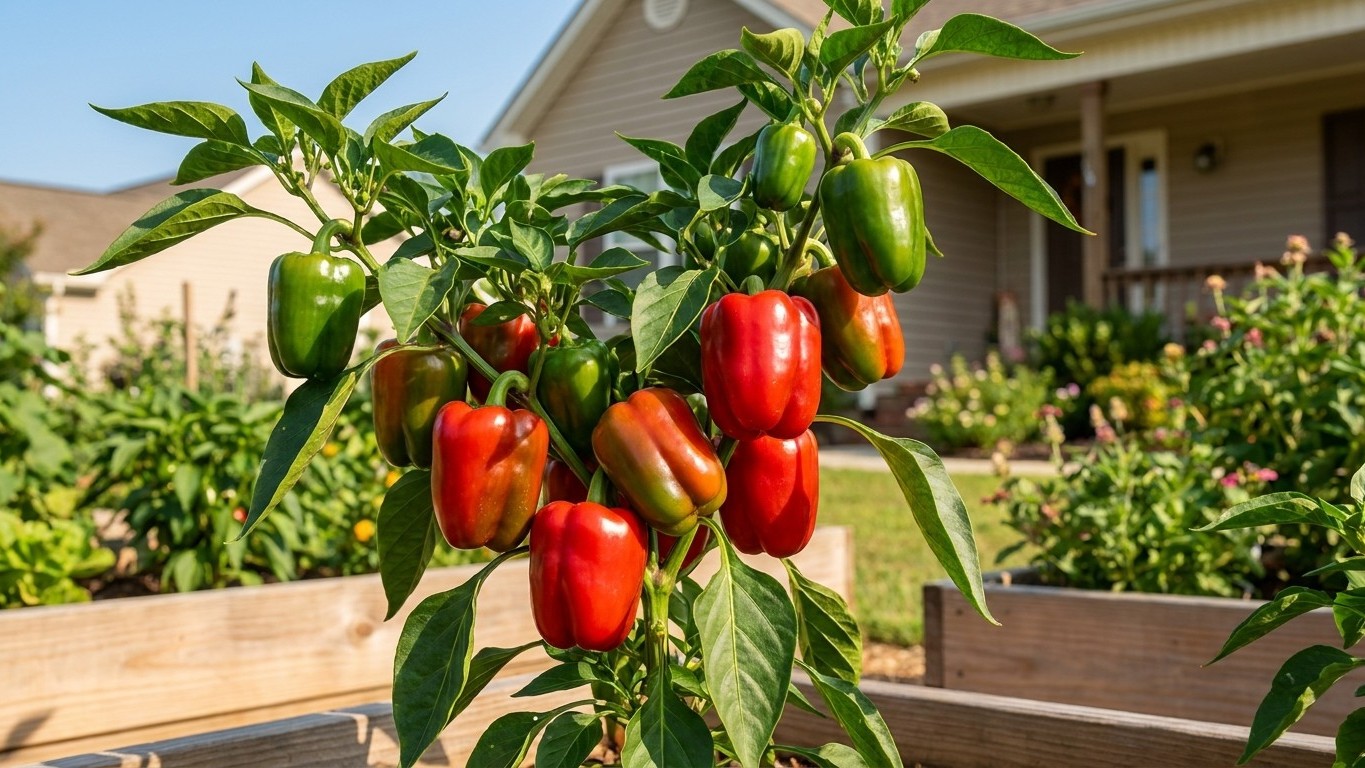

Pick peppers about 70 to 85 days after transplanting, according to Clemson Cooperative Extension. In the Piedmont, the last spring frost falls between March 23 and April 5, and transplants wait for warm soil after that. First picking therefore depends on when the plants went in. Then comes the step most gardeners get wrong. Whole peppers keep best at 45 to 50°F, which is warmer than a refrigerator, and below about 45°F they pit and soften.
Keeping them, and for how long
Peppers come from warm-climate stock, and their flesh is injured by cold well above freezing. Growers call this chilling injury. The skin develops sunken pits, the wall goes soft and watery, and the fruit rots faster once it warms back up. A freshly picked pepper looks tough, which is why so many people put it straight in the crisper drawer. The damage often shows up a few days later, after the fruit has come back to room temperature.
Clemson Cooperative Extension’s Home & Garden Information Center gives the target in its pepper fact sheet: “The optimal conditions for storage are temperatures of 45 to 50 °F and 80- to 90-percent relative humidity for two to three weeks.” The humidity half matters as much as the temperature. In dry air, a pepper loses water through its skin and shrivels. At the high end of that humidity range, the skin stays taut.
What does the refrigerator do to peppers?
A household refrigerator is set colder than 45°F, so it sits below the safe range for whole peppers. That is the mistake nearly everyone makes, and the pitting and softening that follow are the signs of chilling injury, not of an old pepper. Refrigerator air is also dry, so the fruit can pit and shrivel at the same time.
Cut peppers are a different case. Once a pepper has been sliced, it belongs in a sealed container in the refrigerator and should be used soon. The cold-injury rule applies to whole, uncut fruit that you hope to hold for a while.
How long will picked peppers last?
Two to three weeks is the ceiling under the best conditions Clemson describes. It is a maximum, reached only when temperature and humidity both stay in range from the day of picking. A pepper picked at the peak of a hot afternoon and left on the counter will not make it that long. A fruit with a nick, a sunscald patch or a soft spot will not either, so sort out blemished peppers and eat them first.
The gap between the garden and the table also matters. Fruit picked in the cool of the morning starts its storage life with less field heat to shed. Peppers that cannot be kept in a good spot, or that arrive faster than the household can eat them, are better chopped and frozen for cooking than left to soften in the wrong place.
Where in the house that actually is
A target of 45 to 50°F sounds easy until you look for it in a real house. Most of the usual places for produce miss it in one direction or the other, as the table shows.
| Place | What goes wrong | What to check |
|---|---|---|
| Kitchen refrigerator | Colder than the safe range, so whole peppers pit and soften | Keep whole peppers out; use it for cut ones |
| Kitchen counter or heated room | Far too warm, so fruit wrinkles and softens early | Fine only for peppers you will eat within a day or two |
| Garage | Swings with the weather, hot in an August afternoon and cold on a winter night | Read the thermometer at midday and at dawn |
| Basement or interior pantry | Often the closest match, though some run dry or damp | Read temperature and humidity over several days |
In a Piedmont house, the basement or an unheated interior closet away from the kitchen and the heating ducts comes closest. Earth-sheltered rooms stay steadier than anything above ground. A cool pantry on an inside wall can work too, but a pantry beside the oven or the water heater will run well above 50°F.
A guess about a room is not good enough, so check the temperature where the peppers will actually be stored. Leave a thermometer in the spot for two or three days before you trust it with a harvest, and look at it in the morning and again in late afternoon. Skipping that check costs you the very fruit you spent the summer growing, since a spot that is too cold pits the peppers and a spot that is too warm shortens their life. A cheap hygrometer reads humidity the same way, and a loosely closed perforated bag can lift humidity in a dry room without trapping water against the skin.
If no room lands in range, aim a little on the warm side. A room at 55°F that is humid keeps peppers longer than a refrigerator that is too cold. Expect less than the full two to three weeks in any room that misses the range.
How do you know a pepper is ready to pick in North Carolina?
Start with the calendar on the plant tag. Clemson counts the 70 to 85 days from transplanting, so write the transplant date on a label and count forward. The timing shifts with the region. The Blue Ridge mountains to the west run several weeks later in spring than Charlotte, and the coastal plain runs earlier. Your county extension office can tell you the typical dates for your own county.
Utah State University Extension adds the conditions behind that count. Transplants need 8 to 10 weeks indoors before they go out, and they belong in the ground once the soil reaches 60°F, after frost. Setting them out too early stalls them, and the 70 to 85 days then run longer than the label suggests.
Then come the weeks when picking depends on whether the plant is setting fruit at all. Utah State University Extension says fruit set fails at both ends: nights below 55°F or days above 90°F. The reference station in Charlotte averages 35 days a year at 90°F or more, so most Piedmont gardens run into the hot end at some point in the summer. The cool end depends on your own nights, which no regional average will tell you, so keep a thermometer outside and watch it in late spring and again in early fall. Flowers that drop during a hot spell mean a gap in the harvest later. For the full picture, see Why Peppers Fail to Set Fruit in North Carolina.
On the plant, a pepper is ready when it has reached full size for its type and the skin is firm and glossy. Cut the stem with clippers or scissors rather than pulling, because the branches snap easily. Frequent picking keeps the plant producing. Fruit left to hang past its prime invites trouble from insects and birds, which is covered in What Eats Pepper in North Carolina, and When. Before the first fall frost, which a county extension office can date for your area, strip every fruit that has reached usable size, because frost will end the plant. For the whole season, from seed to last pick, the overview Growing Peppers in North Carolina lays out the sequence.
Common questions
Can whole peppers go in the refrigerator at all?
They can, but they will suffer. A refrigerator is colder than the 45 to 50°F that Clemson names as ideal, and below about 45°F peppers pit and soften from chilling injury. If the refrigerator is your only option, keep the peppers there for as short a time as you can and eat them first. Cut peppers belong in the refrigerator in a sealed container.
How many days after transplanting are peppers ready?
Clemson Cooperative Extension says peppers should be ready for harvest in about 70 to 85 days after transplanting. That is a typical range, and weather moves it. A cold snap after planting, or a stretch of nights below 55°F, can delay both flowering and fruit.
Do days above 90°F stop peppers from producing?
They can stop fruit from setting. Utah State University Extension lists days above 90°F as one of the two ends where fruit set fails, with nights below 55°F as the other. Charlotte has about 35 days a year that reach 90°F or more, so a pepper plant in the Piedmont will likely meet some of them. Shade cloth in the afternoon and steady watering are the usual remedies, and the plants often resume setting fruit once the heat eases.
Do mountain and coastal gardens pick on the same schedule?
No. The Blue Ridge runs several weeks later than Charlotte in spring, and the coastal plain runs earlier. Because the 70 to 85 days count from transplanting, a later transplant date pushes the first harvest later by the same amount. Call your county extension office for the frost dates in your own area before you set out plants.