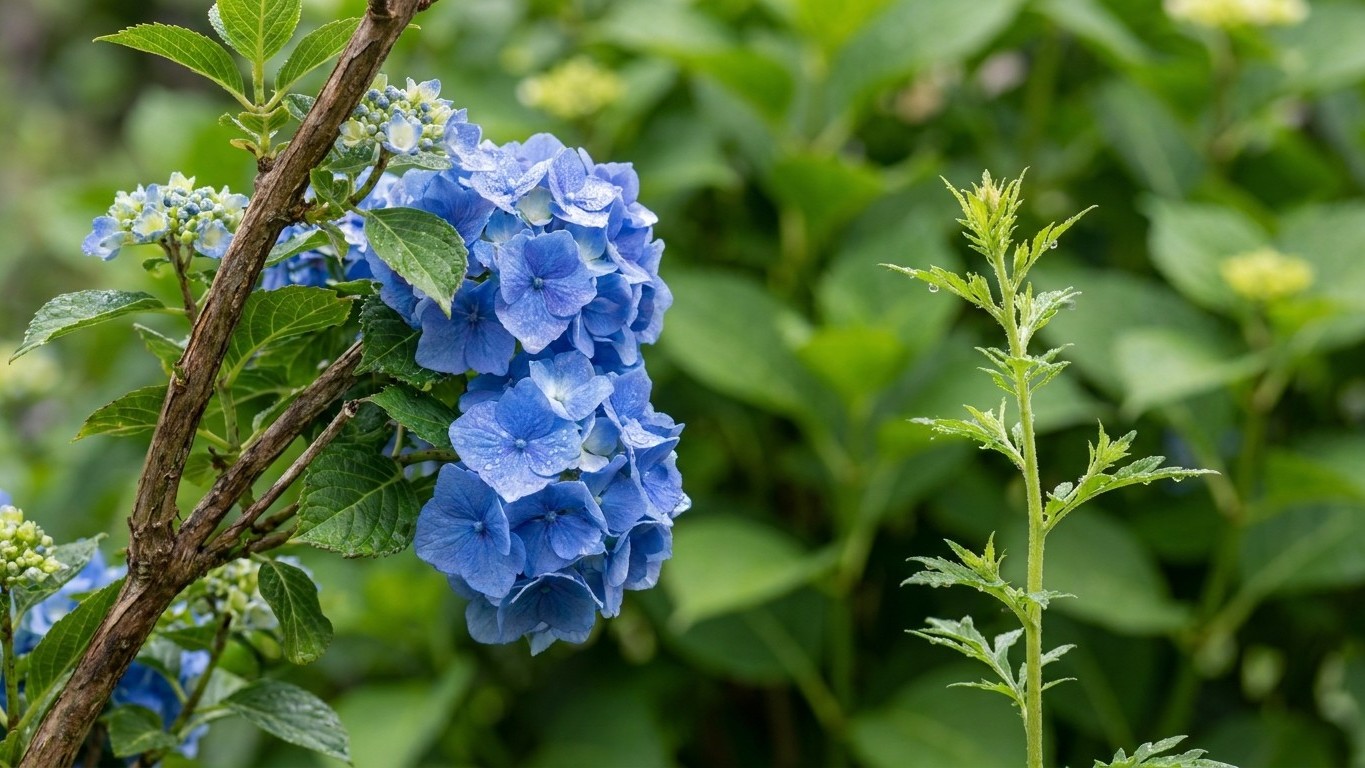

Hydrangeas are pink in Nebraska because the soil is usually neutral to alkaline. In that soil, aluminum, the mineral that turns bigleaf hydrangea flowers blue, stays locked up and the plant can’t take it in. To change the color you have to lower the soil pH and keep phosphorus modest. It takes a full season or more, and only some hydrangeas will respond at all.
What this comes down to in Nebraska

Turning a hydrangea blue here is a season-long project, and it fits inside the frost window at Omaha: the last spring frost typically falls in mid to late April, and the first fall frost in mid to late October. Those are reference-city figures from the Omaha airport station, based on the NOAA NCEI U.S. Climate Normals. Suburban and rural gardens can see the last frost later and the first fall frost earlier than the airport does, especially at higher elevation.
That window sets your work calendar. Soil treatments go on in spring as the shrub leafs out and finish well before fall. Flower color comes from what the roots take up while buds and blooms are forming, so a treatment applied in October does little for next summer’s color.
Why does alkaline soil keep hydrangeas pink?
Bigleaf hydrangea flowers carry a single pigment that shifts color depending on whether aluminum is present inside the plant. With aluminum, the flowers go blue. Without it, they go pink to red. Aluminum is abundant in almost every soil, but it dissolves only when the soil is acidic. Once pH climbs too high, the aluminum turns into forms the roots can’t absorb, and the flowers come out pink.
Much of Nebraska sits on that side of the line. Many soils across the state are rich in lime and run neutral to alkaline, and the drier the region, the more likely this is. Groundwater used for irrigation often carries dissolved carbonates, too, so every watering nudges the pH back up. Even a bed that was acidified last year can drift back toward pink.
Which hydrangeas can actually turn blue?
Bigleaf hydrangea (Hydrangea macrophylla), including its lacecap and reblooming forms, changes color with soil chemistry. Mountain hydrangea behaves the same way. The smooth hydrangeas such as Annabelle stay white. Panicle hydrangeas fade from white to pink as the blooms age, which is a response to season and temperature and has nothing to do with the soil. Oakleaf hydrangea does the same. If your pink flowers started out white and blushed in late summer, soil treatments won’t turn them blue.
Some bigleaf cultivars lean pink or red by nature and give a muddy purple at best. Others change readily. A nursery tag often says whether a variety is known for deep blue, and the plant’s first-year color in your soil tells you more than the tag does.
Working it out for your own garden
Begin with a soil test, not a bag of amendment. Your county extension office can explain how to collect a sample and which lab to send it to, and the result gives you a pH reading. That number is the starting point for everything else, since a bed at 7.5 needs far more work than one at 6.5.
The table shows the rough relationship between pH and color for bigleaf types.
| Soil pH (approximate) | Aluminum available? | Typical flower color |
|---|---|---|
| 5.5 or lower | Yes | Blue |
| About 5.5 to 6.5 | Partly | Purple, or pink and blue on the same plant |
| 6.5 or higher | No | Pink to red |
From there, the method is simple. Compare your test reading to the table, then decide how far the pH has to fall. A reading just above 6.5 can move with modest help. A reading well into the alkaline range may never hold at blue in the open ground, and that’s the point where a large container becomes the better plan.
Two products do the work. Aluminum sulfate supplies aluminum directly and acidifies the soil quickly, but too much at once can burn roots and stress the shrub. Elemental sulfur is gentler and slower, because soil microbes have to convert it into acid. Plan on sulfur starting in spring and aluminum sulfate going on in lighter doses from the time leaves open through early summer. Follow the label on whichever you buy, and don’t double a dose to speed things up.
Pair that with a low-phosphorus fertilizer. Phosphorus binds aluminum in the soil and makes it less available even when pH is right. Many general lawn and garden fertilizers are heavy in phosphorus, so check the middle number on the bag.
Retest in fall, after the first fall frost has ended the season, and compare against your first reading. If the pH has dropped but the flowers are only purple the first summer, that’s normal. Many plants need a second season to show full blue.
What changes across the state
Nebraska is a wide state, and the garden conditions shift across it. The USDA hardiness zone system, which is built on average annual extreme minimum temperature, places the state anywhere from zone 4b to zone 6a. Omaha and the southeast sit toward the milder end. The Panhandle and the northern tier sit toward the colder end.
Soil pH follows rainfall. The wetter east, where more rain washes lime down through the soil, tends to have less alkaline soil than the drier west. In the west, calcium carbonate sits close to the surface and fights every attempt to acidify. A gardener near the Missouri River may bring a bed to blue with a few seasons of steady work, while a gardener in the Panhandle may find the same plan keeps slipping back.
Soil texture matters as well. Sandy soils, as in much of the Sandhills, hold little buffering capacity, so pH moves faster in both directions. Heavy clay soils resist change but hold it longer once it happens. Acidic organic matter such as pine bark or peat moss can help acidify the soil a little, but it won’t hold the pH down on its own.
Elevation and wind change the frost calendar more than they change the color chemistry. In colder, windier parts of the state, spring cold snaps can kill bigleaf flower buds that formed on last year’s stems, and no amount of soil work fixes a plant with no buds. Protecting Hydrangeas Through a Nebraska Winter covers that side of the problem.
The mistakes this state punishes

Dumping the whole season’s aluminum sulfate on at once is a common mistake. In a bed that started alkaline, a heavy dose can scorch roots and leave brown leaf edges before the flowers have changed a shade. Smaller applications spread across the leaf-out period work better and cost less.
Watering with untreated well or hard municipal water undoes much of the effort. If the water is alkaline, the bed creeps back toward pink all summer. Rainwater from a barrel is gentler, and a pH test strip on your hose water tells you what you’re dealing with.
Planting right beside a concrete foundation or sidewalk causes the same trouble. Concrete leaches lime into the surrounding soil, which holds pH high in exactly the strip where many people plant. Lawn lime and wood ash spread near the bed have the same effect. Give the shrub a few feet of clearance, or build a raised bed of acidic mix.
Judging the result too early is another way to give up. A plant that shows purple by midsummer is on its way. Pulling it out, or doubling the dose in August, helps nothing.
Pruning at the wrong time also costs blooms, which makes color irrelevant. Bigleaf types set buds on old wood, so a heavy cut in spring removes the flowers you were trying to recolor. When to Prune Hydrangeas in Nebraska lays out the timing. Finally, don’t treat white or panicle hydrangeas at all. The soil change won’t affect them and you’ll only stress the plant.
Checking this against your county
The Omaha frost dates and the pH ranges above are starting points. Your own soil and your own microclimate decide the outcome. Your county office at University of Nebraska–Lincoln Extension can help with soil testing, local water quality and which hydrangea types do well near you. For the broader picture of site, planting and care, see the state guide to growing hydrangeas in Nebraska.
Common questions
Can I turn a pink hydrangea blue in one summer?
Sometimes you’ll see partial change, with purple or mixed pink and blue blooms, in the first season. Full blue takes time, since the plant has to take up aluminum while new buds form.
Will coffee grounds or vinegar turn my hydrangeas blue?
Neither does much. Coffee grounds have a small and short-lived effect on pH, and vinegar acidifies the soil briefly, then washes out. Neither supplies aluminum, and a soil test plus sulfur or aluminum sulfate works far more reliably.
Is it easier to grow blue hydrangeas in a pot?
Yes. A container with acidic potting mix gives you full control of pH and water, which is difficult in alkaline ground. Use rainwater when you can, and bring the pot to a sheltered spot for winter, since roots in pots freeze more easily than roots in the ground.
Why did my blue hydrangea turn pink again?
The pH has probably drifted back up. Alkaline irrigation water, lime from nearby concrete, or a fertilizer high in phosphorus can all pull it back toward pink. Retest the soil in fall and repeat the acidifying treatments next spring.