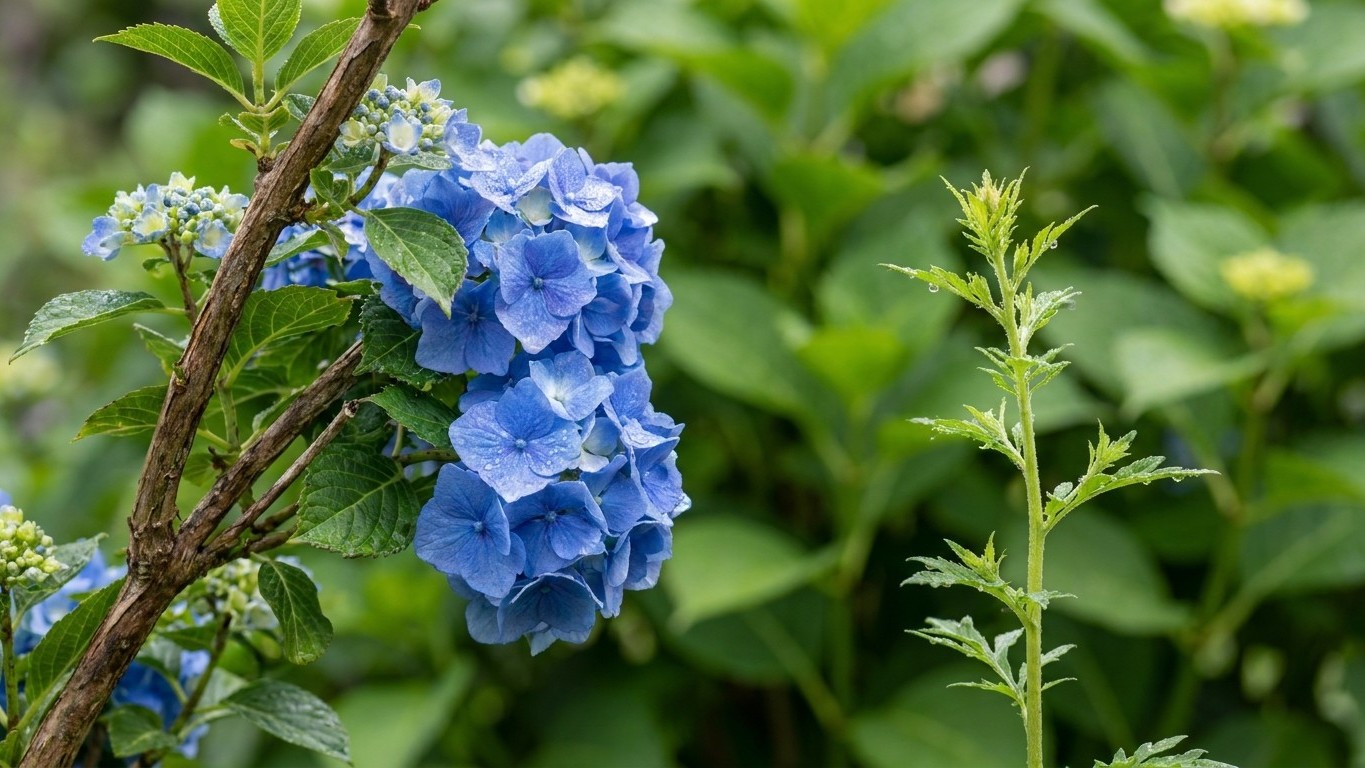

Prune by how your hydrangea blooms. Panicle and smooth types flower on new wood, so cut them in late winter or early spring, before buds swell. Bigleaf and oakleaf types flower on wood grown the year before, so any shaping happens right after the flowers fade, and spring work is limited to removing dead stems. Frost timing decides when “early spring” actually arrives in a Nebraska yard.
What this comes down to in Nebraska

In Omaha, where the airport weather station shows the average last spring frost falling between April 12 and April 23, hydrangeas that bloom on new wood get pruned in late winter to early spring, before buds swell. Those that bloom on old wood wait until after flowering, with only dead-stem cleanup once that frost window has passed. The dates come from the NOAA NCEI U.S. Climate Normals for the Omaha station. They describe that one site. Suburban and rural gardens can see the last spring frost a week or two later than the airport does.
The first fall frost at the same station falls between October 15 and October 26, and that marks the other end of the pruning calendar. Cuts made in the weeks before it push soft new growth that the first hard freeze then kills. Leave the shears alone from late summer until the plant is dormant.
Where winters are cold enough to dip into USDA zone 4b (the USDA system rates zones by the average annual extreme minimum temperature, and the state runs from 4b to 6a on the 2023 map), the type of hydrangea matters even more. Old-wood bloomers are the ones that lose flower buds to a hard winter or a late freeze, and pruning at the wrong time makes that loss worse. If you are still choosing plants, Which Hydrangeas Survive a Nebraska Winter sorts the types by hardiness.
When do you prune panicle and smooth hydrangeas?
Panicle types such as Limelight and smooth types such as Annabelle set their flower buds on shoots that grow in the current season. You can cut them hard without giving up the season’s blooms. Do it on a mild day in late winter or early spring, before the buds swell and well before leaf-out.
For panicles, take off up to a third of the height and cut back to a pair of healthy buds. For smooth hydrangeas, cutting to about a foot above the ground works well and keeps the stems from flopping under the heavy flower heads.
When do you prune bigleaf and oakleaf hydrangeas?
Bigleaf and oakleaf hydrangeas form next year’s buds in late summer and fall. Any shaping has to happen soon after the flowers fade, and by early August at the latest. After that you are cutting off the following summer’s flowers.
Reblooming bigleaf types, such as Endless Summer, flower on both old and new wood. They tolerate a lighter hand, but dead-stem removal in late spring is still the only cut most of them need. Pruning has no effect on bloom color. That comes from soil chemistry, which Why Hydrangeas Are Pink in Nebraska, and How to Turn Them Blue covers.
Working it out for your own garden
Three questions settle the timing anywhere: what kind of hydrangea you have, whether its stems are alive, and where your yard sits in relation to the frost window. Answer them in that order and you can build the calendar yourself, even in a year when spring runs early or late.
How do you tell which kind you have?
Look at the flower heads and the leaves. Cone-shaped flower clusters on a tall, upright shrub mean a panicle. Big round white heads that open lime green on a sprawling, mounded shrub mean a smooth hydrangea. Large round or flat heads in pink or blue with glossy, rounded leaves mean bigleaf. Leaves shaped like oak leaves, with white flower cones that age to pink, mean oakleaf. If a plant came without a tag, the bloom shape and leaf shape will sort it into one of these four.
The table sums up the timing for each.
| Type | Blooms on | Prune when | How much |
|---|---|---|---|
| Panicle | New wood | Late winter to early spring | Up to one-third of the height |
| Smooth | New wood | Late winter to early spring | Down to about a foot |
| Bigleaf | Old wood (rebloomers also on new) | After flowering; dead stems in late spring | Dead wood and spent blooms only |
| Oakleaf | Old wood | Right after flowering | Light shaping only |
How do you decide when to clean up a bigleaf in spring?
Use the frost window as the starting line. The Omaha reference range for the last spring frost is April 12 to April 23. Add roughly one to two weeks for a suburban or rural yard and the earliest sensible cleanup falls somewhere between about April 19 and May 7. A cold spring pushes it later.
Then test the stems. Scrape a little bark with a thumbnail. Green underneath means the stem is alive and its buds may carry flowers. Dry, brown tissue means it is dead. Bigleaf hydrangeas leaf out late, so a bare stem in early May tells you little. Wait until the live buds on the lower stems have opened, then cut each dead stem back to the first pair of plump, green buds, or to the ground if the whole stem is dead.
The same logic applies to the shorter list of decisions in fall. Once the first fall frost window has passed (October 15 to October 26 at the reference station) and the leaves have dropped, the plant is dormant. Cuts to panicle and smooth types can wait for late winter anyway, and the old flower heads give the crown some cover in the meantime.
What changes across the state
Nebraska is a long state, and the frost window from Omaha does not travel well. The Missouri River valley in the east holds heat longer and gives the earliest spring. Moving west, the land climbs toward the Panhandle, nights get colder, and the last frost comes later in spring and the first one earlier in fall. The shift is big enough that a gardener in the far west may be pruning panicles a few weeks after a gardener in the southeast, and cleaning up bigleaf stems later still.
North to south matters too. The northern tier, including the northeast, runs colder in winter and sits closer to the 4b end of the USDA range. The southern counties lean toward 6a. A hydrangea that sails through winter near the Kansas line can lose all of its top growth in the north, and that changes what you are pruning in spring. Where a bigleaf dies to the ground every year, the cleanup is simply cutting the dead canes back to the base, and you should expect little or no bloom from it.
Wind and exposure move the dates as well. The open plains and the Sandhills have swings that a sheltered city lot in Lincoln or Omaha rarely sees, and a warm spell there can be followed by a hard freeze with little warning. Within a single yard, a south-facing wall wakes plants up earlier than a north-side bed, which makes the buds there more exposed to a late freeze. When your site runs warm, take the earlier end of the cleanup window with caution. When it runs cold, take the later end.
The mistakes this state punishes

A common error is cutting a bigleaf or oakleaf back in fall or early spring because the plant “looks dead.” Those bare canes carry the buds for next summer’s flowers. A tidy-up in March removes them, and the plant answers with leaves and no blooms. Wait for leaf-out, check the stems, and cut only what is actually dead.
The second is reacting to a warm spell. Nebraska can run well above normal in March and then drop below freezing in April. Pruning a panicle or smooth hydrangea during the warm stretch is usually fine if the buds have not yet swelled, because those types flower on new growth and a late freeze costs them only some tender shoots. Doing heavy work on an old-wood type, or pulling off the winter protection around it, is where a late freeze catches buds that have started to swell.
A third is late-season pruning. Shearing a panicle in September or October triggers fresh shoots that the first freeze, sometimes as early as mid-October, will burn back. For old-wood types, pruning after early August means cutting off buds that are already formed. If a shrub is outgrowing its spot, the better fix is a hard cut at the right time next year or a move to a bigger bed.
Finally, shearing every hydrangea into a ball with hedge clippers after bloom treats all four types as one. It works acceptably on panicles in late winter and badly on bigleaf in summer. Do selective cuts instead: take dead wood first, then crossing stems, then the oldest canes at the base on an overgrown shrub, no more than a third at a time.
Checking this against your county
The Omaha frost range is a starting point for your own yard. Your county’s frost dates, elevation, and local freeze history will shift the calendar by a week or two in either direction. Call or visit your county office of University of Nebraska–Lincoln Extension for local timing, and read the state guide to growing hydrangeas in Nebraska for the rest of the care routine.
Common questions
Can I prune hydrangeas in the fall in Nebraska?
Avoid it. Fall cuts on a panicle or smooth hydrangea can stimulate tender growth right before the first freeze, and on bigleaf or oakleaf types they remove next year’s flower buds. The only fall task worth doing is removing branches that are clearly broken or diseased.
My bigleaf hydrangea looks dead in May. Should I cut it down?
Not yet. Bigleaf hydrangeas leaf out later than most shrubs. Scrape a bit of bark on a few stems and look for green. Wait until buds have opened on the lower stems, then remove only the stems that stay bare and brown inside.
How far back should I cut Annabelle?
Most gardeners cut smooth hydrangeas to about a foot above the ground in late winter or early spring. A taller stub gives a bigger shrub with a framework, but the stems may flop under heavy blooms.
Should I deadhead hydrangeas?
You can, and the timing depends on the type. On panicle and smooth hydrangeas, spent flower heads can come off anytime or stay for winter interest. On bigleaf hydrangeas, many gardeners leave the faded heads through winter for a little protection over the buds, then trim them off in spring above the first pair of healthy buds.