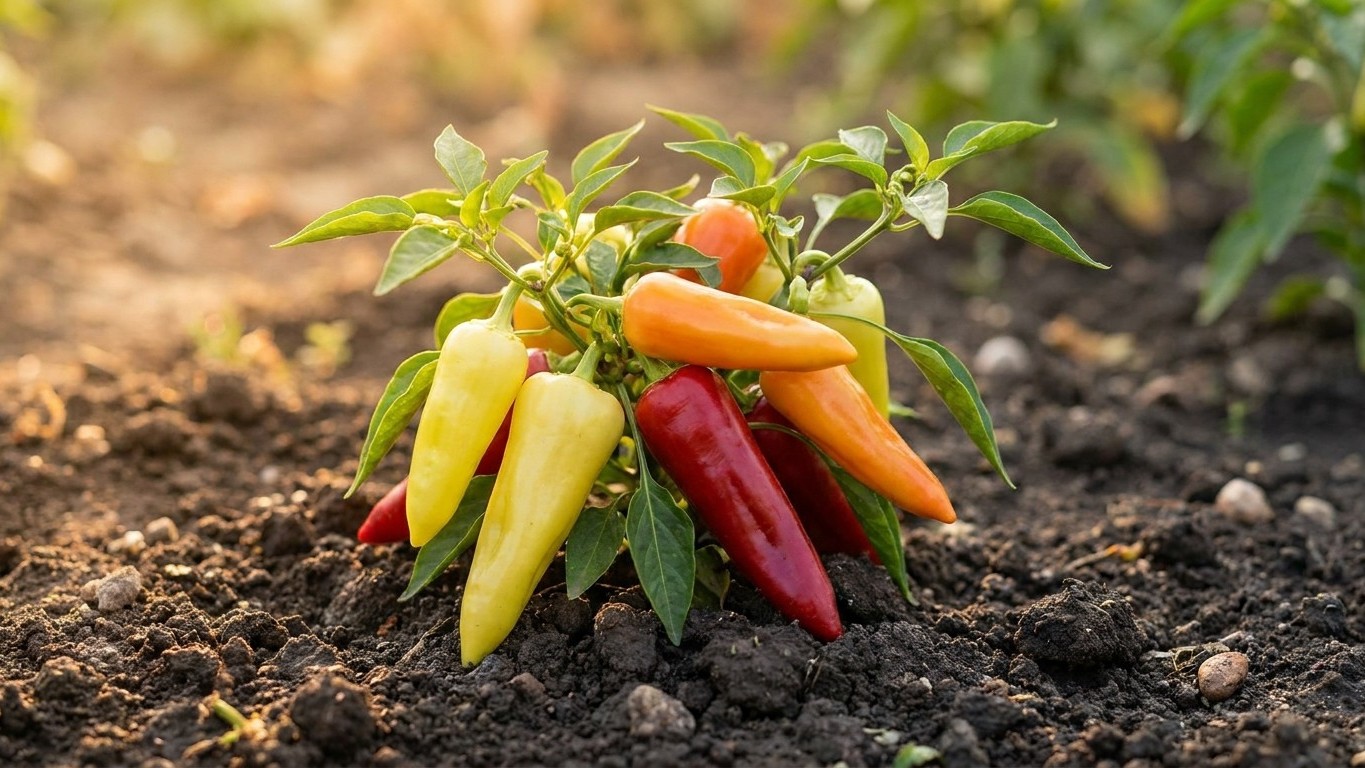

Pick a pepper when it has reached full size for its type and feels firm and glossy. In practice that means roughly 70 to 85 days after transplanting. Then keep it out of the refrigerator. Whole peppers store best at 45 to 50 F and 80 to 90 percent humidity, which is warmer than a household fridge. The cold shelf is where most Nebraska harvests go to pit and soften. What follows covers the heat, the cold, the seed-starting math and the problems that ruin fruit first.
The short answer
The Omaha reference station averages 28.1 days a year at or above 90 F, according to NOAA NCEI Climate Normals. That is about four weeks of heat load in a typical year. It is an average, so any single summer can run well above or below it, and your yard may differ from an airport. For peppers the number matters because fruit set fails at both ends. Utah State University Extension puts the hot limit at days above 90 F. A blossom that opens during one of those days can drop instead of becoming a pepper, and you find out weeks later as a gap in the harvest.
The other end is the cold. The same extension source flags nights below 55 F as the point where fruit set fails on the cool side. This site does not carry summer night minima, so there is no honest number to hand you. Your garden’s nights are yours to watch. Don’t guess from a map or from how cold the winters run. A min/max thermometer left in the bed for a few weeks will tell you more than any estimate.
Picking, once the fruit is there
Clemson Cooperative Extension says peppers should be ready for harvest in about 70 to 85 days after transplanting. Treat that as a window, not a deadline. A pepper that set during a cool spell can sit on the plant a good while before it sizes up. Judge by the fruit: full size for its type, firm walls, a glossy skin. If someone quotes you 35 to 45 days, ask where the clock starts. That count runs from flowering, not from sowing or transplanting.
The first fall frost date is not published on this site, so check your county before you rely on one. Plan to have the fruit in before frost does the picking for you.
Storing what you pick
Clemson’s figures for storage are 45 to 50 F and 80 to 90 percent relative humidity, for two to three weeks. Read “two to three weeks” as a ceiling under ideal conditions, not a promise. Below about 45 F, peppers develop chilling injury: small pits, soft spots, a skin that goes slack. A household refrigerator runs colder than that range. Most people put peppers in the crisper drawer by reflex, and most people lose them by day five or six.
A cool pantry, a basement room or a back corner of a cool garage can land in the right range, but only a thermometer will say so. Pick a spot, check it for a couple of days, and use that spot only if it reads 45 to 50 F. Peppers you can’t use in that window are better sliced and frozen than rescued in the cold.
When to start seed here
Start from the transplant date and count backward. Utah State University Extension says transplants need 8 to 10 weeks indoors, and that they go out when the soil reaches 60 F, after frost. Here is the arithmetic in order, so you can redo it for your county.
- Find your last spring frost. The reference figure comes from the Omaha airport station: April 12 to April 23, the 30 to 70 percent probability band for a 32 F freeze (NOAA NCEI). Suburban and rural gardens typically see the last spring frost later than the airport, often by one to two weeks, and more at elevation. Adding that margin gives a rough April 19 to May 7. Your county Extension office can narrow it.
- Wait for the soil, not the calendar. Peppers go out when the soil reaches 60 F, and that usually comes after the last frost date. Push a soil thermometer into the bed in the morning and again in the afternoon. Your transplant date is whichever comes later, the frost date or 60 F soil.
- Count back 8 to 10 weeks. Multiply by seven. Eight weeks is 56 days, ten weeks is 70. As an example only, say your soil reaches 60 F on May 20. Fifty-six days earlier is March 25, and seventy days earlier is March 11. Sow seed anywhere in that window.
- Count forward to the first pick. From the same May 20 transplant date, 70 days lands on July 29 and 85 days lands on August 13. That is when fruit can start to be ready, if it set on schedule.
- Check the weather at the ends. If nights are still under 55 F when your transplant date arrives, hold the plants back and harden them off a few more days. A long run of days above 90 F, once the plants are blooming, is a reason to expect gaps in the first flush.
Starting earlier than that window does not buy you earlier peppers. Plants that outgrow their pots get leggy and stressed, and they may flower in the tray, then stall after transplanting. The full planting picture, from varieties to spacing, is in Growing Peppers in Nebraska.
What goes wrong here
Nebraska’s heat and its swings between hot days and cool nights cause most of the trouble. Here are the failures to watch for, each with the fix.
- Blossom drop. Flowers fall off without setting fruit, usually after a hot spell with days above 90 F or after a night below 55 F. Neither end is rare enough to ignore, since the reference station alone averages 28.1 hot days a year. Remedy: shade cloth over the plants on hot afternoons, a row cover or a blanket on a cold night, and steady watering through the spell. Don’t spray or fertilize to “fix” it. The plant will bloom again when the weather settles. The fuller diagnosis is in Why Peppers Fail to Set Fruit in Nebraska.
- Sunscald. Pale, papery, sunken patches show up on the side of the fruit facing the sun, and they turn gray or moldy later. It happens when fruit is exposed, often because the plant lost leaves or was pruned hard. Remedy: leave the leaf canopy alone, stake or cage plants so branches don’t splay open, and use shade cloth in the strongest afternoon sun. Pick damaged fruit and use the sound part.
- Blossom-end rot. A dark, leathery, sunken spot forms on the bottom of the pepper. The usual cause is calcium that can’t get to the fruit, most often because soil moisture swings between dry and soaked. Remedy: water evenly, mulch the bed to hold moisture, and run a soil test through your county Extension office before adding calcium. Pull affected fruit early so the plant puts energy elsewhere.
- Chilling injury after the pick. This one happens on your kitchen shelf, not in the bed. Whole peppers stored below about 45 F pit and soften. Remedy: store at 45 to 50 F with humidity at 80 to 90 percent, and expect two to three weeks at the very most. If your fridge is the only cool spot you have, use the peppers within a few days or freeze them.
Insects and animals take their share too, and some of what looks like a heat problem is a bite mark. What Eats Pepper in Nebraska, and When covers who shows up and in what order.
Common questions
Can I store peppers in the refrigerator?
You can, but you shouldn’t count on it for more than a few days. The recommended range is 45 to 50 F, and a household refrigerator runs colder. Below about 45 F, peppers pit and soften from chilling injury. For longer keeping, use a cool spot in that range or freeze them.
How long after transplanting are peppers ready?
Clemson Cooperative Extension gives about 70 to 85 days after transplanting. Treat it as a guide and judge the fruit itself. Look for full size, firm walls and a glossy skin. A cool or very hot stretch can slow things down.
Will days above 90 F ruin the crop?
One hot day won’t. Utah State University Extension says fruit set fails when days run above 90 F, so blossoms that open during a hot spell are the ones at risk. The Omaha reference station averages 28.1 such days a year, which is why shade and even watering help. Cold nights under 55 F cause the same failure from the other side.
How long do stored peppers last?
Under ideal conditions, 45 to 50 F and 80 to 90 percent relative humidity, Clemson says two to three weeks. That is a maximum, not a guarantee. Check them every few days, and use or freeze any that begin to soften.