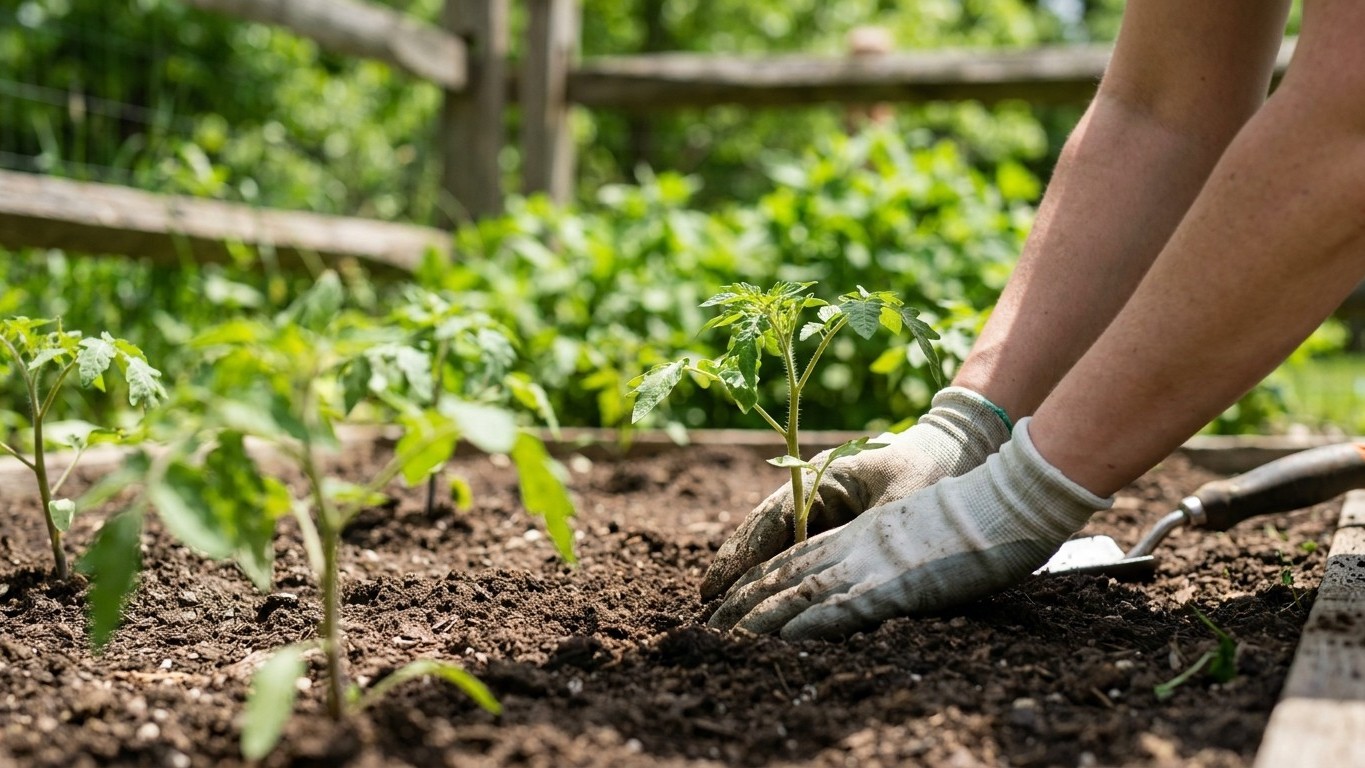

June is the month Nebraska gardens fill up. The reference-station frost window closed in mid-to-late April, so soil has had weeks to warm, and this is the point where beans, corn, squash, melons, and heat-loving transplants like tomatoes and peppers go into open ground without much risk. The real decision this month isn’t whether to plant, it’s how to stagger plantings so the harvest doesn’t all land in one overwhelming week in August.
What goes in the ground in June

By June, frost isn’t the limiting factor anymore in most of Nebraska. The reference weather station’s last spring frost falls between April 12 and April 23, and soil temperature, not the calendar, decides what actually germinates and grows. Corn, beans, and squash all want soil that’s reliably warm through the top few inches, not just a warm afternoon. If the ground still feels cool and damp when you dig down past the surface crust, wait a few more days rather than rushing seed in.
Direct-sown crops that do well starting now include bush beans, pole beans, sweet corn, summer squash, winter squash, cucumbers, and melons. Okra, where the season allows it, also goes in easily this month. These are the crops that were a gamble back in April and May and are now a sure bet.
Transplants are the other half of the picture. Tomatoes, peppers, eggplant, and basil should already be hardened off and in the ground by early June if they weren’t planted in May; if you’re catching up, early June is still workable since the soil has had time to warm through. Sweet potato slips also go in now, since they need consistently warm ground to take hold.
Cool-season crops are trickier. Spinach and lettuce sown now will race to bolt as daytime heat builds, so treat early June as the last reasonable window for a quick, heat-tolerant lettuce variety, ideally with some afternoon shade. Spring peas are essentially done as a planting option by this point; the plants that survive the coming heat are the ones already established, not new seed. Onion sets and other alliums were a spring job, not a June one, since bulbing onions need the long cool stretch earlier in the season to size up properly.
What to start under cover
The seed-starting conversation in June isn’t about spring crops anymore, it’s about fall. Nebraska’s first fall frost, based on the reference station, arrives between October 15 and October 26. Working backward from that window is how you figure out whether there’s still time to start something new.
Fall brassicas are the clearest example. Broccoli, cabbage, and Brussels sprouts started indoors or in a shaded seed tray now spend roughly six to eight weeks as seedlings before they’re ready to move outside, which puts transplant timing in mid-to-late summer, well ahead of the October frost window. Starting them in June, rather than waiting until the heat peaks, keeps the seedlings from getting stressed before they even hit the garden.
The two failure modes here are worth naming directly. Start fall crops too early under cover and you end up with leggy, rootbound seedlings sitting in trays for weeks with nowhere to go, because the garden bed they’re destined for is still full of June’s warm-season crops. Start them too late, and the plants don’t have enough weeks of growth left before the first fall frost window closes the season, leaving you with small, underdeveloped heads. June sits right in the middle of that arithmetic for most Nebraska gardens, which is exactly why it matters to start counting now instead of waiting until August.
It’s also a reasonable month to start a second round of basil or a few extra tomato or pepper seedlings indoors as insurance against transplant losses from wind, hail, or early pest damage in the main planting.
What is ready to pick
June is when the early spring plantings start paying off. Radishes sown in April are long past ready and should be pulled before they turn woody and sharp. Spinach and lettuce planted earlier in spring need to come out now, before the heat pushes them to bolt and turn bitter; once a lettuce plant sends up a flower stalk, the leaves are done.
Strawberries hit their peak in June across most of Nebraska, and this is the month to check plants every couple of days rather than waiting a week, since ripe berries attract birds and rot quickly in humid stretches. Rhubarb stalks are still worth harvesting through June, though it’s wise to stop pulling by early July to let the plant rebuild its energy for next season.
Asparagus is winding down its harvest window by mid-June. The rule of thumb growers use is to stop cutting spears once they start coming in noticeably thinner than earlier in the season, letting the plant put energy into the fern growth that feeds next year’s crop. Garlic planted the previous fall may also be sending up scapes now; cutting those curling flower stalks redirects energy into bulb size and gives you an edible bonus in the process.
Check any stored crops from the previous season, onions, winter squash, and potatoes kept in a cool basement or root cellar, for soft spots or sprouting. Anything starting to turn should be used first rather than left to spoil the rest of the batch.
The jobs that matter this month
Staking and caging need to happen before plants sprawl, not after. Tomatoes, pole beans, and cucumbers grow fast in June’s warmth, and trying to wrestle a cage around a plant that’s already flopped over usually breaks stems. Get supports in place while the plants are still small and manageable.
Mulching pays off directly through the hottest stretch of the year. A few inches of straw or shredded leaves around warm-season crops holds soil moisture, keeps weed pressure down, and buffers roots against the swings between hot afternoons and cooler nights. Skipping this step in June usually means more watering and more weeding for the rest of the summer.
Watering rhythm matters more than watering volume. Deep, less frequent watering trains roots to grow downward, while frequent shallow watering keeps roots near the surface where they dry out fast. Established beds generally do better with a thorough soak every few days rather than a light sprinkle every evening.
Succession sowing keeps the harvest steady instead of all at once. Bush beans and summer squash both do well with a second planting two to three weeks after the first, so the plants don’t all mature and decline in the same week. Pest scouting belongs on the weekly checklist too. Squash bugs, bean beetles, and early signs of Colorado potato beetle activity are far easier to manage when caught on a handful of leaves than after they’ve spread across a whole row.
What not to do in June
The most common mistake this month is treating a stretch of hot days as permission to plant heat-sensitive greens in full sun without any shade cloth or timing plan. Lettuce and spinach sown into peak June heat bolt fast no matter how carefully they’re watered, and the result is bitter, wasted effort.
Overfeeding tomatoes and peppers with high-nitrogen fertilizer once they start flowering is another frequent misstep. Nitrogen pushes leafy growth at the expense of fruit set, so a plant that looked great in May can turn into a lush, leafy tomato bush that produces disappointingly little in July. A balanced or lower-nitrogen feed once flowering starts serves the plant better.
Working wet soil after a heavy June rain is worth avoiding too. Nebraska’s early summer storms can leave beds saturated, and walking or tilling that ground compacts it, squeezing out the air pockets roots need. Waiting a day or two for the soil to firm up costs less than the season of poor drainage that follows compaction.
Ignoring pest scouting because “it’s too early to worry” is the last classic error. By the time squash bug eggs are obvious to the naked eye without looking, they’ve often already been on the underside of leaves for a week or more. A quick check every few days beats a full-blown infestation discovered in July.
Checking this against your own county
A statewide picture of June is a starting point, not a fixed instruction. Nebraska spans USDA Hardiness Zones 4a to 5b, and elevation changes across the Panhandle versus the eastern river valleys shift frost timing and heat buildup by real weeks, not days. The reference station’s frost dates are a benchmark, and most home gardens away from paved, heat-holding areas will see frost linger later in spring and arrive earlier in fall than that benchmark suggests.
Before locking in a planting date, check conditions against your own county rather than the state average. The University of Nebraska-Lincoln Extension maintains local planting guidance suited to specific regions of the state, and it’s the most reliable next step for narrowing a statewide window down to your own backyard.
Common questions
Is it too late to plant tomatoes in June in Nebraska?
No. Tomato transplants can still go in during early June with good results, since the soil has had weeks to warm past the reference station’s last frost window of April 12 to April 23. Later in the month, expect a slightly later harvest than plants set out in May.
Can I still plant sweet corn in June?
Yes, June is a solid month for direct-sowing sweet corn, and staggering a second planting two to three weeks after the first extends the harvest window into late summer instead of one short burst.
Why did my June-planted lettuce bolt so fast?
Lettuce and spinach respond to rising temperatures and longer daylight by flowering early, which turns the leaves bitter. Choosing heat-tolerant varieties and giving them afternoon shade slows this down, but full-sun June plantings will still bolt faster than spring ones.
Should I fertilize my vegetable garden in June?
It depends on the crop’s stage. Leafy greens and young transplants benefit from balanced feeding, but tomatoes and peppers that are already flowering do better with lower nitrogen so the plant puts energy into fruit rather than leaves.