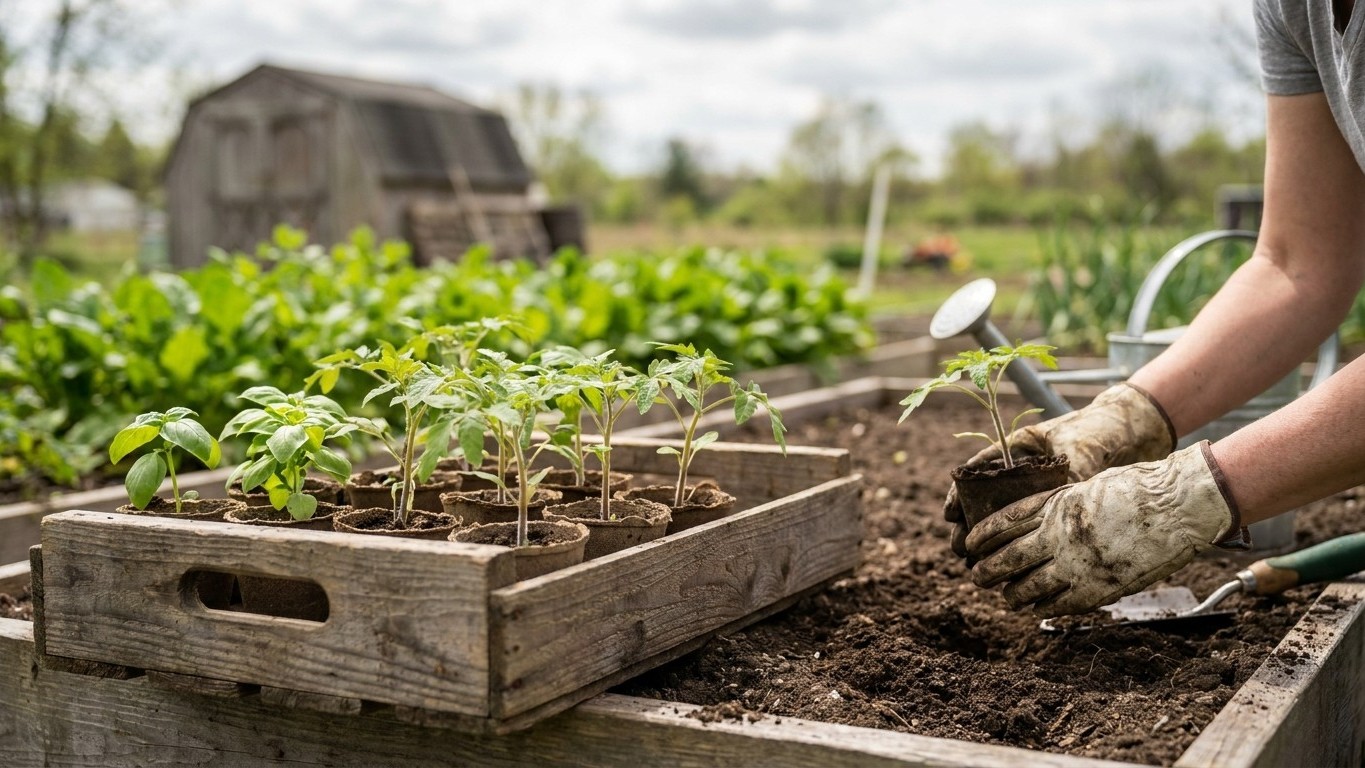

By May, Nebraska gardens have usually cleared the reference frost window of April 12 to April 23, so most of the state can move from cold-hardy crops into warm-season planting. The exact week still depends on soil temperature more than the calendar, and northern or higher counties often lag behind the reference station by a week or two.
What goes in the ground in May

The frost window that matters here runs April 12 to April 23 at the reference weather station, which means that by early May the odds of a damaging freeze have dropped sharply across most of the state. That’s the mechanism that decides everything below, not the date on a calendar. Soil temperature is the real gatekeeper: a warm afternoon doesn’t mean the top four inches of soil have caught up, and cold soil rots seed and stunts roots even when the air feels like summer.
Early May still favors the cold-tolerant crops that could have gone in weeks earlier: potatoes, onion sets, peas, spinach, lettuce, and the alliums generally. These handle a light frost without much drama. By mid to late May, once soil has had time to warm through several consecutive mild days, beans, sweet corn, squash, cucumbers, and melons can go straight into open ground as seed. Tomatoes, peppers, eggplant, and basil move outdoors as transplants rather than seed, and they benefit from waiting until the soil has genuinely warmed rather than rushing them in the week after the frost window closes.
| Crop group | Method | Timing note |
|---|---|---|
| Peas, spinach, lettuce, onion sets | Direct sow | Early May, tolerates light frost |
| Potatoes | Direct plant seed potatoes | Early to mid-May |
| Beans, corn, squash, cucumbers, melons | Direct sow | Mid to late May, once soil has warmed |
| Tomatoes, peppers, eggplant, basil | Transplant only | Late May, after hardening off |
Skip the temptation to push tender crops in right after that April window closes. A late cold snap outside the 30-70 percent freeze-probability band the reference data describes isn’t impossible, and rural gardens away from the reference station often run a week or two behind it anyway.
What to start under cover
Most of the classic “start indoors” work for spring crops is already behind schedule by May, since tomatoes and peppers typically need six to eight weeks under cover before transplanting near the frost window. Counting forward instead of back, May is really the month to start the crops aimed at fall harvest. Working backward from the first fall frost window of October 15 to October 26, broccoli, cabbage, and Brussels sprouts need roughly twelve to fourteen weeks from seed to a mature fall harvest, which puts a mid to late May start date squarely in range for transplanting outdoors in July.
Starting too early under cover produces the same problem every season: leggy, rootbound seedlings stretching for light on a windowsill, stressed before they ever reach the garden. Starting too late for the fall crop runs the opposite risk, chasing a harvest that gets cut short by the first hard frost before the plants finish sizing up. If a warm-season direct-sown planting fails to germinate in the ground, a fast tray of squash or cucumber seedlings under cover can also buy back a couple of weeks for a second attempt, which matters more in years when a cool, wet stretch delays the first round.
What is ready to pick
Early May harvests lean on what carried over the winter and what got an early start under cover or cold protection. Asparagus is the headline crop this time of year, with spears pushing up fast enough that established beds may need cutting every day or two once the ground warms. Rhubarb stalks reach pulling size around the same window, and established chive clumps are usually well ahead of everything else in the herb bed.
Radishes sown in early April are typically ready by early May, since they run their full cycle in around three to four weeks. Spinach, lettuce, and other greens seeded in late March or April start filling out enough for a first cutting, especially if they had a cold frame or row cover keeping the soil a few degrees warmer through cool nights. Peas sown early in the window generally need more time and won’t be at picking size yet.
Stored crops from the previous season deserve a check now too. Onions, potatoes, and winter squash held in storage over winter are entering their last stretch before they start sprouting or softening, so it’s worth sorting through the bins and pulling anything showing soft spots or premature sprouting before it spreads to the rest of the batch.
The jobs that matter this month
Soil prep pays off disproportionately in May because it’s the last easy window before beds fill up with growing plants. Working compost or aged manure into beds now, while they’re still mostly empty, is far easier than trying to side-dress around established roots later. Mulching follows right behind it: once soil has warmed to where you’re comfortable direct-sowing warm-season crops, a layer of mulch locks that warmth and moisture in rather than letting May’s wind strip it back out.
Staking and support structures belong in the ground before plants need them, not after. Tomato cages, pea trellises, and cucumber supports installed at planting time avoid root damage that comes from jamming stakes into soil around an already-sprawling plant. Succession sowing keeps the harvest window open longer, particularly for lettuce, radishes, and beans, all of which bolt or slow down fast once summer heat arrives, so a new short row every couple of weeks through May extends the picking season well past what a single planting would give.
Watering rhythm shifts this month too. Cool-season transplants and newly direct-sown seed need consistent surface moisture to germinate and establish, but overwatering cold soil invites rot before roots can take hold. Pest scouting starts in earnest as well: flea beetles show up fast on young brassica transplants, and aphids build populations quietly on the undersides of leaves before anyone notices the damage. Catching either early, before populations explode, is far easier than fighting an established infestation in June.
What not to do in May
The single most common mistake this month is planting warm-season crops into soil that hasn’t actually warmed up, just because the air felt like summer for a few days. Tomatoes and peppers set into cold, wet soil sit stalled for weeks, sometimes yellowing or dropping leaves, and rarely catch up to a planting made just one or two weeks later into properly warmed ground.
Uncovering cold frames, row covers, or newly hardened-off transplants too aggressively after a mild stretch is the second classic error. A few warm days in a row don’t guarantee the frost risk described by the April 12 to April 23 window has fully passed everywhere, and a transplant that’s been babied under cover for weeks can be knocked back hard by a single cold night it wasn’t hardened against.
Nitrogen timing trips people up too. Heavy nitrogen feeding on tomatoes and peppers early in their outdoor life pushes lush green foliage at the expense of flowering and fruit set, leaving gardeners with a jungle of leaves and little to show for it by midsummer. A modest, balanced feeding at transplant time, saving heavier nitrogen for leafy greens and corn instead, keeps fruiting crops on track. Skipping the hardening-off step entirely, moving trays straight from a warm windowsill into full sun and wind, is the fastest way to lose a batch of seedlings to sunscald or wind stress in a single afternoon.
Checking this against your own county
A state-wide month is a starting point, not a set of instructions for a specific yard. Nebraska’s hardiness range spans USDA zones 4a to 5b, and the difference between the Panhandle’s elevation and the southeastern part of the state can shift a safe planting window by real weeks, not days. The frost figures cited here come from one reference weather station; a rural garden or a spot at higher elevation often sees its last spring frost later and its first fall frost earlier than that station records.
The Nebraska Extension service publishes county-level guidance and a state planting calendar built specifically for these local variations, and it’s worth checking before locking in a planting date based on a state-wide average.
Common questions
Is it safe to plant tomatoes in Nebraska in May?
Generally yes by mid to late May, once soil has warmed past the reference frost window of April 12 to April 23, but always harden off transplants first and watch for late cold snaps in colder counties.
Can I still direct-sow peas and spinach in May?
Yes, especially early in the month. Both tolerate light frost and actually prefer the cooler soil of early May over the heat that arrives later in the season.
What’s ready to harvest in a Nebraska garden in May?
Asparagus, rhubarb, radishes, and early spring greens sown in March or April are the main crops reaching picking size, along with established herbs like chives.
Why does my county’s frost date seem different from what’s published?
Published frost windows usually come from a single reference weather station. Elevation, rural exposure, and distance from that station can push local frost dates later in spring and earlier in fall by a week or two.