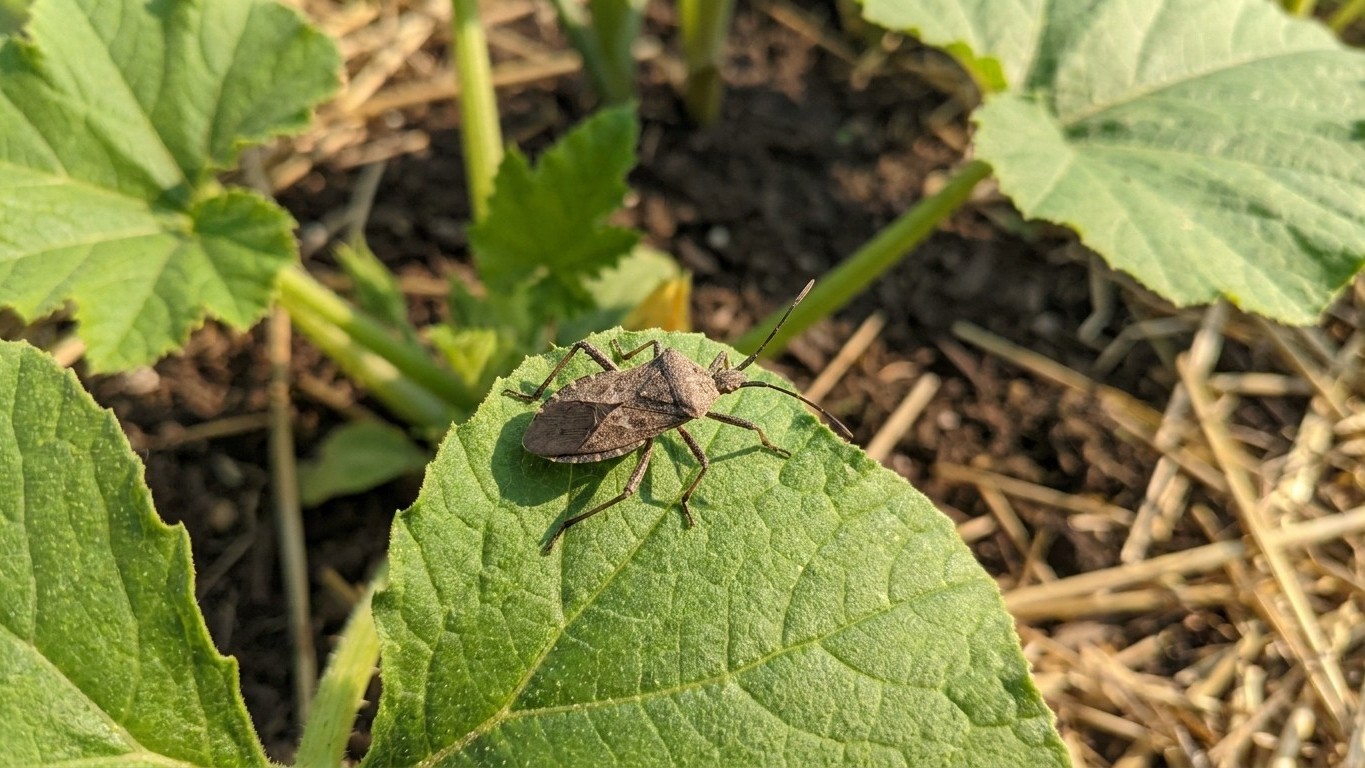

Squash bugs show up in Nebraska gardens in two waves each year: overwintered adults crawl out of leaf litter and mulch once daytime temps hold steady above 70°F, usually mid-to-late May in eastern Nebraska and into early June out west, and their offspring peak from mid-July through August. Row covers timed to that first emergence window, plus fall cleanup that strips their winter hiding spots, do more to stop them than any spray applied after an infestation takes hold.
When squash bugs appear in Nebraska gardens

Anasa tristis, the brownish-gray, shield-shaped insect that plagues squash, pumpkin, and cucumber patches, doesn’t migrate into Nebraska each spring. It’s already here. Adults spend winter tucked under dead vines, wood piles, landscape timbers, or thick mulch, essentially anywhere they can stay dry and out of the wind. Nebraska’s winters, with lows regularly dropping below zero in the Panhandle and single digits common statewide, kill off a good share of the population. But enough survive in sheltered spots to restart the cycle every year.
The trigger for emergence isn’t the calendar, it’s soil and air temperature. Once conditions warm consistently, overwintered adults become active and start searching for host plants. In the Omaha and Lincoln area, that typically lines up with the second half of May. Farther west and at higher elevation around Scottsbluff or North Platte, cooler spring soil pushes emergence into early June. This matters for garden timing because Nebraska’s average last frost date already ranges from early May in the southeast to late May in parts of the Panhandle, meaning gardeners are often transplanting squash and setting out cucumber starts right as the first squash bugs are waking up.
One generation, sometimes two
In most of Nebraska, squash bugs complete one full generation per growing season. Adults emerge in late spring, mate, and the females lay eggs through June and into July. Those eggs hatch into nymphs that molt through five stages before reaching adulthood by late summer. In a longer, warmer season, particularly in southeastern Nebraska where the frost-free period stretches past 170 days some years, a partial second generation can develop, adding another wave of nymphs in September before the new adults settle in for winter. That’s the population gardeners in Nebraska City or Falls City are more likely to see than someone gardening near Chadron.
How to spot squash bug damage before it spreads
The eggs are the easiest early warning sign, and they’re distinctive once you know what to look for. Females lay clusters of bronze to copper-colored eggs, usually in a tidy V-pattern or grid, on the undersides of leaves near the veins. A single female can lay dozens of eggs over her lifetime, and checking the underside of a few leaves each week from late May through July catches most infestations before they explode.
Feeding damage looks different depending on the plant’s age. On young squash and cucumber vines, a heavy nymph population can cause wilting that looks a lot like bacterial wilt or vine borer damage, but squash bug feeding leaves behind small yellow speckles that turn brown and papery, sometimes called “squash bug blight” even though it’s not a disease at all. It’s just cumulative damage from dozens of insects piercing leaf tissue and sucking out plant fluids. On mature plants, the damage shows up as scarring on stems and, later in the season, on the fruit itself, especially on winter squash and pumpkins left in the field to cure.
Adults are harder to catch in the act because they tend to hide at the base of plants or under leaves during the heat of the day and become more active in early morning or evening. Shaking a leaf or lifting mulch near the stem often sends a cluster of them scattering, which is honestly the fastest field diagnosis there is.
What actually stops squash bugs in Nebraska gardens
Squash bugs are stubborn partly because their tough, shield-shaped body resists a lot of contact insecticides once they reach adulthood, and partly because a single missed egg cluster can restart an infestation. The most effective approach in Nebraska conditions combines timing, habitat removal, and targeted treatment rather than relying on one method alone.
Cultural controls that reduce the population before it starts
Fall cleanup matters more for squash bugs than for most garden pests. Because adults overwinter in plant debris, removing old vines, fruit, and mulch from squash and cucumber beds after harvest cuts down significantly on the number of insects available to restart the cycle the following spring. Tilling under crop residue in fall, where practical, exposes overwintering adults to Nebraska’s harsh winter temperatures instead of letting them shelter comfortably until May.
Crop rotation helps too, though it’s less effective on its own since adults can fly and travel between garden beds. Planting squash and cucumbers in a different part of the yard each year, combined with debris removal, makes it harder for a local population to build momentum year over year.
Trap cropping is a technique worth trying in larger garden plots. Blue Hubbard squash is particularly attractive to squash bugs, and planting a few Hubbard vines around the perimeter of a cucumber or zucchini patch draws the insects there first, concentrating them where they’re easier to spot and treat, whether that’s hand removal or a targeted insecticide application on just the trap plants.
Direct control during the growing season
Row covers work well early in the season, before plants flower and need pollinator access. Covering young squash and cucumber transplants with floating row cover from planting until first bloom keeps overwintered adults from reaching the plants to lay eggs in the first place. Once flowers open, covers need to come off for pollination, which is exactly when gardeners should start weekly egg checks on leaf undersides.
Hand removal remains one of the most reliable tools for home gardens. Scraping egg clusters into a bucket of soapy water, or simply crushing them between fingers, eliminates that generation before it hatches. Adults and larger nymphs can be knocked into a bucket of soapy water in the early morning when they’re sluggish and clustered at the base of plants.
For chemical control, timing against the insect’s life stage matters. Adult squash bugs have a hardened exterior that many contact insecticides struggle to penetrate, but young nymphs are vulnerable to insecticidal soap and neem oil sprayed directly on contact. Applying these treatments in the early morning or evening, when nymphs are actively feeding on leaf undersides, gets better results than a midday spray when insects are hiding. According to Extension entomologists, the newly hatched nymph stage, roughly the first one to two weeks after eggs hatch, is the window when insecticidal soap and similar products have the strongest effect. Waiting until adults dominate the population means switching to a labeled insecticide formulated for true bugs, applied according to the product’s directions and with attention to pollinator activity on flowering plants.
Diatomaceous earth dusted around the base of plants and along stems can also help by damaging the exoskeleton of crawling nymphs, though it needs reapplication after rain or irrigation to stay effective.
Varieties and conditions that make a difference
Not every cucurbit is equally attractive to squash bugs. Yellow summer squash and zucchini tend to draw heavier infestations than butternut or acorn squash, and cucumbers are generally less preferred than true squash varieties. Gardeners dealing with repeat squash bug pressure in eastern Nebraska sometimes shift toward butternut types or interplant with less-preferred crops to spread the risk across the garden rather than concentrating vulnerable plants in one bed.
Soil moisture and mulch type play a supporting role too. Heavy straw or wood mulch, while good for moisture retention during Nebraska’s dry summer stretches, also creates ideal daytime hiding spots for adult squash bugs. Switching to a thinner mulch layer, or pulling mulch back from the base of stems where adults tend to cluster, removes some of that shelter without sacrificing the moisture benefits altogether.
The University of Nebraska-Lincoln Extension service tracks regional pest pressure and offers updated guidance each growing season, which is worth checking for county-specific timing since squash bug emergence can shift by a week or two depending on how quickly spring warms up in a given year.
Related guides
- Squash bug in South Dakota: When It Shows Up and What Stops It
- Squash bug in Iowa: When It Shows Up and What Stops It
- Squash bug in Nevada: When It Shows Up and What Stops It
- Squash bug in New Mexico: When It Shows Up and What Stops It
- Squash bug in Connecticut: When It Shows Up and What Stops It
- Squash bug in Delaware: When It Shows Up and What Stops It