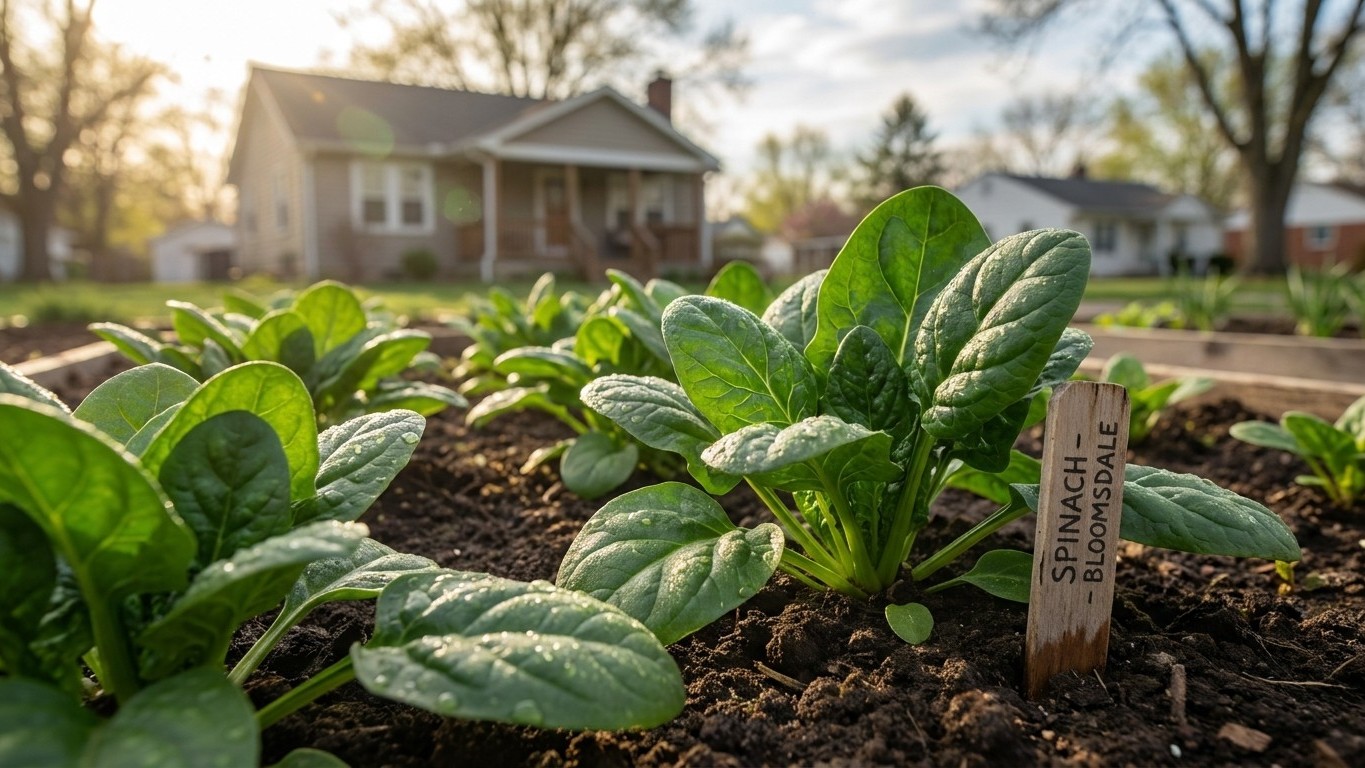

Spinach bolts in Nebraska once the calendar pushes past the longest days of the year, and heat finishes the job. The reference station near Omaha logs nearly 15 hours of daylight at the June solstice, a trigger for flowering that has nothing to do with how hot the thermometer reads. That raises the question of Will Spinach Bolt Early in Nebraska?, since the growing season here splits into two short windows, spring and fall, both bracketed by day length on one side and soil or air temperature on the other.
The short answer
At the reference city near Omaha, the longest day of the year delivers 14 hours and 59 minutes of daylight. That number matters more than most gardeners expect, because spinach flowers, or bolts, in response to long days as well as to warmth. Once daylight stretches past a certain threshold, the plant shifts its energy from leaf production to seed stalk production, and no amount of shade or watering reverses that switch. A cool, cloudy stretch in June does not buy extra weeks here, because the day length that drives bolting keeps climbing whether the air feels mild or not.
Heat compounds the problem rather than replacing it. The reference station averages 28.1 days a year at 90 degrees Fahrenheit or hotter, and spinach grows best where temperatures stay under 75 degrees Fahrenheit. Above that ceiling, growth slows and leaves turn bitter, which means the plant is under pressure from both directions at once as summer approaches: lengthening days pushing toward flower, and climbing heat pushing toward poor-quality leaves.
So is the limit here day length, heat, or both? Both, and they arrive close together on the calendar. Day length becomes a problem first, since it builds steadily from the spring equinox onward regardless of weather. Heat then piles on through late spring and early summer, especially once the region starts stacking those 90-degree days. A gardener who times a spring crop well can usually beat the day-length trigger before the heat load becomes serious, but there is no version of a Nebraska summer where spinach simply keeps growing through July. The plant is built for short, cool stretches, and this region hands it exactly two of those a year.
None of this means spinach is a poor fit for Nebraska gardens. It means the crop has to be treated as a spring sprint and a fall sprint, not a season-long resident of the vegetable bed the way tomatoes or peppers are. Understanding that the trigger is day length first, heat second, changes how a gardener plans sowing dates rather than just watching the thermometer, and knowing When to Sow Autumn Spinach in Nebraska is just as important as nailing the spring window.
How long the spring window really is
- The reference station’s last spring frost falls between April 12 and April 23. Spinach seed should go in the ground two to three weeks ahead of that date, which puts a realistic sowing window at roughly March 22 through April 9.
- Spinach germinates and grows well in cool soil, so an early sowing in that window is not risky the way it would be for a warm-season crop. The plant tolerates a light frost on its own without protection.
- From sowing, the plant has until temperatures push consistently above the 75-degree growth ceiling before quality starts to drop. Nebraska’s spring typically stays below that mark into May, giving several weeks of steady leaf growth before heat becomes an issue.
- Day length is climbing the entire time, from a little over 12 hours at the equinox toward the 14-hour-59-minute peak in June. By late May and into early June, the combination of lengthening days and the region’s first runs toward 90-degree air temperatures typically pushes spring-sown spinach toward bolting.
- Counting from a late-March or early-April sowing to a bolt risk that sets in around late May to mid-June leaves a usable spring window of roughly eight to eleven weeks, depending on how early the ground can be worked and how quickly a given spring warms.
Seed catalogs commonly list spinach varieties such as Bloomsdale, Melody, Teton, and Olympia for home gardens, but the extension source behind the figures in this article does not publish days-to-maturity or bolt-resistance data for any specific variety. Choosing among them on that basis is not something this data set can support, so treat variety names as a starting point for your own research rather than a guarantee of a longer window.
The autumn crop, and when the soil lets you sow
Fall gives Nebraska gardeners a second shot at spinach, and in some ways it is the more forgiving of the two windows, since day length is falling rather than climbing as autumn approaches. But two separate obstacles have to line up before a fall crop works, and in a state with a real summer heat load, they do not always leave much room.
Soil still too warm to germinate
Spinach seed germinates poorly once soil temperature climbs above 80 degrees Fahrenheit. Nebraska’s summer heat load, that same 28.1 days a year at 90 degrees or hotter in the air, keeps soil warm well past the point most gardeners expect, often through most of July and a good part of August. Sowing directly into that warm ground usually means poor, patchy germination even with fresh seed. The practical fix is patience, or active cooling: mulching a bed and watering it through August to knock soil temperature down faster than bare, sun-baked ground would cool on its own, so seed can go in a little earlier than the soil would otherwise allow.
The frost that ends the season
The reference station’s first fall frost arrives between October 15 and October 26. The extension source behind these figures gives no fixed days-to-maturity number for spinach, only a rule of thumb: sow 50 to 75 days before the date you want to harvest. Counting 75 days back from October 15 lands on roughly August 1; counting 50 days back from October 26 lands on roughly September 6. That puts the theoretical sowing window at early August through the first week of September.
Lay those two obstacles side by side and the real fall window narrows considerably. Soil is often still too warm for reliable germination through late July and into August, right when the 75-day count would need seed in the ground. The workable overlap tends to land in late August into the first days of September, once soil has cooled below 80 degrees but before the calendar runs out of days ahead of frost. It is a tight fit, and it is the reason fall spinach in this region rewards gardeners who actively manage soil temperature rather than waiting for it to cool on its own.
Checking this against your own county
Every figure above comes from a single reference station, and Nebraska is a large enough state that conditions shift meaningfully from the Panhandle to the eastern river valleys. Suburban and rural gardens typically see the last spring frost later and the first fall frost earlier than an airport station records, sometimes by one to two weeks, and more at higher elevation. That directly changes both the spring sowing date and the 50-to-75-day countback for fall.
Before locking in a sowing date, check local frost records and soil temperature guidance through Nebraska Extension at extension.unl.edu. County offices track local conditions more closely than a single regional station can, and a soil thermometer pushed a few inches into the bed will tell you more about germination odds than any calendar date.
Common questions
Can I stop spinach from bolting by giving it shade?
Shade lowers soil and air temperature somewhat, which helps with the heat side of the equation, but it does nothing about day length. Since long days trigger bolting on their own, shade alone will not hold off flowering once the solstice approaches.
Does a light frost kill a fall spinach crop?
The source behind these figures does not publish a separate light-frost threshold for spinach, only the standard 32-degree freeze dates used for frost planning generally. Plan the harvest around the first fall frost window rather than assuming the crop simply stops at some earlier, softer cutoff.
Is there a spinach variety that resists bolting better in Nebraska?
Bloomsdale, Melody, Teton, and Olympia are commonly available varieties, but the extension source used for this article does not publish bolt-resistance or maturity data for any of them, so no variety-specific recommendation can be made from this data.
Why does spinach do better in spring than in the heat of summer here?
Spring stays under the 75-degree growth ceiling longer and the days have not yet reached the length that triggers flowering. Summer combines both problems at once, long days and the region’s 28.1 average days a year at 90 degrees or hotter, which is why the crop is grown as two short seasonal sprints rather than one long summer planting.