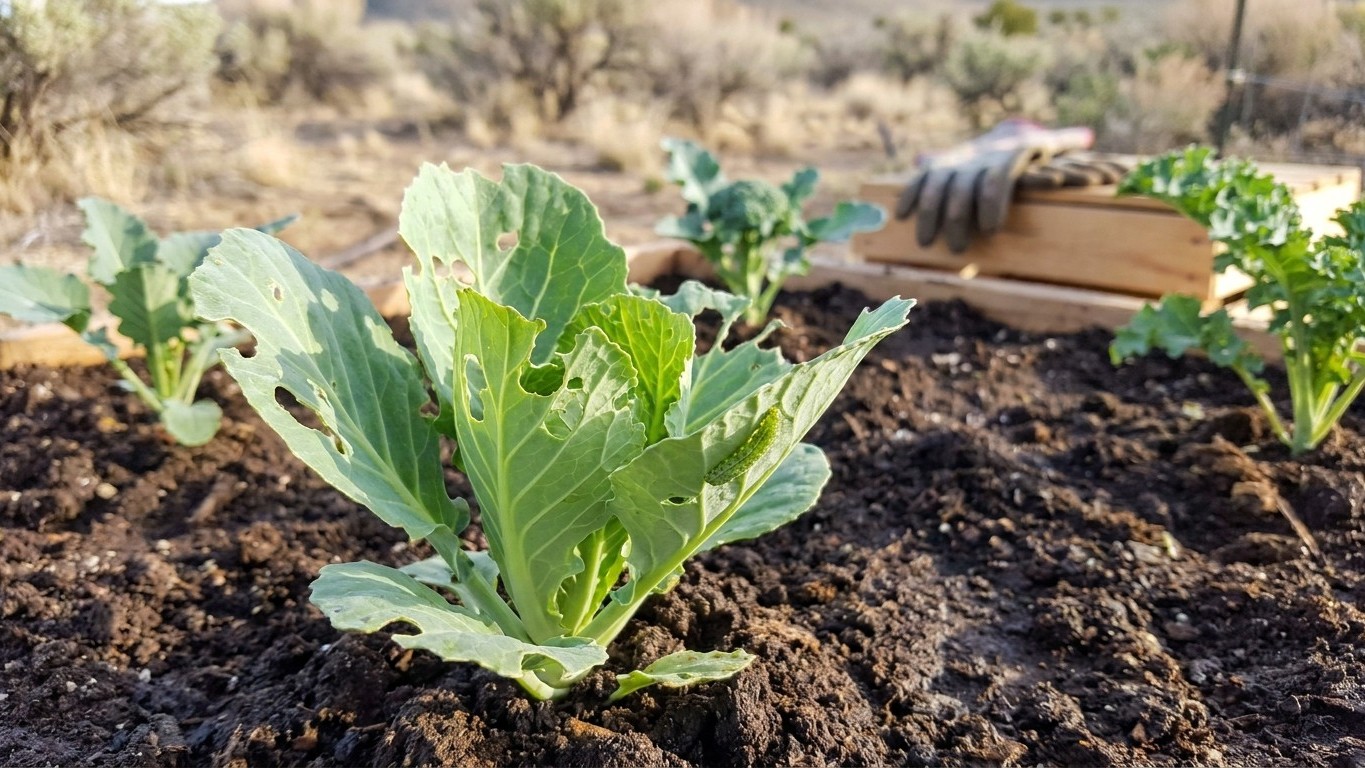

Cabbage moth larvae show up in Nevada gardens once soil and air warm enough for eggs to hatch, typically as brassicas get established in spring, with more generations following through summer wherever cole crops keep growing. University of Nevada, Reno Extension doesn’t publish a species-specific flight calendar for this pest, so the timing below follows the general pattern documented across the moth’s range and adjusted for how Nevada’s climate actually behaves.
The weeks to watch

The short answer: watch your brassicas from the moment daytime highs settle above roughly 50°F and stay there, because that’s the temperature threshold that gets eggs moving toward hatch. University of Nevada, Reno Extension does not name a specific flight window for this species, so gardeners here are working from the general lifecycle pattern rather than a locally published date.
First generation
The opening wave of caterpillars tends to appear as young cabbage, broccoli, and kale transplants take hold in the ground. Adults are drawn to the tender growth of newly set plants, and the eggs laid on leaf undersides hatch within roughly a week under favorable warmth.
Later generations
Where the growing season runs long enough, a second and even third generation can follow, each new batch of moths laying on whatever brassicas remain in the ground. In warmer valley locations that stretch is longer than in higher, cooler pockets of the state, which is part of why a single statewide date doesn’t exist for this pest.
Reading the calendar from your last frost

This insect doesn’t check a wall calendar. It answers to soil and air temperature, which means an early spring pulls its activity forward and a cold, slow one pushes it back. That’s exactly why one fixed date can’t work for a state built out of desert valleys, high plateaus, and mountain towns that sit thousands of feet apart in elevation.
NOAA’s 1991-2020 climate normals put the last spring frost window at the Las Vegas airport station between January 7 and February 1, a figure driven heavily by that site’s urban heat and low desert elevation. It is not a workable planting guide for Reno, Carson City, or any higher-elevation Nevada town, where frost risk commonly lingers months later into spring. Use the two-step logic below with your own county extension office’s frost date, not this desert-airport figure.
- Get your local last-frost date from your county extension office, since it varies by hundreds of miles and thousands of feet in elevation across Nevada.
- Count forward roughly one to two weeks after transplanting brassicas outdoors, which is the general span before the first feeding damage tends to show once soil has warmed enough for eggs to hatch.
That arithmetic tells you when floating row cover needs to already be in place, and it gives a rough sense of when it can safely come off once transplants have hardened past their most vulnerable early weeks. Treat both numbers as planning ranges tied to a normal, not as guarantees for any single year.
What it attacks, and what the damage looks like

Most gardeners notice the damage before they ever spot the caterpillar responsible for it. Leaves develop ragged, irregular holes that start small at the edges and widen as feeding continues, often concentrated along the veins where the tissue is thinner. On tightly wrapped heads like cabbage, you may not see the damage until you pull back outer leaves and find chewed interior layers or caterpillar droppings, small dark pellets, tucked into the folds.
The larval stage does essentially all the damage. Adult moths themselves don’t feed on the plant in any meaningful way, so once you’re looking at chewed foliage, it’s the caterpillar generation currently on the leaves that treatment needs to target, not the adults flying around the garden.
Crops at risk include:
- Cabbage
- Broccoli
- Kale
- Cauliflower
- Brussels sprouts
Anything in the brassica family is fair game, which is part of why crop rotation matters later in this guide, moving these plants to a different bed each season interrupts the pest’s easy access to a familiar food source.
How Nevada sits in this pest’s range

This pest is documented in just one territory on this site so far, which puts Nevada near the edge of the mapped range rather than in the thick of it. That’s a narrow footprint compared to species tracked across many states, and it means less accumulated local observation to draw from when pinning down exact timing here.
University of Nevada, Reno Extension is the named local source for pest guidance in the state, but it doesn’t publish a dedicated flight calendar for this particular moth. That gap isn’t unusual for a state with such extreme internal variation, a pest calendar useful in the Las Vegas valley would be close to meaningless in Elko or Ely. Nothing in the available data supports a claim about how severe this pest’s presence is in Nevada relative to elsewhere, so the honest position is simply that it’s confirmed here, without a documented rank or trend to attach to that fact.
What actually works against it

Start cheap and mechanical before reaching for anything else. The order below runs from the least effort to the most, which mirrors how most home gardeners actually approach it once damage appears.
- Time your transplanting. Getting brassicas in early, ahead of peak moth activity, means plants have more mature growth by the time egg-laying picks up, and mature leaves tolerate some feeding better than seedlings do.
- Cover the bed. Floating row cover placed over transplants at planting time physically blocks adult moths from reaching the leaves to lay eggs in the first place. It has to go on before eggs appear and stays effective only as long as the edges are sealed against the soil.
- Hand-pick caterpillars and eggs. Checking leaf undersides every few days and removing what you find works well on a small garden scale, though it stops being practical once an infestation is heavy or the caterpillars have already tunneled into a dense head.
- Rotate your crops. Moving brassicas to a different part of the garden each year makes it harder for emerging adults to find a host plant nearby, particularly if pupae overwintered in old plant debris.
- Clear plant debris after harvest. Removing old brassica stalks and leaves eliminates a place for pupae to overwinter close to next year’s planting site.
All of these measures lose their usefulness once larvae have already bored into a stem or worked their way deep inside a wrapped head, at that point the damage is done and the remaining caterpillar simply has to be removed by hand or the affected portion discarded. Popular remedies like copper tape or ultrasonic repellents show up often in gardening conversations, but for foliage-feeding caterpillars like this one, there’s no established mechanism connecting either method to actual control, and gardeners report mixed results at best.
Common questions
Does Nevada’s dry climate keep cabbage moth numbers lower than wetter states?
There’s no published Nevada-specific severity data to confirm or rule that out. What’s documented is presence in the state, not a comparative population count against other regions.
Can I plant brassicas again in the same bed the same season after an infestation?
It’s not recommended without clearing all plant debris first, since leftover material can shelter pupae that emerge to attack the next planting in the same spot.
Is row cover still worth using after I’ve already spotted caterpillars?
Not for the caterpillars already present, cover only blocks new egg-laying. Existing larvae need to be hand-picked or the damaged tissue removed before the cover goes back on.