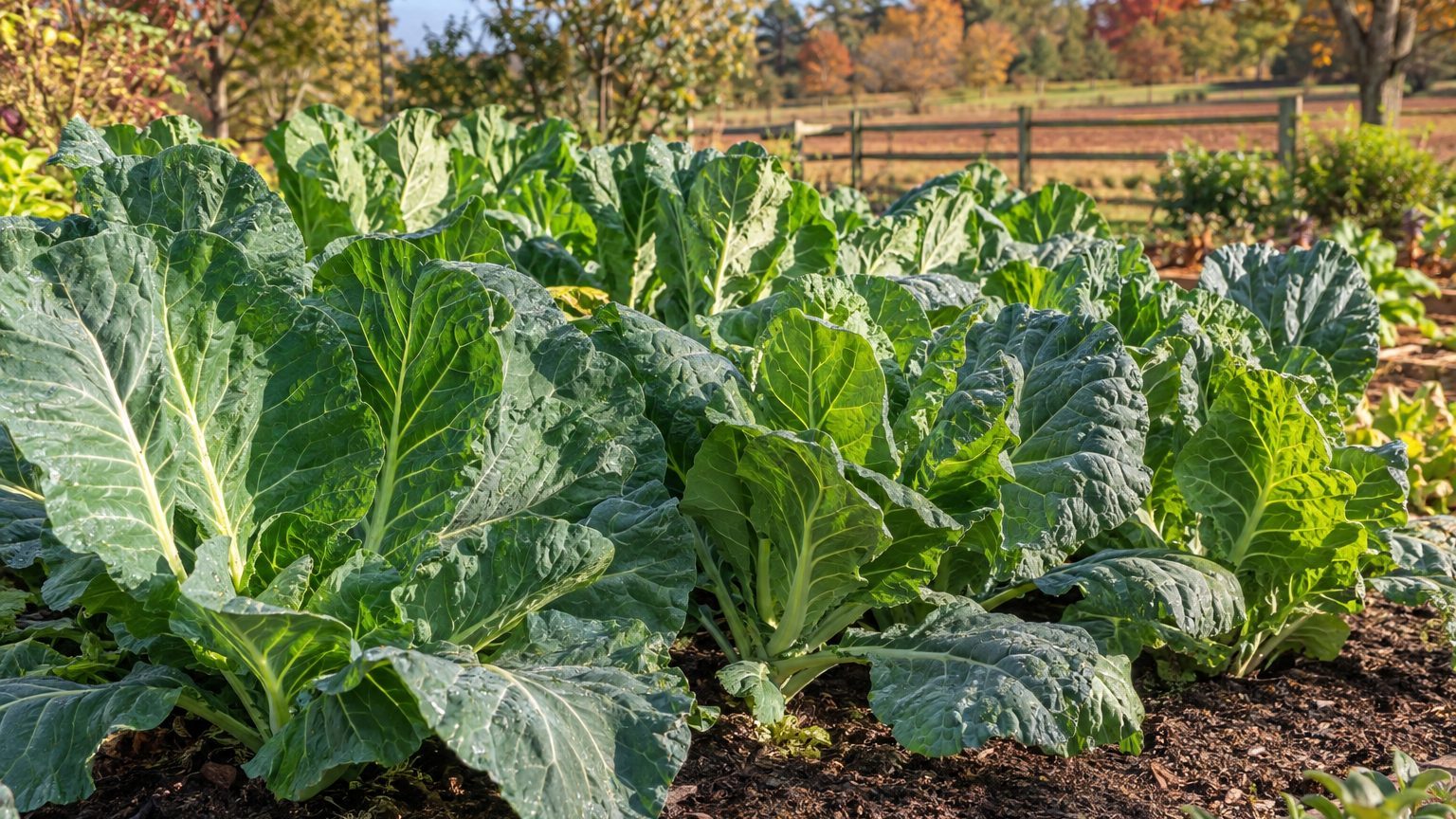

For most New Mexico gardens, a compact, bolt-tolerant collard such as Vates is the safest pick. Pair it with chard for summer and kale for winter. Treat the fall planting as the main event, because long, dry summers punish tall, slow heirlooms while cool autumn nights reward every green in the bed.
The short answer for New Mexico
Choose by type before you choose by name: a compact, uniform collard for the main crop, an early type for short-season sites, and a tall heirloom only where the season runs long. Reference-city weather shows why. At the Albuquerque airport station, the odds of a 32°F freeze fall in the 30 to 70 percent band from March 31 to April 12 in spring, and again from October 29 to November 9 in fall. Those are probabilities, not promises, and gardens outside the city usually freeze later in spring and earlier in fall, often by one to two weeks, and more at elevation.
That leaves a long stretch between frosts, yet collards are a cool-season crop. They stall in sustained heat and sweeten after a light freeze. The sensible plan is a spring planting that finishes before midsummer and a fall planting set out in late summer that matures into cold nights. The When to Plant Collards in New Mexico guide covers the dates in detail. Winter helps too: the mean daily minimum of the coldest month at the reference station is 26.4°F, mild enough that hardy greens often stand through much of winter in low-elevation gardens.
| Type | Examples | Best fit | Watch for |
|---|---|---|---|
| Compact, uniform collard | Vates | Most home gardens, tight beds, drip lines | Still needs steady water |
| Early collard | Flash | Short seasons, high elevation, spring crops | Less winter staying power than slower types |
| Tall heirloom | Georgia Southern | Long-season, low-elevation fall and winter beds | Needs space and time before hard cold |
| Loose-heading collard | Morris Heading | Gardeners who want a different leaf habit | Slower to size up |
Other greens fill the gaps. Swiss chard shrugs off summer heat better than any collard. Kale, including the dark, crinkled-leaf Lacinato type, handles winter cold. Mustard and turnip greens give fast leaves in cool spring and fall weather, though they bolt quickly once days warm. A bed with collards, chard and kale covers nearly every month the ground isn’t frozen solid.
What will not work here
The classic Southern pattern, where you plant collards in spring and pick all summer, fails in New Mexico. Hot, dry summers push spring plantings into bolting, bitter leaves and aphid outbreaks by midsummer. A collard set out in late April and expected to produce through July is the most common disappointment. Finish the spring crop early, or skip it and put your effort into the fall planting.
Weekly watering is the next failure. A long soak once a week sounds responsible, but in a dry summer the top foot of soil dries out within days, and collards respond with tough, bitter leaves, tipburn and stalled growth. Roots stay shallow and the plant never recovers its pace. Drip irrigation on a timer, a few inches of straw or wood-chip mulch, and a bit of afternoon shade from cloth or a taller crop make a bigger difference than any variety swap.
Slow heirlooms fail where the season is short. The reference-city frost window already shrinks by one to two weeks at the edge of town, and by more at elevation. A tall collard sown late there may reach hard freezes still undersized. Frost doesn’t kill collards, but a deep freeze ends their growth and, in the coldest parts of the state, the plants themselves.
Habits from humid regions also backfire. Wide spacing there fights fungal disease, but in New Mexico’s dry air the bigger risk is plants competing for limited water, so crowding two collards into one planting hole simply gives you two small plants. Give each a little room to spread. Another mismatch is soil: many New Mexico soils are alkaline and low in organic matter, so unamended beds produce pale, slow plants. Work in compost before planting, and use windbreaks or row cover where spring gusts shred tender leaves.
One more trap is the midsummer start. Direct-sowing collard seed into baking July soil gives patchy germination and seedlings that scorch. Start transplants in shade or indoors, then set them out when the heat begins to break.
What changes across New Mexico
The USDA Plant Hardiness Zone Map (2023 edition, built on 1991-2020 normals) places New Mexico in zones 4b through 9a. That is a spread of several zones, so no single answer fits the whole state. Zone is built on one variable, the average annual extreme minimum temperature, so it says whether a plant survives winter but nothing about summer heat or season length. Both matter for greens.
In the colder north and at altitude, shift everything later and shorter. Start collards indoors a few weeks before the last frost and set them out under row cover. Choose early or compact types such as Flash or Vates over tall heirlooms. Count on a fall crop that must be in the ground weeks earlier than in the valleys, because cold arrives sooner. In the coldest zones, treat collards as annuals and expect kale to be the only green with real winter staying power. If you want the full growing basics, Growing Collards in New Mexico covers soil, feeding and harvest.
In the warmer south and low desert, the calendar tilts the other way. Spring crops run short, so favor early collards and plan on shade cloth by May. The sweet spot is fall through winter, when a tall heirloom has months to size up and mild nights let leaves keep coming. Chard stays productive through the heat that ends other greens.
Which zone you live in is a question for the map, not for this article. Enter your ZIP code in the USDA Plant Hardiness Zone Map, then compare the result with the shifts above.
Where to check this for your own county
The best local source is the New Mexico State University Cooperative Extension Service, which keeps an office in or near most counties. Reference-city frost dates and statewide advice average together valleys, mesas and mountain towns. A county agent knows which of those you live in. A county recommendation beats a state one, and any statewide guidance, however carefully built, should give way to it.
Look for three things when you contact or browse the extension site. The first is a local planting calendar for cool-season vegetables, ideally with spring and fall windows for your county. The second is the list of varieties trialled in your area, since a collard that does well in a valley can sulk at 7,000 feet. The third is local frost data for your town, which will often differ by a week or two from the airport figures above.
County offices usually offer extras worth using. Many run Master Gardener programs with plant clinics, where you can bring a damaged leaf and get an identification of the aphid, flea beetle or nutrient problem behind it. Some post soil-testing instructions, which matter in alkaline ground. Even a short phone call can settle a planting date you have been debating.
Checking this against your own garden
Your own yard outranks every date in this article, and three observations tell you more than a calendar can. Soil warmth by feel is the first. In spring, push your hand into the bed: if the soil is cool and crumbles rather than clumps, it is ready for transplants. In late summer, if the top inch is too hot to hold your palm against, give it shade and water before setting out fall seedlings. A bed that warms early marks a sheltered south-facing spot, while one that stays cold marks cold air pooling.
The second is the first flush of male flowers on local trees, such as cottonwood catkins or the first apricot blossoms. Note the date each year. If they open earlier than your neighbors’ or earlier than in a previous year, your spot is warmer, and frost risk may pass sooner. Apricots in bloom also tend to get frozen, which is a reminder that a warm spell does not close the frost window.
The third is the first true leaves on your seedlings. The first pair that unfolds are seed leaves, and the next, rougher pair are the true leaves. When those appear on seedlings in a protected spot, they are ready for the open bed. If they take much longer than the packet suggests, your bed is cooler than you assumed, and you can adjust next season. A few seasons of notes tell you more than any statewide average.
Common questions
What is the best collard variety for New Mexico?
Vates is a reliable default because it is compact, uniform and slow to bolt. Choose Flash for short seasons and high elevation, and Georgia Southern only where the growing season is long enough for a tall plant to mature before hard cold.
Can collards survive a New Mexico winter?
In low-elevation gardens, often yes. The mean daily minimum of the coldest month at the Albuquerque reference station is 26.4°F, and collards tolerate light and moderate freezes. In colder zones and at altitude, extreme lows can kill them, so row cover helps and kale is a safer choice.
Should I plant collards in spring or fall?
Fall is usually the better crop. Spring plantings must finish before summer heat triggers bolting and bitter leaves, while fall plantings mature into cool nights and sweeten after light frost. Details are in the planting calendar guide.
What greens handle summer heat better than collards?
Swiss chard handles heat best of the common greens. Give it consistent water and a little afternoon shade, and it will keep producing when collards, mustard and turnip greens have given up.