The New Mexico Lawn Care Calendar, Month by Month
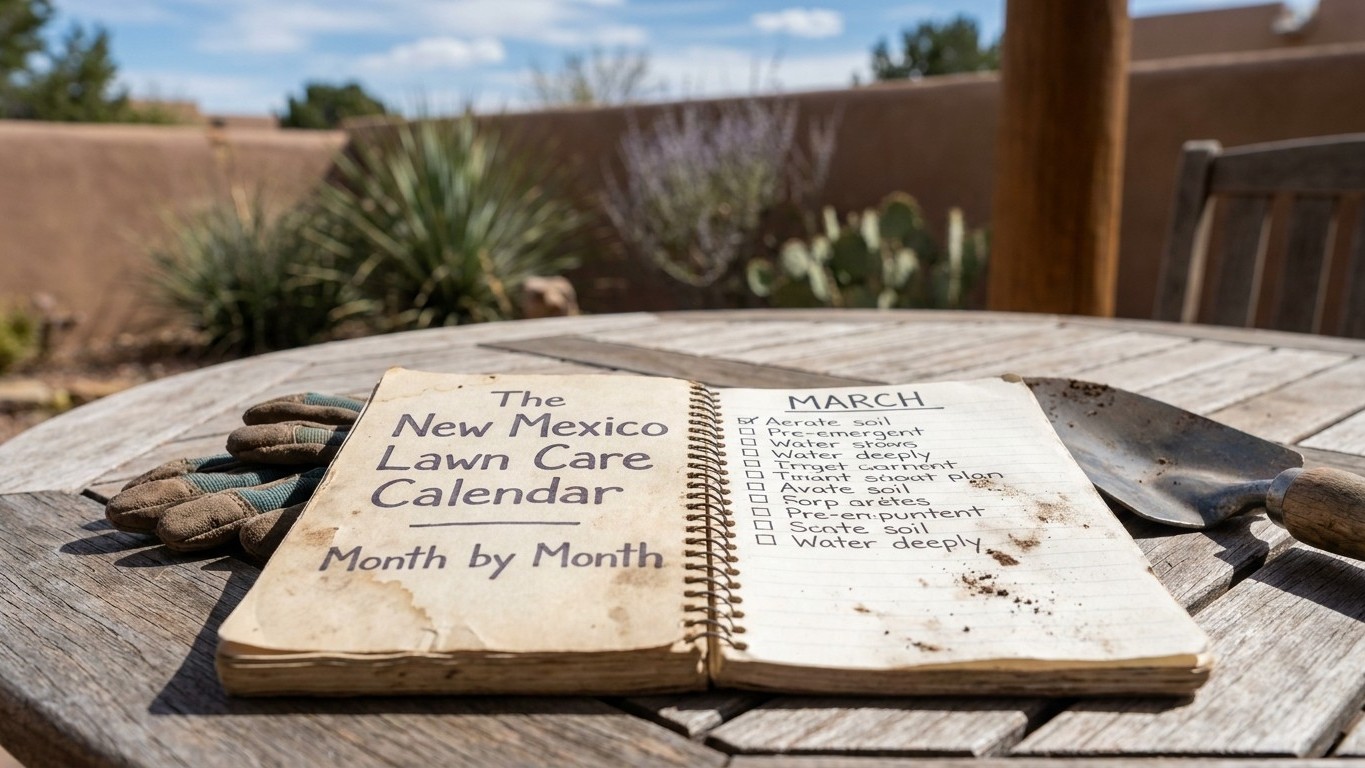
A month-by-month lawn schedule for New Mexico, keyed to cool-season and warm-season grass calendars and Albuquerque’s first fall frost date.
Home & garden, state by state
Everything we have worked out for New Mexico: what to plant and when, which varieties finish in time, the pests that actually turn up here, and the jobs that pay off month by month. We also cover the rest of the property, from lawns and soil to home care and energy, because a garden rarely stops at the vegetable bed.
The numbers first, because everything else follows from them. Measured at the weather station in Albuquerque, the last spring freeze runs March 31 to April 12 and the first fall freeze runs October 29 to November 9, USDA zones 4b-9a, 4,341 growing degree days in the year.
Garlic does well: 21.8 weeks below 40 °F, comfortably past the six it needs to form a proper head.
Elsewhere on the property in New Mexico: the pests that turn up here.
Figures from NOAA's 1991-2020 climate normals. A state is not one climate: elevation, a large lake or the coast can move these dates by two weeks either way, so check your own county with the extension service before you spend money.
A month-by-month lawn schedule for New Mexico, keyed to cool-season and warm-season grass calendars and Albuquerque’s first fall frost date.
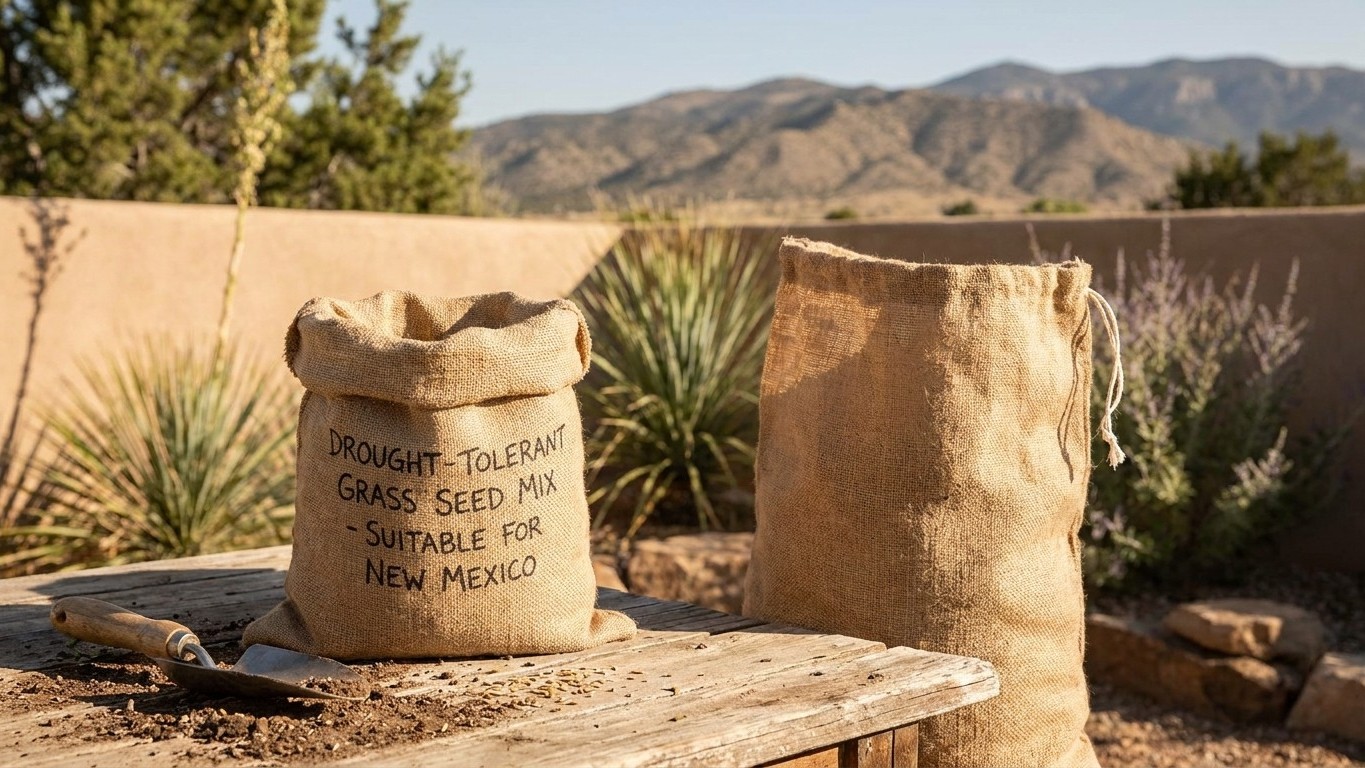
New Mexico lawns sit in a transition zone, so choosing grass seed means picking between winter color and summer heat tolerance, not one best variety.
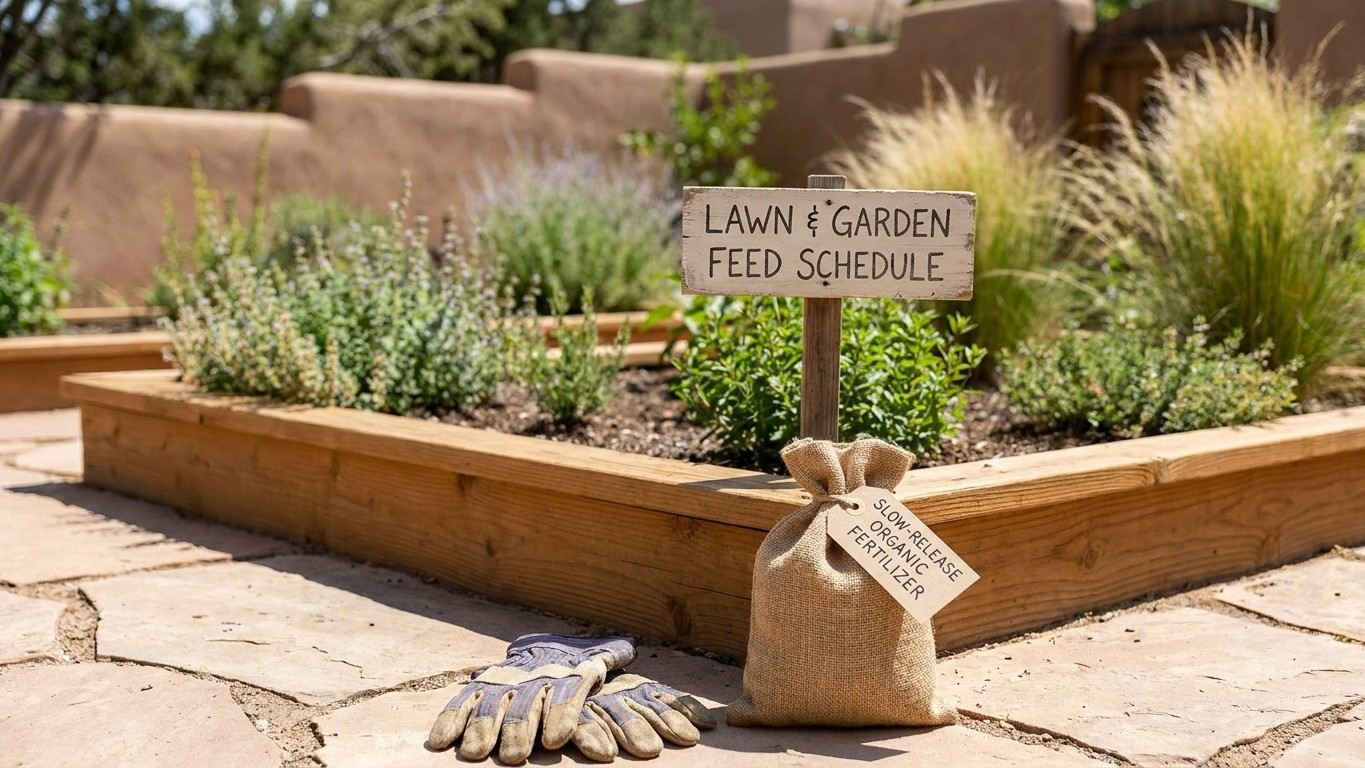
New Mexico’s transition climate means no lawn grass is ideal year-round, so this guide gives seeding windows, feeding rates and mowing heights for each option.
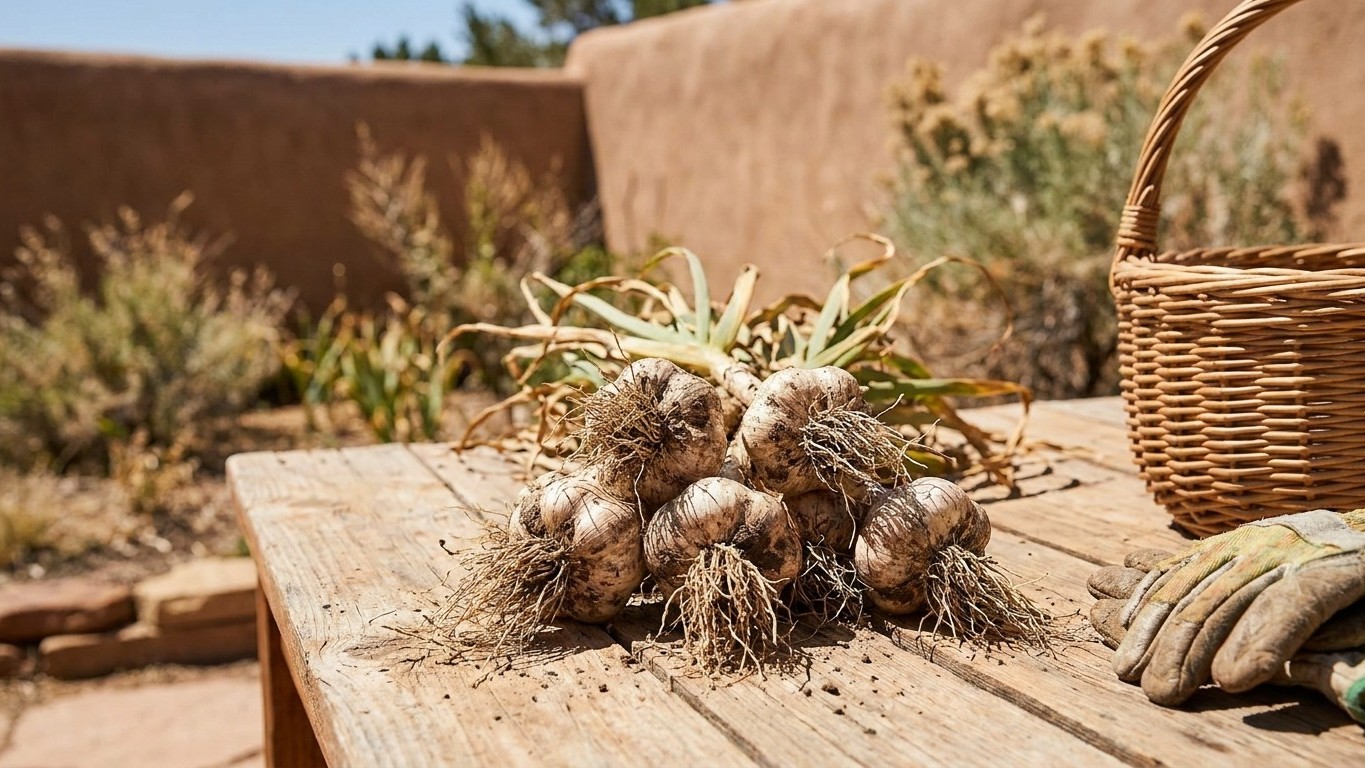
New Mexico’s winter cold and Albuquerque’s fall frost dates decide when to plant garlic and which of fourteen catalog varieties will split properly by summer.
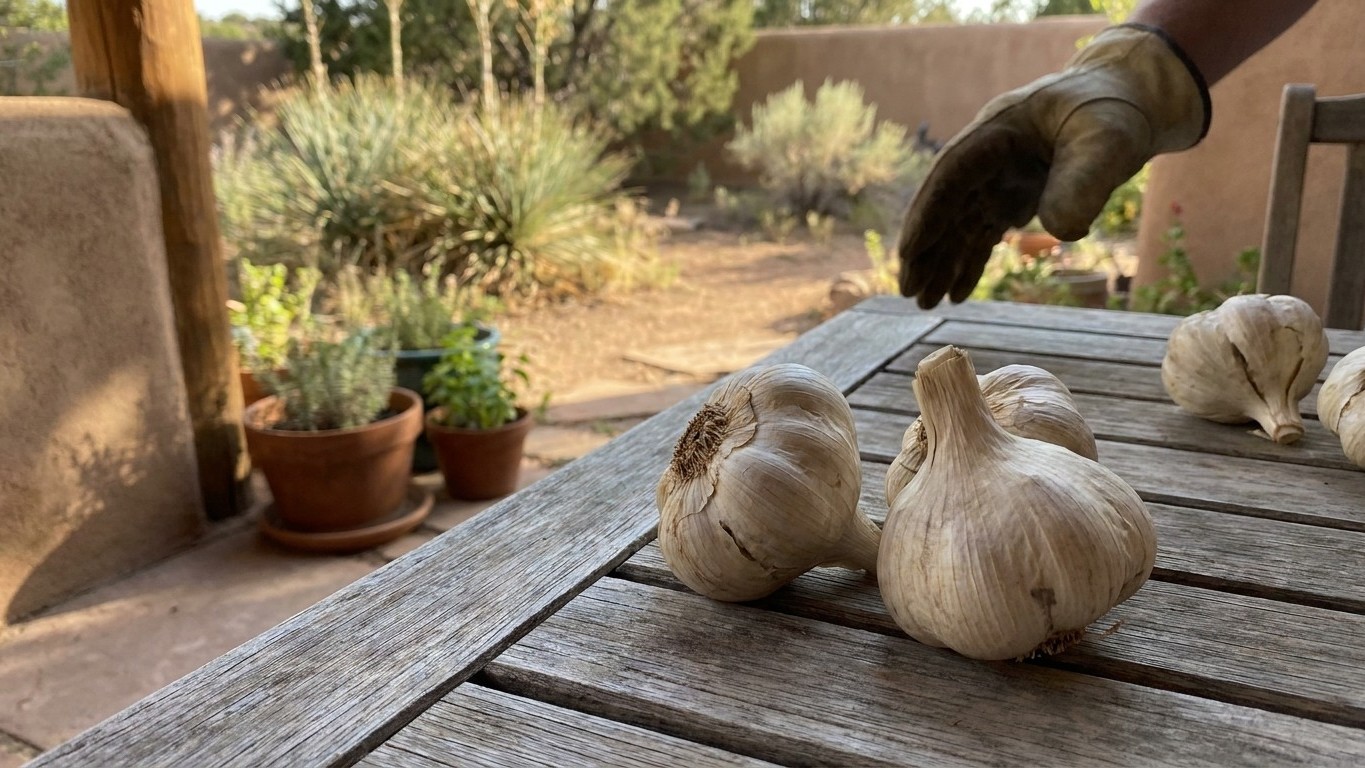
Explains how to calculate New Mexico garlic planting dates from NOAA’s Albuquerque frost window, with variety-specific timing and county-level checks.
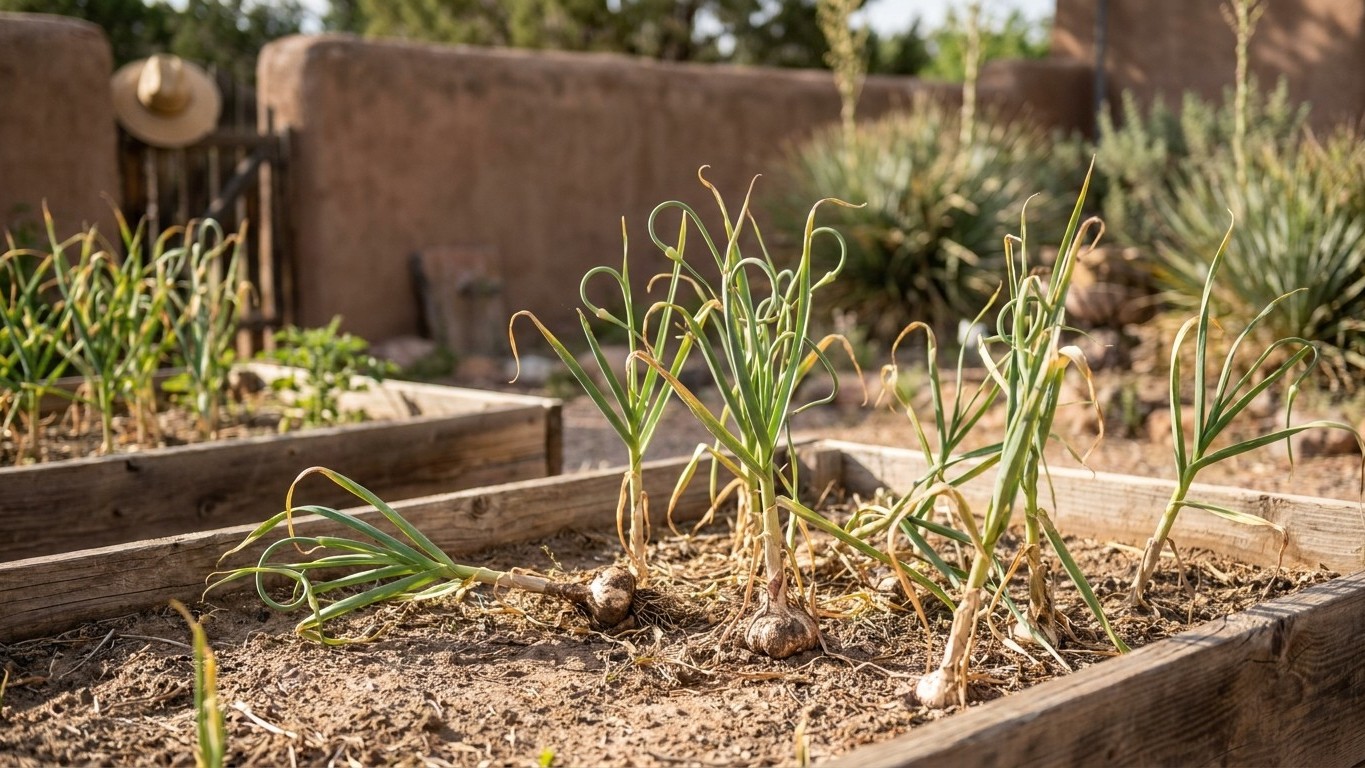
New Mexico’s high desert winters usually give garlic the chill it needs, but low elevation gardens should refrigerate cloves or choose a softneck variety instead.
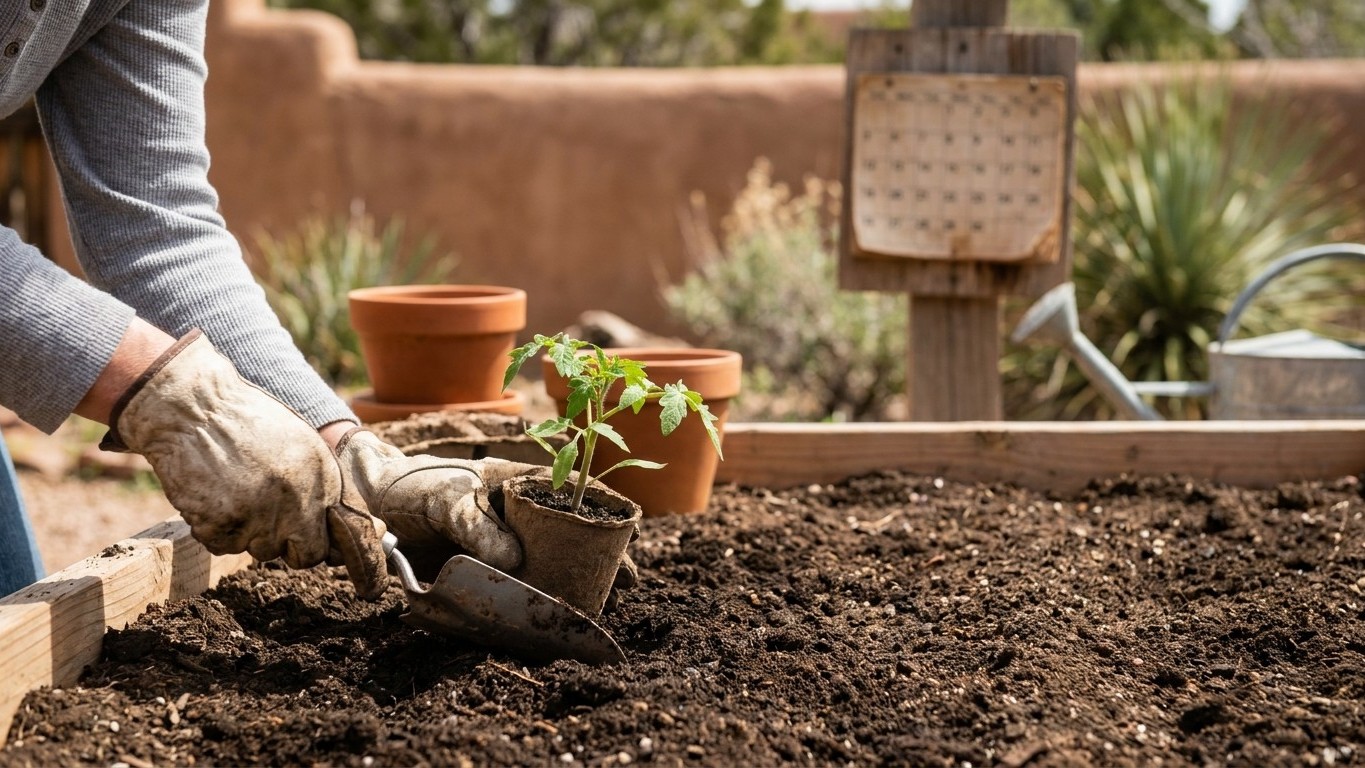
Explains how to count backward from New Mexico’s frost window to find a safe tomato transplant date for your own garden and elevation.
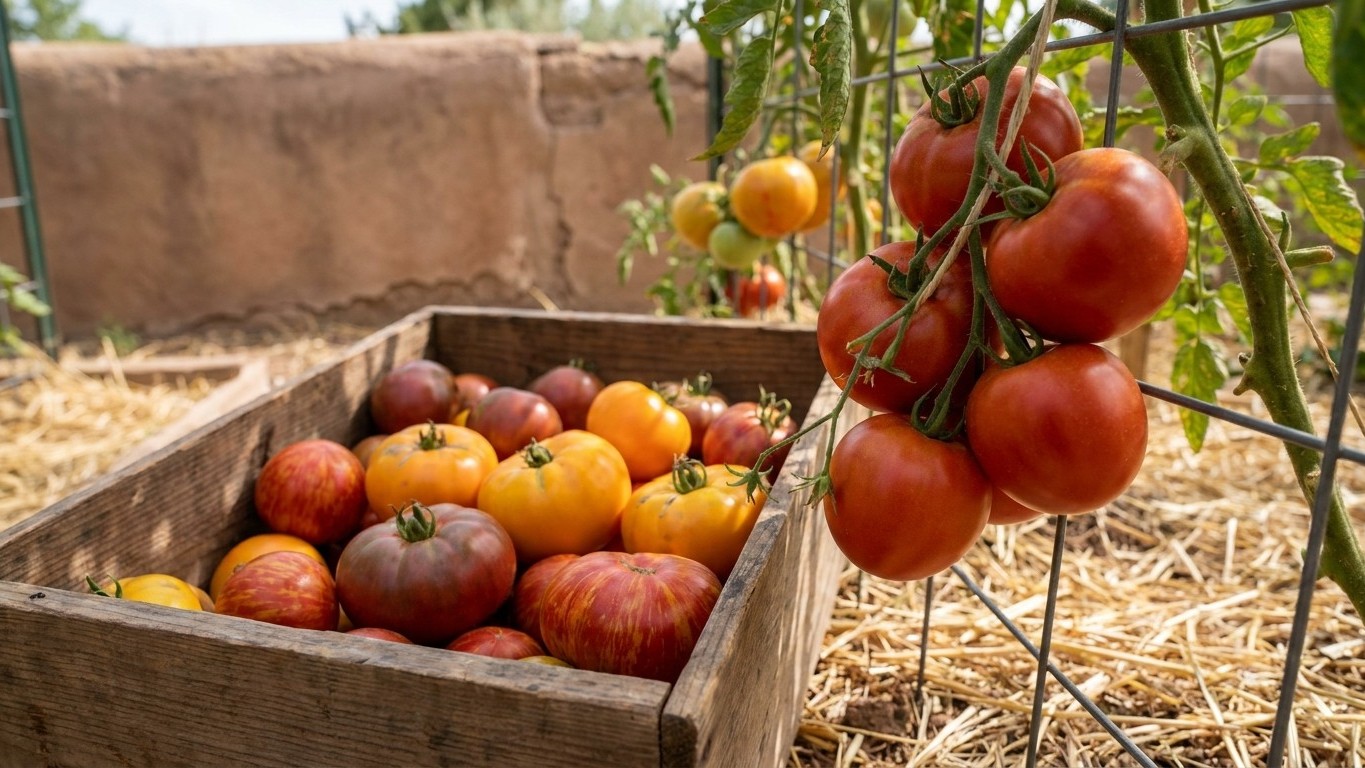
Shows which named tomato varieties, from 55-day cherry types to 78-day slicers, have enough margin to ripen before New Mexico’s first fall frost.
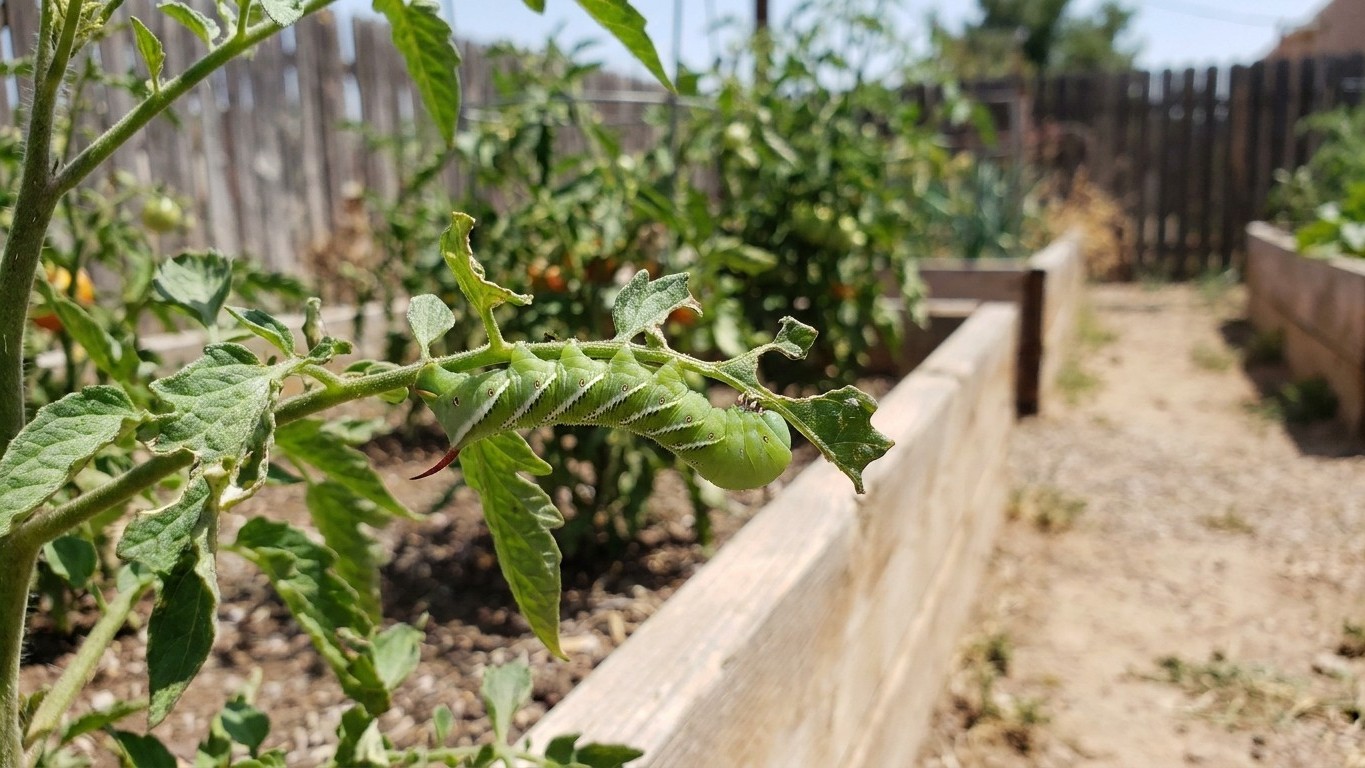
New Mexico tomato growers deal with cutworms, aphids, spider mites, leafhoppers carrying curly top virus, hornworms and whiteflies, each appearing at a different point in the season.
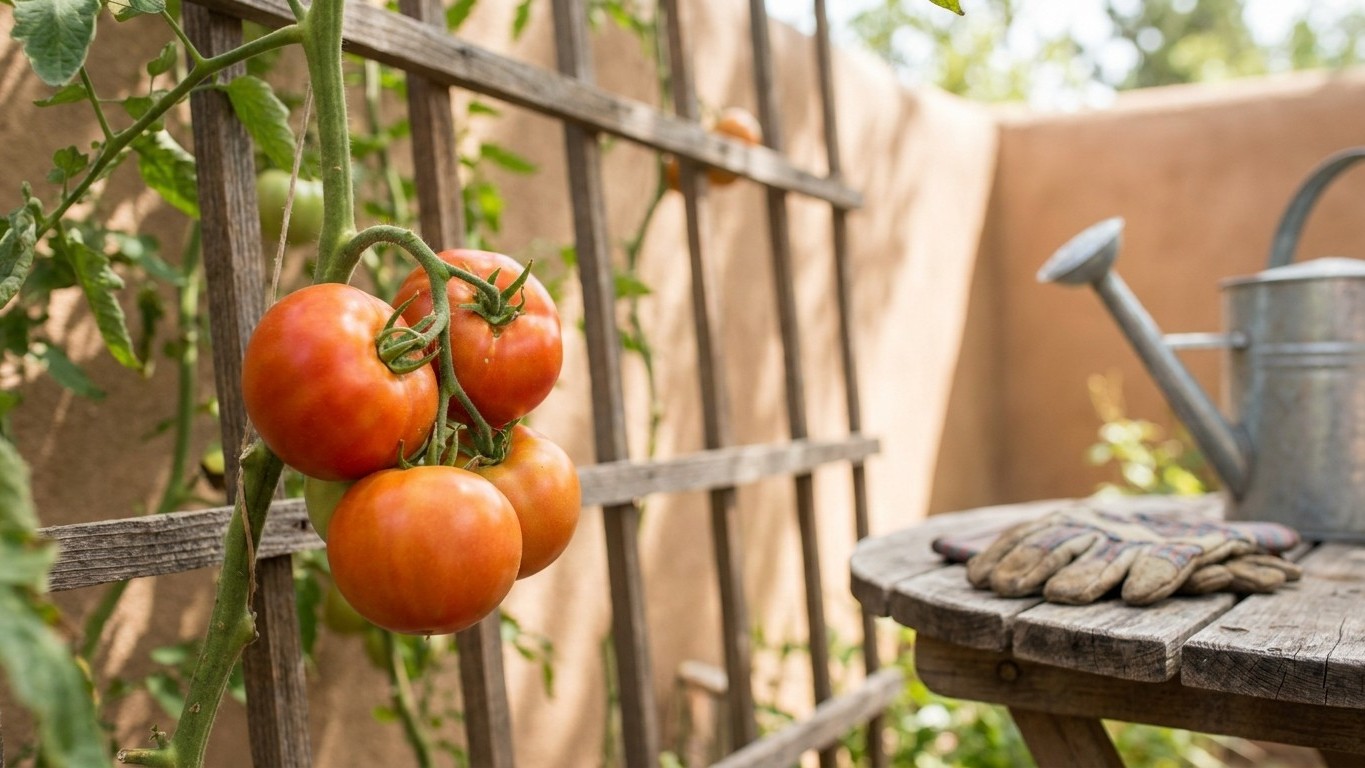
Albuquerque’s frost data, disease-resistant varieties, and season-long care steps for growing tomatoes successfully across New Mexico’s high desert gardens and varying elevations.