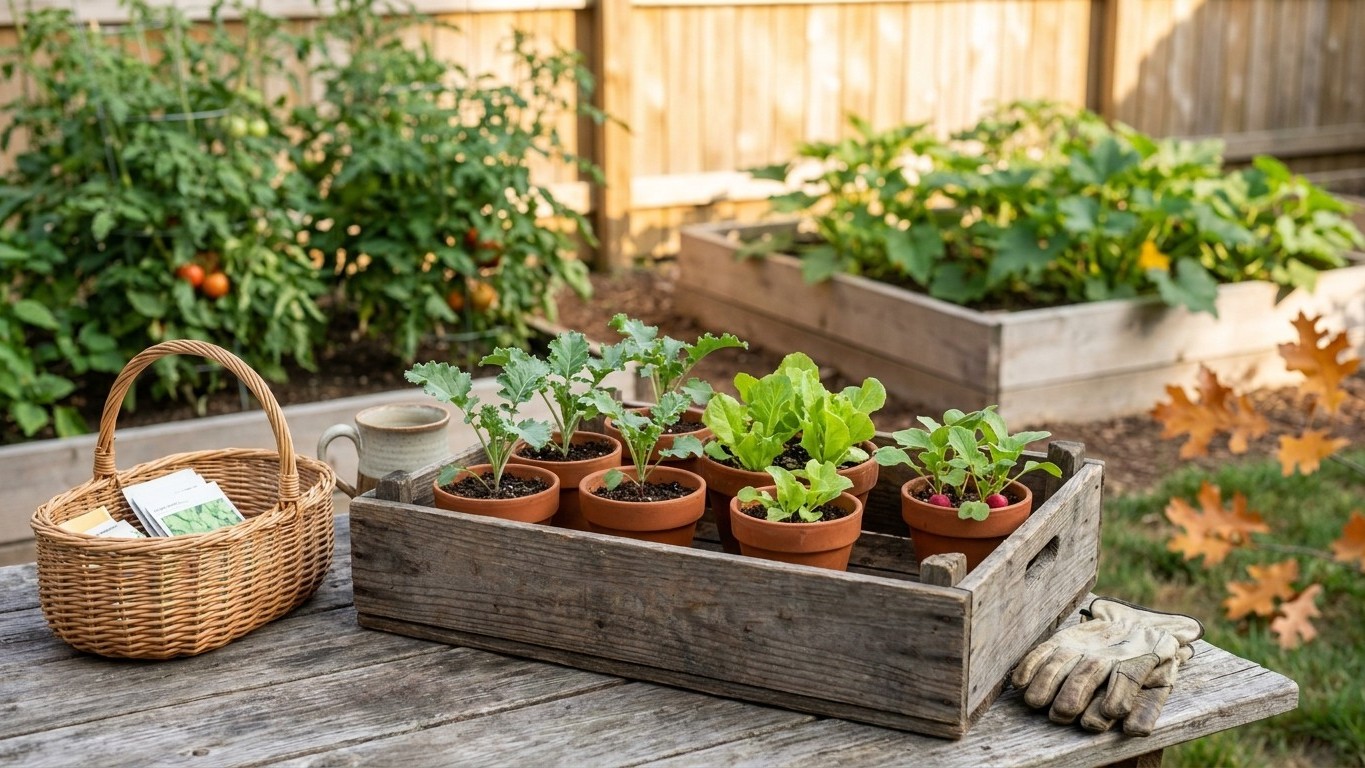

August in Newfoundland and Labrador falls squarely inside the frost-free window, so the ground is still open for fast-growing crops. Direct-sow quick greens, radishes and a final round of peas, and set out fall brassica transplants now so they mature before the average October frost. Garlic and true cold-storage alliums wait for next month.
What goes in the ground in August

The calendar says summer, but soil temperature and the shrinking daylight window decide what actually works this month, not the date on the wall. In St. John’s, the average last spring frost lands May 30 and the average first fall frost lands October 17, according to Environment and Climate Change Canada’s 1981-2010 climate normals for the ST JOHN’S A station. That is a mean, not a promise: in one year out of two, frost arrives later than October 17, and in the other half it can show up earlier. Treat that date as the middle of a range, not a safe line, especially away from the coast.
With roughly ten to eleven weeks left before that average frost, August is the last real month to start crops that finish quickly. Anything needing 90 days or more is a gamble now unless you plan to cover it. Anything under 60 days is comfortable.
What actually fits the window
- Radishes, mesclun mix, arugula and spinach, direct-sown, ready in 25-40 days.
- Bok choy and turnips grown for greens or small roots, 40-50 days.
- A last succession of quick peas, 55-65 days, if sown in the first half of the month.
- Fall brassica transplants (broccoli, cabbage, kale) started earlier under cover, set out now to bulk up before the light drops off.
Garlic and shallots stay out of the ground in August in this province. They go in after the alliums already growing have been lifted and the soil has cooled, closer to fall. Planting them now, into warm summer soil, invites early top growth that winter then kills off.
| Crop | Method | Days to maturity | Notes |
|---|---|---|---|
| Radish | Direct sow | 25-30 | Fastest safe bet this month |
| Spinach | Direct sow | 35-45 | Bolts in heat, fine as nights cool |
| Turnip (greens) | Direct sow | 40-50 | Pull young for tender tops |
| Peas (quick type) | Direct sow | 55-65 | Sow early August only |
| Fall broccoli | Transplant | 50-60 from transplant | Started under cover in July |
What to start under cover
Count backward from the average first frost rather than from a fixed date on a seed packet. If the mean frost lands October 17 and you want mature spinach or mache under a cold frame, allow 35-45 days for growth after transplant, plus a week for the seedling to size up before it moves outside. That puts the sowing date indoors somewhere in the first half of August for anything meant to be transplanted by early September.
Two things go wrong with this math. Start too early, and the seedlings sit too long indoors, get rootbound in small trays, and stall out once they finally hit the garden. Start too late, and the plant runs out of daylight and warmth before it can size up, leaving you with a stunted crop that never fills in before the cold locks it down.
What fits an August start indoors or under a cold frame
- Spinach and mache for a cold-frame harvest running into late fall.
- Kale and Swiss chard for transplanting under low tunnels once the first cool nights arrive.
- Lettuce successions kept in trays and moved out in small batches every couple of weeks, so a cold snap does not take the whole crop at once.
Anything meant for open, unprotected ground by fall needs to already be a transplant, not a seed, by the time you set it out. Seeds sown directly outdoors in late August compete with dropping soil temperatures and a shorter day length that slows germination even when the air still feels mild.
What is ready to pick
August is one of the fuller harvest months here. Peas come off in a steady wave once pods fill out and feel plump between the fingers, usually picked every two to three days to keep the vines producing. Early potatoes, planted for a June start, are ready once the plants flower and begin to yellow, and a light hand-dig at the edge of the row will tell you the tuber size without lifting the whole plant.
Broad beans finish up this month, best picked while the pods are still glossy rather than leathery. Radishes and turnip greens sown in July come out quickly, and lettuce and spinach sown in succession keep cycling through as long as they are cut before bolting. Rhubarb, if it has been left to grow since spring, is still cropping, though stalks pulled late in the season should be thinner cuts rather than the thick spring stalks.
Soft fruit is also moving through its peak, with strawberries, currants and gooseberries all coming off through the month depending on planting date and exposure. Check any earlier-planted squash or zucchini grown under cover for fruit sizing up quickly now that the plants are established; picking small and often keeps the vine producing rather than putting all its energy into one oversized fruit.
The jobs that matter this month
Succession sowing pays off directly this month: a new short row of lettuce or spinach every two weeks keeps the kitchen supplied right through into fall, instead of one big flush followed by a gap. Skip a sowing now, and there is no fixing that gap later once the light drops off in September.
Watering rhythm matters more than volume. A steady, even soak two or three times a week beats a light daily sprinkle, especially for root crops that split when moisture swings from dry to soaked. Mulch around peas, brassicas and root crops now, both to hold that moisture and to keep soil temperature from spiking on a warm afternoon, which can push cool-season crops like spinach straight into bolting.
Staking and support need to go in before plants sprawl, not after. Peas left unsupported by mid-month tangle into a mat that is hard to pick through and prone to rot where stems touch wet soil. The same goes for any indeterminate crops grown under cover.
Pest scouting is worth the ten minutes it takes. Cool, damp coastal conditions in this province are exactly what late blight favors on potato foliage, so check leaves for dark, water-soaked spots and pull affected foliage promptly rather than waiting. Slugs also thrive in the same damp conditions, particularly around brassica transplants set out this month, so check under mulch and along bed edges in the evening.
Start preparing the bed that will take garlic in the fall. Working compost into that spot now, while the soil is still workable and warm, gives it weeks to settle before planting, rather than trying to dig in amendments on a cold, wet fall day.
What not to do in August
Warm afternoons this month can be misleading. Air temperature says summer, but soil and night temperature are already easing toward fall, and any crop that needs a long, hot run, corn, melons, or anything else counted in the 90-plus day range, will not mature before the average frost lands, even with a generous read of the calendar. Skip planting them now rather than hoping for an unusually long season.
Do not treat the average frost date as a safe number to plan right up against. Because it is a mean, frost has landed earlier than October 17 in roughly half the years on record for the reference station, and that gap only widens away from the coast. Keep row cover or a cold frame lid within reach for anything still maturing into late September.
Avoid feeding nitrogen-heavy fertilizer to root crops and fall brassicas at this point in the season. Nitrogen late in the cycle pushes leafy top growth at the expense of the root or head filling out, which is the opposite of what a turnip, radish or cabbage needs as it heads toward harvest. A balanced or lower-nitrogen feed suits this stage better.
Do not let ripe crops sit in the ground past their point. Radishes split, lettuce bolts, and peas turn starchy within days of being ready, and in a short season there is rarely time to let a crop wait for a more convenient picking day.
Checking this against your own county
A province-wide month is a starting point, nothing more. The frost figures here come from a single station in St. John’s, and elevation, exposure to the open Atlantic, and the long stretch between the Avalon Peninsula and interior Labrador all shift the real frost window by weeks in either direction. A sheltered coastal garden can run noticeably milder than an inland or upland site only a short drive away.
For a planting calendar built around local conditions, check the province’s own resource through the Newfoundland and Labrador Department of Fisheries, Forestry and Agriculture, which covers regional variation this single station figure cannot.
Common questions
Can I still plant tomatoes in August in Newfoundland and Labrador?
Not from seed outdoors. Tomatoes here are almost always grown under cover or in a greenhouse given the cool summers, and any planting this late would need an already-established transplant with a very short remaining maturity window before the average October frost.
What hardiness zone is Newfoundland and Labrador in?
St. John’s sits in Canadian hardiness zone 6a, based on Natural Resources Canada’s 1991-2020 data. This is the Canadian system, built on seven climate variables, and it does not convert directly to the USDA zones used elsewhere in the United States, so it should not be read on that scale.
When should garlic actually go in the ground here?
Garlic waits until the soil has cooled well past summer temperatures, typically after other alliums are lifted, closer to fall. Planting it into warm August soil pushes premature top growth that winter then damages.
How reliable is the average first frost date for planning the rest of the season?
It is a useful midpoint, not a guarantee. Because it is an average drawn from decades of data at one station, frost has arrived earlier than October 17 in roughly half of the years on record, so anything maturing close to that date should have row cover ready as a backup.