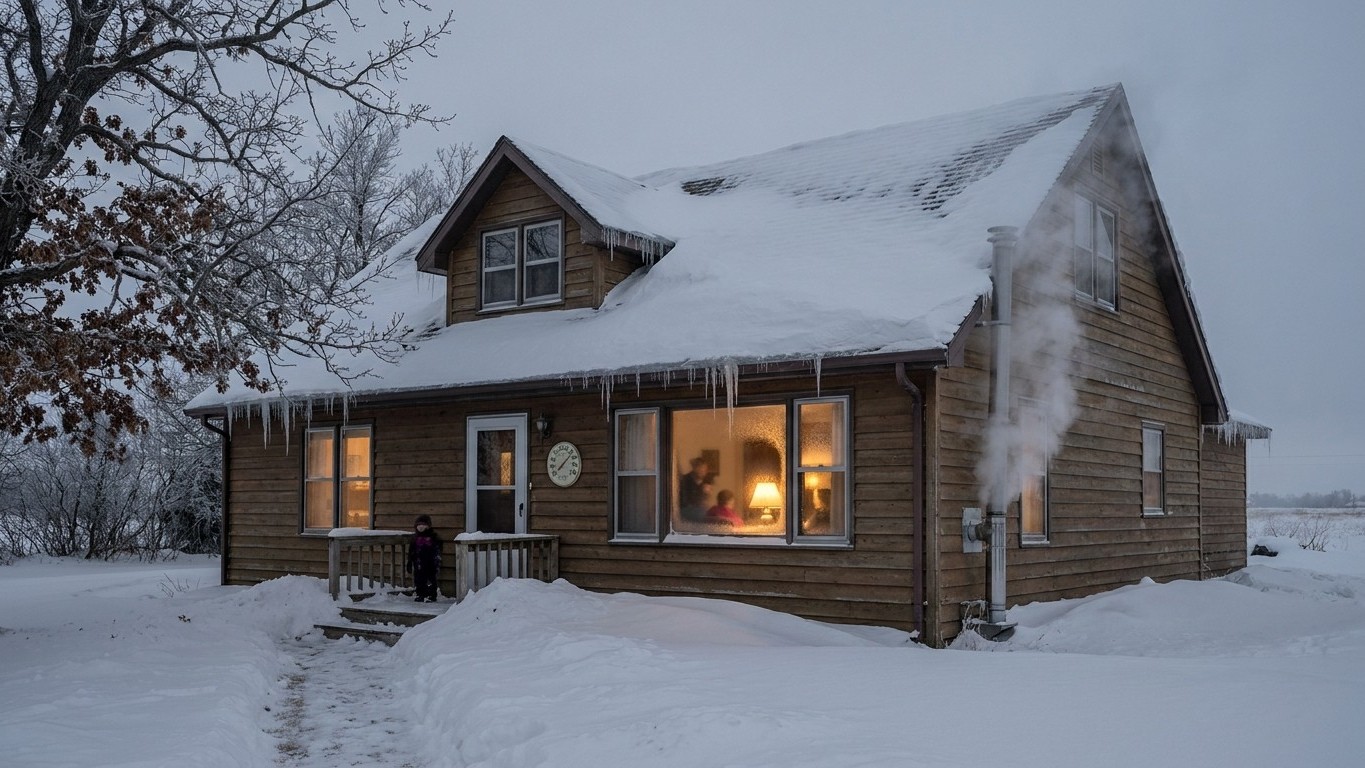

Fargo’s coldest month averages a low of just 0.2°F, and that single number explains why North Dakota heating bills run higher than almost anywhere else in the country. But the real cost isn’t just how low the mercury falls. It’s how long it stays down there, and what that means for whatever’s keeping your house warm.
How cold it gets, and for how long

That 0.2°F figure is the average daily minimum for January, the coldest month, measured at Fargo over the 1991-2020 period tracked by NOAA. It’s not a record low and not some rare cold snap. It’s the typical low, night after night, for the whole month. A house here isn’t just fighting the occasional deep freeze. It’s fighting a season where “cold” means well below freezing as a baseline, not an exception.
That distinction matters more than most homeowners realize. A climate that hovers just under 32°F for four months puts a steady, moderate load on a heating system: it runs a lot, but rarely at maximum output. A climate that drops to near zero, like North Dakota’s, forces the system to work at or near capacity for long stretches, and it does that starting as early as October and running into April in a lot of years. The heating season isn’t just cold. It’s long and cold, which is the combination that actually drives up fuel use.
What that means for equipment and fuel
Furnaces and boilers sized for milder climates get outpaced fast in a North Dakota winter. Systems here need to be rated for sustained sub-zero performance, not just occasional cold nights, and that goes for wood heat too. A woodstove that comfortably heats a house in a place with a 30°F winter low will burn through fuel far faster, and far more often, when the outdoor temperature sits near zero for weeks. Anyone budgeting for a winter here has to plan around duration as much as intensity: it’s not one brutal week, it’s a whole season of demand.
What a cord of wood is worth here
If wood heat is part of the plan, the cord is the unit everything hinges on, and it’s also the most commonly misunderstood one. A cord isn’t a weight and it isn’t a vague pile. It’s a specific volume: a stack measuring 4 feet by 4 feet by 8 feet, which works out to 128 cubic feet. Anything smaller than that, sold as a “cord,” is a short measure, and it’s the single most common way firewood buyers get shorted.
According to Michigan State University Extension, a cord of well-seasoned hardwood delivers around 20 million BTU. MSU frames that in terms a homeowner can actually use: one cord is roughly equivalent to the heat from 145 gallons of #2 fuel oil, or 215 gallons of LP gas. That’s a useful yardstick when you’re trying to figure out how many cords a North Dakota winter, with its long stretch of sub-zero and near-zero days, is actually going to eat through.
| Measurement | Value |
|---|---|
| Cord dimensions | 4 ft x 4 ft x 8 ft |
| Volume | 128 cubic feet |
| Heat content (seasoned hardwood) | about 20 million BTU |
| Fuel oil equivalent | roughly 145 gallons |
| LP gas equivalent | roughly 215 gallons |
That 20 million BTU figure is an average, and it moves a lot depending on species and moisture. Dense hardwoods pack more mass into that same 128 cubic feet than softer, lighter species do, which is the whole trick of buying firewood by volume instead of weight. Two cords that look identical stacked side by side can hold very different amounts of usable heat, and the difference usually comes down to species and how dry the wood actually is when it goes in the stove.
How long wood takes to dry in North Dakota
Moisture is the variable that decides almost everything about how a cord performs. MSU Extension puts the target at 20 percent moisture or less for burning, while green, freshly cut wood can run over 60 percent. That difference isn’t cosmetic. Water inside the wood has to boil off before the wood releases any usable heat, and that process eats energy you were counting on for warmth. Burn wood too wet, and you’re spending a chunk of every log’s heat output just drying out the log itself.
Split green wood typically reaches that 20 percent target after one full summer of seasoning, provided it’s split and stacked so air can actually move through the pile. Rounds tossed in a heap without splitting won’t season on the same timeline, no matter how long they sit. Red oak is a named exception: MSU notes it dries more slowly than most species because of its cell structure, so it needs extra time beyond a single summer to get down to burnable moisture.
Burning wood before it’s properly seasoned doesn’t just waste heat. It also drives up creosote buildup inside the flue, since incomplete combustion from wet wood sends more unburned particulate up the chimney. That means more frequent chimney sweeping and a higher risk of flue fires over a season already defined by heavy stove use. In a climate where the woodstove might be running daily from October through April, that’s not a minor maintenance detail. It’s the difference between a stove that heats efficiently all winter and one that’s quietly costing you in wasted fuel and extra upkeep.
Where to check before you buy
Every figure above is anchored to Fargo, the reference station NOAA uses for North Dakota’s climate normals. The state stretches across a wide range of elevation and exposure, from the Red River Valley to the higher ground farther west, and local conditions can shift both the length of the heating season and which wood species are realistically available to buy.
For guidance specific to your part of the state, from species availability to local seasoning advice, North Dakota State University Extension is the resource to check. It’s also worth confirming any seasonal burn restrictions before you plan on wood heat as a primary or backup source. Burn rules, including outdoor burning limits and air-quality advisories, are set at the local level and can change from year to year, so what applied last winter isn’t guaranteed to apply this one.