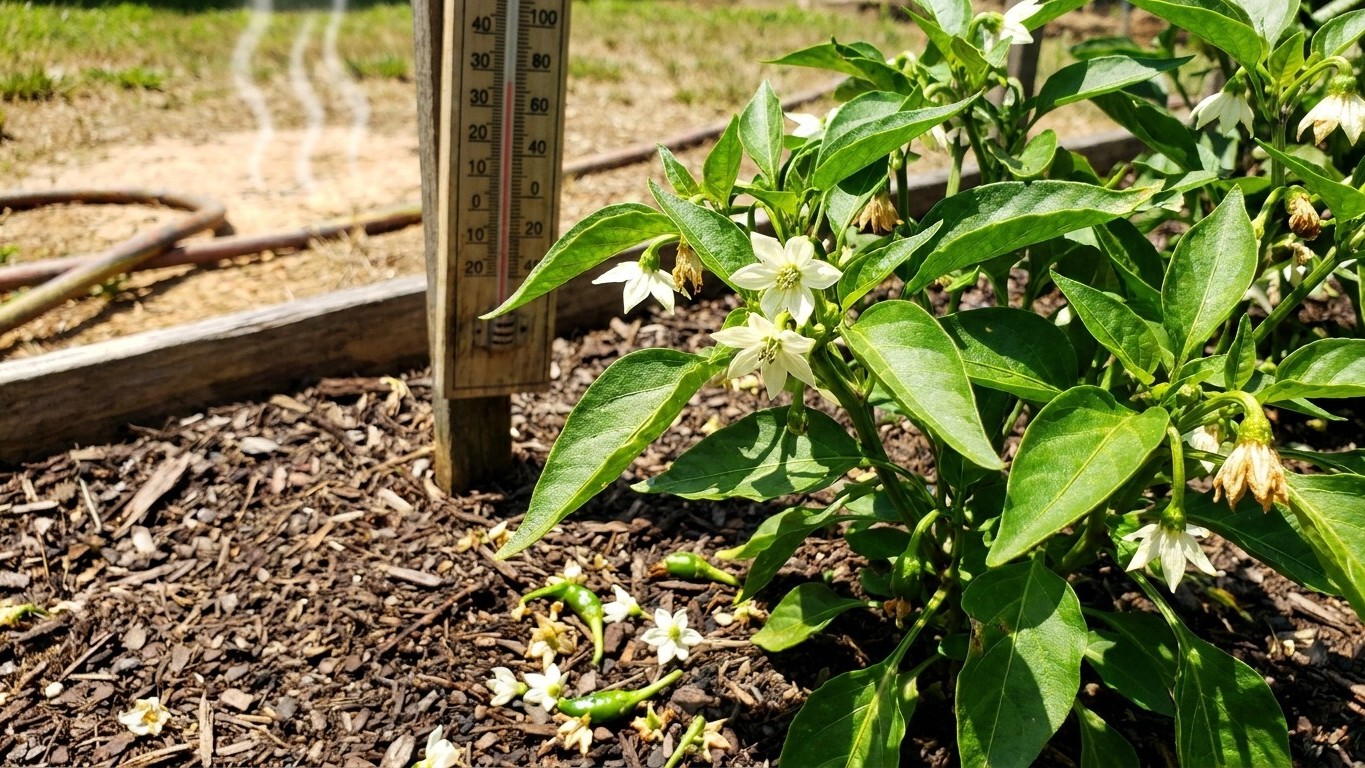

Fargo averages 11.7 days a year at 90 F or hotter, enough heat to stall pepper blossoms before they ever become fruit. On the other end, cool nights below 55 F cause the same failure, but this site does not track summer night lows for North Dakota, so gardeners need to watch their own thermometer once the sun goes down.
The short answer
Eleven and seven-tenths days above 90 F might not sound like much stacked against a five-month growing season, but pepper flowers don’t need a heat wave to fail. A handful of afternoons in the low 90s, especially if they land back-to-back during flowering, is enough to make blossoms drop before pollination finishes. The plant isn’t dying. It’s protecting itself, shedding flowers it can’t support while it redirects energy into surviving the stress. That’s the mechanism behind heat-related fruit set failure, and it’s why a short, intense hot spell in July can do more damage than a long, mild summer ever would.
Utah State University Extension puts the failure threshold plainly: pepper fruit set collapses at both ends, above 90 F daytime and below 55 F at night. North Dakota’s daytime number is measured and public. The nighttime number, for this state, is not something this site publishes. That’s not an oversight, it’s a deliberate line, because guessing at night lows from a location’s latitude or from how cold its winters run is a bad habit that leads gardeners astray. A northern latitude doesn’t guarantee cool summer nights, and a mild winter doesn’t guarantee warm summer nights. The two just aren’t connected closely enough to bet a pepper harvest on.
So the practical move is this: track your own overnight lows during bloom, right in your yard or as close to it as you can manage. A basic min-max thermometer left outside for a few weeks in July gives you more useful information than any state average ever could. If nights are dropping into the 40s or low 50s on a regular basis, even briefly, that’s likely why fruit set is stalling even when the days look perfectly reasonable.
Both ends of this problem point to the same lesson: pepper flowering has a narrow comfort zone, and North Dakota’s climate can push against either edge of it depending on the week. Eleven-plus hot days a year, on average, is the documented risk from above. What’s happening below 55 F on your particular nights is the piece only you can measure.
When to start seed here
Getting pepper timing right in North Dakota means working backward from two fixed points: when frost typically clears, and when the soil is actually warm enough to receive a transplant. Neither of those dates is a guess, but neither is a guarantee for every yard either.
- Start with the frost window. NOAA NCEI’s 1991-2020 climate normals, drawn from the reference weather station, put the last spring freeze at 32 F somewhere between May 4 and May 15. That’s a city-level average built from a single airport station, not a promise for every county. Rural and suburban yards, especially in low-lying spots or areas away from urban heat retention, commonly see their last frost run one to two weeks later than the reference date, sometimes more at higher elevation.
- Check soil temperature, not just the calendar. Frost clearing isn’t the same as the soil being ready. Peppers need soil at 60 F before transplants go in the ground, and cold soil in early spring can lag well behind air temperature for a week or more after the last frost, particularly in years with a wet spring.
- Count backward 8 to 10 weeks for indoor seed starting. If your working transplant date lands around mid-to-late May, factoring in both frost clearance and soil warmth, then seed starting indoors should begin roughly 8 to 10 weeks earlier, which puts most North Dakota gardeners starting seed somewhere in the second half of March.
- Adjust for your own county. If your local frost history runs later than the reference station’s May 4 to May 15 window, as it does for many rural properties, shift your indoor start date correspondingly later too. The arithmetic doesn’t change, only the anchor date does.
This backward math is the same for any gardener anywhere, but the anchor dates are what make it local. Plug in your own last-frost observation and your own soil thermometer reading, and the 8-to-10-week rule does the rest.
What goes wrong here
- Blossom drop from a hot spell. When daytime temperatures push into the 90s during flowering, even for a day or two, pepper plants often shed their blossoms rather than complete pollination. There’s no fix that reverses dropped flowers, but light afternoon shade cloth during a forecasted heat spell, along with consistent soil moisture so the plant isn’t fighting drought stress on top of heat, reduces how many blossoms are lost.
- Blossom drop from a cool night. The same failure happens at the other extreme, when nighttime temperatures dip below 55 F during bloom. Since this site doesn’t carry night-minimum data for North Dakota, the fix starts with observation: track your own nights with a simple outdoor thermometer during flowering season, and if you’re seeing repeated dips into the low 50s or below, consider a floating row cover pulled over plants in the evening to trap a few extra degrees of warmth.
- Sunscald on developing fruit. Strong, direct sun on fruit that isn’t shaded by enough foliage can cause pale, papery patches on the pepper’s skin, particularly on plants that have been pruned back hard or that lost leaves to disease. Keeping the plant’s natural leaf cover intact, and avoiding aggressive pruning during the hottest stretch of summer, is the most reliable prevention.
- Blossom-end rot. This shows up as a sunken, dark, leathery patch on the bottom of the fruit, and it traces back to inconsistent watering rather than a soil nutrient shortage in most home gardens. Uneven watering, a dry week followed by heavy rain or a deep soak, disrupts the plant’s calcium uptake even when calcium levels in the soil are fine. Even, regular watering on a set schedule, rather than reactive watering when the soil looks dry, is the fix that holds up best over a full season.
Common questions
Why are my pepper plants flowering but not setting fruit in North Dakota?
The most likely explanation is temperature stress at one end or the other. Daytime highs above 90 F, which happen an average of 11.7 days a year in this region, can cause flowers to drop before pollination completes. Nighttime lows below 55 F during bloom cause the identical failure. Since this site doesn’t track summer night minima for North Dakota, watch your own nights during flowering to see which end is the culprit.
When should I transplant peppers outdoors in North Dakota?
Wait until after your local last frost date and until soil temperature reaches 60 F. The reference station’s 1991-2020 normals put the last spring freeze between May 4 and May 15, but rural and suburban yards often run one to two weeks later than that, so treat it as a starting estimate rather than a fixed date for your property.
How early should I start pepper seeds indoors for this climate?
Count back 8 to 10 weeks from your expected transplant date. If you’re planning to transplant in mid-to-late May based on your local frost and soil conditions, that puts most indoor seed starting in the second half of March.
Does a hot North Dakota summer always mean poor pepper yields?
Not necessarily. Eleven-plus days above 90 F a year is an average, not a guarantee of failure, and the damage depends heavily on whether those hot days land during active flowering. Consistent soil moisture and some afternoon shade during a forecasted heat spell reduce blossom loss even when the thermometer climbs.