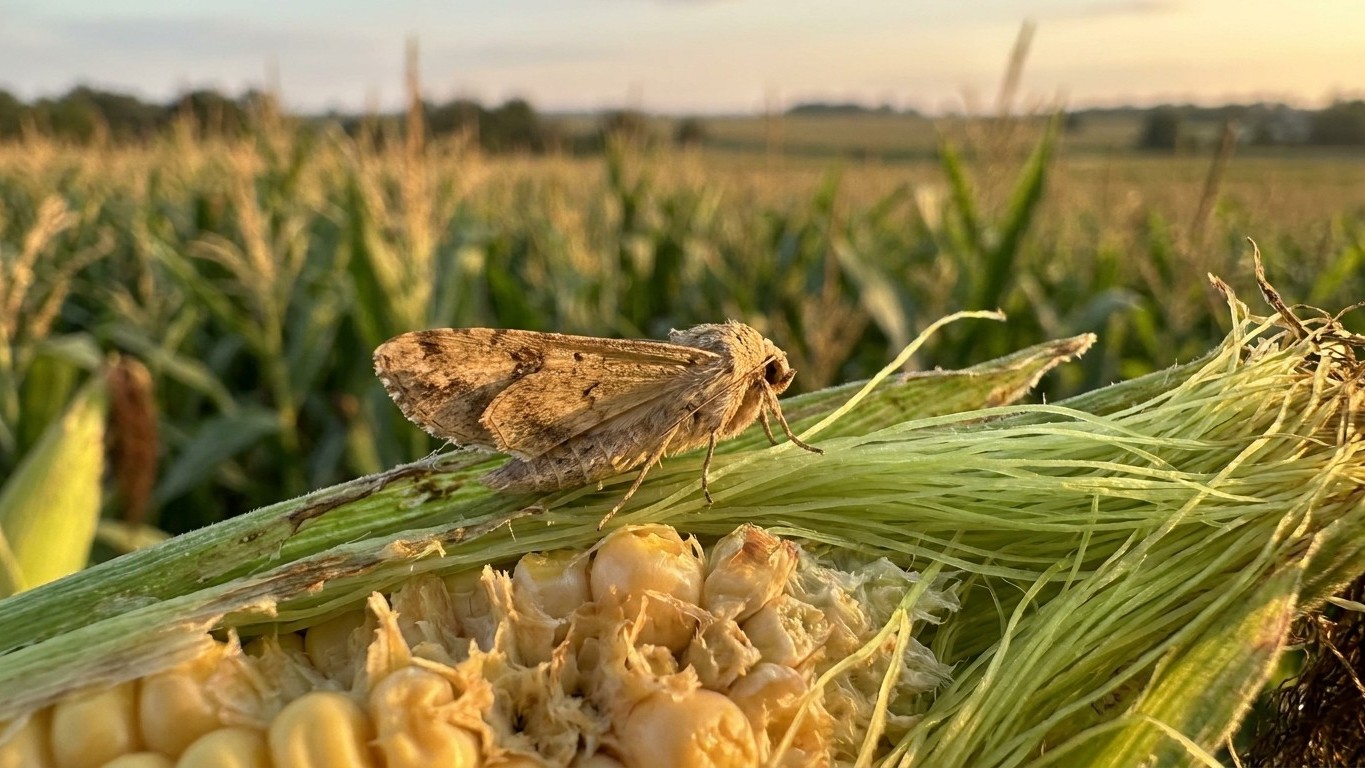

Corn earworm can’t survive a North Dakota winter on its own. Every population that shows up in the state’s cornfields each year arrived on the wind, riding storm systems up from Texas, Oklahoma, and the Gulf Coast states where the insect overwinters as a pupa in the soil. That single fact explains almost everything about how the pest behaves here: when it shows up, how bad an infestation gets, and why the tools that stop it look different than they do in Georgia or Kansas.
For North Dakota growers, that means no early-season worry and no soil-borne carryover to manage. But it also means the threat is unpredictable, tied to weather patterns hundreds of miles away, and concentrated late in the growing season when sweet corn and dent corn are at their most vulnerable stage.
Why Corn Earworm Doesn’t Overwinter in North Dakota

Helicoverpa zea, the scientific name for corn earworm, spends its winter as a pupa buried a few inches underground. That pupal stage needs soil that doesn’t freeze solid for extended stretches. North Dakota’s frost line regularly reaches well below the depth where a pupa could survive, so any earworm population that tries to overwinter here simply dies out. Entomologists sometimes call this a “non-overwintering zone,” and it stretches across most of the northern Plains and upper Midwest.
So where do North Dakota’s earworms come from? Adult moths emerge in the southern states in spring, mate, and then ride weather fronts northward, sometimes traveling hundreds of miles in a single night on strong southerly winds ahead of a storm system. This isn’t a slow crawl across state lines. It’s a fast, weather-dependent migration that can drop moths into North Dakota fields within days of a favorable wind event down south.
That migratory pattern is exactly why infestation levels swing so much from year to year in this region. A summer with frequent southerly jet stream patterns can push large moth flights into the Dakotas. A summer dominated by different wind patterns might mean the pest barely registers. Growers a few hundred miles south dealing with heavy earworm pressure doesn’t automatically mean North Dakota will see the same thing that year.
When Corn Earworm Typically Shows Up in North Dakota
Because it depends on migration rather than local overwintering, corn earworm tends to arrive later in the North Dakota growing season than gardeners might expect from reading general pest guides written for southern states. Moth flights are usually detected starting in mid to late summer, with activity often picking up through August and sometimes stretching into early September, right as sweet corn silks and field corn approaches the dough and dent stages.
This late arrival creates a timing mismatch that actually works in favor of many field corn growers. Early-planted corn that silks in July may finish silking and move past its most attractive stage before significant moth pressure builds. Late-planted or late-maturing hybrids, along with a second planting of sweet corn meant for a late harvest, run a higher risk simply because their silk is fresh and green right when moth flights peak.
North Dakota State University Extension entomologists track this seasonal pattern through pheromone trap networks placed at research and demonstration sites across the state. These traps don’t just confirm that the pest has arrived, they give growers a rough sense of flight intensity from week to week, which matters more for timing decisions than any calendar date ever could.
Why Silk Timing Matters More Than the Calendar
Adult female moths lay their eggs directly on fresh corn silk. Newly hatched larvae then crawl down the silk channel to feed on the ear tip. That single behavior explains why corn earworm is fundamentally a silk-stage pest. Corn that has already pollinated and moved past fresh green silk is far less attractive to egg-laying females, which is why growers watching trap counts pay close attention to which fields are silking during a moth flight, not just how many moths are showing up in a given week.
What Damage Looks Like in North Dakota Fields
The larva feeds inside the ear tip, chewing kernels and leaving behind a trail of frass, the sawdust-like waste that signals an active feeding site. In sweet corn destined for the table or a farmers market stand, even light feeding at the tip can make an ear unmarketable, since buyers reject anything with visible worm damage or a chewed tip regardless of how much of the ear underneath is perfectly fine.
Field corn grown for grain tolerates the damage better. A single larva feeding at the ear tip on a commodity corn field rarely causes meaningful yield loss across an entire field, since the damage is localized and doesn’t spread kernel to kernel the way some other pests behave. The bigger concern in field corn is the wound itself acting as an entry point for mold and secondary rot organisms, which can affect grain quality and storage down the line more than the direct feeding does.
Beyond corn, this same insect (sometimes called tomato fruitworm or cotton bollworm depending on the crop it’s attacking) will feed on tomatoes, peppers, and beans in home gardens. Gardeners growing a mixed vegetable plot in North Dakota sometimes notice fruitworm damage on tomatoes around the same late-summer window that field corn growers are watching moth trap counts, since it’s the same migratory insect working multiple hosts.
What Stops Corn Earworm in North Dakota
Because the pest arrives from elsewhere every year, crop rotation and field sanitation, which work well against insects that overwinter locally, do almost nothing to prevent corn earworm from showing up. Control here is built around three approaches: genetics, timing, and targeted insecticide application guided by trap monitoring.
Bt Corn Hybrids
Many field corn hybrids planted across North Dakota carry Bt traits, genes from the soil bacterium Bacillus thuringiensis that produce proteins toxic to caterpillar pests feeding on the plant. Hybrids with ear-feeding worm protection reduce earworm damage substantially in field corn, and this genetic control is one reason commercial grain corn growers rarely need to spray specifically for this pest. Sweet corn hybrids with similar traits exist too, though not every sweet corn variety on the market carries them, so growers and gardeners buying seed for direct-market sweet corn should check trait packages if earworm protection is a priority.
Monitoring and Insecticide Timing
For sweet corn and other high-value plantings without built-in resistance, pheromone traps remain the most reliable early-warning tool. NDSU Extension and similar programs across the region encourage growers to place traps near silking fields starting in mid-summer and check them regularly through the late-season flight window. When trap counts rise and fields are actively silking, a foliar insecticide application timed to fresh silk emergence, and often repeated every few days during peak silking as new silk continues to emerge, gives the best control window. Once silk has browned and dried, spraying does little good, since the vulnerable feeding pathway into the ear has already closed off.
Home gardeners without access to commercial trap networks can use a simpler rule: watch for fresh silk during August and check ear tips every few days for the telltale frass once tassels have shed pollen and silks begin to brown. Hand removal of affected tips at harvest, or applying an approved garden insecticide right at first silk appearance, covers most backyard situations without needing a full monitoring program.
Natural Enemies Already at Work
Corn earworm eggs and small larvae face pressure from a range of predators already present in North Dakota cropland, including minute pirate bugs, lacewing larvae, and several species of parasitic wasps that lay their own eggs inside earworm eggs or young larvae. These natural enemies won’t eliminate a heavy moth flight on their own, but they do reduce the number of larvae that survive to cause visible ear damage, and broad-spectrum insecticide use timed poorly (spraying when moth counts are low, for instance) can end up killing more beneficial insects than pests, making the trap-monitoring approach worth the extra effort over a calendar-based spray schedule.
One detail that surprises a lot of growers moving to North Dakota from southern states: because the pest can’t establish a resident population here, a bad earworm year one summer says nothing about risk the next year. Each season starts from zero, with the entire outcome riding on wind patterns still forming somewhere over Texas in early summer.