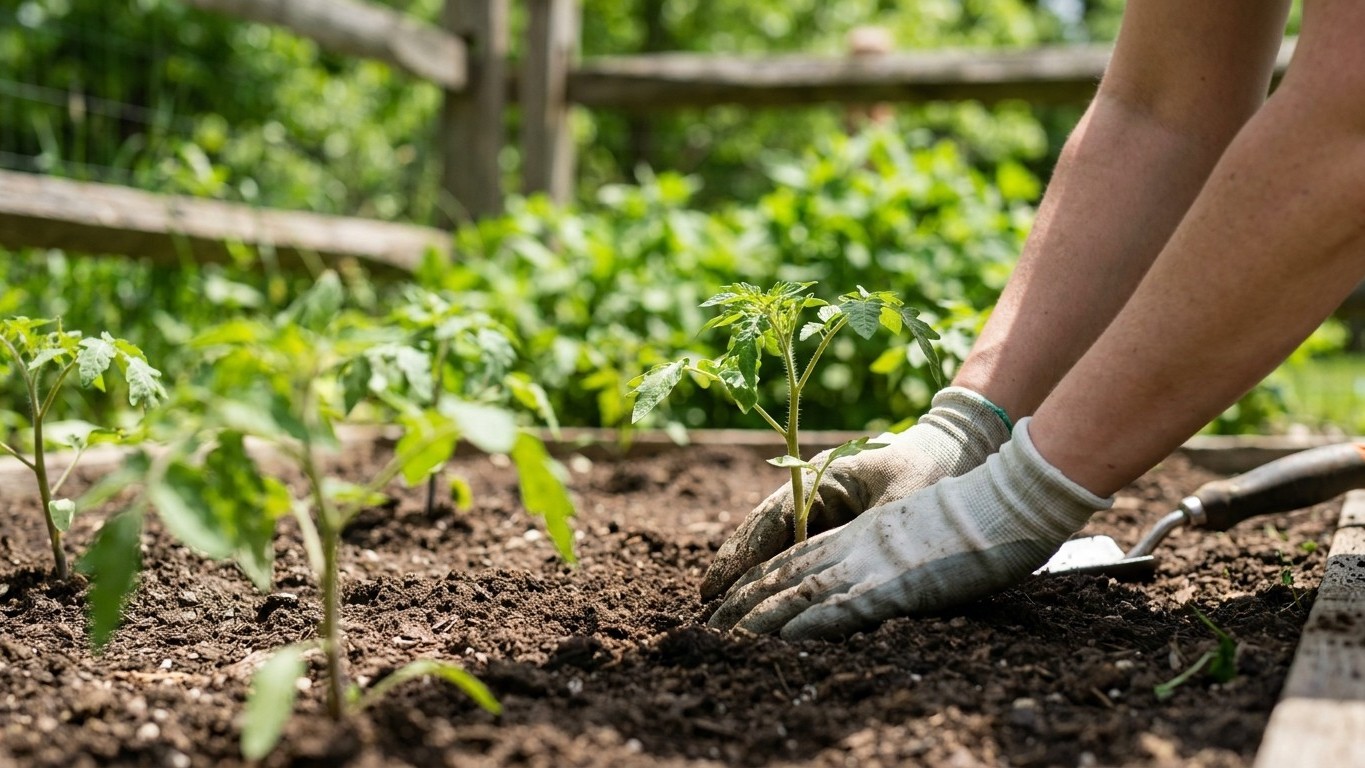

Frost risk has mostly cleared by now across mainland Nova Scotia, so June is the month when the garden actually fills up. With the mean last spring frost falling May 7 at Halifax Stanfield, most direct-sown and transplanted crops can go in with reasonable confidence, though soil warmth, not the calendar, still makes the final call on tender crops like tomatoes and squash.
What goes in the ground in June

The mean last frost date of May 7 is exactly that: a mean. In one year out of two, frost arrives later than that date at the Halifax Stanfield station, and inland valleys or higher ground routinely lag weeks behind the coast. That’s why the safe answer for June isn’t “plant everything” but “check what your soil is actually doing before you commit tender transplants.”
Cool-season crops that tolerate a stray light frost can go in with little worry: peas, spinach, lettuce, radishes, beets, carrots, and the brassica family (cabbage, broccoli, kale) as transplants. Alliums like onion sets and leeks are equally forgiving. These crops germinate in cooler soil and shrug off a chilly night that would wipe out a bean seedling.
Warm-season crops are the ones where June becomes a judgment call rather than a guarantee. Corn, beans, squash, and cucumbers can be direct-sown once the soil has held steady warmth for several days running, not just after one sunny afternoon. Tomatoes, peppers, and eggplant should go out as transplants only once nights have settled, and gardeners in the Annapolis Valley or along the Fundy shore, where cold air pools overnight, often wait longer than those closer to Halifax.
Safe now versus still a gamble
| Crop group | Method | Frost tolerance |
|---|---|---|
| Peas, spinach, lettuce, radish | Direct sow | Tolerates light frost |
| Onion sets, leeks, garlic (if not already in) | Direct sow / transplant | Tolerates light frost |
| Beets, carrots, brassica transplants | Direct sow / transplant | Tolerates light frost |
| Beans, corn, squash, cucumbers | Direct sow | Damaged by frost, needs warm soil |
| Tomatoes, peppers, eggplant | Transplant only | Killed by frost, wait for settled nights |
If a cold snap is forecast after tender crops are already in, a bedsheet or row cover thrown over them for one night beats losing weeks of growth to a replant.
What to start under cover
By June, most spring seed-starting indoors is finished, but the arithmetic still matters for anything you want ready before the mean first fall frost of October 18. Winter squash and pumpkins, which need a long season, can still be started under cover early in the month and set out once they’ve hardened off, since they have roughly four months of growing season ahead of them before that October date arrives.
Fall brassicas are the other big reason to start seed trays in June. Cabbage, broccoli, and kale sown indoors now and transplanted out in July have time to mature before the days shorten and frost returns, filling the gap that spring crops leave once they’re harvested.
The two ways this goes wrong are predictable. Start too early relative to your transplant date and you end up with rootbound, leggy seedlings sitting in trays past their prime, stretching for light and stalling once they finally hit the ground. Start too late, especially for anything with a long maturity window, and you’re racing the October frost with plants that never quite finish. Counting backward from your own expected transplant date, rather than from a fixed spot on the calendar, keeps both mistakes in check.
What is ready to pick
June is a transition month in the garden: the last of the very early crops are finishing just as the first tastes of true early summer arrive. Rhubarb, asparagus, and overwintered spinach are usually at their peak early in the month, with asparagus cutting typically tapering off as the plant needs to build energy for next season.
Radishes sown in spring are usually ready within weeks of germination and should be pulled promptly. Left in the ground too long, especially as the weather warms, they turn woody and hot-tasting fast. Lettuce and other salad greens are worth checking daily once the weather turns warm, since heat pushes them toward bolting, and a plant that’s sent up a flower stalk is past its best for eating.
Green onions and the earliest peas, if sown in the first cool weeks of spring, often start coming in toward the end of June. It’s also worth doing a final check on anything left over from winter storage, root cellars, pantries, or cold basements. Potatoes, onions, and any lingering winter squash should be inspected for soft spots or sprouting, since anything on the edge won’t hold much longer once outdoor temperatures climb.
The jobs that matter this month
Staking and trellising are the job most gardeners put off until it’s too late. Peas, tomatoes, and vining squash grow fast once the weather warms, and a plant that’s already sprawled across the bed is far harder to stake without breaking stems than one caught early. Get supports in place while plants are still small.
Mulching pays off directly this month, as soil moisture becomes harder to hold once temperatures climb and days lengthen. A layer of straw, shredded leaves, or grass clippings around vegetables cuts down on watering frequency and keeps weed pressure from exploding, which it will if bare soil sits exposed to the longer daylight hours.
Watering rhythm matters more than volume. Deep, less frequent watering encourages roots to grow downward in search of moisture, while frequent shallow watering trains roots to stay near the surface, where they dry out fast on a hot afternoon. Established beds generally do better with a thorough soak every few days rather than a light sprinkle daily.
Succession sowing keeps the harvest coming rather than arriving all at once. Lettuce, radishes, and beans sown every couple of weeks through June spread out the harvest window and reduce the glut-then-gap pattern that hits gardeners who plant everything on one weekend.
Pest scouting is worth a few minutes on a regular walk through the garden. Slugs go after young lettuce and brassica transplants especially after damp nights, flea beetles riddle young brassica leaves with small holes, and cutworms can sever a seedling stem at ground level overnight. Catching any of these early, before populations build, is far easier than dealing with an infestation two weeks later.
What not to do in June
The classic mistake is trusting the air temperature over the soil. A run of warm, sunny days can feel like summer has arrived, but if the soil underneath hasn’t caught up, warm-season transplants set out too early often sit and sulk rather than grow, and a late frost, remembering that half of all years see frost after the May 7 mean, can still take them out entirely.
Uncovering cold frames or removing row covers too soon after a mild stretch is another recurring error. A week of pleasant weather doesn’t mean the risk is over, particularly away from the coast, and plants hardened off gradually cope with a cool night far better than ones exposed all at once after weeks under protection.
Nitrogen timing trips up a lot of tomato and pepper growers specifically. A heavy dose of nitrogen fertilizer early in the season, meant to give plants a boost, often produces lush green foliage at the expense of flowers and fruit. Once plants are established and growing steadily, a balanced feed geared toward fruiting matters more than another round of straight nitrogen.
Letting soil dry out between waterings, then flooding it to compensate, is also worth avoiding. Inconsistent moisture is a leading cause of blossom end rot in tomatoes and peppers and of splitting in root vegetables like carrots and beets.
Checking this against your own county
A single frost date for the whole province is a starting point, not an instruction. The May 7 mean last frost and October 18 mean first frost both come from the Halifax Stanfield station, and Nova Scotia’s coastline, valleys, and higher inland ground don’t share one climate. The Annapolis Valley, the South Shore, and Cape Breton’s highlands can each run weeks apart from that coastal figure, and the province’s Canadian hardiness zone of 6b applies specifically to that reference station, not to every county.
For local frost records and crop guidance suited to your specific district, the Nova Scotia Department of Agriculture is the place to check before committing tender transplants to the ground.
Common questions
Is it too late to plant tomatoes in Nova Scotia in June?
No. June is actually a common month to set out tomato transplants once nights have settled, since the mean last frost has typically passed by early May and soil has had time to warm through the following weeks.
Can I still direct-sow corn and beans in June?
Yes, and for many gardeners this is the preferred window, since soil temperature by June is more reliably warm than it was in May, which matters more than the calendar date for germination.
What does Canadian hardiness zone 6b actually mean for my garden?
It’s a rating built from several climate variables, not a single figure, and it comes from Natural Resources Canada’s mapping for the reference city near Halifax. It doesn’t convert directly to the USDA zones used on US gardening sites, so it shouldn’t be treated as equivalent to a US zone number.
Why does the frost date matter if it’s just an average?
Because an average last frost date means roughly half of all years see frost after that date, not that frost is guaranteed to stop by then. Treating May 7 as a hard deadline rather than a midpoint is how tender crops end up damaged by a late cold snap.