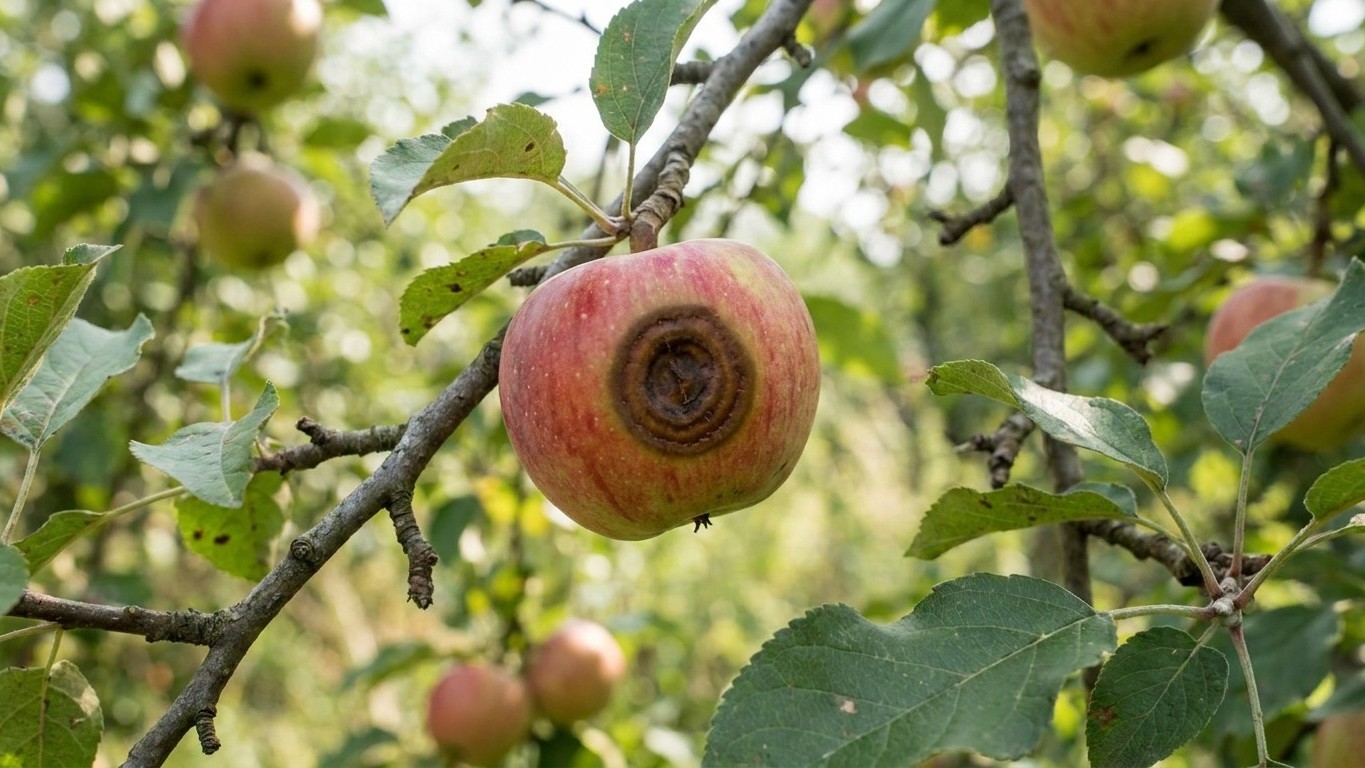

No commercial orchard in Nunavut publishes a picking date, because no reference orchard exists here in the way southern Canada or the northern U.S. states have them. The territory’s frost-free window and its winter cold rule out fruiting apple trees in open ground almost everywhere. Where fruit trees are grown at all, it happens inside heated structures, on the plant’s own schedule, and the fruit gets eaten fresh rather than stored for winter.
When apples are ready to pick in Nunavut
Picking time isn’t a date on a calendar. It’s a stage the tree reaches: bud break, then bloom, then a stretch of frost-free warmth long enough to turn a pollinated flower into a firm, sugar-filled apple. Even the fastest-ripening dessert varieties bred for short seasons need that stretch to run from spring bloom to a fall harvest measured in months, not weeks. That’s the number that matters here, more than any month name.
Reading the frost dates
At Rankin Inlet, the reference station for this region, the average last spring frost falls around June 19, and the average first fall frost arrives around September 13. Both are averages from Environment and Climate Change Canada’s 1981-2010 climate normals, which means something specific: in one year out of two, the frost comes later in spring or earlier in fall than these dates. They’re a midpoint, not a guarantee.
Subtract one date from the other and the frost-free window at Rankin Inlet runs to roughly 86 days. That’s the outer limit, assuming a tree breaks dormancy the moment frost risk clears and finishes ripening the moment frost risk returns. In practice a tree needs time after bud break to flower, and time after the last bloom to develop fruit, so the usable growing window is shorter still. Very few apple cultivars, even the earliest-ripening ones bred for northern climates, complete bloom-to-harvest inside that span reliably.
| Marker | Date (Rankin Inlet, 1981-2010 average) |
|---|---|
| Last spring frost | June 19 |
| First fall frost | September 13 |
| Frost-free window | About 86 days |
Regional differences within Nunavut
Nunavut isn’t one climate any more than any other territory is. Rankin Inlet sits on the Hudson Bay coast in the Kivalliq region. Iqaluit, further southeast in the Qikiqtaaluk region, gets some maritime moderation from Frobisher Bay. Communities in the Kitikmeot region, like Kugluktuk or Cambridge Bay, run more continental and colder still. No equivalent frost-date station data for those communities is presented here, and a resident in one hamlet shouldn’t assume Rankin Inlet’s window applies to their own dooryard.
Which ones keep, and which must be eaten
Apple varieties split broadly into two behaviors after picking. Early-season dessert types, thin-skinned and softer at harvest, are bred to be eaten within weeks. Late-season types, with denser flesh and thicker skin, are bred to hold their texture in cold storage for months. That split holds true wherever apples are grown, and it’s the split that decides what happens to any fruit produced in Nunavut.
Hardiness versus winter chill
Two separate questions decide whether an apple tree works in a given place, and they get confused constantly. Hardiness is whether the wood survives winter cold at all. Winter chill is whether the tree accumulates enough cold hours to flower normally the following spring. Rankin Inlet’s coldest month averages a daily minimum of -34.3 °C, a figure from Environment and Climate Change Canada’s 1981-2010 climate normals for that station. That’s the mean minimum for the whole month, not the record low and not a single cold night. No apple cultivar marketed for northern gardens is rated for a monthly mean minimum anywhere near that, which means the hardiness question here is settled before the winter-chill question even becomes relevant.
Storage life apples don’t get here
Because full-size apple trees don’t reliably survive outdoors across Nunavut, the storage-variety question that matters in temperate provinces (which cultivar keeps until March) doesn’t really apply. Any apple grown locally, in a heated greenhouse structure rather than open ground, tends to come from fast-fruiting, early-ripening types selected for a short indoor season rather than for months of cold-room storage. That fruit is grown to be eaten, not banked. For anyone in Nunavut thinking about storage life, the practical question shifts from “which variety keeps” to “how do I extend the shelf life of apples that arrived by plane or by ship.”
Storing them through a Nunavut winter
Most apples eaten in Nunavut never grew in the territory. They arrive by air freight through the year and, for many communities, in bulk during the short summer sealift window, the annual resupply ship that brings non-perishable and some cold-chain goods to coastal hamlets. That supply pattern changes what “storage” means for a household here.
What actual home storage looks like
The standard advice for keeping apples firm anywhere is cool, humid, dark, and just above freezing, roughly 0 °C to 4 °C (32 °F to 39 °F). In most of the country that’s a root cellar or an unheated basement corner. Nunavut homes are typically built on pilings above permafrost, without basements, so that storage option doesn’t exist in the usual form. A refrigerator crisper drawer, or a small unheated but insulated porch space monitored so it never actually freezes, does the job instead.
The sealift and air freight reality
An unheated shed or a vehicle left outside is not a substitute cold room in this climate. Once outdoor temperatures track anywhere near that -34.3 °C coldest-month average, fruit left in an uninsulated space freezes solid, and a frozen-then-thawed apple turns mealy and weeps liquid, losing the crispness that makes storage worthwhile in the first place. Given how much of the territory’s produce arrives on an infrequent shipping schedule, the practical goal for most households is stretching a delivery across weeks with steady refrigeration, not building a season-long cellar stock the way a grower in a longer-season province might.
What goes wrong here
The most common mistake is treating a hardy nursery tree, one rated for a harsh but temperate winter further south, as proof that fruiting is possible in Nunavut’s ground. Hardiness ratings assume soil that thaws to real depth and a root zone that isn’t sitting on permafrost. Across most of the territory it is, which kills roots regardless of how the top growth is rated.
Light and pollination gaps
A heated greenhouse solves the temperature problem but not the light problem. Winter daylight in Nunavut drops to a few hours or less depending on latitude, and even a warm structure can’t force normal flowering and fruit-set on a light schedule that short. Pollinator insects, scarce to begin with this far north, add a second gap at exactly the bloom window a tree would need them.
The storage mistake that ruins good fruit
The second common failure has nothing to do with growing at all: it’s storing shipped-in apples in a space that isn’t actually monitored for freezing. A porch or unheated entryway can swing from safely cool to well below freezing within a single cold snap, and by the time anyone checks, the fruit is ruined. No local extension trial documents apple cultivation outcomes for Nunavut specifically; for general planting and storage guidance, Agriculture and Agri-Food Canada’s public site is the working federal resource, since the territorial department’s own pages aren’t reliably reachable for verification.
Common questions
Can apple trees survive outdoors anywhere in Nunavut?
No documented local source confirms outdoor apple cultivation anywhere in the territory. The coldest month’s average daily minimum at Rankin Inlet, -34.3 °C, exceeds what named hardy cultivars are bred to tolerate, and much of the territory’s ground stays frozen at root depth year-round.
What’s the frost-free growing season in Nunavut?
At Rankin Inlet, the average last spring frost is June 19 and the average first fall frost is September 13, a frost-free window of roughly 86 days. Both dates are averages, so in half of all years the actual window is shorter.
Where do Nunavut communities get fresh apples?
Mostly by air freight throughout the year, supplemented in many coastal communities by the summer sealift resupply. Very little, if any, comes from local outdoor cultivation.
Can apples be grown in a greenhouse in Nunavut?
A heated structure removes the cold problem but not the light problem: winter daylight hours drop too low for normal flowering in much of the territory, and pollinator scarcity adds a further obstacle at bloom time. No local source documents sustained greenhouse apple harvests in Nunavut.