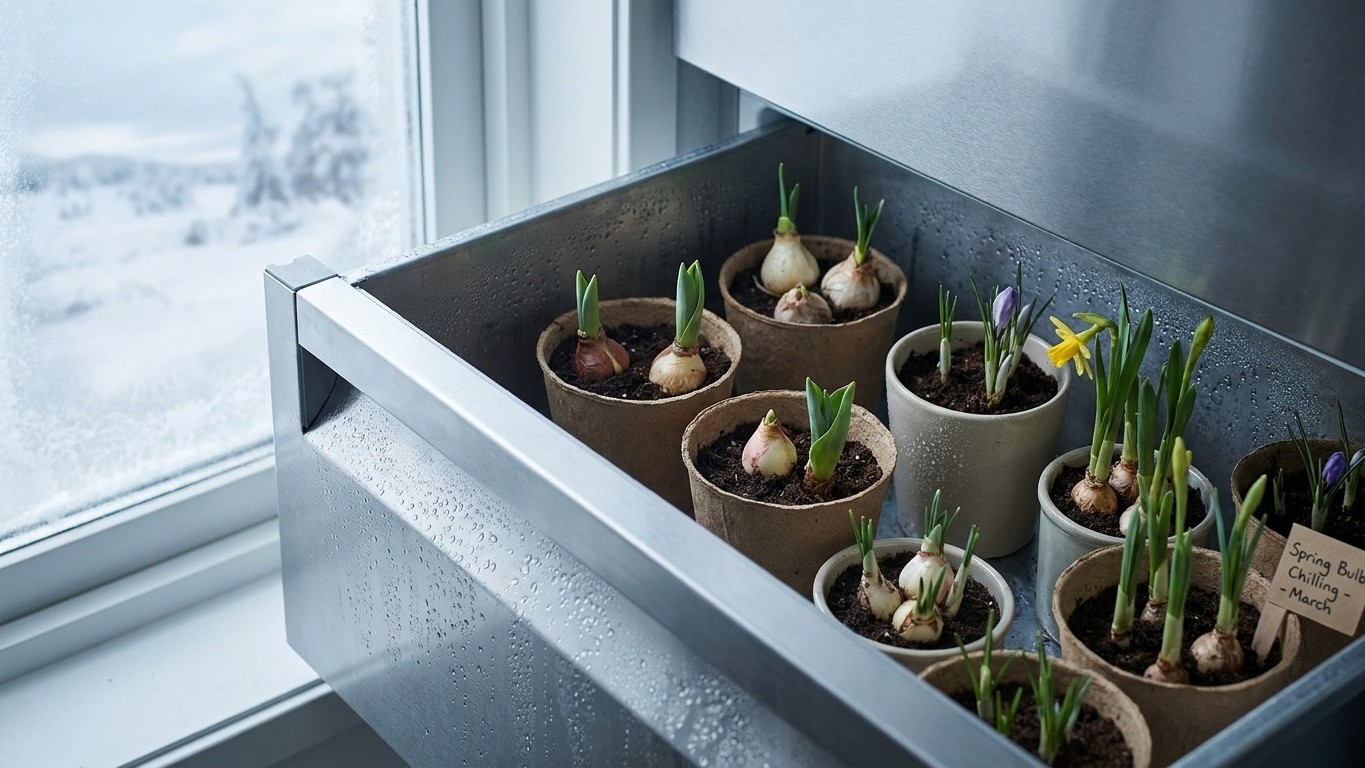

Yes, Forcing Spring Bulbs Indoors works in Nunavut, and it isn’t really optional. With a coldest-month average low of -29.8°F and a Canadian hardiness zone of 0a at Rankin Inlet, no outdoor bulb bed or forgotten pot survives the winter here. A refrigerator drawer, a cold porch, or an unheated closet has to stand in for the ground.
Why this matters in Nunavut

Rankin Inlet’s coldest month averages a daily low of -29.8°F, according to Environment and Climate Change Canada’s 1981-2010 climate normals for that reference station. That single figure rules out one of the two classic reasons gardeners force bulbs indoors in the first place.
In milder places, forcing exists because winter simply doesn’t deliver enough cold. A spring bulb needs roughly twelve to fourteen weeks below 45°F before it can send up a flower stem, and a Gulf Coast or Southern California yard often can’t provide that on its own. Nunavut has the opposite problem. There is no shortage of cold here. There’s an overabundance of it, delivered at a depth and duration that would kill the bulb outright rather than simply chill it into bloom.
The second classic reason for forcing involves containers specifically. A pot sitting above ground freezes all the way through, roots and all, while a bulb planted directly in a garden bed is protected by the surrounding soil mass, which only freezes near the surface. That’s why a bulb rated hardy for a particular zone in the ground can still die in a pot in that same zone. It’s a real distinction in most of the country.
In Nunavut, that distinction barely matters, because neither option works. At Canadian zone 0a, the ground itself rarely offers a workable planting window, and even the toughest spring bulbs sold for northern gardens are typically rated well short of this cold. A container left outside doesn’t just freeze through, it freezes through for months at a stretch. So this territory sits in a category the standard forcing advice doesn’t quite anticipate: not a place lacking cold, and not simply a container problem, but a place where outdoor bulb growing of any kind isn’t realistic at all. Forcing indoors isn’t a workaround for a mild winter or a risky pot. It’s the only route to a blooming crocus or hyacinth that exists here.
How to do it here
The mechanics of forcing don’t change because of where you live, but the resources available in Nunavut change where each step happens. Given the reference climate figures above, an unheated garage or porch that would stay in the 35°F to 45°F sweet spot in a temperate state is unreliable here for months at a time. It will drop well below freezing along with everything else outdoors. That pushes most of the “cold treatment” indoors, into a refrigerator or a consistently cool interior space.
- Buy bulbs suited to forcing. Look for ones described on the package as forcing-friendly, since they’ve usually been selected for a shorter, more predictable cold requirement.
- Pot them up in a well-draining container. Set the bulbs close together, shoulders just at the soil surface, and water once thoroughly.
- Give them twelve to fourteen weeks below 45°F. This is the general cold period most spring-flowering bulbs need before they’ll form a flower rather than just leaves.
- Choose a refrigerator drawer over an unheated room. In a climate where the outdoor minimum in the coldest month averages -29.8°F, an attached garage or entryway can’t be trusted to hold steady above freezing the way it might farther south. A fridge drawer, kept away from ripening fruit, does the job reliably, since apples and other ripening produce release ethylene gas that can kill the flower bud forming inside the bulb.
- Check for root growth and a short shoot after the cold period. Tip the bulb gently out of the soil; visible roots and a pale shoot an inch or two long mean it’s ready to move.
- Move the pot to a cool, dim spot for about a week before giving it full light and warmth, so the shoot doesn’t stretch and flop under a sudden jump in temperature.
- Bring it into normal indoor light and room temperature. Flowers typically follow within two to three weeks once the plant is out of the cold and into the light.
For anyone tempted to leave a forced pot outside afterward rather than store it indoors, remember that a container needs to be roughly two hardiness zones tougher than the bulb inside it to survive outdoors, or else be moved indoors and heavily mulched. At Canadian zone 0a, that math doesn’t work for any spring bulb on the market, which is exactly why the whole process happens under a roof from start to finish here.
Which bulbs are worth it
Not every bulb rewards the effort of forcing, and the ones that do tend to share a trait: a relatively short cold requirement, or a stem that stays short enough to stand up in a pot. A bulb with a long, exacting cold need takes longer in the refrigerator and is less forgiving of a slightly warm shelf. A bulb with a tall, thin stem often looks great in a garden bed but topples over in a container the moment it opens.
It also helps to remember that in this territory, none of these bulbs were ever going to survive outdoors and come back next spring. Given the hardiness figures above, they’re a one-season purchase no matter what. Forcing doesn’t cost the gardener a perennial they’d otherwise have kept; it’s simply the only way to get a bloom out of the bulb at all.
- Paperwhite narcissus, which needs no cold period whatsoever and blooms fastest of the common choices
- Hyacinth, reliable and fragrant, with a stem sturdy enough for a pot
- Crocus, short-stemmed and quick once the cold period ends
- Muscari (grape hyacinth), compact and rarely flops
- Iris reticulata, low-growing and well suited to a small pot
- Large trumpet daffodils, which often need a longer cold period and grow tall stems that lean or fall in a container
- Fritillaria, notoriously uneven when forced, with inconsistent results even under controlled cold
- Alliums, tall and better suited to a garden bed than a windowsill pot
What goes wrong, and when you can still fix it
Leaves but no flower
The bulb put up green growth and stopped there. The cold period was too short, or the temperature during storage crept above the range the bulb needed to form a flower bud. There’s no rescue for this season, since the bud that should have formed simply never did. Note the timing and give the next batch the full twelve to fourteen weeks below 45°F before moving it into warmth.
Short, hidden bloom
The flower opens low, almost buried in the leaves, barely rising above the pot’s rim. This usually means the plant was moved into full light and warmth too abruptly after its cold period, so the stem never had the week or so of cool, dim transition it needed to stretch upward before the flower opened. This season’s bloom is what it is. For future pots, add that gradual step between cold storage and a sunny windowsill.
Rot in the pot
The bulb turns soft and dark, sometimes with a sour smell, instead of sending up any growth. This is a drainage failure, water sitting against the bulb for too long during either the cold period or the growing stage. There’s no saving a bulb once it’s rotted. Discard it and start the next one in a container with an actual drainage hole and a lighter, faster-draining potting mix.