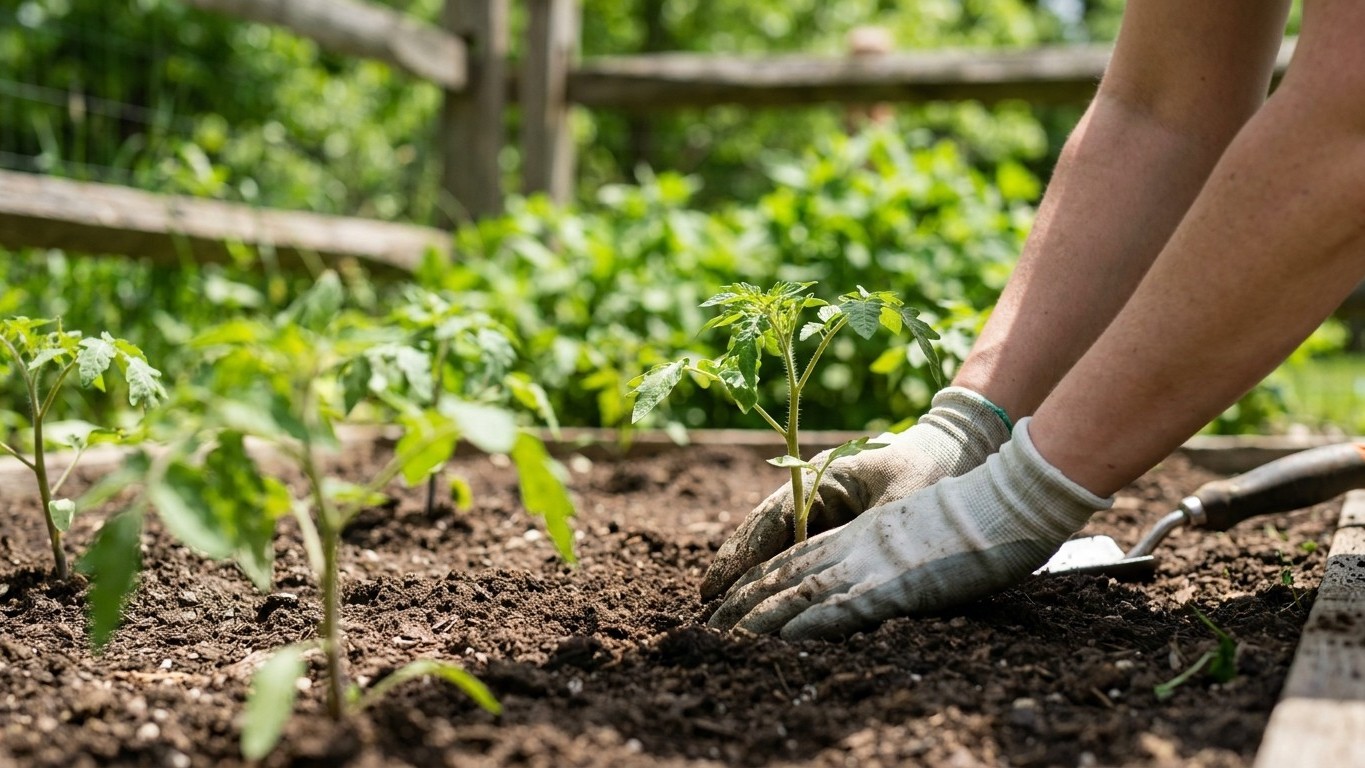

By June, Ontario gardeners are past the guessing game. The average last spring frost at the Toronto area’s Pearson station sits at April 30, so a full month of buffer already separates you from that date. Warm-season crops that were still a gamble in May, tomatoes, peppers, squash, beans, corn, can go in the ground now, right alongside the cool-season successions that keep the harvest rolling.
What goes in the ground in June

The soil, not the calendar, makes the call. Warm-season seeds like beans, corn, cucumbers and squash germinate poorly below roughly 60 F, and tomato and pepper transplants sulk in cold soil even when the air feels warm. By June, soil across most of southern Ontario has caught up, which is why this month reads as a green light for the crops that spring holds back.
Warm-season crops now cleared for planting
Bush and pole beans, sweet corn, cucumbers, summer and winter squash, pumpkins and melons can all be direct-sown once the soil is workable and warm to the touch. Tomato, pepper, eggplant and basil transplants that have been hardening off on a porch or cold frame move into their final beds now. If you started tomatillos or ground cherries indoors, June is their month to go out as well.
Cool-season crops still going in
Early June still has room for a last round of peas, since they stall once daytime highs push consistently into the 80s. Beets, carrots, radishes and Swiss chard can be sown right through the month as part of a rolling succession, and kale started now will size up for a fall harvest. Lettuce and spinach sown early in the month need some afternoon shade by the back half of June, or they bolt before they bulk up.
| Crop group | Method | June timing note |
|---|---|---|
| Beans, corn, squash, cucumbers | Direct sow | Any time this month once soil is warm |
| Tomatoes, peppers, eggplant | Transplant | Harden off first, then plant |
| Peas | Direct sow | Early June only, before heat sets in |
| Lettuce, spinach | Direct sow, succession | Shade or hold off by late June |
| Beets, carrots, kale | Direct sow | Throughout the month |
What to start under cover
Most of the classic June work happens outdoors, but a few things still make sense under cover. Fall brassicas, broccoli, cauliflower, cabbage, and fall lettuce started in cell trays now will be ready to transplant in July for a harvest well before the average first fall frost on October 16. Count backward: a broccoli transplant needs about four to six weeks before it’s ready to move outside, so a June start lands it in the ground with plenty of season left to mature before that October frost window closes in.
Starting seeds in trays rather than direct in the ground also solves a June-specific problem. Bare soil in full summer sun dries out fast, and fine seeds like lettuce or celery can fail to germinate before the surface crusts over. A shaded tray or a cold frame propped open for airflow keeps the seedbed evenly moist while the seedlings get established.
The two ways this goes wrong are familiar to anyone who has started seeds before a proper window. Start too early and the transplants sit too long in small cells, going rootbound and leggy before there’s a bed ready for them. Start too late, especially for fall brassicas, and they hit the shortening days of autumn without enough size to head up before cold weather arrives. Working backward from October 16 rather than forward from today keeps that timing honest.
What is ready to pick
June is when the spring’s patient planting starts paying rent. Asparagus beds that have been cut for a few weeks are winding down for the season, and it’s worth easing off harvest by month’s end to let the ferns grow and rebuild the crown for next year. Rhubarb stalks are at their thickest and least fibrous now, and June-bearing strawberry varieties hit their peak ripeness across most of the province this month.
Greens, roots and the first summer crops
Radishes sown in May are ready within three to four weeks, and any left in the ground too long turn woody and hot-tasting, so pull them as soon as the shoulders push up out of the soil. Spring lettuce and spinach should be harvested before hot spells trigger bolting, a bitter, elongating stem is the clearest sign it’s time to cut. Peas sown early in the month reach picking size by late June if the pods feel full and firm when squeezed. Garlic planted the previous fall sends up curled scapes now, and cutting them not only gives an early harvest but redirects the plant’s energy into bulb size.
The jobs that matter this month

June rewards the gardener who gets ahead of growth rather than chasing it.
Staking, mulching and watering
Tomatoes, peppers and vining squash grow fast enough in June heat that a stake or cage installed after the fact means broken stems and bruised root balls. Set supports at planting time, not weeks later. A two- to three-inch mulch layer laid down now, straw, shredded leaves or grass clippings, holds soil moisture through the hotter stretches ahead and keeps weed pressure down before it compounds. Watering deeply once or twice a week beats a light daily sprinkle, since shallow watering trains roots to stay near the surface where they dry out fastest.
Succession sowing and pest scouting
Sowing a short row of beans, beets or carrots every two to three weeks through June keeps the harvest spread out instead of arriving all at once in August. It’s also the month to start checking the undersides of leaves for Colorado potato beetle eggs, squash bug clusters and the first tomato hornworms, all far easier to manage caught early than after they’ve built numbers. Thin direct-sown carrots and beets to their final spacing before roots start competing, and hill up potato plants as they grow to keep developing tubers covered and green-free.
What not to do in June
The most common June mistake is treating the calendar as a green light without checking the plant. Warm-season transplants that skip hardening off, even weeks after the average frost date, can still suffer transplant shock from a sudden jump in sun and wind exposure. Ease them outside over four or five days before they go in the ground for good.
Overhead watering late in the day is another habit worth breaking. Wet foliage sitting overnight in Ontario’s humid summer air invites fungal issues like early blight on tomatoes and powdery mildew on squash. Water at the base, earlier in the day, so leaves dry before evening.
Heavy nitrogen feeding is tempting once plants are in and growing, but it’s the wrong move for anything grown for fruit rather than leaves. Tomatoes and peppers pushed with too much nitrogen put out lush foliage and little else, delaying flowering and fruit set. Save the nitrogen for leafy crops and switch to a balanced or phosphorus-leaning feed once tomatoes and peppers start to flower. And resist letting bolting lettuce or spinach linger in the bed out of reluctance to pull it, that space is better used for a fresh succession sowing or a heat-tolerant crop.
Checking this against your own county
A province-wide answer for June is a starting point, not an instruction for your specific yard. Ontario stretches from the Windsor and Niagara peninsulas to Thunder Bay and beyond, and that distance moves planting windows by weeks, not days. Lake effect near the Great Lakes shorelines delays spring warming but often extends the fall season, while inland and northern districts warm faster in spring and cool sooner in autumn. Elevation matters too: higher ground in areas like the Dundalk highlands runs noticeably cooler than the Toronto area station these averages come from.
For local frost data and crop guidance specific to your district, the Ontario Ministry of Agriculture, Food and Rural Affairs is the reliable next stop.
Common questions
Is it too late to plant tomatoes in Ontario in June?
No. June transplanting is standard practice across most of the province, and plants set out early in the month still have a full season ahead before the average first fall frost on October 16.
Can I still direct sow corn and beans in June?
Yes, and for many gardens this is the ideal window, since soil temperatures have caught up to what these seeds need to germinate reliably.
What vegetables can I actually harvest in Ontario in June?
Rhubarb, June-bearing strawberries, radishes, spring lettuce and spinach, early peas and garlic scapes are the main crops coming out of the garden this month, alongside the tail end of the asparagus season.
Is frost still a risk in Ontario in June?
The average last spring frost falls on April 30, well before June begins, but that date is a mean, not a guarantee, so a late cold snap in early June is not impossible in cooler or northern districts.