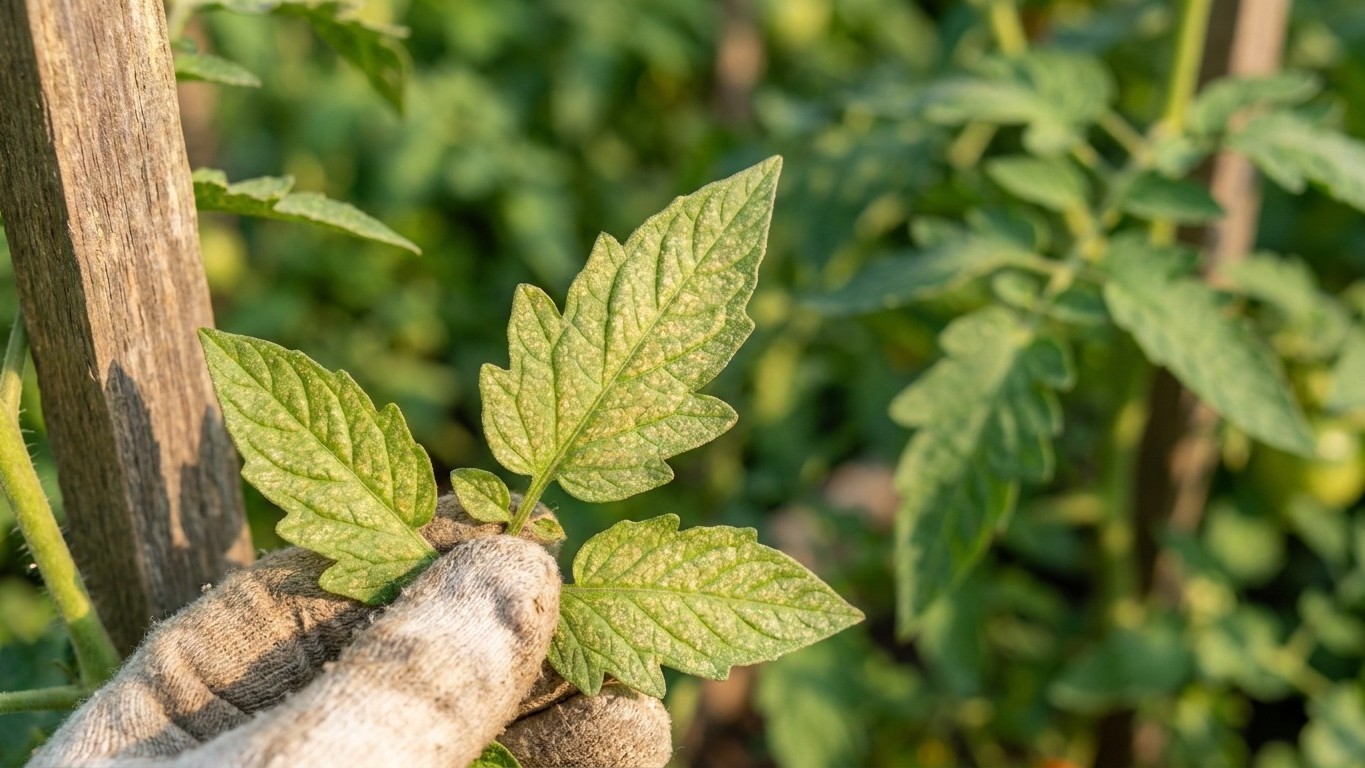

Twospotted spider mites show up in Ontario gardens once the weather turns warm and dry, usually a few weeks after transplanting, and the first sign is rarely the mite itself. It’s stippled, bronzed foliage on beans, tomatoes, or roses. Row covers, timely watering, and fall cleanup do more than any spray once webbing appears.
Reading the calendar from your last frost

Gardeners around Toronto plan their spring around one number: an average last frost of April 30, based on the 1981-2010 Canadian Climate Normals recorded at Toronto Lester B. Pearson International Airport. That figure is a midpoint, not a promise. In roughly one year out of two, frost arrives after that date, and in colder pockets north or east of the city, the real safe planting window runs weeks later still.
Twospotted spider mites don’t check a calendar. They respond to warmth, both in the soil and in the air around the leaves, so a mild March pushes their first appearance earlier than any date on a seed packet, while a cold, wet spring delays them by a similar stretch. What matters more than the frost date itself is the stretch of hot, dry weather that follows it, since that’s the condition that lets mite populations build fast.
Most Ontario gardeners see the first stippling on beans, tomatoes, or ornamentals somewhere between three and six weeks after transplanting into warm soil, once a run of dry days lets populations multiply. That window is the one to watch, not a fixed date on the wall. Any cover meant to slow early colonization needs to go on at transplanting and come off before the heat of midsummer, when covers trap warmth and humidity the mites don’t even need. Treat the April 30 average as a starting point for your own notes, not a guarantee etched in the ground.
What it attacks, and what the damage looks like
The first thing a gardener usually notices isn’t a bug at all. It’s leaves that look dusty, faded, or bronzed, almost as if they’d been dusted with fine ash. Look closer and the surface shows tiny pale flecks, a stippled pattern where each speck marks a spot where a mite pierced a leaf cell and drained it dry. On a bad infestation, fine webbing stretches across the underside of leaves and between stems, especially in the still air near the base of a plant.
Twospotted spider mites feed on a wide range of garden plants. Beans, tomatoes, cucumbers, melons, and strawberries are common targets in the vegetable patch, while roses, marigolds, and many houseplants get hit just as hard. Left unchecked, damaged leaves turn yellow, then brown, curl at the edges, and drop early, which cuts yield on food crops and stunts growth on ornamentals.
Which life stage causes the damage
Both the nymphs and the adult mites do the feeding damage, piercing individual plant cells with tiny mouthparts and sucking out the contents. Eggs, laid on the underside of leaves, don’t feed at all, so a plant can carry a hidden generation before any visible injury appears. That timing matters for control: once a population has moved past egg stage into actively feeding nymphs and adults, damage accumulates fast, and anything that only affects eggs arrives too late to save that generation’s leaves.
How Ontario sits in this pest’s range

This site currently documents the twospotted spider mite in two territories, Ontario and neighbouring Ohio. That narrow count doesn’t mean the mite is rare here; it means the difference between the two territories is timing, not presence. The species shows up in both places, but the date it becomes a problem in a given garden shifts with the local climate rather than with any real boundary at the border.
Because Ontario doesn’t yet have its own province-specific extension bulletin covering this pest in the same detail, the nearest published guidance comes from Ohio State University Extension (Ohioline), across the border. That’s worth saying plainly rather than glossing over: figures and timing notes drawn from Ohio research reflect Ohio’s climate first, and an Ontario garden, especially one north of the Greater Toronto Area, will typically see mite activity ramp up later in the season than an Ohio guide might suggest.
Sitting close to that Ohio guidance rather than a wide, well-documented range across many territories puts Ontario near an edge of what’s mapped out on this site so far. That’s a statement about documentation, not about how common the mite actually is in Ontario gardens; local gardeners and provincial agriculture staff have long dealt with it under other names and general mite advice, even without a dedicated Ontario bulletin to point to yet.
What actually works against it
The cheapest, most effective step is also the least glamorous, but several measures follow the same logic: remove the advantage that lets a small mite population turn into an outbreak.
- Keep plants adequately watered. Twospotted spider mites thrive on drought-stressed plants, since dry, stressed leaves are easier to pierce and offer less resistance than well-hydrated tissue.
- Use row covers, put on at transplanting and removed before the heat of midsummer. They physically block the first wave of mites from reaching young plants at their most vulnerable stage, though the mechanism is simple exclusion, not chemistry, and it stops working the moment the cover comes off or the moment mites are already established underneath it, whichever comes first.
- Direct a forceful spray of water at the underside of leaves. This knocks mites and their webbing off the plant and disrupts their feeding, since these mites lack strong attachment and struggle to climb back up a wet, smooth surface; it works best early, before webbing gets dense enough to shield the colony from the spray.
- Clear garden debris and fallen leaves in autumn. This removes one of the main places adult female mites overwinter, cutting down the size of the population that emerges the following spring.
Crop rotation offers less protection against this particular pest than it does against soil-dwelling insects, since twospotted spider mites feed on such a broad range of plants that moving one crop’s location rarely denies them a host nearby. None of these measures help once mites have moved deep into curled, webbed foliage or into the crown of a badly infested plant. At that point the practical step is removing and discarding the worst-affected leaves or plants entirely, since sanitation, not intervention on an already-collapsed plant, is what protects the rest of the garden.
Common questions
Do twospotted spider mites survive Ontario winters?
Adult females overwinter in garden debris, under bark, and in sheltered plant litter, then become active again as spring temperatures rise. Clearing fallen leaves and old plant material each fall reduces the number that make it through to spring.
Can I see twospotted spider mites without a magnifying glass?
Barely. Adults are roughly the size of a period on a printed page, often pale green to yellow with two dark spots on the body, and are easiest to spot as tiny moving specks against pale webbing on the underside of a leaf.
Does rain get rid of an infestation on its own?
Heavy rain can knock down populations somewhat, similar to a forceful water spray, but it won’t eliminate an established colony hidden in dense webbing or curled leaves. Consistent moisture helps prevent outbreaks more than it cures an active one.