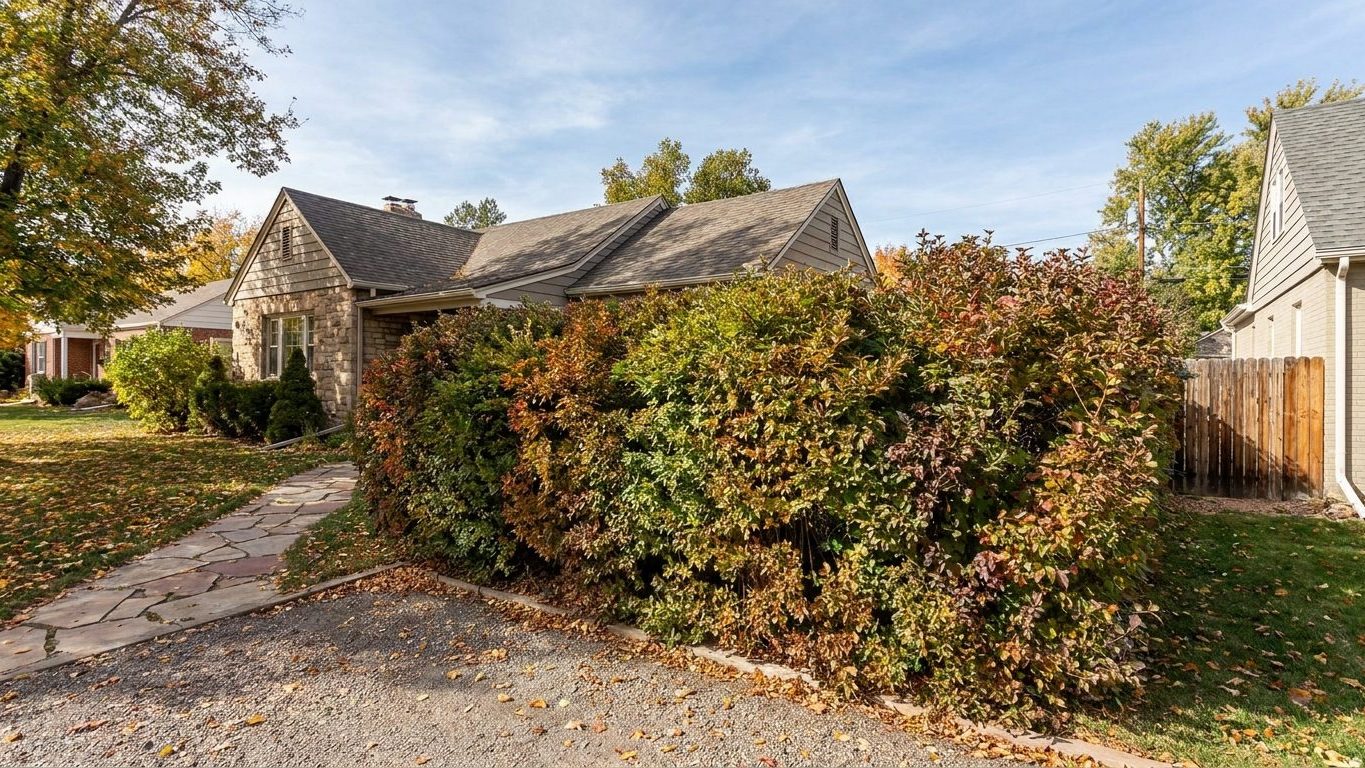

New Jersey has no statewide hedge height limit. Nothing in state statute sets a number for how tall a hedge can grow on your property. That authority sits with your municipality, which means the real answer to “how high can my hedge be” depends entirely on which town, township, or borough you live in, and sometimes on which side of your yard the hedge sits.
There is no New Jersey hedge height law
New Jersey is a home rule state. That phrase does a lot of work here: it means the state legislature has handed land use control, including fences, plantings, and setback rules, down to the 564 municipalities that make up New Jersey. Each one writes and enforces its own zoning code. There is no Title in the New Jersey Statutes Annotated that says a hedge may be 4 feet or 6 feet or 10 feet tall. If you search for one, you will not find it, because it does not exist.
This surprises a lot of homeowners, and it is worth pausing on why. Fences and hedges get lumped into what planners call “accessory structures” or “site elements,” and New Jersey’s Municipal Land Use Law hands that whole category to local governments. So a hedge that is perfectly legal in Montclair might violate the code two towns over in Cedar Grove, even though both are in the same county and separated by a few miles.
The commercial sites that rank for this search often print a single figure, something like “4 feet in front yards, 6 feet in back yards,” and present it as New Jersey law. That number usually comes from one town’s ordinance, copied and generalized. It is not wrong because someone invented it. It is wrong because it is presented as universal when it is local. A rule that applies in one zoning board’s jurisdiction gets stretched to cover the whole state, and the reader walks away thinking they know their limit when they actually know somebody else’s.
Why municipalities regulate hedges at all
Local governments write these rules for three practical reasons: sightlines for drivers and pedestrians, preventing disputes between neighbors over shade and roots, and keeping a consistent look along a street. A tall, dense hedge at a corner lot creates a blind spot. A hedge planted right on the property line can become a decades-long argument if nobody agreed on how tall it could get. Zoning boards handle these problems town by town, which is exactly why the answer to “how high” changes as soon as you cross a municipal border.
None of this means you are stuck guessing. It means the useful next step is not to look for a state answer that does not exist, but to find the one document that actually governs your yard: your municipality’s zoning ordinance.
How to find the rule that actually applies to you
Every New Jersey municipality publishes its municipal code somewhere, and in nearly all cases you can read it online without calling anyone. Three publishers host the overwhelming majority of these codes: Municode (library.municode.com), American Legal Publishing (codelibrary.amlegal.com), and eCode360, run by General Code. If you search your town’s name plus “municipal code,” one of these three will almost always come up first.
Once you land on your town’s code, do not search for “hedge” first. Go to the Zoning chapter. Hedge and fence rules almost never live in a standalone ordinance; they are folded into zoning, usually under a section called “Fences” or “Accessory Structures and Uses.” Some codes bury the height limit even further, inside a table of “bulk requirements” or “yard regulations” that lists setbacks, lot coverage, and fence heights side by side.
Check the exact word your code uses
This is the detail that trips up most homeowners: a hedge is often not legally a fence. Some zoning codes define “fence” narrowly, as a built structure of wood, vinyl, or metal, and then either regulate “hedges” or “living screens” in a completely separate clause, or say nothing about them at all. Others fold hedges into the fence definition explicitly, treating a dense evergreen row the same as a wooden panel fence for height purposes. You cannot assume one applies to the other. Read the definitions section of the zoning chapter first, find out how your town defines “fence,” and see whether “hedge,” “hedgerow,” or “living fence” gets its own line. If the code is silent on hedges specifically, that silence is itself useful information, and it usually means you should call the zoning office directly rather than guess.
If the online code is confusing, outdated, or missing a page, your town’s zoning department or code enforcement office can tell you the current rule over the phone, usually in under five minutes. This is also the office to call if you are on a corner lot, near a driveway, or unsure whether your hedge sits inside a setback area, since those situations often trigger extra rules beyond the general height limit.
The branches that cross the line
One rule shows up in nearly every municipal code regardless of what town you live in, and it is not really about height at all. It is the sight triangle, sometimes called a “clear sight triangle” or “visibility triangle.” At intersections and where a driveway meets the street, most zoning codes forbid anything, hedge included, that blocks a driver’s view above a certain low height, often measured in inches rather than feet. This limit is almost always far stricter than the general hedge or fence height allowed elsewhere on the same property. A hedge that is perfectly legal along your side yard can still be a violation if it sits inside that triangle near your driveway or a street corner.
The second situation that comes up constantly involves not your hedge, but your neighbor’s, growing into your yard. Here New Jersey follows a principle that shows up across most states, and it comes from case law rather than a statute: a property owner generally has the right to cut back branches and roots that cross onto their land, up to the boundary line and no further. You cannot reach over onto the neighbor’s side to trim their hedge to your preferred height, and you cannot damage or kill the plant in the process, since that can expose you to liability for destroying someone else’s property. What you can do is remove, at your own expense, whatever crosses the line.
This principle is sometimes called the “right of self-help” in property law discussions, and it exists precisely because disputes over encroaching branches are common and courts wanted a default rule that does not require a lawsuit every time a branch dips over a fence. But it is a general legal principle, not a New Jersey statute with a specific number attached, and the details, like whether you must notify your neighbor first or whether local ordinances add extra steps, can vary by municipality and by the facts of the case. If a disagreement over an overgrown hedge escalates, that is a moment to talk to an attorney rather than rely on general guidance, since actual damages, easements, or long-standing informal agreements between properties can change the analysis.
What to check before you plant
Before you put a row of arborvitae or privet along a property line, a short checklist saves a lot of trouble later. None of this requires guessing, and most of it is a single phone call or a few minutes with your municipal code.
- Confirm the zoning definition. Find out whether your code treats hedges the same as fences, separately, or not at all, before you assume a fence height limit applies to your planting.
- Locate the sight triangle rule. If you are anywhere near a corner lot, driveway apron, or intersection, ask the zoning office for the exact dimensions of the required clear sight triangle before you choose a spot.
- Ask about setbacks, not just height. Some codes require hedges to sit a certain distance back from the property line or sidewalk, independent of how tall they are allowed to grow.
- Check for a variance history on your street. If neighbors have already gotten permission for taller screening hedges, that can tell you whether the board is flexible on this issue in your area.
- Get the current rule in writing or by name. Ask the code enforcement officer which chapter and section governs hedges, so you have something specific to reference if a question comes up later.
Doing this before you plant matters more with hedges than with almost any other yard feature, because a hedge is a living investment that takes years to mature. A fence you install wrong can be moved or shortened in a weekend. A hedge you plant in the wrong spot, at the wrong species for your eventual height goal, means ripping out root systems and starting over, sometimes after five or six growing seasons.
Common questions
Is there a New Jersey state law that sets a maximum hedge height?
No. Height limits for hedges are set at the municipal level under New Jersey’s home rule structure, not by any state statute. Every town’s zoning code can set a different figure.
Where in my town’s code will I find the hedge rule?
Look in the Zoning chapter, typically under “Fences” or “Accessory Structures.” Most New Jersey municipal codes are hosted on Municode, American Legal Publishing, or eCode360, and searchable by town name.
Can my neighbor make me cut my hedge down to a certain height?
Only if your hedge violates your town’s zoning ordinance, in which case code enforcement, not the neighbor directly, would issue a notice. A neighbor generally cannot dictate hedge height on your side of the line on their own authority.
What can I legally do if my neighbor’s hedge branches grow onto my property?
As a general legal principle followed in most states, you may cut back growth that crosses onto your land, up to the boundary line, at your own expense, without killing the plant or reaching onto the neighbor’s side. For a genuine dispute, a local attorney can confirm how this applies to your situation.