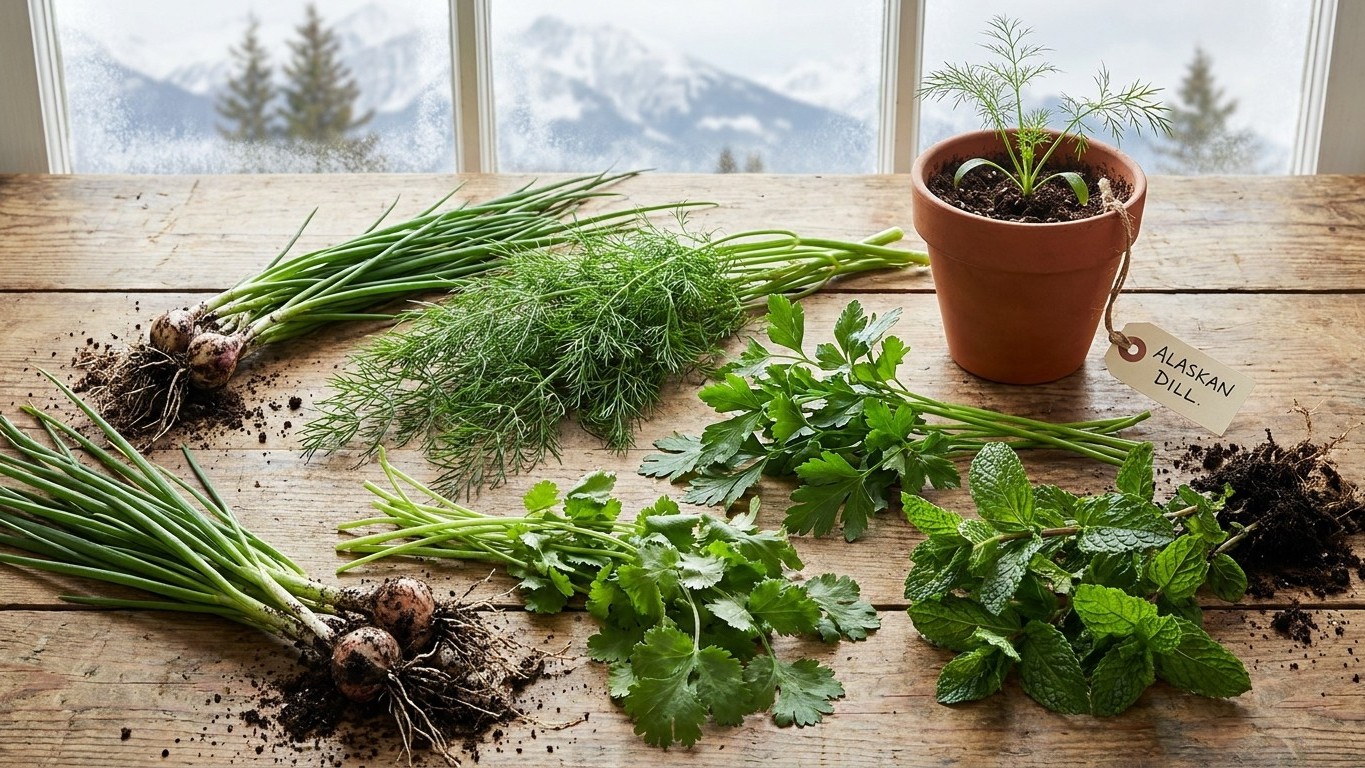

Pennsylvania‘s climate favors hardy perennial herbs like thyme, sage, oregano, and chives across nearly the whole state, while basil, parsley, and cilantro do well as warm- or cool-season annuals. Rosemary is the outlier: it struggles to survive a Pennsylvania winter outdoors except in the mildest pockets near Philadelphia.
The short answer for Pennsylvania
Start with the numbers that actually decide this. The reference station data (Philadelphia) puts the last spring frost between March 29 and April 6, and the first fall frost between November 5 and November 16. Stretch those dates end to end and you get a frost-free growing season somewhere between roughly 213 and 232 days, depending on which end of each window you land on in a given year. That’s a respectable season, long enough for a full run of basil, plenty of time for two cilantro plantings, and more than enough for parsley to bulk up before bolting.
The other number that matters is the coldest month’s average daily minimum: 26.0°F at the Philadelphia reference station. That figure, not the record low and not the monthly average, is what determines whether a perennial herb makes it through winter without protection. Combined with the state’s USDA hardiness zone range of 5a to 7b, it tells you which herbs are safe bets and which are gambles.
Sorting herbs by what the season and cold actually allow
| Herb type | Examples | Fit for Pennsylvania |
|---|---|---|
| Cold-hardy perennials | Thyme, sage, chives, oregano | Reliable statewide; survive a 26°F coldest-month average with mulch |
| Marginal perennial | Rosemary, French lavender | Only near the Philadelphia end of the zone range; elsewhere treat as annual or overwinter indoors |
| Hardy perennial, cold-tolerant | English lavender, mint | Handles zone 5a fine; mint needs containment more than warmth |
| Warm-season annual | Basil | Fits the 213-232 day frost-free window if started from transplants |
| Cool-season annual | Parsley, cilantro | Best in the shoulder seasons, not the heart of summer |
The pattern is straightforward: if an herb is rated hardy to something close to zone 5, this state’s frost data backs it up almost everywhere. If it needs zone 7 or warmer to survive winter, you’re relying on a narrow slice of the state’s mildest corner, and even there it’s not guaranteed.
What will not work here
Rosemary left in the ground over winter is the most common disappointment. Most rosemary varieties need protection once temperatures sit consistently below the mid-teens, and Pennsylvania’s coldest month averages a daily minimum of 26°F, meaning individual cold snaps regularly drop well past what the plant tolerates. Even in the 7b pockets near Philadelphia, a single hard freeze event during an otherwise mild winter can kill a rosemary plant that looked fine in December. Treat it as a container plant you bring inside, or replant it every spring, rather than counting on it as a permanent fixture.
Tropical herbs with long maturity windows run into the same wall from the other direction. Lemongrass, for instance, wants something closer to nine or ten months of warmth to bulk up into a usable plant. Pennsylvania’s frost-free stretch tops out around 232 days at best, and that’s the mild end of the range. Grown in the ground here, lemongrass barely gets going before frost cuts it down. It survives the season only as a container plant moved indoors, not as a garden bed crop.
Timing mistakes that cost a season
Direct-seeding basil right at the last frost date is a common misstep. Basil seed wants soil consistently in the 50s Fahrenheit or warmer to germinate reliably, and a frost date of April 6 (the later end of the window) doesn’t mean warm soil, it just means no more freezing. Gardeners who seed basil directly outdoors that early often watch it sit and rot rather than sprout. Starting from transplants, set out two to three weeks after the last frost date, sidesteps the problem entirely.
Cilantro fails for the opposite reason: it’s a cool-season herb planted into a season that eventually gets hot. Pennsylvania summers aren’t the harshest in the country, but they’re warm and humid enough that cilantro sown in June bolts to seed within weeks instead of producing leaf. And that same summer humidity punishes herbs planted too close together. Oregano and thyme, both fine with the cold here, develop powdery mildew and other fungal trouble when crowded, because humid air trapped between tightly spaced plants doesn’t dry out the way it would in a drier climate. Spacing that works in an arid state doesn’t work here.
What changes across Pennsylvania
A hardiness range of 5a to 7b is not a small spread. That’s the difference between a climate where rosemary has a fighting chance in a sheltered spot and one where it has essentially none. The Philadelphia reference station sits at the mild end of that range, which is exactly why its frost dates and its 26°F coldest-month figure describe the easiest version of Pennsylvania’s climate, not the whole state’s.
Move toward the northern tier or up into the Alleghenies and the same herb decisions shift by weeks, not days. Spring frost risk lingers two to four weeks longer than the Philadelphia window, which pushes basil transplanting, and the safe date for tender annuals generally, correspondingly later. A gardener in those higher, colder sections working off the March 29 to April 6 window would be setting themselves up for a frost-killed planting; their real window opens closer to mid or late April.
The herbs that stay steady across that whole spread are the cold-hardy perennials: thyme, sage, chives, oregano. Their hardiness sits comfortably within even the coldest end of Pennsylvania’s zone range, so the zone gap that matters so much for rosemary barely registers for them. The herbs that swing hardest across the state are the marginal perennials and the long-season annuals, exactly the ones already flagged as the state’s problem cases.
None of this tells you which zone applies to your own yard, because a state-level page can’t know that. What it can tell you is that assuming you’re in the mild end of the range, just because Philadelphia’s frost dates are the most commonly cited ones for Pennsylvania, is a real risk if you garden farther north or at elevation. Check the USDA Plant Hardiness Zone Map for your specific location before betting a rosemary plant, or an expensive lavender variety, on assumptions built for the Philadelphia area.
Where to check this for your own county
Penn State Extension, at extension.psu.edu, is where this state-level answer gets corrected down to the county level. That correction matters more here than in a lot of states, given how wide the 5a to 7b hardiness spread runs between Philadelphia and the northern counties.
Two things are worth looking for specifically once you’re there. First, a local planting calendar, if your county office publishes one, will translate the statewide frost windows into dates that reflect your actual elevation and latitude rather than the Philadelphia reference station. Second, look for variety trial results or recommended cultivar lists. Extension offices regularly test which rosemary varieties, which lavender types, or which basil cultivars hold up best under local conditions, information no statewide overview can responsibly generalize.
A county recommendation beats a state one every time, because it’s built on the actual frost data, soil, and microclimate of the place you’re gardening, not on a single reference station chosen because it has the longest, most complete historical record. The state-level starting point is the broad strokes on which herb types are safe bets and which are gambles. It was never meant to replace what your local extension office can tell you about your specific ZIP code, and it shouldn’t be treated that way.
If your county doesn’t have a dedicated horticulture calendar, Penn State Extension’s statewide vegetable and herb planting guides are still a more granular reference than most general gardening sources, since they’re built from Pennsylvania trial data rather than national averages.
Checking this against your own garden
None of the dates here beat what your own garden tells you directly. Frost windows and hardiness zones describe averages across three decades of weather data; your particular yard, with its own drainage, sun exposure, and shelter from wind, can run a week or two ahead of or behind those averages in either direction.
Three things to watch instead of the calendar alone. First, soil warmth by feel: push a finger a couple of inches into your planting bed in spring. If it still feels cold and damp rather than merely cool, basil and other warm-season herbs will sit and sulk even if the calendar says it’s safe to plant. Second, watch for the first flush of new growth on whatever perennial herbs already made it through winter, sage and thyme especially. Fresh green shoots pushing out at the base is a better sign that the ground has truly warmed than any date on a chart. Third, once seedlings are up, wait for the first set of true leaves, the second pair to appear, not the initial rounded seed leaves, before transplanting or thinning. That stage tells you the plant has enough root and leaf structure to handle the shock of being moved.
Read those three signals together and they’ll tell you more about your specific microclimate, whether you’re gardening in a frost pocket, on a warm south-facing slope, or somewhere in between, than any frost date drawn from a station miles or counties away.