
South Carolina’s long, mild frost-free stretch (mid-to-late spring through late November) favors heat-tolerant herbs like basil, rosemary, and oregano across most of the state. But the state’s 7a-9a hardiness spread means the answer shifts hard between the coast and the Upstate, and summer humidity rules out a few garden favorites entirely.
The short answer for South Carolina
Split your herb list by type, not by a single planting date, because South Carolina’s growing conditions swing too widely for one blanket answer. The frost-free window runs from roughly February 28 to March 17 on the back end of winter to November 20 to December 5 on the front end of the next one, based on NOAA’s 1991-2020 normals for the Charleston-area station. That is eight to nine months of open ground in most years, which is generous by national standards and explains why heat-loving annual herbs perform so well here.
Basil is the clearest winner. It wants warm nights and won’t sulk until August the way it does in cooler states. Cilantro is the clearest loser as a summer crop: it bolts to seed fast once daytime highs push into the 80s and 90s, so it belongs in the fall-through-spring window instead, not the middle of the frost-free season.
Mediterranean perennials split by region rather than by calendar date. Rosemary, thyme, sage, and oregano can hold on as woody perennials where winters stay mild, and the state’s coldest-month mean daily minimum of 38.9°F (measured at the Charleston reference station) tells you why: that’s a mild floor, well above the temperatures that actually damage these plants outright. But that number describes the coast. Inland and upstate, where the hardiness zone drops toward 7a, the same species can get knocked back or killed in a harder winter, and gardeners there often treat rosemary as a plant to bring in rather than one to trust outdoors year-round.
Tender tropical herbs, lemongrass and bay laurel among them, follow the same regional logic in the other direction. They’re comfortable as permanent outdoor plants in the warmer zone 9a pockets near the coast. Move them inland toward zone 7a and they need a container life, coming indoors before the first hard frost rather than staying in the ground.
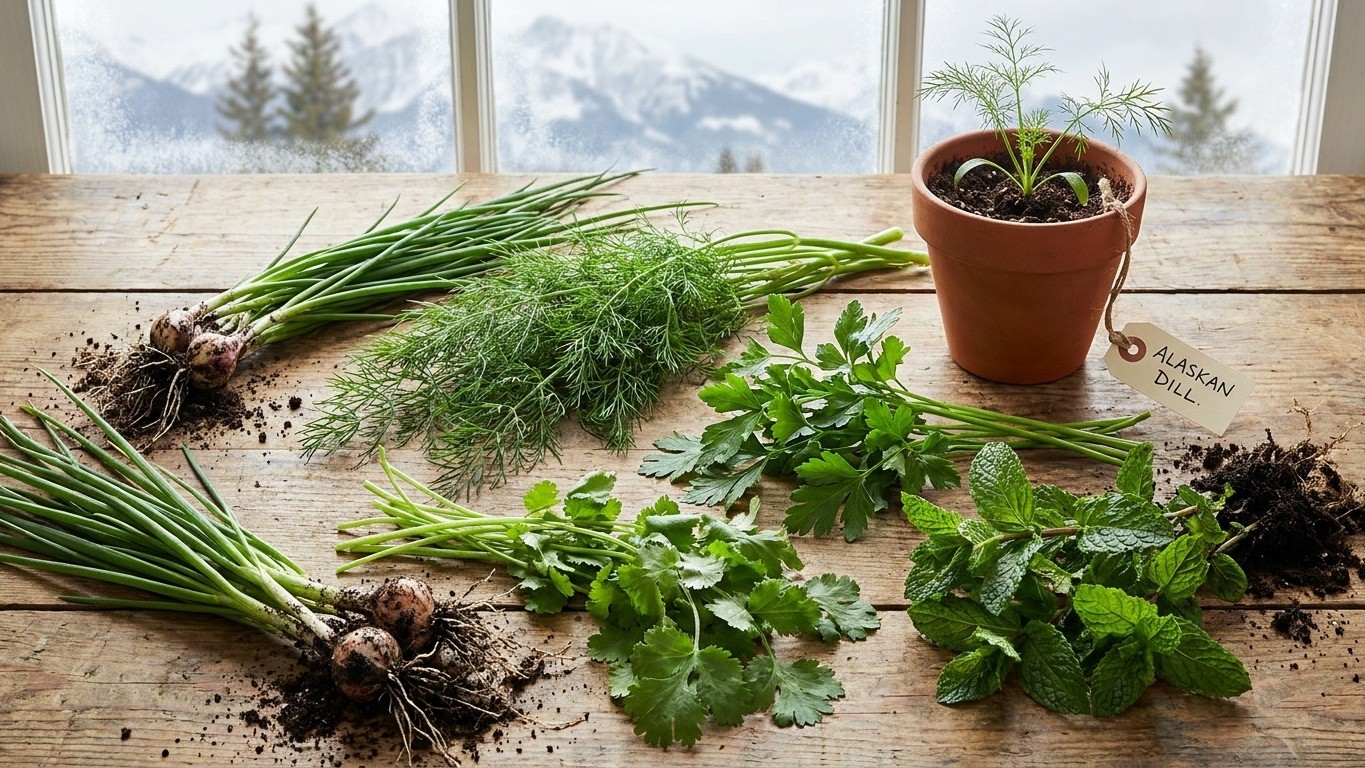
Cool-season herbs, parsley, dill, and chives, do better treated as spring and fall crops than as summer plantings. They tolerate the mild winters just fine but lose vigor and flavor once the humid heat sets in.
What will not work here

English lavender is the herb most likely to disappoint a South Carolina gardener who planted it expecting a Provence-style hedge. It’s bred for dry Mediterranean summers, and South Carolina offers the opposite: heat paired with humidity, often landing on heavy clay that holds water at the roots. The combination invites root rot and fungal decline well before winter cold becomes the issue. French and Spanish lavender varieties tolerate the humidity a little better, but neither turns this into an easy, low-maintenance plant here the way it can be out West.
Cilantro planted in June or July is a near-guaranteed failure, not because the plant dies, but because it skips straight to flowering and seed instead of producing the leafy growth most cooks actually want. The frost-free season is long enough that gardeners sometimes assume any summer planting date works. Cilantro is the exception: it needs to go in during the cooler bookends of that season, not the middle of it.
Close spacing on basil and oregano causes trouble that has nothing to do with frost dates and everything to do with humidity. Tight plantings trap moisture around the leaves overnight, and South Carolina’s summer humidity gives fungal problems, downy mildew on basil especially, more time to take hold before the plant can dry out the next morning. Wider spacing than a seed packet from a drier climate would suggest is often the fix.
Weekly watering, a schedule that works fine for many herbs in spring, breaks down for container-grown herbs once July and August heat arrives. Shallow pots lose moisture fast under sustained 90-degree afternoons, and a rosemary or thyme plant that’s fine on a weekly soak in April can be bone-dry and stressed within two or three days at peak summer. Container herbs generally need checking every day or two through the hottest stretch, not on a fixed weekly calendar.
Leaving tender tropical herbs outdoors through winter without protection fails reliably in the cooler parts of the state. A bay laurel or lemongrass plant that survives fine in a zone 9a coastal yard can be killed outright in a zone 7a Upstate winter, since the extreme minimum temperatures driving that zone difference sit well below the coastal coldest-month average of 38.9°F.
What changes across South Carolina
South Carolina isn’t one climate wearing a single state name. The USDA Plant Hardiness Zone Map puts the state across a range of 7a to 9a, a system built on one number: the average annual extreme minimum temperature. That spread from 7a to 9a is wide enough that a herb list built for one end of the state can flatly fail at the other. There is no single hardiness answer for South Carolina, only a range, and where you land inside it changes what survives winter outdoors versus what needs to come in.
The frost dates used above (February 28 to March 17 for last spring frost, November 20 to December 5 for first fall frost) come from a Charleston-area station, and that matters more than it might seem. Peninsular Charleston itself runs milder than even that airport-based reading. Move inland and upstate, and both frost windows tighten by what NOAA’s own caution notes as several weeks at both ends of the season, meaning a shorter frost-free stretch than the coastal numbers suggest.
Practically, that means a rosemary hedge or bay laurel that’s a permanent fixture in a Lowcountry garden is a much bigger gamble, or an indoor-outdoor plant, in the foothills near the Blue Ridge. Basil and other tender annuals face the same squeeze in reverse: a gardener upstate should expect to plant later in spring and pull plants earlier in fall than someone gardening near the coast, simply because the frost-free window itself is shorter there.
None of this can be resolved by a state-level page, and it shouldn’t be. Figuring out which end of that 7a-9a range applies to a specific address means checking the USDA hardiness zone map for that exact location rather than guessing from a regional description.
Where to check this for your own county
Clemson Cooperative Extension is South Carolina’s land-grant extension service, and it exists precisely to fill the gap a state-wide page like this one can’t close. The state office is reachable through the main Clemson Extension site, and county offices operate underneath that umbrella with agents who work with local soil, local microclimates, and local pest pressure specific to their own county.
Two things are worth asking a county office for by name. First, a local planting calendar, since Clemson’s Home & Garden Information Center publishes species-specific guidance rather than one generic statewide schedule, and the difference between a coastal county calendar and an Upstate county calendar can run to several weeks on both ends of the growing season, exactly as the frost-date spread above suggests. Second, ask which herb varieties have actually been trialled or recommended for that county specifically. Extension offices track what performs under their own local humidity, soil type, and disease pressure, information a statewide overview simply cannot carry.
A county-level recommendation beats a state-level one every time, because it accounts for exactly the regional variation described in the previous section: the difference between a zone 9a coastal yard and a zone 7a Upstate one, or between a station-based frost date and the milder reality of a specific peninsula or valley.
Calling or emailing before a big planting decision, especially for a perennial herb meant to survive multiple winters, is a cheap way to avoid a guess that a five-minute local conversation could have corrected.
Checking this against your own garden
Every date and zone number describes an average. A reader’s own garden will confirm or contradict that average faster than any calendar can, and it’s worth trusting that confirmation over the printed date.
Soil warmth by feel is the simplest check before planting heat-loving herbs like basil. Push a finger a couple of inches into the bed in the morning; if the soil still feels cool and slightly damp-cold rather than mild, the ground hasn’t caught up to the calendar yet, even if the frost-free window has technically opened. Basil and other tender herbs sulk and stall in cold soil regardless of air temperature.
The first flush of new growth on overwintered perennials, rosemary, sage, thyme, tells its own story about how hard the past winter actually hit that specific spot in the yard. Vigorous new green growth low on the plant signals the winter was mild enough locally; dieback that needs pruning back hard signals a colder microclimate than the state average would suggest, worth remembering for next winter’s protection plans.
The first true leaves on seedlings, as opposed to the rounder seed leaves that appear first, mark the point where a young herb plant is established enough to handle a bit more sun and a slightly less babied watering schedule. Watching for that stage on a windowsill tray or in a seed bed is a better cue for hardening off than counting days since sowing, since a cool, cloudy spring can slow that timeline by a week or more compared to a warm one.