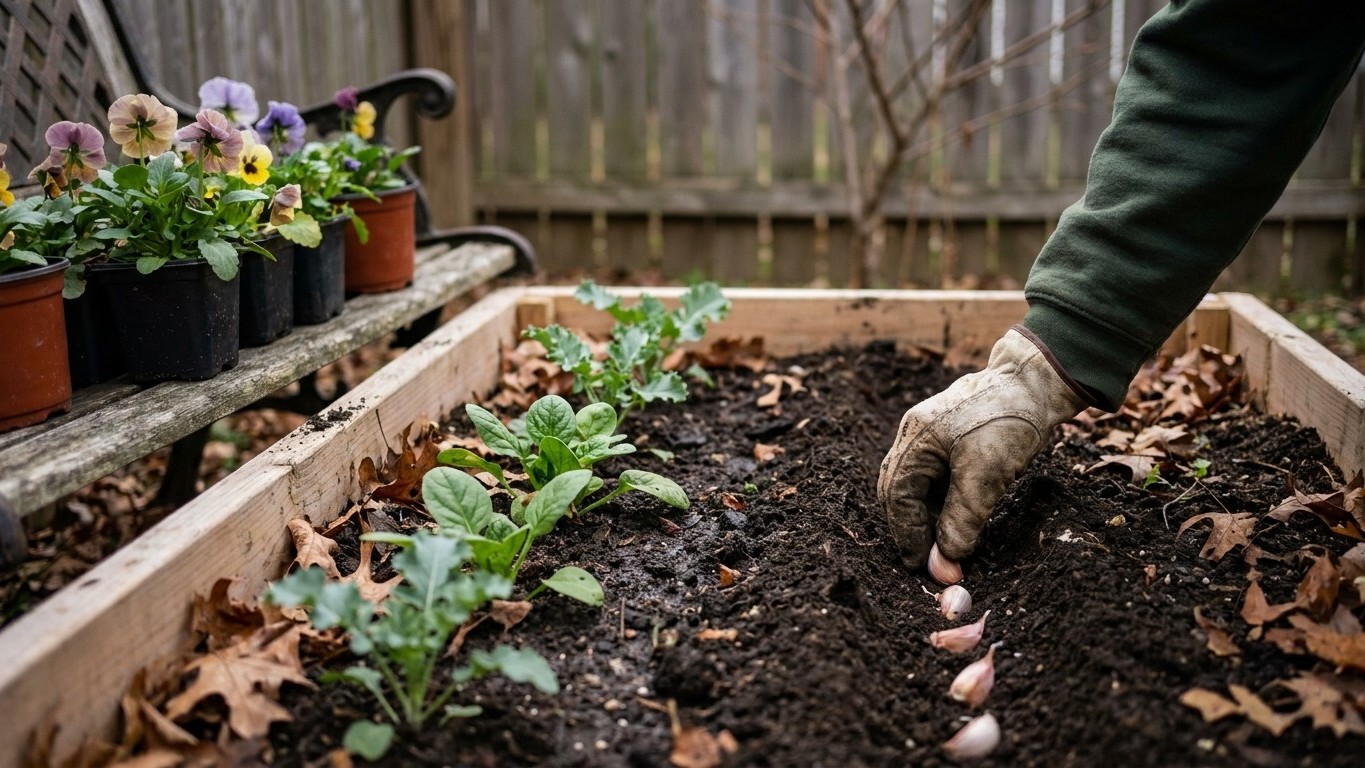

October in South Carolina still sits weeks away from the first freeze, so soil stays workable for a long run of cool-season crops. Direct-sow leafy greens, root vegetables, and English peas; set out broccoli and cabbage transplants; get garlic cloves and shallots staged for the ground. Warm-season vegetables are finished for the year. What’s actually safe to plant depends less on the date than on how close your county sits to that coming frost.
What goes in the ground in October

The number that matters this month isn’t the calendar, it’s the gap between now and the first freeze. Statewide, that first fall frost lands somewhere between November 20 and December 5, based on 1991-2020 NOAA climate normals for the Columbia airport station. That gives most of South Carolina three to nine weeks of frost-free ground in October, depending on where in the window you fall and where you garden. Peninsular Charleston runs milder than that airport reading, so coastal gardeners often get the long end of the range or better. Upstate counties run tighter at both ends, so treat late October there as the closing bell rather than the middle of the game.
That window is plenty of time for quick, cold-hardy crops but too short for anything that needs a long slow finish. Direct-sow spinach, lettuce, arugula, mustard greens, turnips, radishes, beets, and Swiss chard through the month. Carrots can still go in during the first half of October in most of the state, but push past mid-month and they risk running out of daylight before they size up. Collards and kale, both used to a light frost sweetening their flavor, do well seeded now.
English peas are one of the better-kept secrets of a Carolina fall garden. They dislike summer heat but thrive in the cooler, shorter days ahead, and early-to-mid October sowings usually beat the frost with room to spare.
Transplants and alliums
Broccoli, cabbage, and cauliflower transplants started indoors in late summer belong in the ground now, especially in the Upstate where the frost window closes sooner. Garlic and shallots can go into prepared beds late in the month, though many South Carolina gardeners hold off until soil temperatures drop further in November. If your ground is still warm to the touch, waiting a few more weeks costs nothing and often produces stronger cloves.
What to start under cover
Counting backward from that November 20 to December 5 frost window tells you what’s still worth starting indoors or under a cold frame this month. A fast crop like lettuce or arugula needs roughly four to six weeks from seed to a usable harvest size. Sown in early October, that puts a mature planting right around the earliest edge of the frost window, with a cold frame or row cover buying extra weeks past that if a cold snap arrives on schedule.
Slower crops don’t have that luxury. Broccoli and cabbage need eight to ten weeks from seed to a transplant-ready size, and October is already too late to start them from scratch outdoors in most of the state. Those should already be transplants by now, not seeds. Starting them this late leads to the first failure mode gardeners hit every fall: seedlings that never bulk up before cold weather stalls their growth, leaving spindly, rootbound plants that limp through winter instead of producing.
The second failure mode runs the opposite direction, starting seeds too early back in late summer heat, which produces leggy, heat-stressed transplants before the weather even turns favorable. October sowings under cover should be reserved for crops with a short clock: lettuce, spinach, mustard, and other quick greens that can still finish before or shortly after that first frost lands. A cold frame or low tunnel extends the useful window on the back end, letting a mid-October sowing keep producing well past the point an open bed would freeze out.
What is ready to pick
October in South Carolina is a harvest month, not a lean one. Sweet potatoes typically come out of the ground before the first hard frost, since a freeze damages the tubers left underground. Check for slips that have died back at the tips, a sign the roots below have sized up and are ready to dig on a dry day.
Winter squash and pumpkins planted back in early summer finish curing on the vine through October; a thumbnail pressed into the skin should no longer puncture it easily. Okra keeps producing until the first real cold snap, so keep picking pods every couple of days to prevent the plant from shutting down early. Peppers and the last tomatoes often limp along too, especially in the milder coastal counties, though their days are numbered.
Meanwhile, greens seeded back in August or early September, collards, kale, mustard, and turnip greens, are usually ready for a first cutting this month. Pick outer leaves and let the center keep growing rather than harvesting the whole plant at once; that single habit stretches one planting across several weeks instead of one.
The jobs that matter this month

Soil preparation done now pays off through the whole fall season. Working compost or aged manure into beds before a planting gives cool-season crops the nutrients they need heading into shorter days, when growth naturally slows and there’s less time to correct a deficiency later. Mulch newly seeded beds lightly to hold moisture, since October’s drop in humidity and rainfall can dry out a seedbed faster than gardeners expect after a summer of frequent storms.
Succession sowing keeps a fall garden productive instead of producing one glut and then nothing. Reseed a short row of lettuce, spinach, or radishes every two to three weeks through the month, and you’ll have a staggered harvest running well past the point a single planting date would have played out.
Pest scouting matters more in October than gardeners often expect. Cabbage worms and aphids target the same brassica transplants going in this month, and catching an infestation early, by hand-picking or with a targeted treatment, is far easier than fighting a spread colony in November. Check the undersides of leaves on broccoli and cabbage transplants weekly.
Watering rhythm shifts too. Cooler air fools people into skipping irrigation, but germinating seeds still need consistent moisture at the surface, particularly for slow-germinating carrots and beets. And with harvest underway, check stored sweet potatoes, winter squash, and any late onions weekly for soft spots or mold, pulling anything questionable before it spreads to the rest of the batch.
What not to do in October
The most common mistake this month is planting anything warm-season because a stretch of mild afternoons made it feel like summer again. Tomatoes, peppers, squash, and beans set out in October are working against a closing window rather than an opening one; even where the first frost lands late, there isn’t enough season left for these crops to produce before cold weather cuts them down. Save the seed packets for spring.
A second mistake shows up after a warm spell convinces gardeners to pull row covers off transplants too early. South Carolina’s fall weather swings, and a mild week is often followed by a sharper cold snap than the calendar suggests. Keep covers handy and ready to redeploy rather than storing them away after the first comfortable stretch.
Nitrogen timing trips up plenty of fall gardens too. Heavy nitrogen feeding late in the season pushes soft, tender new growth on crops that would otherwise be hardening off for cooler weather, and that tender growth is exactly what a light frost damages first. Favor balanced or lower-nitrogen feeding once plants are established, and let the plant’s own slowing metabolism do the hardening work as days shorten.
Checking this against your own county
A statewide October guide is a starting point, not an instruction sheet. Elevation shifts frost timing by weeks between the Upstate foothills and the coastal plain, and South Carolina’s own geography, from the mountains near the North Carolina border down to the barrier islands, stretches the state across USDA hardiness zones 7a through 9a. That range is built on a single measure, the average annual extreme minimum temperature, so it tells you about winter survival more than it tells you about this month’s planting window. For a planting calendar built around your specific county, and for current frost and soil guidance, check with Clemson Cooperative Extension before finalizing your October planting list.
Common questions
Can I still plant tomatoes in South Carolina in October?
No. There isn’t enough frost-free season left for tomatoes to produce a worthwhile crop, and the first frost, arriving somewhere between November 20 and December 5 depending on location, would cut them down before harvest. Save tomato planting for spring.
When should garlic go in the ground in South Carolina?
Late October works in cooler pockets of the Upstate, but many South Carolina gardeners wait until soil temperatures drop further in November. If the ground still feels warm to the touch, holding off a few extra weeks generally produces stronger cloves.
Is October too late to plant lettuce?
No. Lettuce is one of the better October crops statewide, since it matures in four to six weeks, well within the frost-free window most of the state still has left this month.
Does it matter that South Carolina spans multiple USDA hardiness zones?
Yes, for winter survival planning, since the state runs from zone 7a to 9a. But for October’s planting decisions, the first fall frost window matters more directly than the hardiness zone, and that window shifts by weeks between the Upstate and the coast.
Gardeners who plant by the Moon can check the October 2026 moon planting calendar, a tradition rather than a proven method.
Related guides
Elsewhere? See what to plant in October in every state and province.