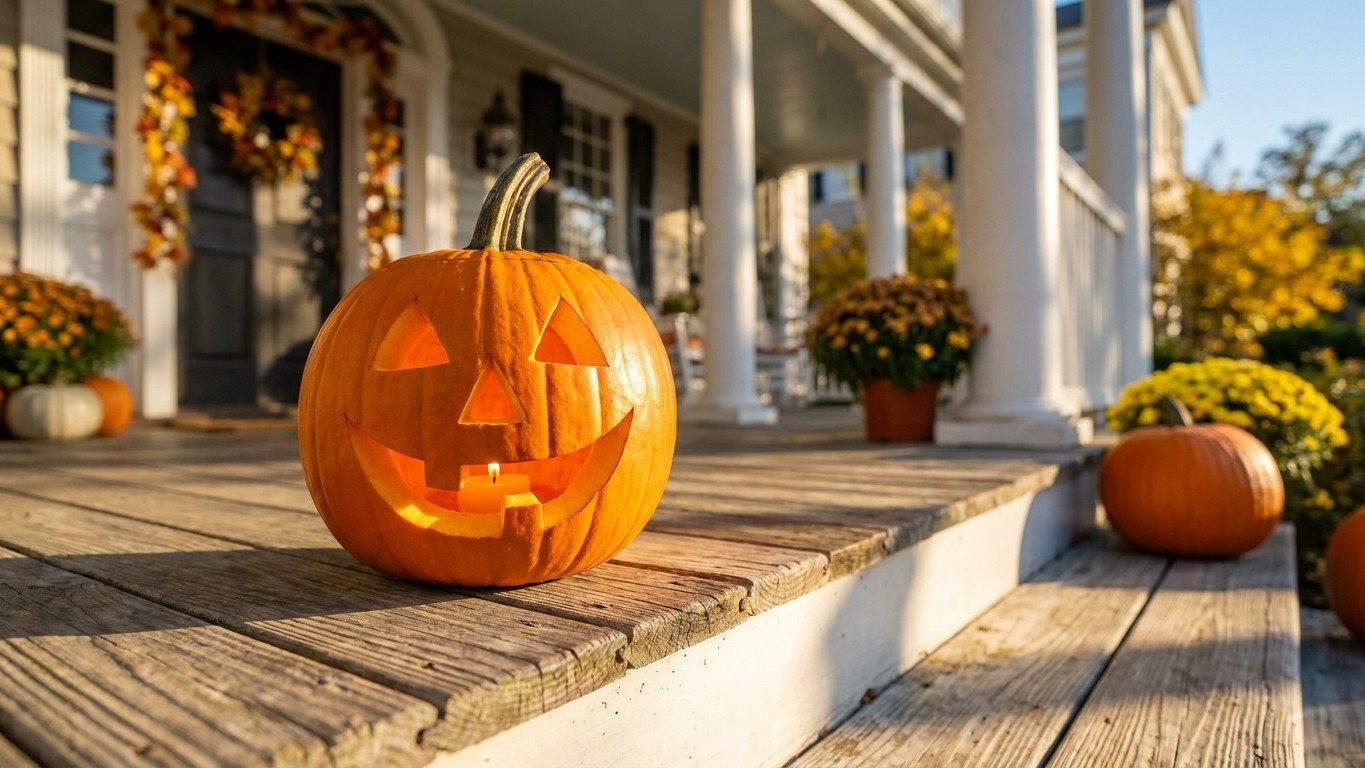

Around Charleston, the mean first fall frost lands somewhere between November 20 and December 5, weeks after Halloween has come and gone. That single fact reframes the whole question for South Carolina: frost isn’t what threatens your porch pumpkin. Heat is. And that changes when and how you should carve.
The short answer

Start with the number that matters most: the mean first fall frost for the Lowcountry region, based on the National Weather Service station near Charleston, falls somewhere between November 20 and December 5. That’s an average drawn from three decades of data, not a guarantee, so treat it as a general window rather than a date circled on the calendar. But even with that caveat, the takeaway is clear. Halloween, on October 31, arrives roughly three to five weeks before that average frost window even begins. In most of South Carolina, frost simply isn’t part of the pumpkin-carving equation.
That’s good news and a small trap at the same time. Good news, because you don’t need to race a freeze the way a homeowner in Minnesota or upstate New York does. There’s no need to carve early just to beat an incoming cold snap. The trap is assuming that because frost isn’t a threat, timing doesn’t matter at all. It does, just for a different reason: warmth, not cold, is what ages a pumpkin in this state.
So here’s the practical window. Since frost isn’t forcing your hand, you have latitude to carve anywhere from about two weeks before Halloween to the morning of the 31st itself, and the closer to Halloween you carve, the better the pumpkin will look for trick-or-treaters. A pumpkin carved ten to fourteen days out will have already started softening by the time the neighborhood kids show up, because South Carolina’s late-October air simply doesn’t cool it down the way a Northern climate would. If you’re set on a jack-o’-lantern that still has crisp edges and a firm stem on Halloween night, carve in the final three to five days before it, not two weeks out.
One regional wrinkle worth flagging: the Upstate, around Greenville and Spartanburg, runs its frost timeline several weeks tighter at both ends than the coastal data above. If you’re carving in the foothills rather than near the coast, lean toward the earlier side of that general logic, though frost still isn’t the driving concern for a Halloween pumpkin anywhere in the state.
Frost or heat: which one gets it here
The cold end
In states where the mean first frost lands in early or mid-October, before Halloween, a pumpkin left out on a porch can freeze solid overnight, then collapse into a wet, sunken mess once it thaws the next afternoon. That’s the classic Northern pumpkin problem, and it’s a real one for gardeners well north of here. It’s just not South Carolina’s problem. With the mean first frost sitting between November 20 and December 5, a jack-o’-lantern carved in October has no realistic chance of freezing before the holiday even arrives.
The warm end
The actual risk in South Carolina runs the opposite direction. A whole pumpkin keeps best in a cool, dark spot between 45 and 50 degrees Fahrenheit, according to University of Illinois Extension. That’s a narrow, specific band, and it’s worth comparing against what late October actually looks like in this state. Consider the coldest month of the year at the reference Charleston station: even January, the depth of winter, averages a nightly low of only 38.9 degrees. If the coldest point of the entire year barely dips into the upper 30s overnight, late October, still weeks away from any real cold, is running comfortably warmer than that 45-50 degree storage window during both day and night. A pumpkin sitting on a South Carolina porch in October isn’t fighting frost. It’s fighting warmth that never lets up enough to slow down decay, softening the flesh and inviting mold days sooner than it would in a state where autumn nights actually cool off.
Where to keep it until you carve
- Pick an interior closet or a windowless pantry over the porch. Because South Carolina homes rarely have true cellars (the water table along the coast makes basements uncommon), an interior closet away from exterior walls is usually the closest thing in the house to that 45-50 degree, dark ideal.
- An attached garage works if it stays out of direct sun and off the concrete floor. Set the pumpkin on a folded towel or a wooden board rather than directly on concrete, which can hold ground moisture and encourage soft spots.
- Keep it away from any HVAC supply vent. Warm air blowing across the pumpkin all day is exactly the kind of low-grade heat exposure that speeds up softening in this climate.
- Store it away from ripening fruit, especially apples, potatoes, or tomatoes. Ripening produce releases ethylene gas, and that gas ages a pumpkin faster than the surrounding temperature alone would. A fruit bowl on the same counter is one of the worst neighbors a pumpkin can have.
- Avoid the sunny side of the porch entirely. Direct afternoon sun in South Carolina in October can push the surface temperature of an unshaded pumpkin well past that storage band, even on a day that feels mild in the shade.
- Handle it by the base, never by the stem. Look for one to two inches of stem left on the pumpkin when you buy it; once that stem breaks off, the exposed spot becomes an entry point for rot. The stem is a seal, not a handle, and treating it as one is the single most common way a good pumpkin gets ruined before it’s even carved.
Checking this against your own county
Frost dates and average temperatures shift block by block along the coast and county by county inland, and a station near Charleston won’t perfectly match conditions in Aiken, Florence, or the mountains above Walhalla. For a reading specific to your own county, contact Clemson Cooperative Extension, South Carolina’s land-grant university extension service, which maintains local offices and current guidance across the state at clemson.edu/extension.
Their county agents can tell you how your specific area’s fall pattern compares to the general coastal data above, which matters most if you’re gardening in the Upstate or in a low-lying spot that tends to run a few degrees cooler than the surrounding area at night.
Common questions
How long does a carved pumpkin last in South Carolina?
No university extension publishes a specific shelf life for a carved jack-o’-lantern, and none publishes a preservation protocol involving bleach, petroleum jelly, or similar treatments. Those claims circulate widely but don’t come from research. What is published: choose a pumpkin with an intact stem, keep it whole and stored cool and dark for as long as possible, and carve as close to Halloween as you can. That’s the honest, research-backed answer here.
Do I need to worry about frost damaging my pumpkin before Halloween?
No. With the mean first frost landing between November 20 and December 5 in most of the state, frost simply isn’t in play by October 31. The concern in South Carolina runs the opposite direction: too much warmth, not too little.
Can I carve early and just refrigerate it?
The published storage guidance covers whole, uncarved pumpkins kept between 45 and 50 degrees Fahrenheit, not a carved one. There’s no extension-backed guidance on refrigerating a carved jack-o’-lantern, so the safer approach is keeping it whole in a cool, dark spot and carving it close to the day you plan to display it.
What time of day is best for carving in South Carolina’s climate?
Work indoors or in shade rather than on a sunny porch in the afternoon, since direct fall sun here can warm the pumpkin’s surface well past that ideal storage range even on a mild-feeling day. Morning or evening, out of direct light, keeps the pumpkin cooler while you carve.