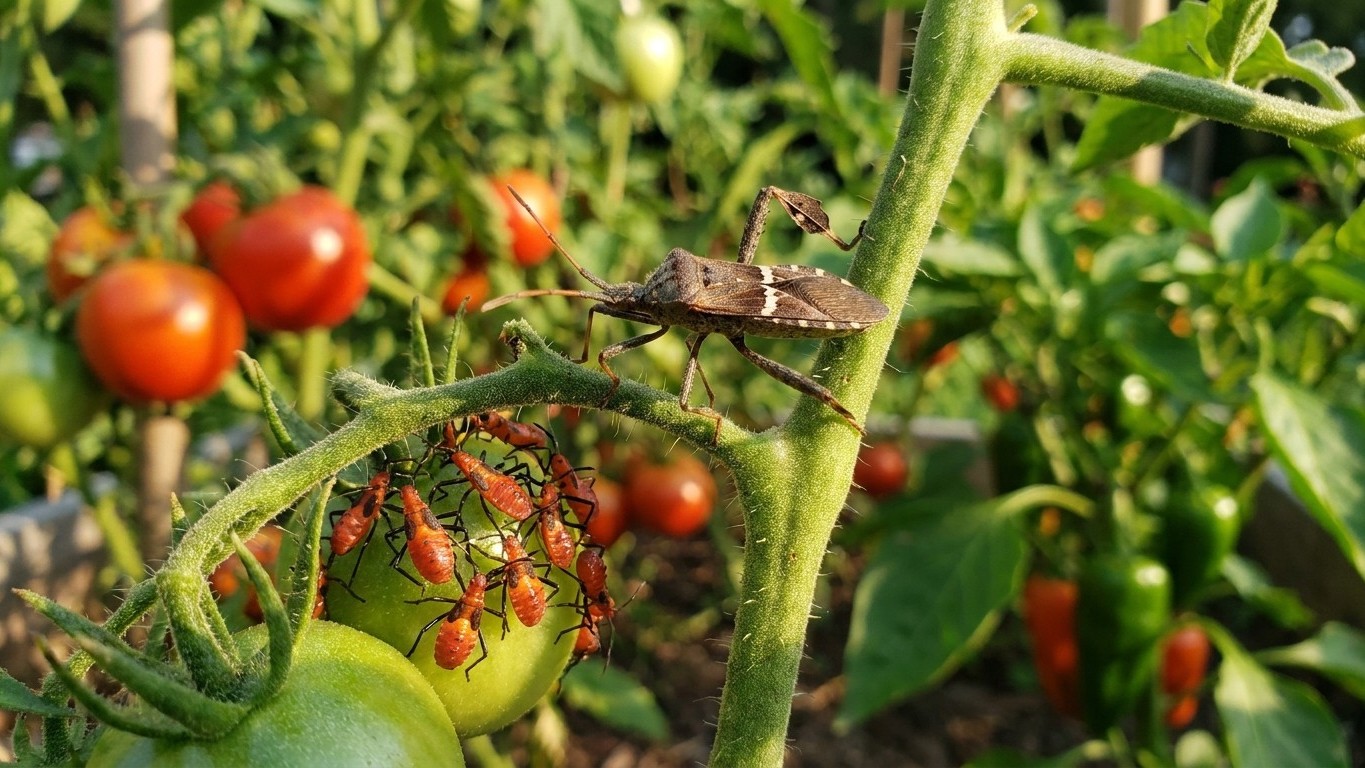

Leaffooted bugs show up in South Carolina in two waves: a spring emergence around late March through April, and a bigger population surge from July through September when nymphs mature into breeding adults. Nothing eliminates them outright, but a combination of early-season monitoring, weed removal, and targeted treatment on young nymphs knocks populations down before they wreck tomatoes, peppers, and pecans.
What a Leaffooted Bug Actually Looks Like

The species causing trouble across the Palmetto State is Leptoglossus phyllopus, a brownish-gray insect that stretches close to an inch long as an adult. The name comes from flattened, leaf-shaped expansions on the hind legs, a feature that separates it from squash bugs and the various stink bugs homeowners often lump it with. A thin white or yellowish band crosses the wings partway down the back, another quick giveaway.
Nymphs look nothing like the adults at first. Newly hatched ones are bright orange-red with black legs, almost delicate looking, and they cluster tightly on stems and developing fruit. As they molt through five stages, they darken toward a dull brown-gray and start growing those distinctive leaf-shaped hind legs. Gardeners who spot the orange clusters early have their best shot at control, because a single female can lay clutches of 50 or more eggs in a season, and those clusters turn into a wall of hungry nymphs within two weeks.
Confusion with stink bugs is common enough that Clemson Cooperative Extension fields regular identification questions on it. Stink bugs are shield-shaped and lack the flared hind legs; leaffooted bugs are more elongated with that unmistakable leg flare, and both release a similar sharp odor when handled or crushed.
When Leaffooted Bugs Show Up in South Carolina
Adults overwinter in leaf litter, under loose bark, inside wood piles, and sometimes in the gaps of siding or sheds. South Carolina winters rarely get cold enough to kill them off in large numbers, especially in the Midlands and Lowcountry, so survival rates into spring stay high compared to states farther north.
They become active again once daytime temperatures hold consistently above 70°F, which in most of the state lands somewhere between mid-March and mid-April. This first generation feeds lightly and looks for early host plants, but the real pressure builds later.
By June, that overwintered generation has mated and laid eggs, and by July the nymphs from those eggs are maturing into a second, much larger generation. This is the wave that does the most visible crop damage, coinciding almost exactly with peak tomato and pepper ripening in home gardens across the Upstate, Midlands, and coastal plain. A third partial generation can appear in September in the warmer southern counties before adults retreat to overwintering sites as nights cool in October and November.
That fall retreat is when homeowners notice them indoors. Leaffooted bugs don’t infest houses the way some pests do, but they will wander into garages, attics, and wall voids looking for a dry place to sit out winter, much like brown marmorated stink bugs do farther north.
What Plants and Crops They Target
Leaffooted bugs are true bugs with piercing-sucking mouthparts, meaning they don’t chew leaves so much as puncture fruit and stems to feed on the fluids inside. That feeding style is exactly what makes them frustrating in a vegetable garden, since the damage often shows up on the part of the plant you actually want to eat.
- Tomatoes and peppers, where feeding causes discolored, sunken spots and a condition growers call “cloudy spot” or internal white tissue near the puncture site
- Pecans, a significant concern in South Carolina’s pecan-growing counties, where feeding on developing nuts leads to kernel necrosis known as “black pit”
- Pomegranates and citrus in the coastal and southern counties, with similar puncture scarring on fruit
- Cotton, where feeding introduces yeast organisms that stain the boll internally, a quality issue mills penalize growers for
- Squash, okra, and beans in the home garden, usually secondary hosts compared to tomatoes and peppers
Weedy legumes such as vetch and crimson clover serve as an early-season bridge host. Bugs build numbers on these plants in late winter and early spring before crops are even in the ground, then move over once tomatoes and peppers start setting fruit. That single fact explains why field edges matter so much in any control plan.
What Actually Stops Them
No single tactic wipes out a leaffooted bug population, largely because adults have a tough exoskeleton that shrugs off many contact insecticides. Effective control in South Carolina gardens and small farms comes from stacking several tactics and timing them around the life cycle described above.
Cut Off the Early Buildup
Mowing or removing vetch, clover, and other legume weeds along fence lines and field edges in late winter takes away the early host plants that let overwintered adults build a first generation before crops are even planted. Clemson Cooperative Extension recommends this weed management step specifically because it reduces the spring population that would otherwise seed the much larger summer generation.
Clearing leaf litter, stacked firewood, and loose bark near the garden in fall also reduces the number of adults that survive winter close to next year’s target plants. It won’t reach every hiding bug, but fewer overwintering sites near the vegetable bed means fewer bugs waiting there in April.
Target Nymphs, Not Just Adults
The orange, soft-bodied nymphs are far more vulnerable to insecticidal soap and horticultural oil than hardened adults. Checking the undersides of leaves and stems weekly starting in June, and treating clusters of nymphs as soon as they’re spotted, does more good than waiting until adults show up in force. Once nymphs reach the later instar stages and start resembling small gray adults, soap and oil sprays lose most of their punch.
For heavier infestations, pyrethroid insecticides labeled for leaffooted bugs on vegetables give better knockdown on adults, but coverage has to be thorough since the bugs are quick to fly off when disturbed. Spraying in early morning or evening, when they’re less active, improves contact.
Physical Removal Still Works
Hand-picking adults and dropping them into a jar of soapy water is tedious but genuinely effective in a backyard garden, since populations in a home setting rarely reach the scale seen in commercial pecan orchards or cotton fields. A daily five-minute check on tomato plants during peak season, July through early September, catches most new arrivals before they establish.
Floating row covers over young pepper and tomato plants keep adults from laying eggs directly on the crop during the critical fruit-set window, though covers need to come off once pollination is required.
Let Trap Crops Take the Hit
Planting sunflowers or sorghum along garden borders gives leaffooted bugs a preferred feeding site that pulls pressure away from tomatoes and peppers. This trap-cropping approach, used in commercial vegetable production across the Southeast, works in home gardens too, provided the trap crop goes in a few weeks ahead of the main planting so it’s already attractive when the bugs arrive.
Natural Predators Help, But Won’t Solve It Alone
Assassin bugs, spiders, and some parasitic wasps attack leaffooted bug eggs and nymphs, and a garden that isn’t blanketed in broad-spectrum insecticide tends to hold a healthier population of these predators. That said, no natural enemy in South Carolina keeps leaffooted bug numbers low enough on its own to protect a tomato crop during peak season. Predators are a supporting piece, not the whole strategy.
Keeping Them Out of the House in Fall
Sealing gaps around window frames, door thresholds, and utility penetrations before October reduces the number of adults that slip indoors looking for winter shelter. Unlike some overwintering pests, leaffooted bugs found inside a home are almost always incidental wanderers rather than an established indoor population, so vacuuming up strays and tightening exterior seals solves the issue without needing indoor pesticide treatment.
For anyone growing pecans, the black pit damage caused by fall feeding often isn’t visible until the nuts are cracked open at harvest, which means monitoring during September, while nuts are still developing, matters more than reacting after the fact.