
In Middle Tennessee, sow pepper seed indoors between roughly February 4 and February 18, then move transplants outside after the last frost, once soil hits 60°F. East Tennessee and the Cumberland Plateau run later, so push both dates back by a week or two. That’s the mechanical answer. What decides whether those seedlings ever set fruit is a different question, tied to how hot and how cool your particular growing season gets.
The short answer
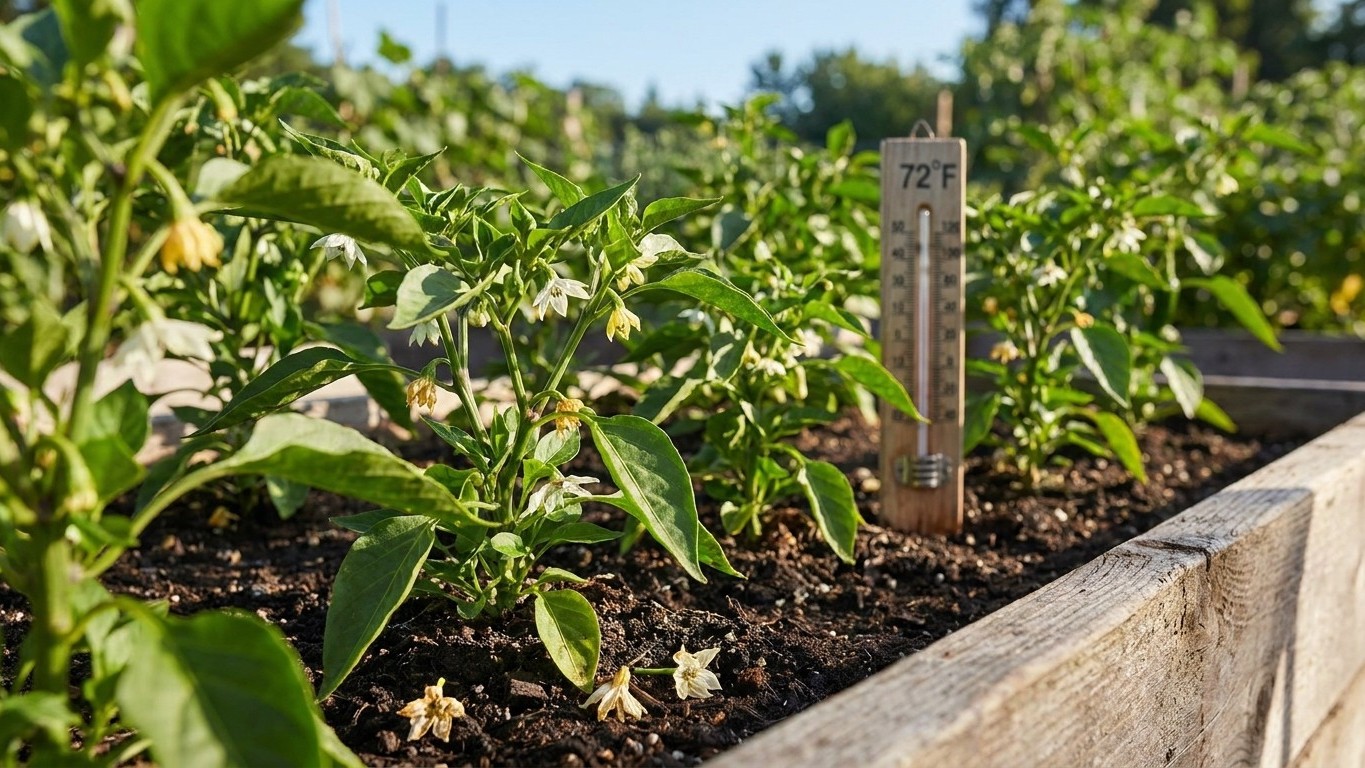
Nashville’s reference station logs an average of 40.0 days a year at or above 90°F, according to NOAA NCEI Climate Normals covering 1991 to 2020. That’s not a handful of scorching afternoons in July. It’s five and a half weeks, spread across the peak of the growing season, when pepper flowers can abort before they ever become fruit. Pepper plants don’t stop growing in that heat. They stop reproducing. The plant keeps its leaves green and its stems upright, but the blossoms drop, and a gardener who doesn’t know to look for this assumes something else went wrong: bad soil, wrong variety, a watering mistake. Usually it’s just the thermometer.
Forty days above 90°F also means the heat doesn’t arrive as a single event. It stacks. A string of hot days in mid-July, another in August, sometimes a third wave before the season cools in September. Each stretch is a window where new flowers may not hold, even while the plant looks perfectly healthy. Gardeners who track their own bloom dates against a thermometer, rather than against the calendar, tend to catch this pattern faster than those who just wait for peppers to show up.
The other end of the equation matters just as much, and it’s the one this data doesn’t cover. Pepper fruit set also fails when nights drop below 55°F, according to Utah State University Extension. That threshold isn’t tied to how far north or south you are, and it isn’t something you can read off a hardiness zone map or a coldest-month average. Spring nights in the 40s can linger well past the last frost date in some years and in some low-lying yards, even while daytime highs feel like summer. This site tracks days above 90°F for Tennessee, but it doesn’t carry summer night minima for any specific location. That’s a gap only your own outdoor thermometer, checked at bedtime and again at dawn, can fill. If your spring nights are still dipping into the 40s or low 50s after transplanting, expect flowers to stall until they warm up. No county-level number will substitute for watching your own yard.
When to start seed here
Working out a start date is arithmetic, not guesswork, once you know your local last frost and are willing to watch your soil temperature rather than the calendar. Here’s how the count runs, using the ranges this state’s data actually supports.
- Find your last spring frost window. NOAA NCEI’s 1991-2020 climate normals put the last spring 32°F freeze at the Nashville-area reference station somewhere between March 31 and April 12. That’s a probability band, not a single date, and it reflects Middle Tennessee. East Tennessee and the Cumberland Plateau sit at higher elevation and run cooler, so their last frost typically lands later than this window.
- Add time for the soil to catch up. Air temperature crossing above freezing doesn’t mean the soil is ready. Peppers need soil at 60°F before transplanting, per Utah State University Extension, and soil often lags behind air temperature by a week or two in early spring, especially in clay-heavy ground or shaded beds. In a typical Middle Tennessee spring, that pushes the safe transplant date into mid-to-late April rather than right at the frost line.
- Count back 8 to 10 weeks for indoor sowing. If your realistic transplant date lands around April 15, counting back 8 weeks puts your seed-starting date around February 18. Counting back the full 10 weeks moves it to roughly February 4. That gives a start window of early-to-mid February for gardeners transplanting in mid-April.
- Shift the whole schedule later for cooler regions. If your county’s last frost runs closer to late April, as is common on the Cumberland Plateau and in higher elevations of East Tennessee, add those extra one to two weeks to both the transplant date and the seed-starting date. A gardener transplanting around May 1 should be sowing seed indoors in late February to early March instead.
- Recheck soil temperature before you dig, not before you plant it on your calendar. A soil thermometer pushed 4 inches down, checked over a few consecutive mornings, is the only reliable way to confirm 60°F has actually arrived. Calendar dates are a starting estimate. The soil is the final word.
What goes wrong here
Tennessee’s climate creates a specific, repeatable set of pepper problems, and each one traces back to either the heat load this state carries or a cool snap the local data doesn’t track directly.
- Blossom drop during a hot spell. When daytime highs push past 90°F during one of those roughly 40 days a year, flowers can abort before pollination completes. There’s no way to force fruit set during the hottest stretch. The workaround is timing: get plants established early enough that a strong first flush of fruit sets before the hottest weeks arrive, so the plant carries a load even through a stalled patch later in summer. Afternoon shade cloth over the hottest days can also reduce the stress on open blossoms.
- Blossom drop from a cool night. The same failure shows up at the other extreme, when nighttime lows sit below 55°F, per Utah State University Extension. Late spring and even early summer nights in Tennessee can dip that low, especially in low-lying areas prone to cold air pooling. Since this site doesn’t track summer night minima, the only fix is monitoring your own yard with an outdoor thermometer and holding off on expecting fruit set until nights consistently clear 55°F.
- Sunscald on exposed fruit. Strong summer sun, paired with the same heat load that causes blossom drop, can scald pepper skin, especially on plants that lose leaf cover to disease, wind damage, or over-aggressive pruning. Keeping foliage intact so fruit stays shaded by the plant’s own canopy is the simplest prevention. Avoid stripping leaves for “better air circulation” during the hottest months.
- Blossom-end rot on developing fruit. This shows up as a sunken, leathery patch on the fruit’s blossom end, usually tied to inconsistent watering rather than a calcium shortage in the soil itself. Heat stress accelerates it, because plants under water stress during a hot stretch pull moisture unevenly. Deep, consistent watering, especially during those 90°F-plus days, reduces the swings that trigger it.
Common questions
Can I start pepper seed too early in Tennessee?
Yes. Starting more than 10 weeks before your transplant date usually produces leggy, root-bound seedlings that stall out once transplanted, rather than an earlier harvest. Sticking to the 8 to 10 week window before your soil-ready transplant date gives plants enough size without overgrowing their containers.
Does the last frost date matter more than soil temperature?
Soil temperature matters more for peppers specifically. Air temperature can clear the frost threshold while soil is still too cold for root development, which is why Utah State University Extension specifies 60°F soil as the transplant benchmark, not just a frost-free date.
Why do my pepper plants flower but never set fruit in midsummer?
This is almost always the heat-driven blossom drop tied to days at or above 90°F, which Nashville’s data shows averaging 40 a year. The plant isn’t unhealthy. It’s waiting out the heat. Fruit set typically resumes once temperatures moderate.
Should East Tennessee gardeners follow the same schedule as Middle Tennessee?
No. East Tennessee and the Cumberland Plateau run cooler and later in spring than the Nashville-area reference station this data is built on. Shift both the transplant date and the indoor seed-starting date later, and confirm with your own soil thermometer rather than relying on a single statewide date.