
Tennessee’s ground is closed for business in December. Statewide first fall frost lands October 28 to November 8, so by the time this month starts, the growing season has been over for weeks in most counties. That doesn’t mean the garden goes dark. It means the work shifts from planting to preparing, and from harvest to storage checks. Here’s what actually happens in a Tennessee garden this month.
What goes in the ground in December

Nothing goes into open, unprotected garden soil this month with any real expectation of growth. Tennessee sits in USDA hardiness zone 5b-8a, and the reference point most gardeners plan around, Nashville, has already crossed into the freeze zone well before December opens. Soil temperature, not the calendar, is what decides this, and by now most of the state’s soil has dropped below the range where roots build new tissue.
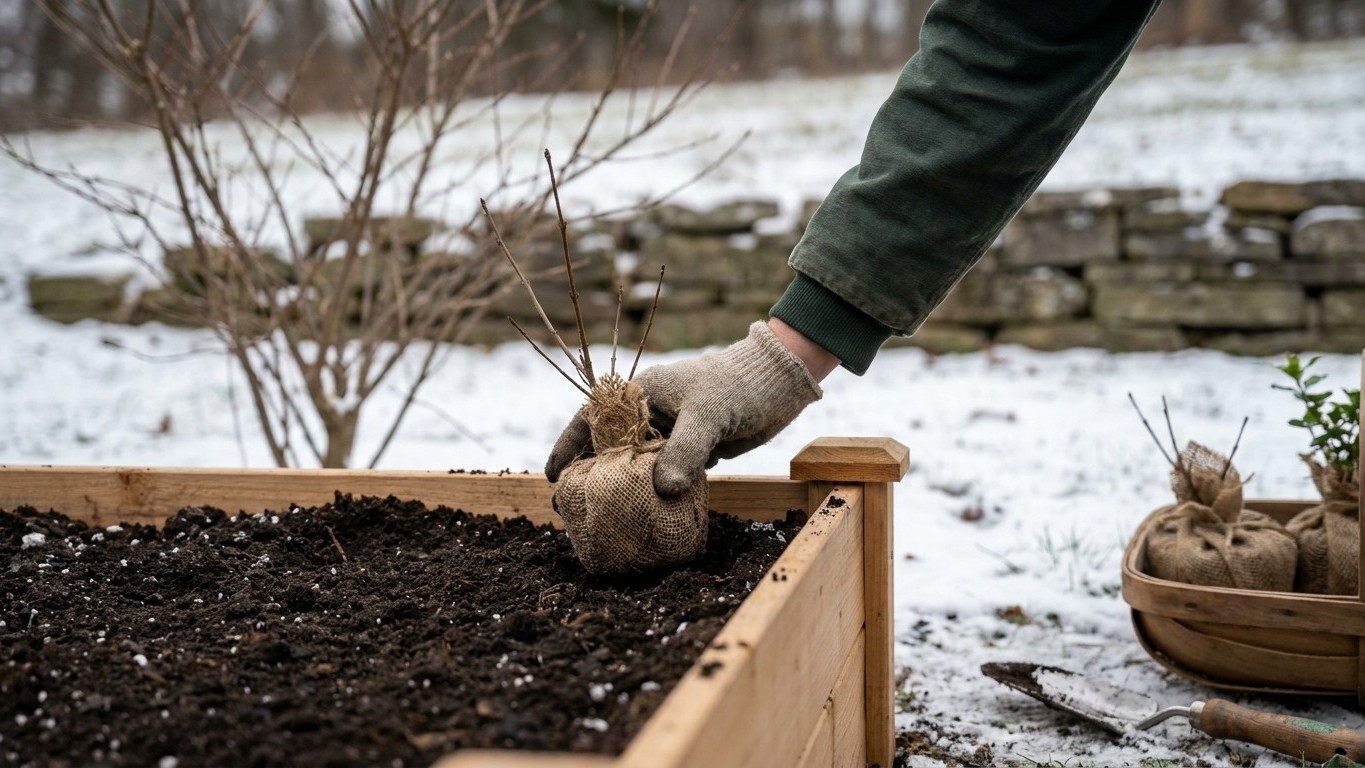
That said, a handful of tasks genuinely belong in the ground right now. Garlic and shallots are the exception: if you missed planting them in fall, a mild window in early December, where soil is still workable and not frozen solid, is a last legitimate chance. Push cloves 2 inches deep, mulch heavily with straw, and let winter do the vernalizing. Bare-root fruit trees, roses, and dormant shrubs can also go in during any stretch where the ground isn’t frozen, since they’re not trying to grow, just settle their roots before spring.
Cold frames and low tunnels change the math entirely. Inside one, soil temperature stays high enough to direct-sow the toughest hardy greens: spinach, mâche, and claytonia will germinate slowly under cover even in December’s short days. Overwintering onion sets and fava beans, both known for shrugging off hard freezes, can also go into a protected bed in the milder parts of West Tennessee.
One indoor trick worth doing this month: forcing. Dig a few rhubarb crowns or a head of Belgian endive/chicory root, pot them in a dark, cool space (a basement or unheated garage works), and you’ll get pale, tender stalks or leaves in a matter of weeks, with none of the frost risk. It’s a small project, but it’s genuinely productive when the outdoor beds are locked up.
What to start under cover
Seed starting under cover in December is really about counting backward from spring, not forward from today. Take the last spring frost window, March 31 to April 12 for the Nashville reference point, and work back from there. A crop that needs 8 to 10 weeks of indoor growth before transplant, say onions or leeks, should already be started around now if it’s going to hit that window with sturdy, transplant-ready stems rather than seedlings that got tired waiting.
Onions and leeks are the classic December starts under lights, because they’re slow and forgiving of a long indoor childhood. Started now, they’ll be at the right size, not rootbound, not floppy, when the soil finally warms enough to receive them in late winter or early spring. Alliums are one of the few crops where an early December start is genuinely the correct move rather than an impatient one.
The two failure modes matter here. Start too early, and you get leggy, rootbound seedlings sitting in small cells for months, stressed and stunted before they ever see garden soil, a real risk with fast growers like tomatoes if someone jumps the gun by 8 or 10 weeks. Start too late, and slow growers like leeks or celery simply won’t have the size to perform once transplanted, costing weeks of harvest at the other end of the season.
For anyone in East Tennessee or on the Cumberland Plateau, push this whole calculation later. Those areas run cooler and their frost windows lag Nashville’s, so a start date that’s perfectly timed in Middle Tennessee can be a few weeks premature at higher elevation.
What is ready to pick
Outdoors, the honest answer is little. Anything left unprotected in the open garden has likely already been hit by the first fall frost, weeks in the past for most of the state. But a few things still deliver.
Kale, collards, and leeks left in the ground are frost-hardened crops, and cold actually improves their flavor by converting starches to sugars. Kale under a light frosting is sweeter than it was in October. Leeks can stay in the ground and be pulled as needed, even through snow cover, as long as the soil isn’t frozen solid around them. Brussels sprouts, if they were planted with enough lead time, are often at their best after several frosts.
Cold frames extend this further: spinach, lettuce, and mâche growing under cover can be cut a leaf or two at a time all month, as long as the frame is vented on sunny days to avoid cooking the plants inside.
Indoors, sprouts and microgreens on a windowsill or under a grow light are the fastest fresh crop available this time of year, ready in 7 to 14 days depending on the variety.
The other job this month is checking the pantry, not the garden. Go through stored winter squash, potatoes, and onions by hand. A soft spot on a squash, a sprouting eye on a potato past its dormancy, or a soft neck on an onion means that item needs to be used or composted now, before it takes its neighbors with it.
The jobs that matter this month

December is a working month even without planting, and several of these jobs have real deadlines attached.
Dormant pruning on fruit trees and cane berries should happen while the plant is fully leafless and inactive. Pruning now, rather than waiting for a late-winter warm spell, reduces disease spread and lets you see branch structure clearly without foliage in the way. Wait too long and you risk cutting into a plant that’s already starting to push sap.
Seed ordering belongs on this month’s list for a practical reason: popular varieties, especially heirloom tomatoes and specialty peppers, sell out early in catalogs. Ordering in December instead of February means getting the variety you actually want instead of a substitute.
Soil testing is easiest to schedule now, while beds are empty and there’s no crop to work around. Tennessee’s county extension offices process these tests through UT’s soil lab, and results take a few weeks, so submitting in December gives time to amend before spring planting.
Compost turning keeps the pile active through cold weather; an unturned pile can stall out entirely in freezing temperatures, losing months of decomposition progress.
Round out the list with structural work: sharpen and oil pruners and hoes before they sit idle and rust, repair raised bed corners and fencing while there’s no plant material in the way, and finalize a crop rotation plan for next season so seed orders match the actual bed layout.
- Prune dormant fruit trees and berry canes
- Order seed before popular varieties sell out
- Submit soil samples to the county extension office
- Turn compost and repair beds, fencing, and tools
What not to do in December
The most common mistake this month is trusting the air temperature over the soil. A run of 55-degree afternoons can feel like an invitation to get something in the ground, but soil temperature lags air temperature by days or weeks, and a warm-season crop planted into cold soil will simply sit and rot rather than germinate. If you’re tempted by a mild stretch, check soil temperature directly rather than the forecast.
A related error: uncovering cold frames or removing mulch after a few warm days, only to have a hard freeze move back in and hit exposed crowns and roots that had started to break dormancy. Once a plant is mulched for winter, leave the mulch in place until the frost window has genuinely passed in spring, not after the first warm week.
Fertilizing is the third trap. Nitrogen applied now can push soft, new growth on shrubs, perennials, or overwintering greens right before a freeze, and that new growth is exactly what cold damages first. Established plants don’t need feeding heading into or through winter dormancy; save the nitrogen for active spring growth.
Finally, don’t assume stored crops are stable and forget about them. A single soft potato or squash left unchecked can spread rot to everything stored nearby within a couple of weeks.
Checking this against your own county
Every date and window here is built around a single reference station near Nashville. Tennessee’s real geography moves these numbers by weeks in either direction: elevation on the Cumberland Plateau and in East Tennessee keeps soil colder longer, while parts of West Tennessee warm earlier in spring and hold heat later in fall. A statewide month is a starting point, not an instruction for a specific yard.
Before planting or pruning based on any date above, check it against local conditions through the University of Tennessee Extension, which runs county offices with localized frost data and soil testing services.
Common questions
Can I still plant garlic in December in Tennessee?
Yes, if the ground is workable and not frozen. It’s late compared to the ideal fall window, but garlic and shallots planted in early December with heavy mulch still have time to root before hard winter sets in.
Is it too late to start seeds indoors this month?
No. Slow-growing crops like onions and leeks benefit from an early start counted back from the last spring frost window of March 31 to April 12. Faster crops like tomatoes should wait to avoid leggy, rootbound seedlings.
Why does my kale taste better after a frost?
Cold triggers plants to convert stored starches into sugars as a natural antifreeze response, which is why kale, collards, and Brussels sprouts often taste sweeter after several frosts than they did earlier in fall.
Should I fertilize my garden beds in December?
No. Nitrogen applied now can push tender new growth right before a freeze, and that growth is the most vulnerable part of the plant to cold damage. Wait until active spring growth resumes.
Gardeners who plant by the Moon can check the December 2026 moon planting calendar, a tradition rather than a proven method.