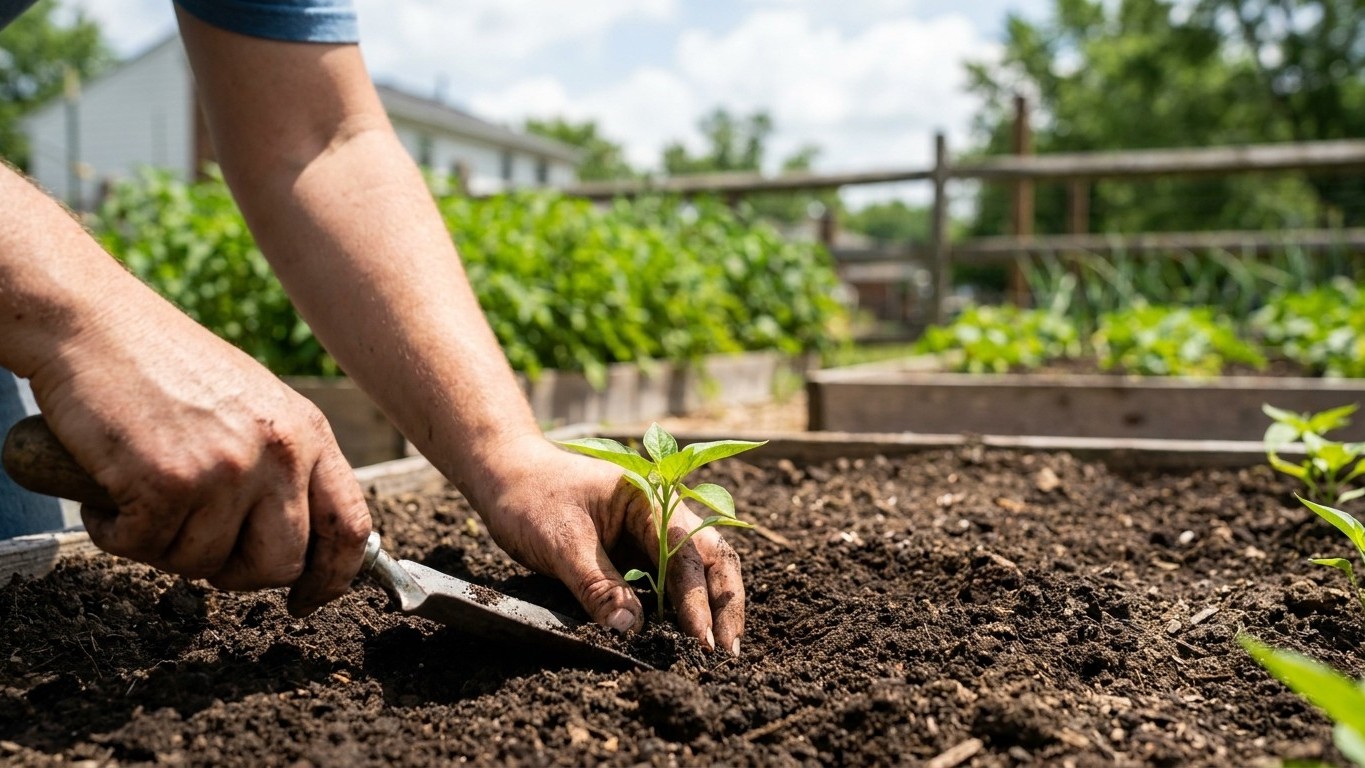

July in Tennessee sits deep in the growing season, months past the last frost window of March 31 to April 12 and months before the first fall frost of October 28 to November 8. Heat, not cold, runs the show. This is the month for heat-loving direct-sown crops like okra and southern peas, and for starting fall brassicas under cover before the transplant window closes.
What goes in the ground in July

Soil temperature, not the calendar, decides what survives here. By July, ground temperatures across Tennessee sit well into the 75-85°F range at planting depth, which is exactly what heat-tolerant seeds want and exactly what cool-season seeds refuse to germinate in. Okra, southern peas (cowpeas), lima beans, and snap beans for a second or third succession all go directly into the ground with no fuss this month.
Sweet corn can still go in for an early July direct sowing, but the math gets tight fast. Corn needs roughly 60 to 90 days depending on variety, and counting forward from a mid-July sowing lands harvest close to the September-October stretch, before the October 28 to November 8 frost window arrives. Push corn past mid-July and you’re gambling against the early end of that frost range.
Winter squash and pumpkins are a similar bet. Most varieties need 90 to 110 days to mature, so a July planting only works in the first half of the month, and it works better in West Tennessee than on the Cumberland Plateau, where cooler nights slow growth and frost tends to arrive earlier.
Cucumbers and summer squash can go in as a fresh succession sowing to replace plants that are winding down from heat stress or vine borer damage. Sweet potato slips, if they weren’t set out earlier, can still go in during the first couple weeks of July in most of the state and still have time to size up.
What’s a genuine gamble: tomato and pepper transplants set out fresh in July. They’ll struggle through blossom drop in the hottest stretches and may only produce a real fall crop in the warmer western third of the state. If you’re set on a fall tomato crop, choose a short-season variety and plant early in the month, not late.
What to start under cover
Fall brassicas are the real project this month, and the arithmetic runs backward from the first fall frost, not forward from today. Take the earlier end of the frost window, October 28, as your safety line. Broccoli and cabbage need roughly 55 to 70 days from transplant to harvest. Back up another 4 to 6 weeks for seedlings to reach transplant size, and you land on early-to-mid July as the window for starting broccoli, cabbage, cauliflower, and kale seed indoors or under shade cover.
“Under cover” in a Tennessee July means protection from heat and blasting sun more than protection from cold. Seed trays started outdoors in direct July sun will scorch or dry out within hours; a shaded porch, a cold frame with the lid propped open, or 30-50% shade cloth over a nursery bed does the real work here.
The two ways this goes wrong are mirror images of each other. Start brassica seed too early in July, and by the time transplant weather arrives in August the seedlings are already rootbound, leggy, and stressed, which shows up later as poor head formation. Start too late, past the third week of July in most of the state, and the seedlings won’t reach transplant size before the fall growing window narrows toward frost, especially in East Tennessee and on the Cumberland Plateau, where cooler nights arrive sooner.
Lettuce, spinach, and other tender greens can be started indoors under cover this month too, timed for transplanting once nights start cooling in late August or September. Starting them earlier than that in Tennessee heat almost guarantees bolting before they ever reach the garden.
What is ready to pick
July is the month the garden finally pays back the spring’s labor. Tomatoes hit full stride, and the tell is simple: color runs from the bottom up on most varieties, and a ripe fruit gives slightly to gentle pressure at the shoulder. Peppers can be picked green or left to color fully; both stages are edible, and leaving fruit on the plant longer often triggers more flowering.
Cucumbers turn bitter and seedy fast if left too long, so daily checks matter; most slicing varieties are ready at 6 to 8 inches. Summer squash and zucchini are best picked young, around 6 inches, because oversized fruit turns woody and also slows the plant’s overall production.
Green beans snap cleanly when ready and should be picked before the pods bulge visibly around the seeds inside. Okra pods are ready at 2 to 4 inches; anything longer turns fibrous almost overnight in July heat, so this is a crop that punishes gardeners who skip a day or two.
Blueberries and blackberries are in full harvest across most of the state, with berries pulling free easily from the stem when fully ripe rather than needing a tug. Early sweet corn planted back in spring is also coming in now, and the classic test still works: peel back the husk slightly and look for plump, milky kernels.
The jobs that matter this month

Mulching is the single highest-return job in a Tennessee July. A 2 to 3 inch layer of straw, shredded leaves, or wood chips around vegetables cuts soil moisture loss dramatically during the hottest stretch of the year and keeps root zones from swinging between soaked and bone-dry, which is what triggers blossom-end rot in tomatoes and peppers.
Watering rhythm matters more than watering volume. Deep, infrequent watering, aimed at wetting the soil 6 to 8 inches down two or three times a week, builds deeper roots than a light daily sprinkle ever will. Morning watering, rather than evening, gives foliage time to dry before nightfall and cuts down on the fungal diseases that thrive in Tennessee’s summer humidity.
Staking and caging should already be done by July, but if tomato and pepper plants have outgrown their supports, this is the last easy window to correct it before the plants sprawl and branches snap under their own fruit load. Squash vine borer and Japanese beetle both peak this month; scout the base of squash stems for sawdust-like frass and check bean and grape foliage for the beetles’ skeletonized leaf damage, since catching either early is far easier than fighting an established infestation.
Succession sowing keeps the harvest steady: reseed bush beans, cucumbers, and summer squash every 2 to 3 weeks through mid-July to replace plants as they decline. Garlic and onions harvested earlier in summer should be fully cured, dry, and stored by now, and it’s worth a quick check of that stored crop for any bulbs going soft before they spread rot to the rest.
What not to do in July
The most common mistake is treating a warm afternoon as proof the soil is ready for something it isn’t. Air temperature and soil temperature are different things, and Tennessee’s July heat can make gardeners rush fall brassica transplants outdoors before the plants have hardened off, resulting in scorched, wilted seedlings that never recover their footing.
Heavy nitrogen feeding is another trap, especially on tomatoes and peppers that are already setting fruit. Extra nitrogen this late pushes leafy growth at the expense of flowering and fruit set, which is the opposite of what a July garden needs. A balanced fertilizer, or none at all if the soil was prepped well in spring, does more good than a nitrogen boost right now.
Overhead watering in the evening is worth avoiding outright. Wet foliage sitting overnight in Tennessee’s summer humidity is close to an invitation for powdery mildew and other fungal disease, particularly on squash, cucumbers, and grapes. Switching to soaker hoses or morning watering solves most of this without any extra cost.
Uncovering shade cloth or removing mulch too early after a brief cool spell is also a common misstep; a few milder days in July don’t change the underlying heat pattern, and pulling protection off young seedlings usually means redoing the work a week later once the heat returns in force.
Checking this against your own county
A statewide July calendar is a starting point, not a fixed instruction. Tennessee’s elevation swings, from the Mississippi River bottomlands to the Cumberland Plateau and the Smoky Mountains foothills, shift both frost timing and summer heat intensity by real weeks, not days. East Tennessee generally runs cooler and can see an earlier onset of fall-like nights than West Tennessee, which changes exactly how far into July a gardener can push heat-loving crops or a fall brassica start.
Local extension agents track these differences county by county, and the University of Tennessee Extension is the direct source for planting guidance tuned to a specific region rather than the state as a whole.
Common questions
Is it too late to plant tomatoes in Tennessee in July?
It’s a gamble rather than an outright loss. A July tomato transplant can still produce a fall crop, especially in the warmer western part of the state, but it works best with a short-season variety planted early in the month rather than late.
Can I still start a vegetable garden from scratch in July?
Yes, with heat-tolerant crops. Okra, southern peas, beans, and squash all direct-sow successfully in July soil, and fall brassicas can be started under cover for transplanting in August.
Why are my July seedlings dying under cover?
Usually heat, not cold. Trays left in direct July sun overheat and dry out within hours; shade cloth or a partly shaded spot protects seedlings far better than a fully enclosed cold frame does this time of year.
When should I start fall broccoli and cabbage seed in Tennessee?
Count backward from the first fall frost window of October 28 to November 8. Early-to-mid July is the general window for starting seed under cover, leaving enough time for transplant-size seedlings by August and a full 55 to 70 days to mature before frost arrives.
Gardeners who plant by the Moon can check the July 2027 moon planting calendar, a tradition rather than a proven method.