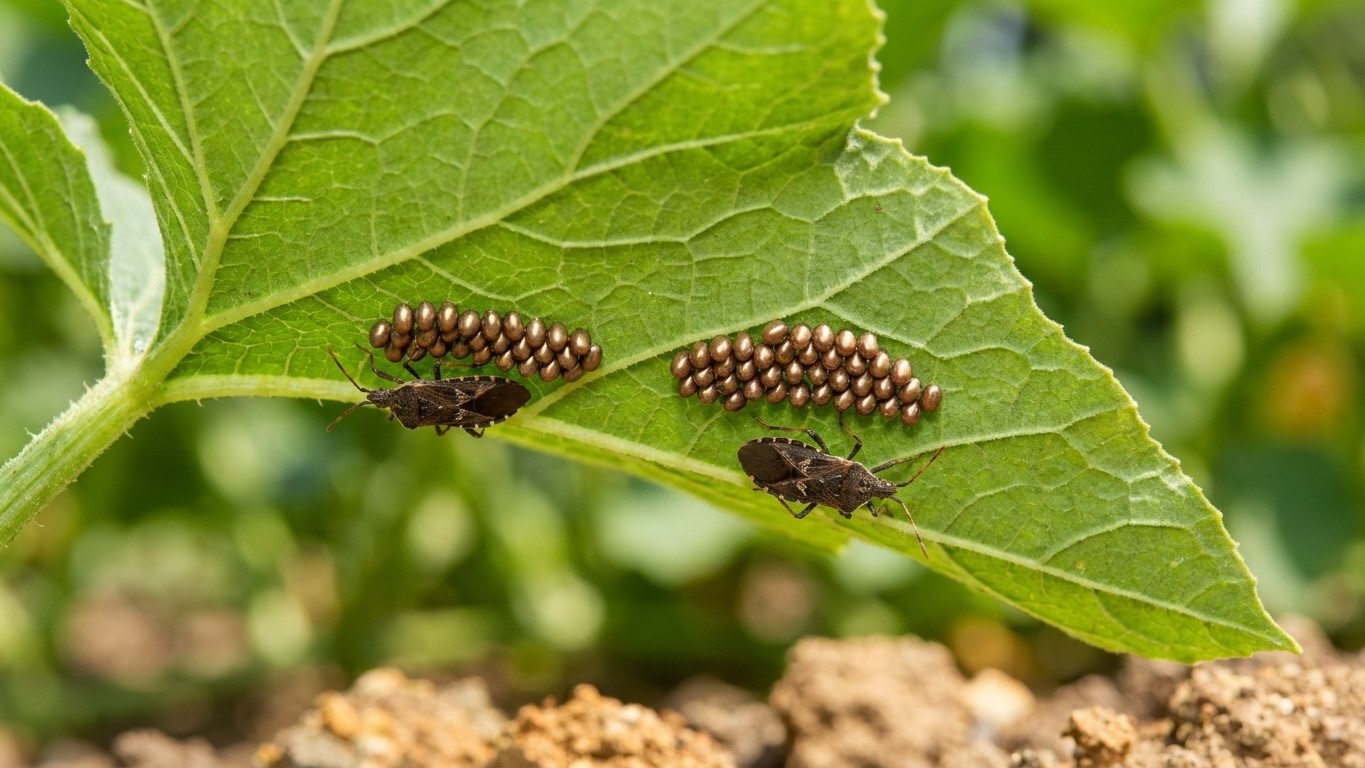

Squash bugs show up in Tennessee gardens once soil temperatures climb into the 60s, usually mid-May in West Tennessee and closer to early June in the higher elevations of East Tennessee. Adults that overwintered under leaf litter or garden debris start moving as soon as squash, pumpkin, and cucumber seedlings emerge, and by July you’re dealing with eggs, nymphs, and full-grown bugs all at once. Stopping them means acting before that egg-laying window opens, not after you’ve already spotted the bronze clusters on the underside of a leaf.
When Squash Bugs Arrive in Tennessee, Region by Region

Tennessee’s growing season stretches from the Mississippi River bottomlands to the Appalachian foothills, and that geographic spread changes the squash bug calendar more than most gardeners expect. In Memphis and the western counties, where frost dates run earlier and soil warms faster, overwintered adults can be active by late April. Middle Tennessee, including the Nashville basin, typically sees the first wave in mid-May. East Tennessee’s mountain valleys lag behind, with activity often not picking up until late May or into June.
What drives the timing isn’t the calendar, it’s soil temperature. Squash bugs need consistently warm ground, generally above 60°F, before they leave their winter shelter. A cool, wet spring can push the first sightings back two or three weeks, while an early heat spell accelerates everything. That’s why two gardens forty miles apart in Middle Tennessee can have wildly different bug pressure in the same year.
Once established, adults mate and begin laying eggs within a week or two of finding host plants. Tennessee’s long summer means the state can support two overlapping generations in a single season, particularly in the western and central regions. By August, you may see adults, nymphs of every size, and fresh egg clusters on the same plant simultaneously, which is part of why late-season infestations feel so much worse than early ones.
The Life Cycle Compressed Into a Few Weeks
An egg cluster hatches in about ten days under warm conditions. Nymphs then pass through five stages over three to four weeks before reaching adulthood, gradually shifting from a soft gray body to the hardened brownish-gray shell of a mature bug. Adults can live for months, which explains why the same insects that damaged your squash in July are often the ones tucked into mulch come October, waiting out winter to start the cycle again next spring.
Spotting the Damage Before It Spreads
Squash bugs don’t chew visible holes the way beetles do. They pierce plant tissue with a needle-like mouthpart and drain the sap, injecting a toxin as they feed. The result is wilting that looks disturbingly like drought stress or vine borer damage, starting with individual leaves and spreading until entire vines collapse. A telltale sign is wilting that begins at the leaf edges and moves inward, paired with yellow or brown speckling on the foliage closest to the crown of the plant.
Flip a struggling leaf over and you’ll likely find the real evidence: bronze-colored egg clusters, usually arranged in a tidy V or diamond pattern in the vein angles, and grayish nymphs clustering nearby. Adults are roughly five-eighths of an inch long, flat-backed, and brownish-gray with orange striping along the abdomen edges visible when they fly or shift position. They’re often mistaken for stink bugs, but squash bugs have a narrower, more elongated shape and tend to scatter quickly when disturbed rather than dropping straight down.
Winter squash, pumpkins, and zucchini take the worst hits in Tennessee gardens, while cucumbers and melons see lighter feeding. A heavily infested young plant can die within a week or two, since seedlings lack the root reserves to compensate for sap loss. Established, well-watered vines can tolerate moderate feeding, which is why timing your control efforts to the seedling and early-vine stage matters more than trying to save a plant that’s already collapsing in August.
What Actually Stops Squash Bugs in a Tennessee Garden
No single method wipes out a squash bug population on its own. What works is layering a few tactics that target different life stages, starting before the bugs establish themselves and continuing through the season.
Cultural Controls That Reduce the Starting Population
Clean-up matters more for squash bugs than for most garden pests, because adults overwinter in exactly the kind of debris gardeners tend to leave behind. Removing old vines, boards, and mulch piles near squash beds each fall cuts down on the number of shelters available for winter survival. Crop rotation helps too, since squash bugs are drawn back to the same soil where they emerged, so moving cucurbits to a different section of the garden each year forces adults to search harder for host plants.
Staggering planting dates can also throw off the timing. Squash bugs key in on tender young growth, so a planting that goes in slightly later, after the first wave of overwintered adults has already searched nearby beds and moved on, sometimes escapes the worst pressure. This isn’t foolproof, but combined with other tactics it reduces the odds of a total wipeout.
Physical Removal Still Works, and It’s Free
Hand-picking remains one of the most effective tools available, particularly for home gardeners with a manageable number of plants. Checking the undersides of leaves twice a week during May and June, then scraping off egg clusters with a fingernail or piece of tape, prevents entire generations from hatching. Adults can be dropped into a bucket of soapy water, where they die within minutes.
Trap boards offer a low-effort supplement. A flat board or shingle laid near the base of squash plants overnight gives adults a place to hide from morning heat, and gardeners can flip the board each morning to collect and destroy whatever has gathered underneath. It won’t catch every bug, but over several weeks it measurably thins the population.
Biological and Chemical Options
Row covers installed at planting time keep adults off young plants during the most vulnerable stage, though they need to come off once flowers appear so pollinators can reach the blooms. Beneficial insects, including certain parasitic flies and predatory insects that target squash bug eggs, occur naturally in Tennessee gardens but rarely provide complete control on their own. Encouraging a diverse planting with flowering herbs nearby supports these natural enemies without added cost.
For chemical control, timing against the youngest nymphs delivers the best results, since older nymphs and adults develop a tougher exoskeleton that resists many products. Insecticidal soap and neem-based products can knock back early nymph stages when applied directly to the undersides of leaves where the insects cluster. Broader-spectrum insecticides labeled for squash bugs are more effective against nymphs than mature adults, and applying them in the early morning or evening reduces harm to bees working the flowers during the day. The University of Minnesota Extension notes that controlling squash bugs is far easier when nymphs are small, before the population disperses across the plant.
Choosing Resistant Varieties for Tennessee Conditions
Not all squash react to bug pressure the same way. Varieties like butternut and other moschata-type squash tend to show more natural resistance to squash bug feeding compared to zucchini and other pepo types, which are consistently among the hardest hit in Southern gardens. Gardeners who’ve struggled year after year with summer squash sometimes find better luck shifting a portion of their planting toward these more tolerant types, without giving up on zucchini entirely.
Soil health plays a supporting role as well. Plants growing in well-drained, adequately fertilized soil handle moderate squash bug feeding better than stressed plants competing with weeds or dealing with inconsistent watering. It’s not a substitute for direct control, but a vigorous plant simply has more reserves to survive an attack that would kill a stressed one outright.
Gardeners who track their own results from year to year often notice that the second week after the first eggs appear is the real turning point: miss that window and the population multiplies faster than hand-picking can keep up with, while catching it consistently through June keeps damage to a level the plants can outgrow.
Related guides
- Squash bug in Kentucky: When It Shows Up and What Stops It
- Squash bug in Missouri: When It Shows Up and What Stops It
- Squash bug in Texas: When It Shows Up and What Stops It
- Squash bug in Utah: When It Shows Up and What Stops It
- Flea beetles in Tennessee
- Cutworms in Tennessee
- Striped cucumber beetle in Tennessee
- Squash bug in Nevada: When It Shows Up and What Stops It