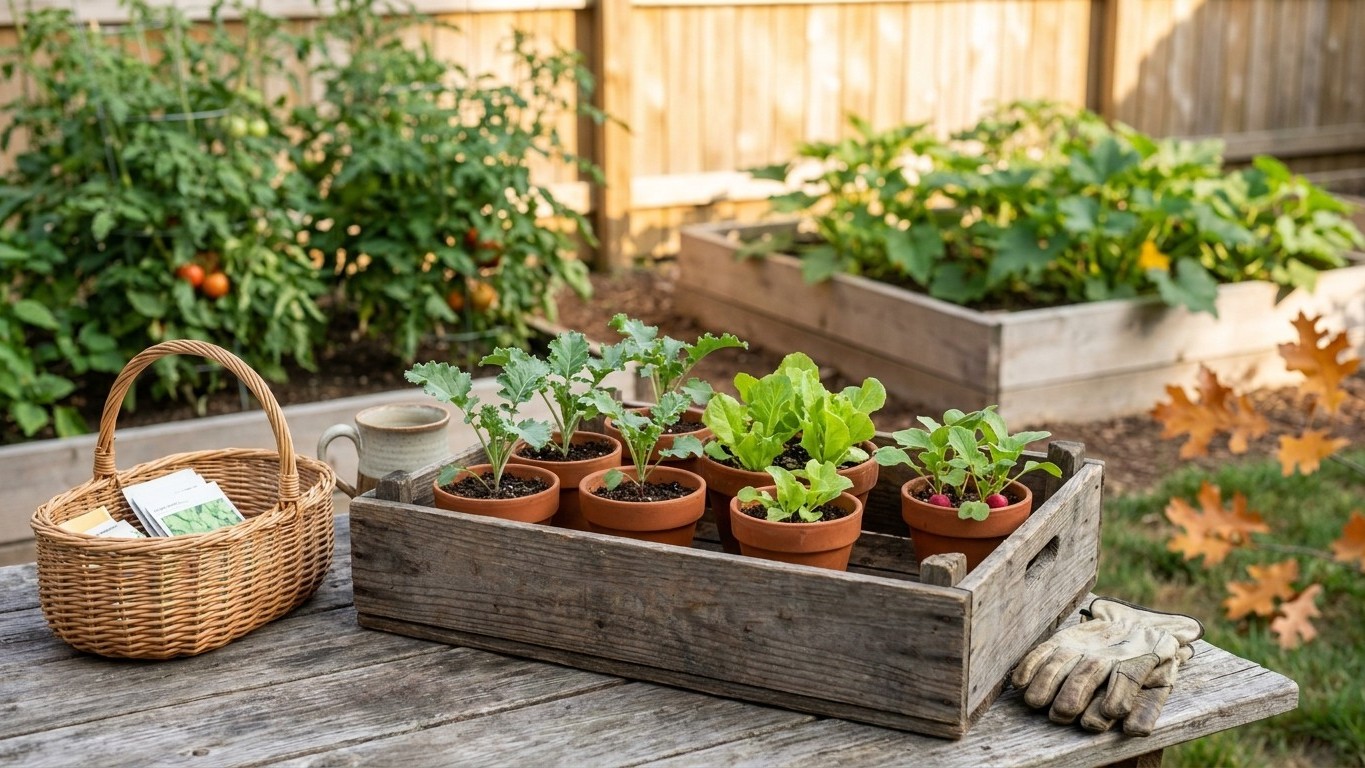

August in Utah sits in the gap between two frost dates: well clear of the last spring freeze and still weeks from the first fall one. That makes it a working month, not a waiting month. Salt Lake gardeners can direct-sow fast fall crops, keep harvesting summer produce, and start planning the transition to cold-season growing, all in the same four weeks.
What goes in the ground in August

The calendar matters less here than the arithmetic. Salt Lake’s first fall frost lands somewhere between October 18 and October 29, based on NOAA NCEI’s 1991-2020 climate normals for station USW00024127. Count backward from that window and August still has room for anything that matures in 60 to 75 days, and plenty of room for anything faster.
Direct-sow candidates for early and mid-August include bush beans (only in the first week or two, since they need the longest run), beets, carrots, turnips, and quick radishes. Lettuce, spinach, and arugula go in right through the month, since they mature fast and actually prefer the cooling soil that comes later in August rather than the peak heat of early August. Peas planted now for a fall crop usually beat the frost if they go in before mid-month.
Transplants matter as much as seed here. Broccoli, cauliflower, and cabbage started indoors or in a shaded nursery bed in July should go into open ground in the first half of August, giving them time to size up before cold shuts growth down. The soil temperature problem in August runs the other direction from spring: it is often too hot, not too cold, for germination. Lettuce and spinach seed can stall or go dormant above roughly 80°F soil temperature, so shading the row with a board, burlap, or shade cloth until seedlings emerge solves more failures than any fertilizer would.
Elevation changes this window fast. A garden at 4,300 feet in Salt Lake Valley has a different clock than one at 6,000 feet or higher in the mountain valleys, where the first frost can arrive weeks earlier than the Salt Lake normal. Southern Utah gardeners generally get more runway on both ends of the season, while high-elevation gardeners should treat the second half of August as the practical cutoff for anything new going into open soil.
What to start under cover
Cover in August usually means shade, not warmth. Row cover, shade cloth, or a board laid over a seeded row protects germinating lettuce, spinach, and brassica seedlings from soil temperatures that spike well past what cool-season seed tolerates. This is the opposite job cover does in spring, when it traps heat instead of blocking it.
Work the arithmetic from the fall frost window rather than from any fixed date. Take a crop’s days-to-maturity, add roughly two weeks for slower fall growth as daylight shortens, then count back from October 18, the early edge of Salt Lake’s frost range, if the garden sits at higher elevation or in a cooler valley. A 60-day crop needs to go in by very early August in those cooler spots to have a real shot at finishing before frost. In the Salt Lake Valley itself, working back from the later edge of the range, October 29, buys an extra week or two of margin.
The two failure modes both show up in August gardens. Starting brassica or lettuce transplants too early under cover, back in the worst heat of midsummer, produces stretched, bolted, or rootbound seedlings before they ever reach the garden. Starting too late, waiting until the last week of August to sow anything needing 70 or more days, means the crop runs out of daylight and warmth before it matures, regardless of frost. Splitting sowings across two or three dates a week or two apart hedges against both problems and spreads the harvest out instead of dumping it all at once.
What is ready to pick
August is the month Utah gardens actually pay off. Tomatoes color up steadily once night temperatures stay above the low 50s, and the earliest slicing varieties often peak by mid-month. Peppers keep producing as long as they’re picked regularly rather than left to fully ripen on the plant, which slows the next flush.
Summer squash and zucchini need daily checking. A fruit that looks small in the morning can turn into an oversized, seedy one by evening, and letting a few mature on the vine signals the plant to slow down overall production. Cucumbers follow the same logic: pick before they yellow and swell for the best flavor and the longest harvest window.
Sweet corn is ready when the silks turn brown and dry while the husk stays green, and a quick thumbnail test on a kernel, checking for a milky rather than watery fluid, confirms it. Onions and garlic planted the previous fall or early spring are usually curing or ready to lift by August, once the tops yellow and fall over. Melons signal ripeness through the stem: a cantaloupe slips free from the vine with light pressure, while watermelon relies on a duller sound when tapped and a yellowing spot where it rests on the ground.
The jobs that matter this month

Watering rhythm decides more August outcomes than any other single task. Deep, less frequent watering that reaches 6 to 8 inches down builds stronger root systems than daily shallow sprinkling, which is especially true for tomatoes and squash under Utah’s dry summer heat. Inconsistent watering on tomatoes is also the most common cause of blossom end rot, not a calcium deficiency in the soil itself.
Mulching pays for itself twice over in August: it slows evaporation between waterings and keeps soil temperatures down enough for those fall seedings to germinate. A 2 to 3 inch layer of straw or shredded leaves around vegetables handles both jobs without extra cost.
Staking and tying still matter even this late in the season. Indeterminate tomatoes and vining squash left unsupported by August sprawl across paths and shade neighboring plants, and untangling that mess costs more time than a stake would have.
Succession sowing keeps the fall harvest from arriving all at once. Dropping in a new short row of lettuce, radishes, or spinach every one to two weeks through August extends the picking window well into fall instead of ending it in a single burst.
Pest scouting matters more in August than any other month, since squash bugs, tomato hornworms, and spider mites all peak in the heat. Checking the undersides of squash leaves for egg clusters and handpicking hornworms before they defoliate a plant costs a few minutes; missing that window costs the plant.
What not to do in August
The classic August mistake in Utah is treating warm, sunny weather as permission to start warm-season crops from seed. Tomatoes, peppers, and melons sown now will not mature before the fall frost window arrives in October, regardless of how hot the days still feel. If a warm-season gap needs filling, a nursery transplant that is already several weeks along is the only realistic option, and even that is a gamble past the first week or two of the month.
Uncovering cool-season seedlings too early after a mild stretch is the second common error. A few cooler days in mid-August do not mean the heat is done; soil temperatures lag behind air temperatures, and pulling shade cloth off young lettuce or spinach too soon often stalls germination that had just started to take.
Feeding nitrogen heavily late in the tomato and pepper season is another trap. Nitrogen pushes leafy growth at the expense of fruit set, and applying it in August, when the plant should be finishing its production rather than expanding, slows the very harvest gardeners are trying to protect. A lower-nitrogen, higher-phosphorus and potassium feed supports fruit finishing instead.
Direct-sowing carrots or beets without a watering plan for germination is the last common slip. Fine seed sown into August’s dry surface soil and then watered inconsistently dries out and dies before it ever breaks the surface; a light daily watering until seedlings emerge solves this without overwatering the rest of the bed.
Checking this against your own county
A statewide frost window is a starting point, not an instruction. Utah’s hardiness zones span 4a to 9a under the USDA Plant Hardiness Zone Map, a range built from a single measurement, average annual extreme minimum temperature, and Salt Lake’s own frost dates already sit in a mild valley pocket that runs later than most of the state around it. Elevation gain of even a few hundred feet, proximity to the Great Salt Lake, and the general north-south split between cooler northern Utah and warmer southern Utah can each shift these windows by two weeks or more.
Utah State University Extension publishes county-level guidance and its own planting calendar at extension.usu.edu, and checking the local office there before locking in an August planting date is the most reliable way to adjust these ranges to a specific garden.
Common questions
Is it too late to plant tomatoes in Utah in August?
Yes, from seed. A tomato sown in August will not reach maturity before the first fall frost window of October 18 to October 29 in Salt Lake, and higher-elevation counties have even less runway. An already-started nursery transplant is the only realistic option this late, and only in the first week or two of the month.
Can I still plant carrots or beets in August in Utah?
Yes, if sown early in the month and kept consistently moist through germination. Both mature within 60 to 75 days, which fits comfortably inside the gap before the first fall frost in most of the state, though high-elevation gardens should sow at the very start of August.
Why is my fall lettuce not germinating in August?
Soil temperature is almost always the cause. Lettuce and spinach seed can stall above roughly 80°F, which is common in unshaded Utah soil in August. Shading the row with a board or cloth until seedlings emerge, then removing it, usually resolves the problem within days.
Does Utah’s frost date differ much by elevation?
Considerably. The Salt Lake frost window of April 12 to April 29 for spring and October 18 to October 29 for fall, based on NOAA NCEI normals for station USW00024127, applies to a mild valley location. Higher mountain valleys can see frost weeks earlier in fall and later in spring, while southern Utah generally runs milder on both ends.
Gardeners who plant by the Moon can check the August 2027 moon planting calendar, a tradition rather than a proven method.